Buyer's guide
Mazda Roadster (Eunos Roadster / MX-5)
The Eunos Roadster is the JDM-market name for what the rest of the world knows as the Mazda MX-5 or Miata — and it is the single best-selling two-seat roadster ever made. The NA generation debuted at the 1989 Chicago Auto Show as a Mazda export model and reached Japan branded under Mazda's Eunos sub-brand: a short-lived premium label Mazda operated between 1989 and 1996 that also sold the Eunos Cosmo. From the NB generation onward the JDM nameplate switched to Mazda Roadster, but the international 'MX-5 Miata' nameplate carried through every generation. The recipe never changed across thirty-six years and four generations: a small front-engine, rear-wheel-drive, two-seat convertible at roughly 2,300 pounds with near-50:50 weight distribution, naturally aspirated four-cylinder power, and a manual transmission as the canonical drivetrain. NA cars use the 1.6L B6-ZE and 1.8L BP; NB switches to fixed headlights but keeps the BP family and adds factory-turbocharged Mazdaspeed and MX-5 SP variants; NC introduces the 1.8L and 2.0L MZR engines and a power retractable hardtop (PRHT); ND returns to the SkyActiv-G 1.5L and 2.0L and a renewed sub-1,000 kg curb-weight target with an RF retractable-fastback body variant alongside the soft top. JDM imports today concentrate on the NA and NB with their JDM-only V-Special, S-Limited, Mazdaspeed MX-5, MX-5 SP, and Club Sport editions — trims that the USDM Miata never received.
The Eunos sub-brand and Japan's late-bubble luxury experiment
When Mazda launched the original Roadster in 1989, it did so on the JDM market under the Eunos brand — a premium sub-brand Mazda created during Japan's late-1980s bubble economy. Eunos operated parallel to Mazda's other Japan-only brands of that era (Autozam for kei and small cars, Efini for the RX-7 FD, Eunos for the Roadster and Cosmo). The Eunos Cosmo and Eunos Roadster were the brand's two anchor products. After the bubble collapsed and Mazda restructured its dealer network, the Eunos label was retired in 1996, and the NB generation onward sold on the JDM market simply as the Mazda Roadster. Export markets ignored all of this: the car was always 'Mazda MX-5' or 'Mazda Miata' globally, regardless of what badge it wore in Tokyo. The Eunos label is now a collector signifier — V-Special, S-Limited, and other early JDM trims carry it on the boot lid and the original paperwork.
Why the NA's engineering reshaped enthusiast economics
The NA's actual technical contribution was not its power output — at roughly 110-160 horsepower across the run it was modest even by 1990 standards — but its accessibility. A two-seat front-engine rear-drive convertible at a curb weight under 2,300 pounds, with a five-speed manual and a Torsen-capable differential, sold new for under $14,000 USD in the US market at launch. That price point opened the lightweight FR roadster format — previously the preserve of period MGs, Triumphs, and Alfas — to a generation of buyers who had only ever owned front-drive economy cars. The aftermarket grew up around that. Three-and-a-half decades on, the NA still rewards the same approach: tight bushings, fresh fluids, a real Torsen LSD, and a soft top that does not leak. The WP body notes the chassis tolerates engine swaps ranging from the RX-7 13B to small V8s; the more common path is leaving the four-cylinder stock and investing in suspension, brakes, and weight reduction.
Quick read
Key takeaways
- Same car: Eunos Roadster (JDM), Mazda Roadster (JDM post-NB), MX-5 / Miata (export)
- Four generations: NA 1989-1997, NB 1998-2005, NC 2005-2015, ND 2015-present
- Lightweight FR: roughly 2,300 lb with near-50:50 weight distribution
- Engines: 1.6L B6, 1.8L BP, 2.0L MZR, 1.5L and 2.0L SkyActiv-G across the four generations
- JDM-only specials: V-Special, S-Limited, Mazdaspeed MX-5, MX-5 SP, Club Sport, NR-A
- Power range: ~100-200 hp across the run; only a few Mazdaspeed NB cars were factory-turbocharged
- Engine-swap friendly: chassis tolerates LS, 13B, and other swaps with significant supporting work
Constants
Common across all Roadster (Eunos Roadster / MX-5) generations
- Two-seat front-engine rear-drive layout across all four generations
- Curb weight around 2,300 lb on NA/NB with near-50:50 weight distribution
- JDM-spec right-hand drive with Japan-only trim packages (V-Special, S-Limited, MX-5 SP, Club Sport, NR-A)
- Naturally-aspirated 1.5L–2.0L four-cylinder engines as the canonical powertrain
- Factory turbocharged only on a small number of NB cars (Mazdaspeed MX-5, MX-5 SP)
- Convertible soft top throughout; PRHT power retractable hardtop on NC; RF retractable fastback on ND
Chassis history
Generation timeline
The Roadster has run through four generations since 1989 and the recipe hasn't really changed. Small, light, front engine, rear wheel drive, two seats, soft top. The NA is the pop-up headlight original. The NB is the most varied by trim. The NC is the heaviest and the most underrated. The ND is current production and brings the weight back down to where it started.
Buyer's call
Should you buy a Mazda Roadster (Eunos Roadster / MX-5)?
The Roadster gives you a lot for not much money and asks for very little back. It's cheap to buy, cheap to run, and easy to work on. What you give up is space, big factory power, and any real weather protection. That trade has been the same Roadster trade since 1989.
Why you'll love it
- Affordable entry Eunos Roadster / Miata listings start under $5,000 with fixer-uppers under $2,000 (per WP body)
- Low maintenance and running cost Simple build quality; fluid changes and routine maintenance are owner-doable (per WP)
- High reliability WP body cites a 4.0 reliability rating; routine care supports several hundred thousand miles
- Fun to drive ~2,300 lb curb weight and near-50:50 weight distribution; engaging at any speed (per WP)
- Pop-up headlights (NA only) Distinctive NA-generation styling feature; eliminated on NB onward per pedestrian-safety regulations (per WP)
- Project-car friendly Engine bay accepts a wide range of swaps; aftermarket support is broad (per WP)
Why you might not
- Small cabin and trunk Two-seat layout limits cargo and passengers (per WP body)
- Firm ride over rough pavement Short wheelbase and low weight transmit road imperfections (per WP)
- Rust-prone on early cars NA and early NB subframes, sills, and frame rails are common rust locations (per WP)
- Soft top maintenance Vinyl tops crack with UV exposure and require replacement (per WP)
- Limited stock power Naturally aspirated 1.6L and 1.8L engines hold roughly 250 hp ceiling on stock internals before bottom-end work is required (per WP)
Who should not buy this
- Anyone needing rear seats or family-hauler cargo capacity
- Buyers with no garage; soft tops degrade under direct sun
- People expecting modern infotainment on NA or NB cars
- Owners who can't tolerate cabin noise and a firm ride
- Drivers wanting big factory power without modification
- Buyers who can't budget for soft-top replacement or rust repair on older imports
- Anyone planning to carry more than one passenger regularly
Reliability
Common issues & solutions
The Roadster is a reliable car. Most of what goes wrong is age, not Mazda. Rust hits the sills and frame rails on NA and early NB cars. The soft top vinyl cracks in the sun. The pop-up headlight wiring fails on NAs. And the 1989 to 1992 cars have an early B6 crankshaft that needs to have been replaced by now. None of these are deal breakers if the paperwork shows the work was done.
| Issue | Cause | Solution | Est. cost |
|---|---|---|---|
| Timing chain / belt slippage | Tensioner and guide rails wear with age (per WP body) | Replace timing belt or chain, tensioner, and guide rails together | Quote from your shop; varies by generation and parts source |
| Engine oil leaks | Aged gaskets seep; common on older NA/NB cars (per WP) | Replace gaskets and flush oil; do not mix old and new | Quote from your shop; depends on which gasket |
| Rust in subframe and engine bay | Age, road salt, water intrusion (per WP body) | Paint or rustproof; replace structural pieces if compromised | Quote from your shop; depends on severity |
| Pop-up headlight wiring failure (NA) | Electrical wiring ages; one motor or relay fails | Rewire headlights; option to wire each side independently per WP | Quote from your shop; minor repair |
| Soft top leaks | UV exposure cracks vinyl; rear plastic window seal fails (per WP) | Replace soft top assembly; rear window panel is replaceable separately if top is otherwise sound | Quote from your shop; full top replacement is the typical fix |
| Frame rail / rocker rot (NA) | Salted-road climates accelerate rocker and frame rust | Cut out and weld in replacement panels; structural inspection required | Quote from your shop; can be significant on rough imports |
| Early NA crankshaft (1989-1992) | Early B6-ZE crankshaft design noted as failure-prone in WP body | Confirm replacement crank installed; otherwise expect engine work | Quote from your shop; engine rebuild range |
| Hardtop hinge cracking | Repeated removal stress and age | Inspect and replace hardtop mounting hardware if cracked | Quote from your shop |
Market
Differences between JDM & USDM
JDM Eunos Roadster (NA, 1989-1996), JDM Mazda Roadster (NB onward), USDM Mazda Miata (NA-NC), and global MX-5 (NB-ND) are the same chassis with badge and trim differences. JDM-only special editions are the key authenticity markers: V-Special and S-Limited on the NA (tan interior, BBS wheels on some V-Special builds), 10th Anniversary, Mazdaspeed MX-5 (180 hp, RH5 VJ35 turbo), MX-5 SP (200 hp, Garrett GT2560R, 100 units), Club Sport (50 units, lightweight strip-out, no A/C or stereo, Torsen LSD) on the NB. The NB Coupe was a JDM-only hardtop body style. The NR-A is a JDM-spec lightweight track-focused trim. NC introduced the PRHT power retractable hardtop globally; ND offers the soft top and the RF retractable fastback. Right-hand drive throughout the JDM run; left-hand drive on US, Canada, and most export markets.
Specs
Technical specifications
Every Roadster runs a naturally aspirated four cylinder. The NA uses the 1.6 liter B6 and later the 1.8 liter BP. The NB keeps the BP family and adds two factory turbo specials, the Mazdaspeed MX-5 and the MX-5 SP. The NC moves to the MZR 1.8 and 2.0. The ND runs SkyActiv-G 1.5 and 2.0. The manual gearbox is the right gearbox in every generation.
Engine options
| Chassis | Engine | Displacement | Power | Boost | Notes |
|---|---|---|---|---|---|
| NA | B6-ZE | 1.6L | ~110-115 hp (per WP body) | N/A | 1989-1993 early NA; DOHC 16V four; smaller intake and exhaust |
| NA | BP | 1.8L | Up to ~160 hp (per WP body) | N/A | 1994-1997 later NA; Mazdaspeed supercharged variant noted in WP body; 2.0L stroker offered by Mazdaspeed (per WP) |
| NB | BP / BP-T | 1.8L | NA ~140-160 hp; Mazdaspeed 180 hp; MX-5 SP 200 hp (per WP body) | Turbo on Mazdaspeed MX-5 (RH5 VJ35) and MX-5 SP (Garrett GT2560R) | 1.6L BP base also offered on JDM Mazda Roadster (per WP body) |
| NC | MZR L8-DE / LF-DE | 1.8L / 2.0L | Per generation (WP cites two MZR options without specific hp) | N/A | 2005-2015; 4-cylinder; replaced BP family |
| ND | SkyActiv-G P5-VP / PE-VPR | 1.5L / 2.0L | 1.5L ~130-160 hp; 2.0L ~130-190 hp (per WP body) | N/A | 2015-present; production continues globally |
Transmission options
| Type | Ratios | Availability | Notes |
|---|---|---|---|
| 5-speed manual | Not cited in WP source | NA and NB standard; NC base | Standard transmission across NA/NB; NC base spec |
| 6-speed manual | Not cited in WP source | NB special editions (10th Anniversary, Mazdaspeed, MX-5 SP); NC optional; ND | Per WP: 6-speed manual was special-edition only on NB |
| 4-speed automatic | Not cited in WP source | NA and NB optional | Older automatic offered alongside 5MT |
| 6-speed automatic with paddle shifters | Not cited in WP source | NB special spec onward; NC option | WP body cites paddle-shifter 6-speed auto added on NB |
Lineup
Variants & trims
JDM Roadsters got special editions the export Miata never saw. The NA gave you V-Special, S-Limited, and M-Edition with tan interiors and BBS wheels on some cars. The NB is where it gets interesting with the 10th Anniversary, the Mazdaspeed MX-5, the 100 unit MX-5 SP, and the 50 unit Club Sport. If you can find a documented one, that's the Roadster to buy.
| Generation | Trim | Engine | Key features |
|---|---|---|---|
| NA (1989-1997) | Eunos Roadster 1.6 (early NA) | 1.6L B6-ZE NA | 5-speed manual or 4-speed automatic, pop-up headlights, soft top |
| NA (1989-1997) | Eunos Roadster 1.8 (later NA) | 1.8L BP NA | 5-speed manual or 4-speed automatic, more torque, soft top or hardtop |
| NA (1989-1997) | JDM special editions (V-Special, S-Limited, M-Edition) | 1.6L B6-ZE / 1.8L BP | JDM-only colour/trim packages; tan interiors and BBS wheels on some V-Special cars |
| NB (1998-2005) | Mazda Roadster 1.6 / 1.8 | 1.6L B6 / 1.8L BP NA | Fixed headlights, glass rear window, larger anti-roll bars, optional ABS |
| NB (1998-2005) | 10th Anniversary | 1.8L BP NA | 6-speed manual, Bilstein shocks, Torsen LSD, Bose audio, badge of authenticity (3,500 units) |
| NB (1998-2005) | Mazdaspeed MX-5 | 1.8L BP-T turbocharged (RH5 VJ35 turbo) | 180 hp, Bilstein shocks, front-mount intercooler, 6-speed manual |
| NB (1998-2005) | MX-5 SP (Special Performance) | 1.8L BP-T turbocharged (Garrett GT2560R) | 200 hp, JDM-low-volume, sub-6-second 0-100; 100 units |
| NB (1998-2005) | Club Sport MX-5 | 1.8L BP NA | Stripped-out lightweight; no A/C, no stereo, no power steering; Torsen LSD; 50 units (25 hard top, 25 soft top) |
| NC (2005-2015) | MX-5 / Roadster 1.8 / 2.0 | 1.8L MZR / 2.0L MZR NA | 5-speed manual, 6-speed manual, or 6-speed auto with paddles; PRHT power retractable hardtop offered |
| NC (2005-2015) | MX-5 MS-R (Motor Sport Racing) | 2.0L MZR NA | 5-speed manual, Koni shocks, LSD, race sway bars, front shock-tower brace, 4-wheel discs |
| NC (2005-2015) | 20th Anniversary | 2.0L MZR NA | Recaro buckets, leather steering wheel and parking brake handle, aluminum wheels |
| NC (2005-2015) | 25th Anniversary | 2.0L MZR NA | 1,099 units; multicoloured stitched seats, chrome accents, 25th Anniversary badging |
| ND (2015-present) | MX-5 / Roadster 1.5 SkyActiv-G | 1.5L SkyActiv-G NA | JDM-spec 130-160 hp, 6-speed manual, return to sub-1,000 kg target weight |
| ND (2015-present) | MX-5 / Roadster 2.0 SkyActiv-G | 2.0L SkyActiv-G NA | 130-190 hp depending on model year; 6-speed manual or automatic; RF retractable fastback variant |
Pricing
Average prices & original MSRP
Driver condition NA and NB Roadsters start around $5,000. You can find fixer uppers under $2,000 if you want a project. Most clean cars stay under $18,000. The factory turbo NB Mazdaspeed and MX-5 SP cars cost more, and a documented Club Sport is the rarest of the run. The chassis is cheap. The story attached to the chassis is what costs money.
Original MSRP: USD13,800 at launch in 1989. USD launch price of the US-market Mazda MX-5 Miata is widely cited as approximately $13,800 in 1989. JDM Eunos Roadster pricing was set in yen and varied by trim; the WP body does not cite a specific JDM yen MSRP.
Today's market range: $2,000 to $18,000 (median ~$8,000). Source: JDM Buy & Sell editorial — WP body source.
NA and NB cars remain the strongest JDM import targets for buyers who want a lightweight rear-drive sports car under a tight budget; per the WP body, driver-condition cars start around $5,000 and most do not exceed $18,000 except low-mileage or extensively invested examples. NC remains under-appreciated and offers the PRHT power-retractable hardtop. ND is still in current global production and is not yet a 25-year import candidate.
| Generation | Condition | Typical price | Notes |
|---|---|---|---|
| NA/NB | Driver | from approximately $5,000 | Per WP body — good-condition Miata floor |
| NA/NB | Project / rough | under $2,000 | Per WP body — fixer-upper listings |
| NA/NB | Special edition / higher trim | approximately $8,000 | Per WP body |
| NA/NB | Top-condition or extensively maintained | rarely above $18,000 except low-mile or invested examples | Per WP body |
Inspect
Pre-purchase inspection checklist
Walk this list with the seller, not in front of them. The Critical items mean walking away if there's no paperwork. The High items can usually be priced into the deal. A short test drive and ten minutes under the car will tell you most of what you need to know.
Critical priority
- Timing belt / chain history Confirm interval service on NA/NB (timing belt) per WP-cited timing chain slippage issue
- Rust — subframe and engine bay Inspect subframe, frame rails, area around battery, rear shock mounts, rocker panels (WP-cited rust locations)
- Frame rails Inspect under sills and pinch welds for rust through
High priority
- Engine oil leaks Check under car for gasket leaks; WP body cites this as a common issue
- Soft top condition Check for UV-cracked vinyl, leaks, rear plastic window cracks (per WP)
- Clutch and 5MT/6MT operation Verify smooth engagement, no synchro crunch on 2-3 downshifts
- JDM import paperwork Verify export certificate, auction sheet, mileage proof for NA/NB imports
- Service history for special editions Mazdaspeed, MX-5 SP, Club Sport, V-Special — verify documentation matches VIN
Medium priority
- Pop-up headlight operation (NA only) Confirm both lights raise and retract; WP body cites wiring failure causing one-eye operation
- Differential and Torsen LSD (if equipped) Check for whine on coast and pinion seal seepage
- Suspension bushings Bushings dry out with age; check for clunks and uneven tire wear
- Hardtop hinges and seals (if equipped) Inspect hardtop mounting points and rubber seals
Cross-shop
Comparable alternatives
If the Roadster isn't the right car, the Honda S2000 is the natural step up with more power and more weight. The Toyota MR2 is the mid engine alternative. If you want something smaller and stranger, the Honda Beat and Suzuki Cappuccino are kei convertibles that scratch the same itch.
Honda S2000
Larger, higher-revving FR roadster; closest direct rival
Honda Beat
Kei convertible alternative — smaller, mid-engine, JDM-only
Suzuki Cappuccino
Kei FR roadster — turbo three-cylinder, removable roof panels
Toyota MR2
Two-seat sports car alternative — mid-engine layout
Nissan 350Z
Larger FR sports car with more power and convertible variant
Compare
How it compares
Among lightweight Japanese roadsters, the Roadster is the cheapest to buy, the easiest to fix, and the one with the most aftermarket. The S2000 has more power. The MR2 has the more exotic layout. The Roadster wins on reliability, parts, and the size of the community behind it.
| Feature | Mazda Roadster (Eunos Roadster / MX-5) | Toyota MR2 (SW20) | Honda S2000 |
|---|---|---|---|
| Layout | FR, 2-seat, convertible | MR, 2-seat, T-top / coupe | FR, 2-seat, convertible / coupe |
| Engine layout | Inline-4 NA (B6/BP/MZR/SkyActiv-G) | Inline-4 NA or turbo | Inline-4 NA high-revving (F20C/F22C) |
| Curb weight | ~2,300 lb (NA/NB, per WP) | Heavier mid-engine package | ~2,800 lb |
| Stock power | ~100-200 hp factory range (per WP) | ~200-245 hp on turbo SW20 | 240+ hp on AP1/AP2 |
| Roof | Soft top / hardtop / PRHT / RF | T-top or coupe (no convertible factory) | Soft top throughout |
| Reputation | Highly reliable, project-friendly | Reliable; mid-engine adds complexity | Reliable; high-rpm engine demands care |
| Production span | 1989-present (4 generations) | 1989-1999 (SW20 only) | 1999-2009 (single generation) |
| JDM-only specials | V-Special, S-Limited, MX-5 SP, Club Sport, NR-A | G-Limited, GT-S, Bilstein editions | Type S / Type V (JDM-only) |
Gallery
In pictures
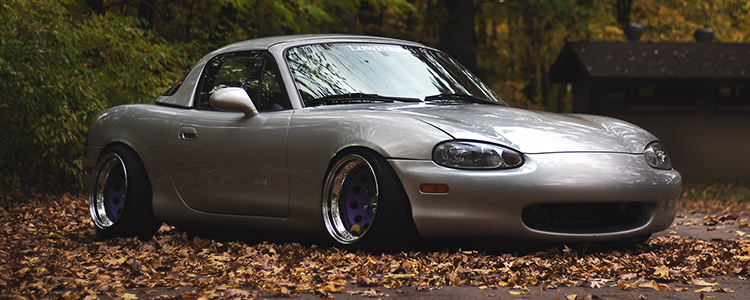
Editorial
The buyer's read
If you're buying a Roadster, the safest place to start is a documented NB from 1998 to 2005. That gives you the stronger BP engine, better body control than the NA, a glass rear window, and a chassis that doesn't have the early NA crankshaft worry. Skip anything under $3,000. A cheap Roadster almost always means rust you can't see and deferred maintenance you'll inherit. What you save on the purchase you'll spend in the first year on the soft top, the bushings, and the timing service.
If you want the NA experience, with the pop-up headlights and the Eunos badging, find a 1994 to 1997 car with the 1.8 BP. The early 1989 to 1992 cars are fine if the original crankshaft has been replaced, but you have to see the paperwork. The pop-ups will need attention at some point. The soft top will need replacing. The sills and frame rails need to be clean. None of that is hard. Just budget another couple thousand on top of the purchase price and you'll be in a good Roadster.
The special editions are where the money lives. A real Mazdaspeed MX-5 with the 180 horsepower turbo and the Bilstein shocks is worth chasing if you can verify it. The MX-5 SP with 200 horsepower is rarer at 100 units. The Club Sport at 50 units is the rarest of the run. Don't trust badges. Trust paperwork.
The one Roadster to avoid is a rough NA with rust in the frame rails and no service records. The chassis is cheap to buy. The chassis is expensive to repair. If you find a clean one with the crankshaft sorted and the rust under control, that's a different conversation. But those cars are getting harder to find.
FAQ
Frequently asked questions
- Are Eunos Roadsters (Mazda Miatas) cheap?
- Yes. Per the WP body, Miatas are relatively cheap regardless of condition — saving money toward a turbo kit or wheels.
- Is a Eunos Roadster (Mazda Miata) good for drifting?
- Yes, with caveats. Stock engines hold roughly 250 hp before bottom-end work is needed. For competitive drifting, the engine, transmission, LSD, suspension, and brakes all need upgrades (per WP).
- How long will a Miata last with OEM components?
- About 250,000 miles with reasonable care and maintenance, after which engine rebuild, suspension refresh, and paint work become typical (per WP).
- Is a Eunos Roadster (Mazda Miata) good for beginners?
- Yes. Low purchase and running costs make it a strong first car; WP body recommends it for teenagers and new drivers.
- Can I turbocharge a Eunos Roadster (Mazda Miata)?
- Yes, but the engine should be inspected before boost is added. WP recommends a turbocharger kit over sourcing individual components.
- Which Eunos Roadster production years should I avoid?
- Early NA cars (1989-1992) had crankshaft issues that could cause engine failure if the OEM crank was never replaced (per WP).
- Can I convert a hardtop Miata to a soft top?
- Yes. WP body confirms hardtop-to-soft-top conversions (and vice versa) are straightforward.
- Is the Eunos Roadster a woman's car?
- No — the Miata is gender-neutral. The size has led to that perception, but it is unrelated to the car's actual driver demographic (per WP).
Citations
Sources & references
- Eunos Roadster (Mazda Miata) — JDM Buy & Sell source article — JDM Buy & SellVerified
- Mazda MX-5 — Wikipedia — WikipediaVerified
- Eunos Roadster — Wikipedia — WikipediaVerified
- Mazda MX-5 Miata — Car and Driver model page — Car and DriverVerified
- Mazda Miata — MotorTrend model archive — MotorTrendVerified
- Mazda MX-5 Miata — current Mazda USA model page — Mazda North AmericaVerified
- Mazda MZR engine — Wikipedia — WikipediaVerified
- SkyActiv Technology — Wikipedia — WikipediaVerified
- Best-selling sports car — Guinness World Records — Guinness World RecordsVerified
Sources last verified: