The market sorting today is clear: SW20 Turbo cars (3S-GTE) lead values, especially late JDM Rev5 builds with the CT20b turbo and 245 hp rating. JDM-only G-Limited NA cars and the TRD2000GT widebody are the collector targets. The biggest pre-purchase priorities are turbo health (shaft play, smoke on boost, boost cut), cooling system integrity (long coolant pipes again, plus turbo heat soak), and chassis condition (rust on sills, arches, rear subframe; bent toe links from curb hits). USDM 3S-GTE cars were sold through 1995 only; for US buyers wanting a later-Rev turbo, JDM import is the path.
Buyer's guide
Toyota Mr2 W20 — Buyer's Guide & Specs
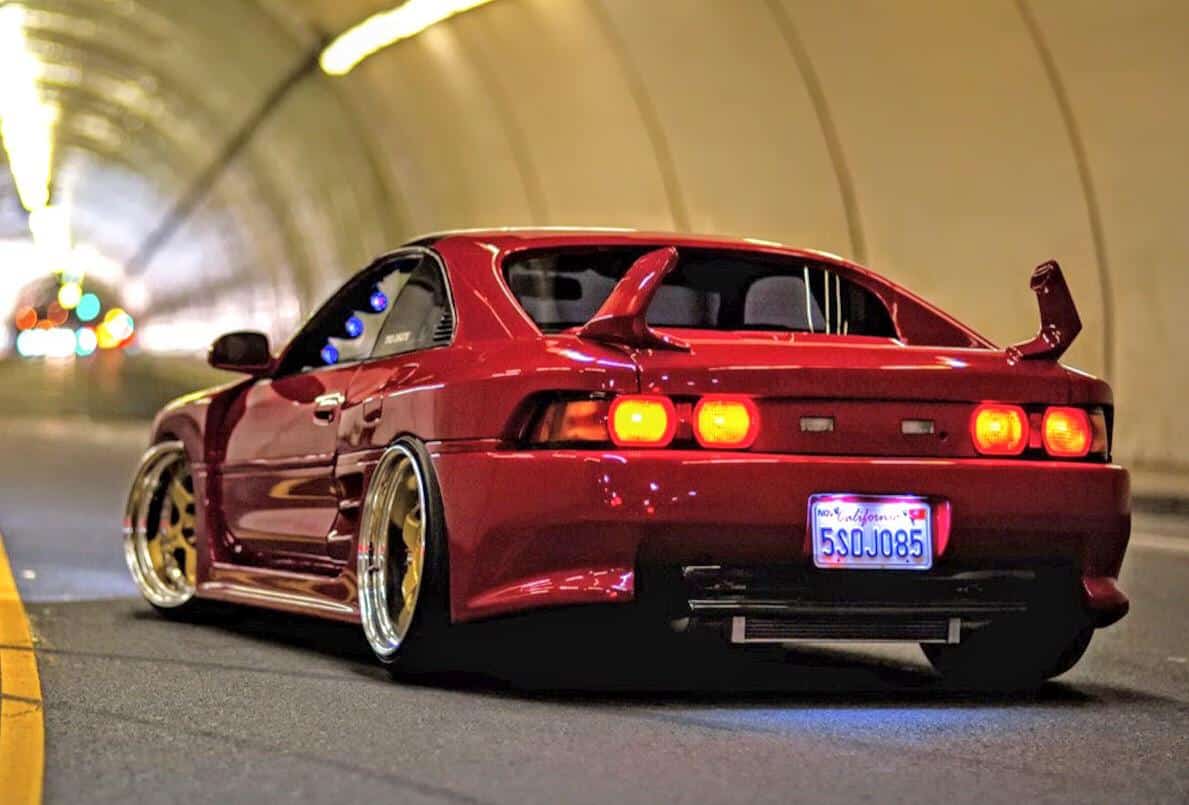
The second-generation MR2 (SW20, 1989-1999) earned the 'baby Ferrari' nickname for a reason — wider, lower, more aggressive than the AW11, with a 2.0L 3S-GTE turbo making 200-245 hp depending on year and market. The trade-off was 350-400 lbs more weight than the AW11 and a rearward weight bias that produced the snap-oversteer reputation that defined the SW20's first few years. Toyota issued five chassis revisions across the W20's life: a 1992 facelift (wider rear tires, larger wheels, revised geometry), a 1996 update (further damper, brake, and ECU calibration), and later Rev4/Rev5 builds that progressively addressed the early instability.
Looking to buy?
Browse Toyota Mr2 listings →
Key Takeaways
The MR2 had three generations from 1984 to 2007, and each one feels like a different car. The AW11 is the lightest and most analog. The SW20 is the fast one with the snap-oversteer reputation Toyota spent five chassis revisions fixing. The W30 Spyder is the softest and the easiest to live with, and it's also the cheapest MR2 to buy today.
- SW20 Turbo is the market’s price leader and most volatile
- Unmodified + documented cars bring the strongest premiums
- Rust and cooling issues drive inspection priorities
- ZZW30 is cheapest to run but watch pre-cats/oil use
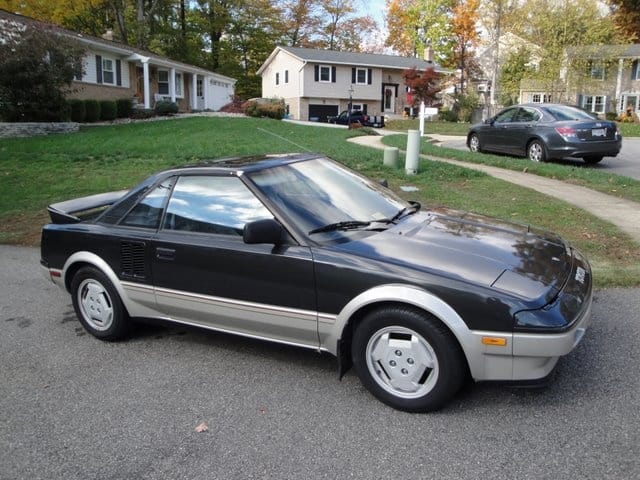
- AW11 is rising as a true 80s classic
- RHD imports add variety; condition matters more than spec
Technical Specifications
Every MR2 is mid-engine and rear-drive. The AW11 runs the 1.6 liter 4A-GE, or the supercharged 4A-GZE on later cars. The SW20 stepped up to the 2.0 liter 3S-GE naturally aspirated, or the 3S-GTE turbo that made anywhere from 200 to 245 hp depending on year and market. The W30 went back to a smaller 1.8 liter 1ZZ-FE at 138 hp, and put the focus back on weight instead of power.
Engine Options
| Engine | Displacement | Power | Boost | Notes |
|---|---|---|---|---|
| 3S-FE | 2.0L | 130hp @ 5400rpm | N/A | DOHC 16V economy NA; market varies |
| 3S-GE (Gen2) | 2.0L | 165hp @ 6800rpm | N/A | High-output NA; early SW20 |
| 3S-GE (Gen3) | 2.0L | 180hp @ 7000rpm | N/A | Revised head/intake; later SW20 |
| 3S-GTE (Gen2) | 2.0L | 200hp @ 6000rpm | 11 psi | CT26 turbo; early SW20 |
| 3S-GTE (Gen3) | 2.0L | 245hp @ 6000rpm | 13 psi | CT20b turbo; JDM late SW20 |
| 3S-GTE (Gen2) | 2.0L | 200hp @ 6000rpm | 11 psi | US rating; torque varies by year |
Transmission Options
| Type | Ratios | Availability | Notes |
|---|---|---|---|
| 5-speed Manual (C50/C52 family) | 3.166/1.904/1.310/0.969/0.815 | AW11 NA | Typical AW11 NA gearing; market varies |
| 4-speed Automatic | 2.810/1.549/1.000/0.705 | AW11 NA | Optional; ratios vary by market/year |
| 5-speed Manual (E51) | 3.230/1.913/1.258/0.918/0.731 | AW11 Supercharged | Stronger SC transaxle; LSD optional |
| 5-speed Manual (S54) | 3.285/1.960/1.322/1.028/0.820 | SW20 NA | Common NA transaxle; market varies |
| 4-speed Automatic (A241E family) | 2.810/1.549/1.000/0.705 | SW20 NA (some markets) | Optional; not on many performance trims |
| 5-speed Manual (E153) | 3.230/1.913/1.258/0.918/0.731 | SW20 Turbo (GT/GT-S) | Heavy-duty turbo transaxle; LSD optional |
| 5-speed Manual (C56/C59 family) | 3.166/1.904/1.310/0.969/0.815 | ZZW30 5MT | Lightweight; final drive varies by market |
| 6-speed Manual | 3.166/2.050/1.481/1.166/0.916/0.725 | ZZW30 (some markets/years) | Later models; market-specific availability |
| 6-speed SMT (Sequential Manual Transmission) | 3.166/2.050/1.481/1.166/0.916/0.725 | ZZW30 SMT | Electro-hydraulic clutch/shift; no torque conv |
Livability
- Headroom
- 37.0"
- T-top cars feel tighter; helmet room is limited
- Rear Seats
- None
- Strict 2-seater; no occasional rear perch
- Cargo
- 9-13 cu ft
- Two trunks; SW20 turbo trunk is smaller from heat
Variants & Trims
The MR2 variant list is where things get interesting if you import. The AW11 had G-Limited and Super Edition trims that stayed in Japan. The SW20 had the JDM-only G-Limited NA and the TRD2000GT widebody that Toyota Racing Development sold through Japanese dealers, and that's the rarest factory-blessed MR2 ever built. The W30 had the TTE Turbo dealer conversion through Toyota Team Europe and the VM180 special edition, and both are JDM or Euro only.
| Generation | Trim | Engine | Key Features |
|---|---|---|---|
| W20 (SW20, 2nd gen, 1989-1999) | MR2 (base, NA) | 3S-FE 2.0L NA | Mid-engine RWD, 5MT/4AT, pop-up lamps |
| W20 (SW20, 2nd gen, 1989-1999) | MR2 GT (JDM turbo) | 3S-GTE 2.0L Turbo | Turbo, intercooler, stronger E153 trans, LSD opt |
| W20 (SW20, 2nd gen, 1989-1999) | MR2 GT-S (US turbo) | 3S-GTE 2.0L Turbo | Turbo, intercooler, E153 5MT, sport suspension |
| W20 (SW20, 2nd gen, 1989-1999) | MR2 Turbo (EU/Gen) | 3S-GTE 2.0L Turbo | Turbo, intercooler, 5MT, market-specific spec |
| W20 (SW20, 2nd gen, 1989-1999) | G (JDM NA) | 3S-GE 2.0L NA | High-output NA, 5MT, sport interior |
| W20 (SW20, 2nd gen, 1989-1999) | G-Limited (JDM NA) | 3S-GE 2.0L NA | Top NA grade, luxury trim, options-heavy |
| W20 (SW20, 2nd gen, 1989-1999) | GTS (some markets NA) | 3S-GE 2.0L NA | High-output NA, sport suspension, 5MT |
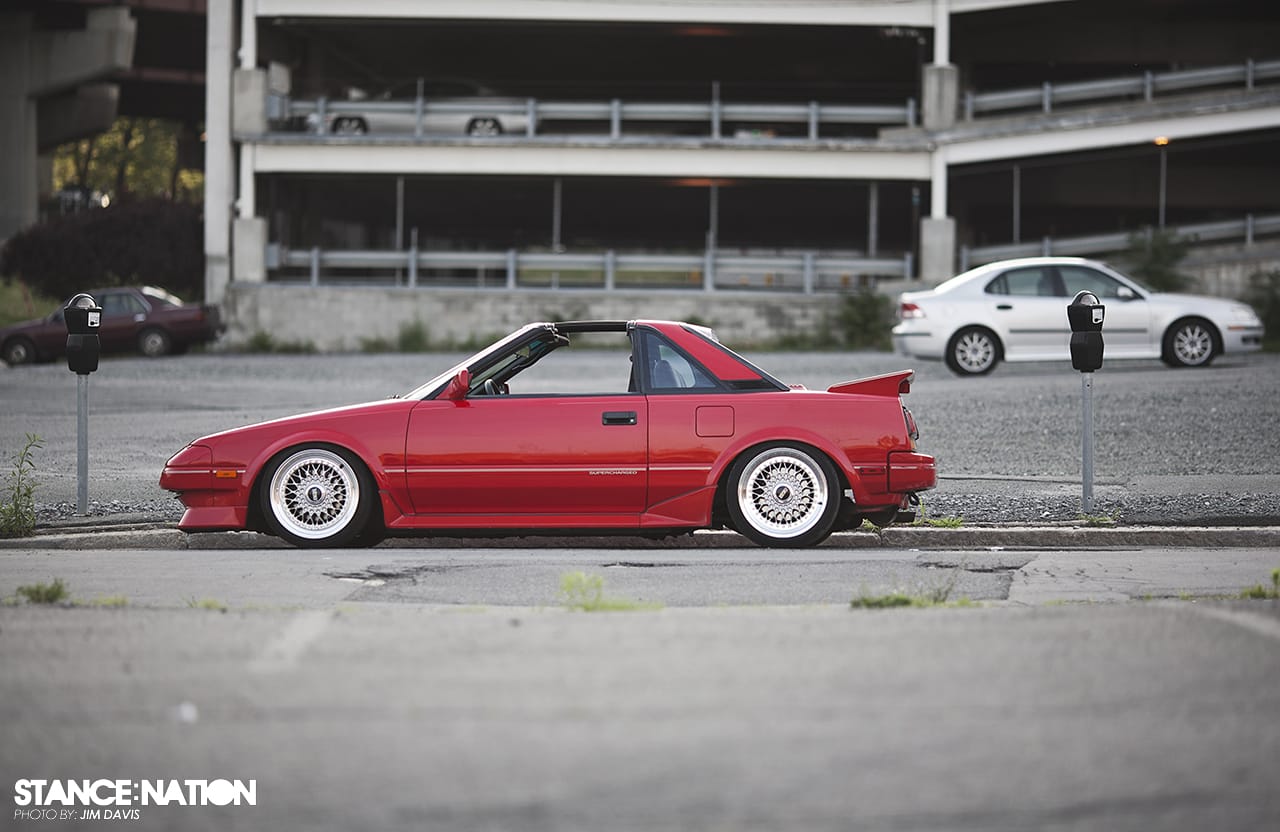
| W20 (SW20, 2nd gen, 1989-1999) | T-Bar (where offered) | 3S-FE/3S-GE/3S-GTE | Removable roof panels, added bracing |
| W20 (SW20, 2nd gen, 1989-1999) | MR2 GT-S 'TRD 2000GT' (Japan) | 3S-GTE 2.0L Turbo | Widebody, aero, TRD parts, very limited |
Should You Buy a Toyota Mr2 W20?
What you give up on an MR2 is just as obvious as what you get. Toyota built it light and mid-engine first, and practical second, so the strong points and the weak points have stayed pretty consistent across all three generations.
Why You'll Love It
- True mid-engine balance Steering feel and rotation are standout; rewards smooth inputs and good tires/alignment.
- Strong value-to-fun ratio Especially ZZW30 and NA SW20: low buy-in vs. high engagement compared to rivals.
- Turbo SW20 tuning headroom 3S-GTE responds well to sensible upgrades; period-correct builds remain desirable.
- Toyota parts ecosystem Service parts generally available; shared components help, though some trim is scarce.
- Distinct collector segmentation AW11 classic, SW20 icon, ZZW30 modern: clear lanes support long-term demand.
- Track-day capable platform Cooling, brakes, and suspension upgrades are well-documented; strong community support.
Why You Might Not
- Rust sensitivity (AW11/SW20) Sills, arches, floors, and rear subframe areas can be costly; repairs affect value heavily.
- Cooling system complexity Long coolant runs and air bleeding matter; overheating history is a major red flag.
- SW20 snap-oversteer reputation Early geometry and poor tires/alignment amplify risk; later revisions and setup fix much.
- Turbo heat/packaging challenges SW20 Turbo access is tight; neglected hoses, vacuum lines, and heat soak cause issues.
- ZZW30 pre-cat/oil concerns Early manifolds can shed material; oil consumption varies—compression and history matter.
- Modified cars are a gamble Swaps and big-turbo builds can be great, but documentation quality drives resale volatility.
Who Should NOT Buy This
- Anyone needing rear seats or child seat space
- Drivers over 6'2" wanting helmet clearance
- People who won't stay on top of cooling upkeep
- Buyers without budget for rust repair surprises
- Anyone expecting modern crash safety standards
- Drivers who panic-lift mid-corner in the wet
- People who won't run correct staggered tires
- Owners without a trusted mid-engine mechanic
- Those needing easy engine bay access for DIY
- Anyone wanting quiet highway cruising
- People in salt states buying a rusty example
- Buyers expecting cheap, quick parts availability
- Those who must pass strict emissions without work
- Anyone buying a heavily modified turbo on faith
- People who need lots of luggage for road trips
- Drivers who hate squeaks, rattles, and old plastics
- Anyone who can't tolerate occasional electrical gremlins
- People who won't do frequent fluid inspections
- Those wanting a low-effort daily in all weather
- Anyone uncomfortable with lift-off oversteer risk
Common Issues & Solutions
The MR2 is a reliable car for what it is, but each generation has its own thing. The AW11 rusts in the sills and the long under-body coolant pipes corrode. The SW20 chews tires and stresses the turbo if you drive it hard without watching heat soak. The W30 pre-cat sheds material into the engine on early cars and that's where the oil consumption stories come from. None of it is hidden, so a careful pre-purchase inspection catches most of it.
| Issue | Cause | Solution | Est. Cost |
|---|---|---|---|
| Overheating from air pockets | Poor bleeding; long coolant lines trap air | Proper bleed procedure; check caps, fans, leaks | $150-600 |
| Corroded coolant hard pipes | Road salt; dents trap moisture under clamps | Replace pipes/hoses; flush; use correct coolant | $600-1800 |
| Radiator end tank leaks | Age-cracked plastic tanks or corroded core | Replace radiator and cap; verify fan operation | $350-900 |
| Heater core leak | Internal corrosion; old coolant; electrolysis | Replace heater core; flush system; new hoses | $700-1600 |
| Timing belt overdue/failure risk | Unknown history; age cracking; tensioner wear | Belt, tensioner, idlers, water pump, seals | $900-2000 |
| Distributor O-ring oil leak | Hardened O-ring; oil wicks into harness | Replace O-ring; clean connector; inspect cap/rotor | $80-350 |
| Cam/crank seal leaks | Aged seals; crankcase pressure; poor prior work | Replace seals during timing service; check PCV | $300-900 |
| Valve cover gasket leak | Flattened gasket; overtorque; clogged PCV | New gasket and grommets; clean PCV system | $120-450 |
| Rear main seal seep | Age; crankcase pressure; worn seal lip | Replace during clutch job; verify PCV | $900-1800 |
| Idle hunting/stalling | Vacuum leaks; dirty ISC/IAC; AFM boot cracks | Smoke test; replace hoses/boot; clean ISC/IAC | $150-700 |
| ECU capacitor leakage | Aged electrolytic caps leak and damage traces | ECU recap/repair or replace with tested unit | $250-900 |
| Alternator heat failure | Mid-engine heat soak; worn bearings/diodes | Replace alternator; check belt tension and grounds | $350-900 |
| Starter heat soak no-crank | Worn solenoid; heat from exhaust area | Rebuild/replace starter; add heat shielding | $250-700 |
| Fuel pump weak/noisy | Age; clogged sock/filter; low tank running | Replace pump and filter; clean tank if needed | $300-900 |
| Injector seal fuel smell | Hardened O-rings/insulators leak under pressure | Replace injector seals; inspect rail and lines | $200-600 |
| Manual trans synchro wear | Hard shifts; old fluid; high mileage | Fluid change; adjust cables; rebuild if grinding | $120-2500 |
| Clutch master/slave leaks | Aged seals; contaminated fluid; rusted bores | Replace master/slave; flush; inspect hard line | $250-700 |
| Clutch wear/slip | Age; oil contamination; turbo torque abuse | Clutch kit; resurface flywheel; fix oil leaks | $900-2200 |
| Shifter cable wear/binding | Aged cable liners; heat; torn boots | Replace cables; lube linkage; adjust shifter base | $450-1200 |
| Rear toe link/bushing play | Worn bushings; bent links from curb hits | Replace toe links/bushings; full alignment | $500-1500 |
| Snap oversteer (SW20 early) | Early geometry + bad tires/alignment + lift-off | Correct tires, alignment; later arms/updates | $200-2000 |
| Steering rack leaks | Aged seals; torn boots let grit in | Rebuild/replace rack; new boots; align | $600-1600 |
| Brake caliper seizure | Corrosion; old fluid; stuck sliders/pistons | Rebuild/replace calipers; flush fluid; new hoses | $400-1200 |
| Rusty brake hard lines | Road salt; moisture under line clips | Replace lines; inspect proportioning valve | $500-1500 |
| Wheel bearing noise | Age; water intrusion; track use | Replace hub/bearing; inspect knuckle wear | $350-900 |
| Pop-up headlight failure | Worn gears/bushings; dirty limit switches | Rebuild motor; clean switches; align buckets | $150-600 |
| T-top leaks/wind noise | Shrunk seals; misadjusted latches; clogged drains | New seals; adjust latches; clear drains | $300-1200 |
| Cabin water intrusion rust | T-top/door leaks soak carpets and floor pans | Fix leaks; dry; repair floor rust properly | $300-4000 |
| Turbo oil smoke (SW20 turbo) | Worn seals/bearings; poor oiling; coked oil | Rebuild/replace turbo; fix PCV; improve cooling | $900-2500 |
| Boost leaks/poor spool | Cracked couplers; loose clamps; split IC hoses | Pressure test; replace couplers; proper clamps | $150-800 |
| Detonation/knock on boost | Bad fuel, heat soak, lean tune, weak ignition | Fix tune, plugs, coils; intercooler; verify AFR | $200-3000 |
| Exhaust manifold cracks | Heat cycling; thin cast sections; turbo stress | Replace manifold; new studs/gaskets; check mounts | $400-1800 |
| Catalyst clog/restriction | Oil burning; rich running; melted substrate | Replace cat; fix root cause (oil/tune/misfire) | $300-1500 |
| Rust: sills/quarters/floors | Water traps, clogged drains, winter salt | Proper metal repair; avoid filler-only fixes | $800-8000 |
| Bent suspension arms | Curb strikes; tow hook misuse; potholes | Replace arms/links; alignment; check subframe | $400-2000 |
| A/C weak or inop | R12 leaks; old hoses; compressor wear | Leak test; replace drier/hoses; proper conversion | $600-1800 |
Differences between JDM & USDM
The MR2 line diverged sharply between Japan and the US, generation by generation. On the AW11 (1984-89), USDM cars got the 4A-GE NA at 112-128 hp and the supercharged 4A-GZE; JDM kept the G-Limited and Super Edition special trims with higher-equipment interiors that never crossed the Pacific. On the SW20 (1989-99), the US got the 3S-GTE turbo (badged MR2 Turbo or GT-S, rated around 200 hp) but lost it after 1995 when Toyota pulled the turbo from the US market; Japan kept the 3S-GTE through 1999, gained the CT20b turbo on late JDM cars (245 hp), and kept the 3S-GE NA G-Limited as a parallel option. The TRD2000GT widebody kit was JDM-only. On the W30 (1999-2007), the divergence is the cleanest: USDM got the 1ZZ-FE NA Spyder only — no turbo, no SMT until later years — while Japan got the MR-S badge, the TTE Turbo dealer conversion through Toyota Team Europe (rare, around 200 limited builds), and the VM180 special edition. For US buyers the JDM-import math is: SW20 Turbo availability after 1995, late SW20 245 hp builds, and W30 TTE/VM180 trims are the main reasons to import a JDM car rather than buy a USDM example.
Pre-Purchase Inspection Checklist
Walk this list with the seller, not in front of them. The Critical items mean walking away if there's no paperwork. The High items can usually be priced into the deal. An MR2 hides almost nothing once you put it on a lift and look at the sills, the rear subframe, and the coolant pipes that run the length of the car.
Critical Priority
- Rust: sills/rockers Inspect outer/inner sills for bubbling, soft spots
- Rust: floor pans Lift carpets; check floors for patches and pinholes
- Rust: strut towers Inspect front/rear towers for cracks, rust, repairs
- Rust: subframes Probe rear crossmember and mounts for scaling rot
- Accident: rear rails Check rear chassis rails for kinks/weld seams
- Cooling system Verify stable temp; fans cycle; no air in system
- Oil level/condition Check for fuel dilution, glitter, burnt smell
- Compression test Warm test; cylinders within ~10% of each other
- Leakdown test Listen at intake/exhaust/crankcase for leakage
- Timing belt history Verify belt/water pump date; no proof = budget it
- Fuel system leaks Smell fuel; inspect lines/rail/injector seals
High Priority
- Rust: rear quarters Check rear arch lips and quarter seams for rust
- Rust: frunk well Check spare well/drains for rust and standing water
- Rust: rear trunk Inspect trunk corners and seams for rust/water marks
- Accident: front rails Check front rails/aprons for ripples and overspray
- T-top leaks (if eq.) Water test; check seals, drains, headliner stains
- Coolant pipes (under) Inspect long underbody pipes for dents/corrosion
- Radiator condition Check fins, end tanks, leaks, and cap condition
- Heater core Sweet smell/fogging indicates heater core leak
- Oil leaks Inspect cam seals, distributor, pan, rear main area
- Water pump Check weep hole, bearing noise, coolant crust
- Distributor O-ring Look for oil at distributor base and harness
- Turbo (if SW20 turbo) Check shaft play, smoke on boost, boost creep
- Knock/boost cut Test pull; sudden power drop indicates knock/boost
- Clutch engagement High bite/slip in 3rd/4th indicates worn clutch
- Clutch hydraulics Check master/slave leaks; pedal sinking
- Trans synchros 2nd/3rd grind on fast shift indicates wear
- Suspension bushings Check control arm/toe link bush cracks and play
- Ball joints/tie rods Check for torn boots and looseness
- Alignment/tire wear Inside rear wear suggests toe issues/bent links
- Brakes: calipers Check for seized sliders/pistons; uneven pad wear
- Brakes: lines/hoses Inspect hard lines for rust; hoses for cracking
- Steering rack Check for leaks, torn boots, dead spot on center
- Charging system Check 13.8-14.4V; dim lights indicate alternator
- ECU capacitors Check for intermittent faults; inspect ECU for leak
- Wiring hacks Look for alarm/boost controller splices and scotchlocks
- Tires correct sizing Staggered sizes correct; mismatched harms handling
- Test drive handling Lift-throttle oversteer feel; check snap behavior
- Service records Verify timing belt, coolant, brake fluid intervals
Medium Priority
- Panel gaps/paint Mismatch gaps/overspray suggests crash or respray
- Door seals/drains Check door bottoms for rust; verify drain holes open
- Idle quality Hunting idle suggests vacuum leaks/ISC issues
- Vacuum hoses Cracked hoses cause lean idle and poor cold start
- AFM/MAP signals Check for flat spots; inspect AFM boot for cracks
- Ignition system Check cap/rotor/wires; misfire under load
- Exhaust manifold Listen for ticking; check for cracks/leaks
- Catalyst condition Rattle/rotten smell; check for hacked exhaust
- Intercooler system Inspect couplers/clamps; boost leaks cause lag
- Shifter cables Check for stiffness/slop; inspect cable boots
- CV axles Clicking on turns; torn boots sling grease
- Wheel bearings Listen for hum; check play at 12/6 o'clock
- Struts/shocks Bounce test; look for leaks and uneven damping
- ABS (if equipped) Verify ABS light self-test and no stored faults
- Power steering (SW20) Check pump/lines; groan at lock indicates issues
- Engine mounts Excess movement/thunk on shifts indicates mounts
- Fuel pump noise Loud whine suggests tired pump or clogged filter
- Battery/grounds Inspect grounds for corrosion; slow crank issues
- Starter operation Heat soak click/no crank indicates starter wear
- Gauges/cluster Verify temp gauge accurate; tach steady
- HVAC operation Check all fan speeds, mode doors, and A/C cold
- A/C system Check compressor noise; convert R12/R134a quality
- Headlights (AW11/SW20) Pop-up motors smooth; no binding or uneven height
- JDM import docs Check export cert, auction sheet, mileage proof
Low Priority
- Charcoal canister Hard hot starts can be evap/canister issues
- Windows/locks Slow windows indicate regulators or guides
Generation History
AW11 (1st gen) (1984-1989)
- 4A-GE NA; supercharged 4A-GZE on select trims
- Lightweight, analog mid-engine handling
- Rust and age-related rubber/trim are key
- Collector interest rising for clean, stock cars
SW20 (2nd gen) (1989-1999)
- 3S-GTE Turbo (JDM/ROW); 5S-FE NA (US)
- Rev1-Rev5 updates; later cars more stable
- Turbo cars lead values; mods can hurt pricing
- Cooling system and turbo heat management critical
ZZW30 (3rd gen) (1999-2007)
- 1ZZ-FE 1.8 NA; 6-speed on later cars
- Light, simple roadster; strong track-day appeal
- Pre-cat failure risk on early cars; oil use
- 2ZZ/2GR swaps common; stock best for resale
Sales Numbers by Year
| Year | Notes |
|---|---|
| 1989 | AW11 production ends; SW20 launched in October |
| 1992 | SW20 first facelift (Rev2) — wider rear tires, larger wheels, revised suspension geometry |
| 1995 | Toyota withdraws SW20 Turbo from US market |
| 1996 | SW20 second update (Rev3) — further damper, brake, and ECU calibration changes; later Rev4/Rev5 follow |
Market Data
Production Numbers & Rarity
| Generation | Years | Total Built | Notes |
|---|---|---|---|
| W10 (AW10/AW11) | 1984-1989 | estimated ~163,000 | Global total estimated; exact by market varies |
| W20 (SW20) | 1989-1999 | estimated ~140,000 | Global total estimated; long run, many markets |
| W30 (ZZW30) | 1999-2007 | estimated ~61,000 | Lowest-volume generation; roadster-only |
Rarest variant: TRD 2000GT
Original MSRP & Pricing
Original MSRP: $11,000 at launch in 1985. USDM AW11 MR2 launch price in the United States for the 1985 model year, approximated from period buff-book road tests. A 1986 supercharged AW11 listed higher; SW20 Turbo cars opened around $20,000 in 1991 USD; W30 MR2 Spyder launched near $24,000 in 2000 USD. JDM Celsior-style trim-grade pricing was set in yen and varied by Super Edition / G-Limited / Supercharged packaging.
How It Compares
Among mid-engine sports cars of its era, the MR2 is the one that lasted. The Fiat X1/9 ended in 1989, the Pontiac Fiero in 1988, and the Honda S2000 in 2009. The Lotus Elise is the closer comparison on weight and feel, but it costs more to buy and a lot more to keep on the road. The MR2 wins on parts, reliability, and how much car you get for the money.
| Feature | W20 | Mazda RX-7 FD3S | Nissan 300ZX Z32 |
|---|---|---|---|
| Layout/drive | Mid-engine, RWD | Front-engine, RWD | Front-engine, RWD |
| Iconic turbo era | SW20 3S-GTE Turbo | 13B-REW twin-turbo | RB26DETT AWD |
| Stock power (typ.) | SW20 Turbo ~200-245hp | FD ~255hp (USDM) | Z32 TT ~300hp (US) |
| Weight (approx.) | ZZW30 ~2,150-2,250lb | NB ~2,300-2,450lb | S2000 ~2,800-2,900lb |
| Handling character | Neutral; rotates on throttle | Playful, forgiving | High-grip, sharp at limit |
| Practicality | 2-seat; limited storage | 2+2 hatch; more cargo | 2+2 coupe; usable rear |
| Reliability baseline | Strong if maintained | Rotary upkeep sensitive | Complex; aging electronics |
| Running costs | ZZW30 lowest; SW20 mid | Higher (rotary/turbos) | Higher (TT packaging) |
| Tuning headroom | SW20 Turbo strong | Strong but heat/rotary | Strong; drivetrain robust |
| Collector liquidity | Best: SW20 Turbo, AW11 SC | Very strong; pricey | Strong; broader buyer pool |
| Entry price | AW11/ZZW30 accessible | Often higher for clean | Similar or higher |
| Track-day suitability | Excellent; cooling key | Excellent; consumables low | Excellent; pricier tires/brakes |
| Rarity premiums | TRD/GT-S/Rev5 Turbo | Type R/Spirit R | Nismo/limited trims |
Comparable Alternatives
If the MR2 isn't the right car, the natural alternatives depend on which generation you were chasing. The Honda S2000 is the direct W30 rival with more power and more cachet. The Mazda MX-5 is the easier-to-live-with roadster. The Nissan 240SX or Silvia is the rear-drive alternative if you want a back seat. The Toyota AE86 is the analog corner-carver if the AW11 spoke to you.
Mazda MX-5 Miata NA/NB
Cheaper, simpler RWD fun; huge parts support
Honda S2000 AP1/AP2
Higher-rev roadster; stronger resale and cachet
Porsche Boxster 986
Mid-engine like MR2; more power, higher upkeep
Lotus Elise S2
Ultra-light mid-engine benchmark; pricey but pure
Nissan 350Z Z33
More torque and practicality; heavier, easier to live with
In Pictures
The Buyer's Read
If you're buying an MR2, the first decision is which generation. The AW11 is the cheapest entry into a documented MR2 right now, but clean ones are getting harder to find. The SW20 is where the money lives, and a Turbo with paperwork is the one most buyers want. The W30 Spyder is the modern-feeling option and still the value play, but you have to accept the soft top and the lower power figure.
For an AW11, look for a stock or lightly modified car with timing belt history and original interior. The supercharged 4A-GZE cars cost more than the NA 4A-GE cars, and the SC12 supercharger is durable if it's been maintained. The deal breakers on an AW11 are rust in the sills and arches, corroded coolant pipes under the floor, and pop-up headlight motors that have given up. None of those are cheap to fix on a car worth $15,000.
For an SW20, the chassis revision matters less than the tires and the bushings. A late JDM Rev3 to Rev5 car is more predictable than a 1989 to 1991 Rev1, but any SW20 on correct staggered tires and a proper alignment is fine. The Turbo cars are the ones to chase. JDM imports get you the late 245 hp CT20b builds and the G-Limited NA trim that never came to the US. The TRD2000GT widebody is the holy grail and you'll know if you can afford one.
For a W30, the pre-cat in the exhaust manifold is the one thing to verify. Early 2000 to 2002 cars are the ones that shed material into the engine and burn oil. A compression test and the oil change history tell you everything. Budget for a pre-cat delete or a manifold swap if you're buying an early car. The TTE Turbo and VM180 trims exist but they're rare and they're JDM or Euro only, so most US buyers end up in a stock 1ZZ-FE Spyder.
Frequently Asked Questions
- Which MR2 generation is best to buy?
- For value: ZZW30. For turbo icon: SW20 Turbo. For classic: AW11. Condition beats spec.
- Are SW20 MR2s really dangerous (snap oversteer)?
- Early cars can bite with bad tires/alignment. Proper setup and later revisions make SW20 predictable.
- What are the biggest MR2 inspection points?
- Check rust, cooling/overheat history, suspension bushings, and crash repairs. Verify maintenance records.
- What should I watch for on a ZZW30 MR2 Spyder?
- Early cars: pre-cat risk and oil consumption. Confirm manifold status, compression, and oil-change history.
- Are turbo SW20s expensive to maintain?
- They can be if neglected. Budget for hoses, cooling, turbo heat items, and tight-access labor.
- Do modifications help or hurt MR2 value?
- Usually hurt unless high-quality and documented. The market pays most for stock/period-correct builds.
- What MR2 trims are most collectible?
- AW11 Supercharged, SW20 Turbo (later Rev), rare aero/TRD parts, and low-mile, original paint cars.
- Is an imported JDM MR2 worth it in the US?
- Often yes for SW20 Turbo availability. Prioritize rust-free examples and verify parts/support for RHD items.
Sources & References
- Toyota MR2 — encyclopedic overview — WikipediaVerified
- Toyota MR2 W10 — first-generation reference — WikipediaVerified
- Toyota MR2 W20 — second-generation reference — WikipediaVerified
- Toyota MR2 W30 — third-generation reference — WikipediaVerified
- MR2 Owners Club — pros and cons discussion — MR2 Owners ClubVerified
- MR2.com forums — pros and cons of owning an MR2 — MR2.comVerified
- PistonHeads gassing — MR2 ownership thread — PistonHeadsVerified
- MR2.com forums — common MR2 problems — MR2.comVerified
- PistonHeads gassing — MR2 common problems thread — PistonHeadsVerified
- MR2 Turbo problems and cures (forme syn) — formesyn.comLink dead View archived ↗
- Bring a Trailer results: Toyota MR2 — Bring a TrailerVerified
- Classic.com market data: Toyota MR2 — Classic.comVerified
- Toyota MR2 history — Car and Driver retrospective — Car and DriverVerified
- Toyota MR2 retrospective — Road & Track — Road & TrackVerified
- Toyota MR2 Spyder — encyclopedic overview — WikipediaVerified
Sources last verified: