Today the PP1 buying market rewards stock, documented cars over modified ones. The cars that lived their lives in Japan and arrived in the US after 2016 are usually the cleanest, but watch the underbody: rear arches, sills, and the trunk floor all reach a similar end-of-life point at 30+ years. The MTREC engine is durable when kept on schedule, but high-rpm life leaves a mark on neglected examples — oil consumption, valvetrain noise, and worn rings are the failure modes when service is skipped. Trim and weatherstrip are the parts-supply pain point; Honda's own spares network has thinned over time and the strongest Beat communities (in Japan, the UK, and increasingly North America) carry the load on roof seals, interior trim, and one-off PP1-specific parts.
Buyer's guide
Honda Beat PP1 — Buyer's Guide & Specs
The PP1 is the only chassis the Beat ever wore. Production ran from May 1991 to February 1996 under a single platform code, with two mainstream sub-variants (commonly catalogued as PP1-100 and PP1-110) covering cosmetic and minor mechanical updates across the run. The layout is fixed: 656 cc SOHC three-cylinder mounted transversely behind the seats, driving the rear wheels through a 5-speed manual transaxle, with the E07A's MTREC individual-throttle setup producing 64 PS at 8,100 rpm. Curb weight came in around 760 kg. Aluminum body panels, a power-folding soft top, and four-wheel discs were standard — the last unprecedented for a kei car at the time.
Key Takeaways
The Beat ran from 1991 to 1996 on a single chassis, the PP1. There's no second generation, no facelift to speak of, just a few late-run trim updates and color editions. That makes shopping simpler than most JDM cars on this site. You're picking a year and a condition, not weighing one generation against another.
- 1991-1996 mid-engine kei roadster; 9k-rpm vibe
- Rust/underbody condition drives price more than miles
- Stock cars with records outperform modified examples
- PP1/E07A parts availability is OK, trim is harder
- US-legal now; demand boosted by 25-year imports
- Slow but special; buy for feel, not straight-line speed
Technical Specifications
Every Beat runs the same 656cc E07A three-cylinder with MTREC individual throttle bodies, making 64 PS at 8,100 rpm. The 5-speed manual is what you want. The 3-speed automatic exists, and it's rare, but it's not the Beat you came for.
Engine Options
| Engine | Displacement | Power | Boost | Notes |
|---|---|---|---|---|
| E07A (MTREC) | 0.656L | 64 PS @ 8100rpm (63 hp) | N/A | DOHC 12V I3, ITBs, 9000rpm redline |
| E07A (MTREC) | 0.656L | 64 PS @ 8100rpm (63 hp) | N/A | Torque 60 Nm @ 7000rpm (44 lb-ft) |
Transmission Options
| Type | Ratios | Availability | Notes |
|---|---|---|---|
| 5-speed Manual | 3.250/1.894/1.259/0.937/0.771 | All MT trims (Base/Version C/Version Z) | Mid-engine transaxle; final drive varies |
| 3-speed Automatic | 2.888/1.551/1.000 | Optional on Base/Version C/Version Z | Torque converter; final drive varies |
Livability
- Headroom
- 36.5"
- Tight with helmet; tall drivers hit roof
- Rear Seats
- None
- Strict 2-seater; no extra passenger capacity
- Cargo
- 4.0 cu ft
- Small trunk; weekend bags only; top storage eats space
Variants & Trims
There were three named special editions during the run. Version F came in Aztec Green Pearl with alloy wheels. Version C was Captiva Blue Pearl with white alloys. Version Z got two color options, black gauges, a rear spoiler, and an exhaust finisher. None of them change the driving experience, but the rarer colors do pull a small premium on stock cars.
| Generation | Trim | Engine | Key Features |
|---|---|---|---|
| PP1 (1991-1996) | Beat (Base) | E07A 656cc I3 NA (MTREC) | MTREC ITBs, mid-engine RWD, 5MT, aluminum panels |
| PP1 (1991-1996) | Beat (Base) + 3AT | E07A 656cc I3 NA (MTREC) | MTREC ITBs, mid-engine RWD, 3AT, aluminum panels |
| PP1 (1991-1996) | Beat Version C | E07A 656cc I3 NA (MTREC) | MTREC ITBs, mid-engine RWD, 5MT, A/C |
| PP1 (1991-1996) | Beat Version C + 3AT | E07A 656cc I3 NA (MTREC) | MTREC ITBs, mid-engine RWD, 3AT, A/C |
| PP1 (1991-1996) | Beat Version Z | E07A 656cc I3 NA (MTREC) | MTREC ITBs, mid-engine RWD, 5MT, A/C, audio |
| PP1 (1991-1996) | Beat Version Z + 3AT | E07A 656cc I3 NA (MTREC) | MTREC ITBs, mid-engine RWD, 3AT, A/C, audio |
| PP1 (1991-1996) | Beat (Special Edition) | E07A 656cc I3 NA (MTREC) | Limited colors/trim, MTREC ITBs, mid-engine RWD |
Should You Buy a Honda Beat PP1?
The Beat is a car you buy with your eyes open. It's slow, tight inside, and rusts if you let it. But it revs to 9,000 and steers like a go-kart, and that's the trade most owners are happy with.
Why You'll Love It
- Mid-engine balance MR layout gives playful rotation and great steering feel at sane speeds.
- High-rev character E07A loves revs; 9k redline makes every drive engaging despite low power.
- Kei-size usability Tiny footprint is city-friendly; easy to store; low tire/brake costs.
- Analog open-top fun Simple controls, light weight, and roof-off driving deliver classic roadster vibes.
- Growing collector support Rising global interest; more importers and parts channels than a decade ago.
- Strong enthusiast community Active owner groups help with troubleshooting, parts sourcing, and guides.
Why You Might Not
- Rust is the #1 killer Sills, floors, rear arches, subframes; repairs can exceed car value quickly.
- Slow by modern standards Great momentum car, but highway passing and hills can feel strained.
- Parts scarcity for trim Weatherstrips, interior plastics, roof seals can be hard/expensive to source.
- Age-related cooling issues Radiator, hoses, fans, and bleeding can cause overheating if neglected.
- Cabin ergonomics Tight for tall drivers; limited storage; noise and heat are part of the deal.
- Modifications can hurt value Engine swaps/body kits often reduce buyer pool; stock examples command premiums.
Who Should NOT Buy This
- Drivers over 6'1" or broad-shouldered
- Anyone needing rear seats or child seat
- People who can't wrench or pay specialty labor
- Owners without indoor storage (leaks/rust risk)
- Salt-belt buyers wanting a daily winter car
- Anyone expecting modern crash safety
- Drivers who need highway passing power
- People who hate high-rpm driving to make speed
- Those needing reliable cold A/C in hot climates
- Buyers who need easy parts availability locally
- Anyone allergic to squeaks, rattles, and wind noise
- People who won't do timing belt by time interval
- Those expecting quiet cabin or good sound system
- Commuters stuck in traffic; cooling must be perfect
- Track-day users unwilling to upgrade cooling/brakes
- Buyers who want automatic transmission
- Anyone expecting low running costs like a Civic
- People who can't tolerate occasional water intrusion
- Owners in strict emissions areas with inspections
- Anyone wanting one car to do everything
Common Issues & Solutions
The Beat is mechanically simple, so when things go wrong it's almost always age, not engineering. The cooling system is the biggest one to watch. Long coolant pipes run under the floor and trap air, and the radiator end tanks crack with age. Old fuel hoses leak. Distributors weep oil. None of this is exotic. It's all the usual 30 year old Honda stuff, just packed into a smaller car.
| Issue | Cause | Solution | Est. Cost |
|---|---|---|---|
| Overheating/air pockets | Long coolant lines trap air; poor bleeding | Proper bleed, new cap, inspect pipes/hoses | $150-600 |
| Radiator end tank cracks | Age-brittle plastic tanks and corrosion | Replace radiator; verify fan switch operation | $350-900 |
| Coolant pipe corrosion | Underfloor steel pipes rust from road salt | Replace pipes/hoses; flush system thoroughly | $600-1800 |
| Water pump seep/whine | Old pump bearings/seal; overdue timing service | Timing belt kit + pump + seals; set timing | $900-1800 |
| Timing belt overdue risk | Unknown history; age cracks despite low miles | Replace belt, tensioner, pump, cam/crank seals | $900-1800 |
| Distributor oil leak | Distributor shaft O-ring and internal seal fail | Reseal or replace distributor; clean cap/rotor | $200-700 |
| Misfire at high rpm | Weak coil/cap/rotor; old wires; bad grounds | Full ignition refresh; verify charging voltage | $250-800 |
| Rough idle/hunting | Dirty IACV/FITV; vacuum leaks; base idle off | Clean/repair valves, replace hoses, set idle | $150-600 |
| Fuel pump weak/whine | Aged pump; clogged sock; low tank running | Replace pump + filter; inspect tank for rust | $300-900 |
| Fuel smell/leaks | Cracked rubber lines and aged clamps | Replace all rubber fuel hoses with EFI-rated | $250-700 |
| Fuel tank rust contamination | Condensation + age; sitting with low fuel | Tank clean/coat or replace; new pump/filter | $600-1800 |
| Oil consumption/smoke | Worn rings/valve seals from high-rpm life | Compression/leakdown; rebuild if out of spec | $2500-6000 |
| Valve train noisy | Valve lash out of spec; neglected adjustments | Adjust valves; inspect cam lobes for wear | $200-500 |
| ECU capacitor leakage | Aging electrolytic caps leak and corrode traces | ECU recap/repair; inspect harness for damage | $200-800 |
| Charging/voltage issues | Old alternator, weak grounds, corroded terminals | Clean grounds; replace alternator/battery as needed | $200-700 |
| 2nd/3rd synchro grind | Wear from hard shifting; wrong/old gear oil | Try correct MTF; rebuild trans if persistent | $120-2500 |
| Clutch slip or chatter | Worn disc/pressure plate; oil contamination | Clutch kit; resurface flywheel; fix oil leaks | $700-1600 |
| Clutch master/slave leak | Old seals; moisture in fluid corrodes bores | Replace master/slave; flush fluid; inspect line | $250-650 |
| CV boot tears | Age cracks; lowered suspension increases angles | Replace boots/axles; correct ride height/alignment | $250-900 |
| Wheel bearing noise | Age, water ingress, track use, wrong torque | Replace bearings; inspect hubs and torque properly | $350-900 |
| Ball joint wear | Age and torn boots; lack of grease retention | Replace joints/arms; align immediately | $400-1200 |
| Bushing deterioration | 30+ year rubber cracks; oil contamination | Replace bushings; consider quality rubber not cheap poly | $600-2500 |
| Brake caliper seizure | Old fluid; corrosion on pistons/sliders | Rebuild/replace calipers; new hoses; flush fluid | $400-1200 |
| Brake line corrosion | Road salt rusts hard lines underbody | Replace hard lines; inspect flex lines; bleed system | $600-1800 |
| Pop-up headlight failure | Worn motor bushings/gears; dried grease | Rebuild motors; lube linkages; check relays | $200-800 |
| Window regulator slow | Dry tracks, tired motors, worn regulators | Clean/lube tracks; rebuild/replace regulator/motor | $150-600 |
| Water leaks into cabin | Shrunk roof seals; clogged drains; poor top fit | Replace seals, clear drains, adjust latches/top | $300-2000 |
| Rust in sills/floors | Water intrusion + age; hidden rot under carpets | Cut/weld proper metal; avoid filler patches | $1500-8000 |
| Heater core leak | Corrosion from old coolant; age fatigue | Replace core; flush system; replace hoses/clamps | $600-1500 |
| A/C weak or inop | R12 leaks, old seals, tired compressor | Leak test; convert to R134a properly; replace drier | $800-2500 |
| Exhaust manifold crack/leak | Heat cycling; thin material; missing supports | Weld/replace manifold; replace gaskets; add support | $250-1200 |
| Engine mount collapse | Old rubber; oil saturation; hard driving | Replace mounts; recheck exhaust clearance | $300-900 |
| Hard hot starts | Leaky injectors, weak pump, heat soak sensors | Fuel pressure test; service injectors; replace pump | $200-1200 |
Differences between JDM & USDM
The Honda Beat has no USDM equivalent. Honda never homologated the Beat for sale outside Japan — it was distributed exclusively through Honda Primo dealerships and built only to JDM kei-class regulations (660 cc displacement cap, 64 PS power cap, 3.4 m maximum length, RHD). Every Beat in North America, the United Kingdom, Australia, or Europe is a gray-market import. In the United States that means the car must clear the federal 25-year rule before it can be legally imported as a non-conforming vehicle: 1991 cars became eligible in 2016 and the final 1996 production reached eligibility in 2021. State-level rules vary — some states (notably those that classify kei vehicles as off-road or low-speed) restrict registration even after federal eligibility. There is no LHD conversion factory option, no export-spec emissions package, no separate VIN sequence. The Beat is JDM-only by design and by paperwork.
Pre-Purchase Inspection Checklist
Walk this list with the seller, not in front of them. Critical items mean you walk away if the paperwork isn't there. High items can be priced into the deal. Bring a magnet for the sills and floor pans, and don't skip the underbody photos before you fly out to see a Beat.
Critical Priority
- VIN/Chassis Plate Match VIN on bulkhead, title, auction sheet
- Import/Title Status Verify legal import docs; no bonded/gray title
- Front Frame Rails Inspect rails for kinks, welds, rust swelling
- Sills/Rocker Panels Probe pinch welds; look for bubbling/patches
- Floor Pans Lift carpets; check footwells for rust/holes
- Oil Level/Condition Check for fuel smell, glitter, sludge
- Compression Test Warm test; cylinders within 10% of each other
- Leakdown Test Confirm ring/valve seal; avoid >15% leakage
- Coolant Leaks Inspect hoses, radiator, pipes under floor
- Cooling Bleed Watch for air burps/overheat; heater output
- Timing Belt History Demand proof; belt+WP+seals within 5 yrs
- Fuel Lines Inspect rubber lines for cracks; smell for fuel
- Ball Joints Check for torn boots, play; clunk over bumps
- Brake Lines Inspect hard lines for rust; flex lines cracks
- Test Drive Heat Drive 20+ min; watch temp gauge stability
- Exhaust Smoke Blue smoke = oil; white sweet = coolant
- Cooling System Pressure Pressure test; hold pressure; no hose balloon
High Priority
- Accident Evidence Check apron seams, overspray, uneven gaps
- Rear Frame/Trunk Floor Check trunk floor for rust, crash pulls, seams
- Rear Wheel Arches Inspect inner arch lips for rot and filler
- Windshield Frame Check A-pillar base for rust under seals
- Targa Roof Seals Look for torn seals; water trails on pillars
- Soft Top Drains Pour water; confirm drains flow behind doors
- Door Bottoms Check drain holes; rust at seams and hem
- Underbody Coating Look for fresh undercoat hiding rust repairs
- Engine Cold Start Start cold; listen for top-end tick/knock
- Oil Leaks Check cam cover, distributor, pan, rear main
- Radiator Condition Check fins, end tanks, fan operation
- Thermostat/Fan Verify fan cycles; no creeping temp in traffic
- Water Pump Noise Listen for bearing whine; check weep hole
- Ignition System Check cap/rotor/wires; misfire under load
- Distributor Seals Look for oil inside cap; wet distributor body
- Fuel Pump Noise Whine at key-on; stumble at high rpm
- Fuel Tank Rust Check filter for rust; look inside if possible
- Idle Quality Warm idle stable; no hunting or stalling
- Engine Mounts Check for excessive rock; clunk on shifts
- Clutch Engagement Check slip in 4th/5th; high bite point
- Clutch Hydraulics Inspect master/slave leaks; soft pedal
- Transmission Syncros 2nd/3rd grind on fast shifts; cold vs warm
- Axle Boots Check inner boots for splits; grease sling
- Wheel Bearings Listen for hum; check play at 12/6 o'clock
- Suspension Bushings Check cracked control arm bushings, toe links
- Steering Rack Check for play, torn boots, binding
- Alignment/Tire Wear Uneven wear suggests bent arms or bad bushings
- Brake Calipers Check seized sliders/pistons; uneven pad wear
- Brake Master/Booster Pedal sink or hiss; check fluid color
- Tires Age/Size Check date codes; correct staggered sizing
- Battery/Charging Check voltage 13.8-14.5V; corroded grounds
- Fuse Box/Relays Look for melted terminals; hacked wiring
- ECU Condition Check for capacitor leak/corrosion in ECU
- Cooling Fans Confirm both fans run; check fan switch
- Heater Core Sweet smell/fog; damp carpet indicates leak
- Water Intrusion Check under seats for damp, mildew smell
- High RPM Pull Rev clean to redline; no breakup at 7-9k
- Engine Blow-by Check oil cap puffing; smoke on decel/idle
- Service Records Confirm belt, fluids, brakes, tires, valve lash
Medium Priority
- Front Fenders Check lower fender rust behind liners
- Roof Latches Confirm latches lock tight; no rattles on road
- Soft Top Condition Check rear window haze, tears, stitching, fit
- Door Hinges Check sag; lift door for hinge pin wear
- Front Trunk Seal Check for water intrusion; rust around latch
- Valve Adjustment Listen for loud valvetrain; ask last lash set
- IACV/FITV Check for high idle cold/hot; surging
- Vacuum Leaks Inspect cracked hoses; brake booster line
- Exhaust Manifold Check for cracks, leaks, missing heat shields
- Catalyst/Emissions Rattle at idle; check for hollowed cat
- Shifter Bushings Excess play; vague gates; check linkage wear
- Parking Brake Check hold on incline; cables not seized
- Wheels/Offset Check for spacers, rubbing, cracked wheels
- Main Grounds Inspect chassis/engine grounds; voltage drop
- A/C Operation Check compressor clutch, cold vent temps
- A/C Conversion Verify R134a conversion done right; no leaks
- Power Windows Slow windows suggest regulator/motor issues
- Lights Pop-ups Check smooth operation; no grinding or stutter
- Headlight Motors Listen for clicking; check bushings/gears
- Seat Rails Check for cracks, wobble; sliders lock
Low Priority
- Instrument Cluster Check tach/speedo stable; backlight works
- Door Locks Check actuators and key cylinders; sticky locks
- Wipers/Washer Check intermittent; washer pump and jets
- Seat Bolsters Inspect tears/foam collapse; hard to source
- Spare Parts Included Ask for OEM roof seals, belts, filters, manuals
Generation History
Beat PP1 (single gen) (1991-1996)
- Mid-engine, RWD kei roadster layout
- E07A 656cc NA; ~64 PS; 9,000 rpm redline
- 5MT standard; rare 3AT option
- Targa-style roof panels; open-top focus
- Most are JDM RHD; limited export presence
- Lightweight chassis; quick steering feel
Late-run updates (1994-1996)
- Minor trim/option changes; special colors
- Aging plastics/soft top wear becomes common
- More examples now show rust and prior repairs
- Collector focus shifts to originality/records
Market Data
Production Numbers & Rarity
| Generation | Years | Total Built | Notes |
|---|---|---|---|
| PP1 (1991-1996) | 1991-1996 | 33,600 (estimated) | Single generation; JDM-only kei roadster |
Original MSRP & Pricing
Original MSRP: ¥1,388,000 at launch in 1991. Launch JDM list price at Honda Primo dealerships, May 1991. The Beat was never sold outside Japan, so there is no comparable USDM MSRP. Wikipedia and period Japanese press cite a launch sticker near ¥1,388,000 for the base car.
How It Compares
Of the kei ABC trio, the Beat is the rev-happy one, the Cappuccino is the turbo one, and the AZ-1 is the collector unicorn. The table below leans toward where the Beat wins, on parts support and stock-car desirability.
| Feature | PP1 | Suzuki Cappuccino EA11R | Autozam AZ-1 PG6SA |
|---|---|---|---|
| Layout/drive | MR, RWD | MR, RWD | MR, RWD |
| Engine type | 656cc NA I3 (E07A) | 657cc turbo I3 (F6A) | 657cc turbo I3 (F6A) |
| Power (JDM cap) | 64 PS (kei limit) | 64 PS | 64 PS |
| Torque feel | Peaky; needs revs | Turbo midrange punch | Turbo punch; short gearing |
| Transmission | 5MT common; rare 3AT | 5MT common | 5MT common |
| Open-top | Targa panels | Targa/convertible roof | Fixed roof; gullwing |
| Practicality | Low; tiny storage | Low; slightly better cargo | Very low; tight cabin |
| Driving vibe | Rev-happy, playful MR | Turbo, classic FR-ish feel | Go-kart exotic mini-supercar |
| Reliability baseline | Good if maintained | Good; turbo adds heat load | Good; parts/trim tougher |
| Rust risk | High; underbody critical | High; sills/arches common | Moderate-high; age dependent |
| Collector premium | High for stock, clean | High; turbo cachet | Very high; rarity/gullwing |
| US import demand | Strong; iconic Honda kei | Strong; 'kei Miata' pitch | Strong; novelty factor |
| Running costs | Low; simple NA | Low-mod; turbo upkeep | Low-mod; body/trim pricey |
Comparable Alternatives
If the Beat doesn't end up being the right car, look at the Suzuki Cappuccino for turbo torque, the Autozam AZ-1 if you want the gullwing-door collector route, or the Mazda Miata NA if you want something bigger and faster with cheap parts. The S2000 isn't really a Beat alternative, but it scratches the same Honda high-rev itch.
Suzuki Cappuccino
Turbo kei roadster; similar size; more torque feel
Autozam AZ-1
MR kei with gullwings; rarer; more collectible
Daihatsu Copen L880K
Later kei roadster; turbo; better refinement; LHD markets vary
Mazda MX-5 Miata NA
Bigger, faster, easier parts; similar open-top purity
Toyota MR2 SW20
MR handling theme; far quicker; still analog 90s feel
In Pictures
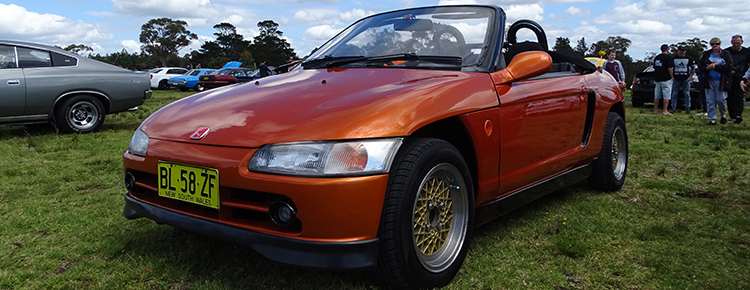
The Buyer's Read
If you're buying a Beat, the right move is to ignore the cheap ones and pay for a documented, stock, rust-free car. The Beat is small, simple, and easy to maintain when it's healthy, but it's a nightmare when the underbody is rotten. Sills, floors, rear arches, and the trunk floor are the places that fail, and proper rust repair on a Beat costs more than most people pay for the whole car. A magnet, a flashlight, and 15 minutes under the car will tell you most of what you need to know.
The second thing to check is the cooling system. The Beat's coolant pipes run a long way under the floor to reach the front-mounted radiator, and they trap air, corrode from road salt, and crack with age. A Beat that overheats once will warp a head, and that turns a fun weekend car into a six month project. Look for receipts showing the radiator, pipes, hoses, and water pump have been done. If the seller can't show you that, factor another two thousand into the deal.
Stock cars with records are worth more than modified ones. The Beat community pays a premium for original air conditioning, original wheels, original seats, and the original radio. Period-correct upgrades are fine. Engine swaps, turbo kits, and cut springs are not. If you find a car that's been left alone and serviced on time, that's the one to buy. The MTREC engine will rev to 9,000 all day long if you keep the oil fresh and the cooling system tight, and that's the whole point of owning a Beat.
The 5-speed manual is the only Beat worth chasing. The 3-speed automatic exists, and you'll see one for sale every now and then, but it makes a slow car slower and erases most of the personality.
Frequently Asked Questions
- What years were the Honda Beat produced?
- Honda Beat (PP1) ran 1991-1996. It’s a single generation with minor late-run trim changes.
- When is the Honda Beat US-legal under the 25-year rule?
- Earliest 1991 cars became legal in 2016; 1996 cars became legal in 2021 (federal 25-year rule).
- What’s the biggest thing to check before buying?
- Rust and prior repairs: sills, floors, rear arches, subframes, and jacking points. Underside photos are essential.
- Are Honda Beats reliable as daily drivers?
- They can be, but age matters: refresh cooling, belts, hoses, and seals. Expect classic-car upkeep, not modern reliability.
- Manual vs automatic: which is better?
- Buy the 5MT for value and experience. The 3AT is rarer but generally less desirable and slower.
- What are common mechanical problems?
- Cooling issues, old rubber hoses, oil leaks, worn engine mounts, and tired suspension bushings. Neglect shows quickly at 9k rpm.
- Do modifications help or hurt value?
- Most mods hurt resale; collectors pay more for stock cars with records. Period-correct upgrades are easier to sell than swaps.
- What’s a fair price range today?
- Driver-quality cars cluster in the mid-teens to 20s; top-condition, low-rust examples can reach the high-20s to 30s+.
Sources & References
- Honda Beat — encyclopedic overview — WikipediaVerified
- Honda Beat — Japanese encyclopedic overview — Wikipedia (Japanese)Verified
- Honda Beat — Autozine classic archive — AutozineVerified
- Bring a Trailer — Honda Beat listings archive — Bring a TrailerVerified
- Cars & Bids — Honda Beat results archive — Cars & BidsVerified
- Honda factbook — Beat launch documentation (1991.05.15) — Honda Motor Co.Verified
- Andrew's Japanese Cars — Honda Beat overview — Andrew's Japanese CarsVerified
- The Honda Beat is an Affordable, Tiny Roadster Jerry Seinfeld Loves — Car and DriverVerified
- Soichiro Honda — biographical overview — WikipediaVerified
- Kei car — class and regulatory history — WikipediaVerified
Sources last verified: