The AP1 is the more collectible generation today, but it carries two known caveats. The first is the snap-oversteer reputation — earned from a combination of aggressive early-production rear geometry, period tires, and a powerband that arrives suddenly above VTEC engagement. Modern matched tires, a proper alignment, and quality dampers neutralize most of it. The second is oil consumption: F20C examples routinely consume a quart per 1,000 miles at sustained high rpm, and low oil at 8,000+ rpm kills the engine. Treat oil level checks as a per-fill ritual. Plan to replace the intake valve retainers as preventative maintenance — under $200 in parts, garage-doable, and the only documented protection against retainer failure from an over-rev event.
Buyer's guide
Honda S2000 AP1 — Buyer's Guide & Specs
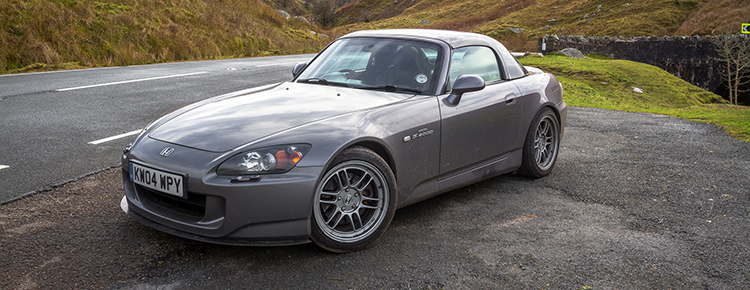
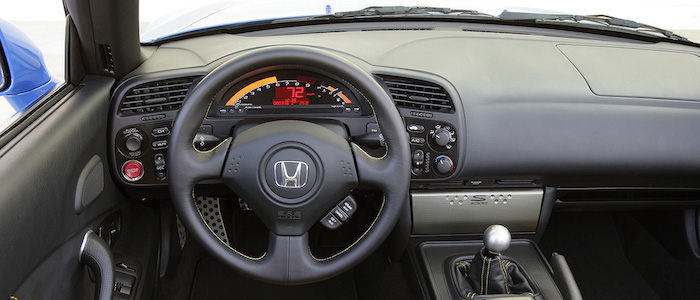
The AP1 (1999–2003) is the S2000 in its rawest form: 2.0-litre F20C, 9,000 rpm redline, cable throttle, and a chassis that rewards precision and punishes lift-off mid-corner. JDM cars left the factory at 250 PS from an 11.7:1 compression ratio; US and European cars saw 240 hp at 11.0:1. The first cars used a plastic rear window in the soft top (replaced with glass for 2002) and 16-inch wheels. The optional aluminum hardtop arrived for 2001. JDM-only Type V (2000–2007) carried Honda's variable-gear-ratio steering — a feature no export market received.
Key Takeaways
The S2000 ran from 1999 until 2009 across two chassis codes, and you'll hear people argue about which one is the real S2000. The AP1 (1999-2003) is the rawer car with the 9,000 rpm redline and the snap-oversteer reputation that built the legend. The AP2 (2004-2009) is the car Honda redesigned around what owners and journalists had complained about, with more torque, a wider rear track, and a calmer chassis. Both share the same body, the same 6-speed manual, and the same 50/50 weight distribution.
- Best value: clean, stock, documented cars
- AP2: more torque, better diff/geometry, calmer
- AP1: 9k redline feel; snap-oversteer reputation
- Hardtop adds value; OEM is most desirable
- Avoid mods; forced induction hurts collector value
- Rust/soft top condition drives real ownership cost
Technical Specifications
Every S2000 runs an NA inline-four through a 6-speed manual to the rear wheels. The AP1 has the F20C 2.0 liter making 240 hp in the US and 250 PS in Japan from an 11.7:1 compression ratio. The AP2 in the US and Japan got the F22C 2.2 liter with about 20 lb-ft more torque and an 8,200 rpm redline, while Europe kept the 2.0 F20C through 2009. The 6-speed gearbox stayed the same across both generations and the LSD was standard from day one.
Engine Options
| Engine | Displacement | Power | Boost | Notes |
|---|---|---|---|---|
| F20C | 2.0L | 250PS @ 8,300rpm | N/A | JDM rating; 11.7:1 comp; 9,000rpm redline |
| F20C | 2.0L | 250PS @ 8,300rpm; 218Nm @ 7,500rpm | N/A | DOHC VTEC; FR layout; aluminum block/head |
| F20C1 | 2.0L | 240hp @ 8,300rpm; 153lb-ft @ 7,500rpm | N/A | US spec; 11.0:1 comp; 8,900rpm fuel cut |
| F20C | 2.0L | 240PS @ 8,300rpm; 208Nm @ 7,500rpm | N/A | ECE rating; 11.0:1 comp; 9,000rpm tach |
Transmission Options
| Type | Ratios | Availability | Notes |
|---|---|---|---|
| 6-speed Manual (AP1) | 3.133/2.045/1.481/1.161/0.970/0.810 | All AP1 trims | Close-ratio; RWD; helical LSD standard |
| 6-speed Manual (AP2 US) | 3.133/2.045/1.481/1.161/0.970/0.810 | All AP2 US incl. CR | Paired w/ 4.10 final drive (typical US AP2) |
| 6-speed Manual (AP2 JDM/EU) | 3.133/2.045/1.481/1.161/0.970/0.810 | All AP2 JDM/EU trims | Final drive varies by market/year; LSD standard |
Livability
- Headroom
- 37.0"
- Top up is tight with helmet; seat lowers limited
- Rear Seats
- None
- Strict 2-seater; no extra passenger capacity
- Cargo
- 5.0 cu ft
- Small trunk; weekend bags only; top down reduces use
Variants & Trims
JDM Celsior offered grades like A, B, C, and F Package. The S2000 doesn't really work that way. You get the base car everywhere, and then a few special trims layered on top. The JDM-only Type V has variable-gear-ratio steering and is the rarest AP1 trim. The Type S is the JDM track-focused AP2 with 1,755 units built. The US-only Club Racer (CR) is the rarest factory S2000 with just 699 units across 2008 and 2009, all hardtop, no soft top, suspension stiffened and stereo and A/C optional.
| Generation | Trim | Engine | Key Features |
|---|---|---|---|
| AP1 (JDM) | S2000 (base) | F20C 2.0L NA | LSD, 6MT, 9,000rpm cluster, 16in wheels |
| AP1 (JDM) | S2000 Type V | F20C 2.0L NA | VGS variable steering, LSD, 6MT, 16in wheels |
| AP1 (JDM) | S2000 Type S | F20C 2.0L NA | Sport suspension, aero pieces, LSD, 6MT |
| AP1 (JDM) | S2000 Type S (VGS) | F20C 2.0L NA | Type S kit, VGS, sport suspension, LSD |
| AP1 (JDM) | S2000 Type S (200) | F20C 2.0L NA | Limited run, Type S content, special trim |
| AP1 (JDM) | S2000 Type S (Ultimate Edition) | F20C 2.0L NA | Final JDM, special interior, aero, 6MT, LSD |
| AP1 (Europe/UK) | S2000 | F20C 2.0L NA | LSD, 6MT, 17in wheels (most markets), ABS |
| AP1 (Europe/UK) | S2000 GT | F20C 2.0L NA | Leather, A/C, cruise (market), premium audio |
| AP1 (North America) | S2000 | F20C 2.0L NA | LSD, 6MT, 16in wheels (early), ABS, soft top |
Should You Buy a Honda S2000 AP1?
The S2000 is the kind of car where the strong points and the weak points are baked into the design choices Honda made in 1999. You're getting an inline-four that spins to 9,000 rpm and a roadster body that weighs around 2,800 pounds, and the trade-offs that come with both of those decisions never really got engineered away.
Why You'll Love It
- Iconic high-rev engine F20C/F22C deliver exotic-like RPM and response; durable when maintained and not overboosted.
- RWD balance and steering Light, communicative chassis; excellent turn-in. AP2 tuning is notably more forgiving at the limit.
- Strong long-term demand Modern classic status supports values; clean, stock cars remain liquid at auction and private sale.
- Honda reliability baseline Compared with many rivals, core drivetrain is robust; issues are usually wear/neglect, not design failure.
- Manual-only purity 6MT is a benchmark; adds enthusiast appeal and supports collectability versus auto-equipped rivals.
- Aftermarket and parts support Huge community and tuning ecosystem; OEM and quality aftermarket options exist for restoration and track use.
Why You Might Not
- Soft top and seals wear Tops shrink/tear; rain rail and seals can leak. Replacement cost is meaningful and affects value.
- AP1 handling can bite Early geometry plus abrupt lift can induce snap oversteer; alignment, tires, and driver skill matter.
- Oil consumption risk Some engines consume oil at high RPM; low oil can kill the motor. Frequent checks are mandatory.
- Synchro wear on hard use Aggressive shifting/track use can wear 2nd/3rd synchros; test for grind and review fluid history.
- Modded cars are a gamble Boost, cut harnesses, and track builds reduce collector value and raise failure risk; stock is king.
- Practicality is limited Tight cabin, small trunk, road noise; great weekend car, less ideal as an only vehicle.
Who Should NOT Buy This
- Anyone needing rear seats or child seat capability
- Drivers over ~6'2" wanting helmet clearance
- People who refuse frequent oil checks/top-offs
- Buyers who want quiet highway cruising
- Those who hate stiff ride and road noise
- Anyone expecting modern infotainment/safety tech
- Owners without secure parking (cat/hardtop theft)
- People who won't pay for quality tires/alignment
- Drivers who want low-rpm torque for daily commuting
- Anyone in strict emissions areas with missing cat risk
- Buyers who can't tolerate convertible leaks/maintenance
- People who won't budget for trans rebuild risk
- Those wanting winter daily use without a second car
- Anyone who dislikes high-rpm driving to make power
- Buyers who plan cheap mods instead of proper parts
- People who need lots of cargo space for travel
- Those who can't live with low ground clearance
- Anyone who won't do pre-purchase compression/leakdown
- Drivers uncomfortable with lively RWD handling limits
- People wanting set-and-forget reliability like a Civic
Common Issues & Solutions
The S2000 is a reliable car by sports-roadster standards. Most of the trouble comes from how the car was driven and how the soft top was looked after, not from the engineering. The AP1 has a documented oil consumption habit at high rpm. Both generations can wear out 2nd and 3rd gear synchros if the previous owner missed a lot of shifts. The soft top fabric and rear window age out around 15 to 20 years and the replacement isn't cheap. None of these are deal breakers if the records back up the car.
| Issue | Cause | Solution | Est. Cost |
|---|---|---|---|
| 2nd/3rd gear synchro grind | High-rpm shifts, old fluid, worn synchros | Try Honda MTF; if persists rebuild trans | $1500-4500 |
| Clutch master cylinder leak | Seal wear; heat; age; fluid contamination | Replace master; flush fluid; inspect pedal bracket | $250-700 |
| Clutch slave cylinder leak | Seal wear/age; contaminated fluid | Replace slave; flush; check line condition | $200-500 |
| Clutch slip/high engagement | Worn disc/pressure plate; oil contamination | Replace clutch kit; resurface/replace flywheel | $1200-2500 |
| Rear main seal seep | Age; crankcase pressure; prior clutch work | Replace seal during clutch; address PCV | $900-2000 |
| AP1 oil consumption | Ring wear; high rpm; extended oil intervals | Leakdown; rebuild if bad; monitor and top off | $0-9000 |
| Valve clearance out of spec | Normal wear; neglected adjustments | Valve adjustment; inspect cam lobes/rockers | $350-900 |
| Timing chain/tensioner noise | Wear; low oil; high rpm use | Inspect; replace tensioner/chain as needed | $600-1800 |
| VTEC solenoid gasket leak | Hardened gasket; heat cycling | Replace gasket/screen; clean mating surface | $120-350 |
| Oil pressure switch leak | Aging switch; seal failure | Replace switch; clean area; verify no other leaks | $80-250 |
| Radiator end tank crack | Plastic tank aging; heat cycles | Replace radiator; new cap; bleed properly | $350-900 |
| Overheating in traffic | Weak fans, clogged radiator, low coolant, air | Pressure test; replace fans/rad; proper bleed | $200-1200 |
| Heater core leak | Corrosion/age; coolant neglect | Replace heater core; flush; new coolant | $900-1800 |
| A/C weak or intermittent | Low refrigerant, leaking seals, compressor wear | Leak test; replace O-rings/compressor as needed | $250-1600 |
| Differential whine/clunk | Worn bearings; low/old fluid; abuse | Change fluid; if persists rebuild/replace diff | $150-2500 |
| Axle CV boot tear | Age/heat; lowered suspension angles | Replace boot or axle; align ride height | $250-900 |
| Wheel bearing noise | Age; track heat; curb impacts | Replace hub/bearing assembly; check knuckle | $450-1200 |
| Compliance bushing wear | Age; aggressive alignment; track use | Replace bushings/arms; align to sane specs | $800-2500 |
| Ball joint wear/clunk | Age; torn boots; potholes | Replace joints/control arms; align afterward | $500-1600 |
| EPS warning light | Torque sensor/rack fault; low voltage | Scan; check charging; repair/replace EPS rack | $200-2500 |
| ABS/VSA wheel speed faults | Sensor damage; corrosion; bearing play | Replace sensor; repair wiring; fix bearing play | $200-900 |
| Soft top rear window cracks | Age; cold folding; UV exposure | Replace top; avoid folding in cold; use cover | $900-2200 |
| Soft top latch misalign | Frame wear; prior forcing; body flex | Adjust latches; inspect frame; replace worn parts | $150-900 |
| Clogged top drains | Leaves/debris; poor maintenance | Clear drains; add screens; dry interior/ECU area | $50-400 |
| Trunk water intrusion | Taillight gaskets; antenna seal; seam sealer | Replace gaskets/seal; dry and treat rust early | $80-600 |
| Window regulator slow/fail | Worn motor/regulator; dry channels | Replace regulator; lube channels; reset indexing | $250-700 |
| Seat bolster wear/tears | Low seating; frequent entry/exit; age | Upholstery repair or seat cover; careful entry | $150-900 |
| SRS light (seat sensor) | Seat belt buckle/occupant sensor faults | Scan SRS; replace faulty sensor/buckle | $250-1200 |
| Aftermarket tune problems | Bad AFR/ignition; cheap piggybacks; wiring hacks | Return to stock or pro tune; repair harness | $300-3000 |
| Catalytic converter theft/missing | Theft or track pipe install | Install quality cat; ensure emissions readiness | $600-2500 |
| AP1 snap oversteer scares | Old/mismatched tires; bad alignment; cheap coils | Fresh matched tires; proper alignment; quality dampers | $800-3500 |
| Cracked wheels (track/curb) | Curb strikes; potholes; track impacts | Replace wheel; inspect suspension and alignment | $250-2000 |
Differences between JDM & USDM
JDM and USDM S2000s share the same chassis and the same six-speed manual, but the trim ladder and a few mechanical details diverge. AP1 JDM cars ran an 11.7:1 compression ratio for 250 PS and 218 N·m, against 11.0:1 and 240 hp / 153 lb-ft for the US car; the redline reads 9,000 rpm on both, with the US fuel cut set at 8,900. The JDM-only Type V (2000–2007) added variable-gear-ratio steering (VGS) that continuously alters the steering ratio with vehicle speed — a feature never offered in any export market. For AP2 (2006-on JDM), the F22C made 242 PS against 237 hp in the US. The CR (Club Racer) was a 2008–2009 US-only variant — 699 units, hardtop-only, suspension and chassis bracing, A/C and stereo optional, no spare. JDM AP2 buyers in 2008–2009 instead got the Type S (1,755 units) with similar aero treatment but softer suspension tuned for street use. European S2000s kept the 2.0L F20C through the entire 1999–2009 run.
Pre-Purchase Inspection Checklist
Walk this list with the seller, not in front of them. The Critical items mean walking away if there's no paperwork backing them up, especially compression and leakdown numbers on an AP1. The High items can usually be priced into the deal. Most of what matters on an S2000 surfaces in the first 10 minutes: how the top latches, whether the 2nd to 3rd shift grinds at rpm, and whether the trunk well is dry.
Critical Priority
- VIN/Title Run VIN for salvage, theft, mileage flags
- Accident Repairs Check core support seams/paint for crash work
- Frame Rails Inspect front rails for kinks, welds, ripples
- Compression Test Warm compression; look for even numbers all cyl
- Leakdown Test Leakdown to spot ring/valve issues before buy
- Transmission 2-3 shift at redline; any grind = synchro wear
High Priority
- Rear Subframe Look for bends, cracked mounts, fresh undercoat
- Convertible Top Check rear window cracks, seams, latch function
- Soft Top Drains Pour water; confirm drains flow behind doors
- Trunk Water Lift carpet; check spare well for moisture/rust
- Floor Pans Check for rust, jack damage, seam sealer breaks
- Hood/Fenders Check panel gaps; uneven gaps suggest crash
- Windshield Frame Check A-pillar paint cracks from rollover/impact
- Radiator Support Check for non-OE rivets, bent brackets, overspray
- Cooling System Inspect radiator end tanks for cracks/seepage
- Oil Level/Color Check level; look for fuel smell or glitter
- Cold Start Listen for chain/tensioner noise and idle hunt
- VTEC Engagement Verify clean VTEC hit; no CEL; no limp mode
- AP1 Oil Use Ask oil consumption rate; check tailpipe soot
- ECU/Mods Check for piggybacks, hacked harness, tune proof
- Catalytic Conv Check for missing cat; emissions headache
- Clutch Check engagement height; slip in 4th at low rpm
- Clutch Master Look for fluid seep at firewall/pedal bracket
- Differential Listen for whine; check for leaks at seals
- Wheel Bearings Check hum with speed; play at 12/6 o'clock
- Suspension Bushes Inspect compliance bush cracks; wander on road
- Ball Joints Check boots/torn; clunk over bumps
- Tie Rods Check inner/outer play; uneven tire wear
- Steering Rack Check EPS warning light; notchiness at center
- Brakes Check rotor lip/cracks; caliper slide sticking
- ABS/VSA Lights Scan codes; wheel speed sensor issues common
- Airbag Light SRS light on = pricey; scan for seat sensor faults
- Heater Core Sniff sweet smell; fogging windows = coolant leak
- Service Records Verify valve adj, diff/trans fluid, brake flush
- Track Use Signs Look for tow hooks, roll bar marks, heat cycles
Medium Priority
- Rocker Panels Inspect pinch welds for crushing and rust
- Rear Quarters Check inner lip rust and bondo with magnet
- Front Bumper Look for repaint, misaligned headlights/fenders
- Undertray Missing undertrays suggest neglect/track damage
- Coolant Level Cold check rad cap level and overflow condition
- Oil Leaks Check VTEC solenoid, timing cover, rear main area
- Valve Cover Look for seepage into plug wells (misfire risk)
- Engine Mounts Check for clunk on throttle blip; torn mounts
- PCV System Check PCV valve; excessive crankcase pressure
- Air Intake Avoid oiled filters; check MAF/IAT wiring hacks
- Exhaust Check for leaks at header flange and cat rattles
- Clutch Slave Check for wetness at slave; spongy pedal feel
- Axles/CV Boots Inspect inner boots for grease sling/tears
- Driveshaft Check center U-joint play; vibration on accel
- Alignment Check for pull; ask for recent alignment printout
- Shocks/Struts Look for leaks; bouncy ride; uneven damping
- Tires Check date codes; mismatched tires ruin handling
- Wheels Check bends/cracks inside barrel; track curbing
- Hardtop (if any) Check OEM vs rep; latch fit; leaks; theft risk
- Cluster/Warning Verify all lights illuminate then go out
- HVAC Check A/C cold at idle; compressor cycling noise
- Window Regulators Check drop/raise with door; slow = regulator wear
- Battery/Charging Check voltage; weak alternator shows dim lights
- AP1 Snap Oversteer Confirm correct tires/alignment; no cheap coils
Low Priority
- Seats/Belts Check bolster wear; belt retractors slow/sticky
- Door Latches Check for sag; hard close; striker misalignment
- Audio/Headunit Check speaker buzz; aftermarket wiring hacks
- Ground Straps Check engine/chassis grounds; weird electrical
Generation History
AP1 (F20C) (1999-2003 (US: 2000-2003))
- F20C 2.0L; 240 hp US, 9,000 rpm
- Cable throttle; rawer, peaky powerband
- Early rear geometry; snap-oversteer stigma
- Glass rear window added after early cars
- Most collectible: unmodified, low-mile examples
AP2 (F22C1) (2004-2009 (US))
- F22C1 2.2L; more torque, lower redline
- Revised suspension/steering for stability
- Updated interior/trim; incremental refinements
- Generally preferred for street drivability
- Late cars often command strongest premiums
Sales Numbers by Year
| Year | Exports | Domestic | Notes |
|---|---|---|---|
| 1999 | 4,911 | 7,209 | Launch year (April 1999 JDM); partial-year US production began for MY2000 |
| 2000 | 11,164 | 3,422 | |
| 2001 | 12,280 | 1,913 | Optional aluminum hardtop introduced |
| 2002 | 12,557 | 1,471 | Glass rear window replaced plastic; minor suspension revisions |
| 2003 | 10,221 | 961 | |
| 2004 | 9,606 | 1,087 | AP2 facelift; 2.2L F22C1 for US, 17-inch wheels, revised suspension |
| 2005 | 9,787 | 981 | |
| 2006 | 7,891 | 1,225 | F22C arrives in JDM; drive-by-wire throttle, VSA stability control |
| 2007 | 5,541 | 997 | |
| 2008 | 3,312 | 1,228 | USDM Club Racer (CR) and JDM Type S production begins |
| 2009 | 1,524 | 1,122 | Final year of production (June 2009) |
| 2010 | 126 | — | Leftover MY2009 inventory at dealer lots |
| 2011 | 5 | — | Final residual dealer-lot sales |
Market Data
Production Numbers & Rarity
| Generation | Years | Total Built | Notes |
|---|---|---|---|
| AP1 | 1999-2003 | estimated ~55,000 | Estimate; global split varies by market/year |
| AP2 | 2004-2009 | estimated ~55,000 | Estimate; includes US-only CR subset |
| All (AP1+AP2) | 1999-2009 | ~110,673 | Commonly cited global total; verify by region logs |
Rarest variant: S2000 CR
Original MSRP & Pricing
Original MSRP: $32,000 at launch in 2000. USDM launch base MSRP for the 2000 model year. Pricing held in the $32,000–$34,000 range across the AP1 run and rose into the $34,000–$36,000 range for AP2; the 2008–2009 Club Racer carried a separate MSRP near $36,300 base.
How It Compares
Among NA sports cars in the same era, the S2000 is the highest revving, the lightest of the convertibles in this group, and the one with the strongest collector trajectory. The table below leans toward what the S2000 actually does best, which is engine character, RWD balance, and resale stability for stock and documented cars.
| Feature | AP1 | Mazda RX-7 FD3S | Porsche Boxster 986 S |
|---|---|---|---|
| Power (stock) | 240 hp (US) | 225 hp | 247 hp |
| Torque (stock) | 153 lb-ft AP1 / 162 AP2 | 217 lb-ft | 181 lb-ft |
| Redline | 9,000 AP1 / 8,200 AP2 | 8,000 | 6,500 |
| Layout | FR roadster, 6MT | FR coupe, 6MT/auto | MR roadster, 5/6MT/auto |
| Curb weight | ~2,800-2,900 lb | ~2,400-2,600 lb | ~3,000-3,200 lb |
| Steering feel | Hydraulic, very direct | Hydraulic, lighter | Hydraulic, refined |
| Track durability | Strong; watch oil level/temps | Cooling/rotary heat management | IMS/RMS era concerns |
| Running costs | Moderate; top/tires add up | Higher; rotary/age parts | Higher; German parts/labor |
| Collector upside | High; stock cars premium | High but volatile; originality key | Moderate; many produced |
| Tuning headroom | NA gains modest; boost works | Big gains; fragile if pushed | Easy NA/boost options |
| Daily comfort | Firm, noisy, tight cabin | More GT-like, roomier | More refined ride |
Comparable Alternatives
If the S2000 doesn't end up being the right car, the closest NA roadster alternative is the Mazda MX-5, which is cheaper and slower but built around the same philosophy. The Nissan 350Z gets you a coupe with more torque and a roof that doesn't leak. The Porsche Boxster 986 is the premium option and drives beautifully when it's healthy, though it brings its own bills.
Mazda MX-5 NB
Similar analog roadster feel; cheaper entry, less power
Nissan 350Z Z33
FR 6MT sports car; more torque and practicality
Porsche Boxster 986
MR balance and premium feel; higher upkeep but great drive
BMW Z4 E85 3.0i
FR roadster with strong torque; more comfort, more costs
Lotus Elise S2
Lightweight purity and track focus; rarer, harsher, pricier
In Pictures

The Buyer's Read
If you're buying an S2000, the safest place to start is a documented AP2 between 2006 and 2009 with under 80,000 miles and an OEM hardtop. That gives you the F22C with the upgraded valve retainers, the revised rear suspension geometry, drive-by-wire throttle, VSA stability control, and the soft top you can drop without worrying about a 20-year-old rear window. Skip anything under $18,000 unless you've actually seen compression and leakdown numbers. A cheap S2000 almost always means a tired motor, a leaking top, or a hidden accident.
If you want the rawest version of the car, that's the AP1, and the right AP1 is a documented 2002 or 2003 with the glass rear window, stock everything, and a binder full of receipts. Plan to replace the intake valve retainers before you do anything else. Parts are under $200 and the work fits a home garage. The alternative is a retainer failure from a single over-rev that turns into an engine rebuild. Check the oil at every fill. F20C examples can drink a quart per 1,000 miles at sustained high rpm and low oil at 8,000 rpm kills the engine.
The S2000s to avoid are modified ones. Boost kills collector value on this car no matter how cleanly it was installed, and most of the worst problems on the used market trace back to a piggyback ECU, a hacked harness, or a cheap coilover setup that ruined the alignment. The Club Racer is the rarest factory S2000 with 699 units built, and an unmodified CR with documented service history is the strongest investment-grade S2000 you can buy today. The Type V and JDM Type S are next on that list. For everything else, condition and records matter more than the badge on the trim plate.
Frequently Asked Questions
- AP1 vs AP2: which should I buy?
- AP2 for torque/stability and street use; AP1 for 9k rpm feel. Condition beats spec.
- What are the biggest S2000 problem areas?
- Watch soft top, oil consumption, synchros, and rear quarter rust. Verify records and PPI.
- Do S2000s burn oil?
- Some do, especially when driven hard. Check level often; low oil can damage the F20C/F22C.
- Are modified S2000s worth less?
- Usually yes. Collectors pay for stock, OEM parts, and documentation. Tasteful reversible mods fare best.
- Is the OEM hardtop worth it?
- Yes. An OEM hardtop can add significant value and desirability; replicas add less and may fit poorly.
- What mileage is 'too high' for an S2000?
- Mileage matters, but maintenance history matters more. 100k+ can be fine if stock and serviced.
- What should a pre-purchase inspection include?
- Compression/leakdown if possible, check top leaks, diff/axles, synchros, alignment wear, and accident signs.
- Are prices still rising or cooling?
- Post-peak normalization, but top cars stay strong. Best examples remain scarce; average drivers are flatter.
Sources & References
- Honda S2000 — encyclopedic overview — WikipediaVerified
- Bring a Trailer auction results: Honda S2000 — Bring a TrailerVerified
- Classic.com market data: Honda S2000 — Classic.comVerified
- Hagerty Valuation Tools — Honda S2000 — HagertyVerified
- 2006 Honda S2000 review — EdmundsVerified
- Honda S2000 Buyer's Guide — Road & TrackVerified
- Honda S2000 — Everything You Need To Know Before Buying One Used — CarscoopsVerified
- Buying a Honda S2000 — buyer's guide — Garage DreamsVerified
- S2000 owners community and tech resource — s2000.clubVerified
- Why You Should Buy a Honda S2000 — SpeedhuntersAccess blocked
Sources last verified: