Interior development continued the chauffeur brief: rear seats gained massage and recline; powered rear window blinds were added; air suspension with adjustable ride height arrived for the first time on a Century. The G50 ran for almost twenty years with only minor revisions. In 2005–2008, four hand-built Century Royal G51 units were produced at the request of the Imperial Household Agency to replace the Nissan Prince Royal that had previously served as the Emperor's state car — three long-wheelbase sedans and one hearse. The Century Royal G51 remains the official state car used by Japan's Emperor; none were ever sold, exported, or replicated.
Buyer's guide
Toyota Century VG45 — Buyer's Guide & Specs
The G50 generation (1997–2017) is the V12 era and the chassis the Century is best known for outside Japan. Toyota extended the platform again, retaining most of the first-gen's mechanical philosophy, then added the 5.0-litre 1GZ-FE V12 — Japan's only mass-produced V12 — alongside the CNG-fuelled 1GZ-FNE for ambassadorial export units. The V12 drives the rear wheels through a 4-speed automatic (later 6-speed on certain market variants). The chassis stretch and the engine added roughly 1,000 lb of weight over the first gen.
Looking to buy?
Browse Toyota Century listings →
Key Takeaways
The Century ran three generations from 1967 until now, and each one stayed in production for roughly twenty years. The G20 through G40 covers the first thirty years on a V8. The G50 is the V12 car most people think of. The G60 is the current hybrid V8 and it still looks like a 1967 Century on purpose.
- VG40 (1997-2017) is the value sweet spot
- GZG50 V12 is most collectible and costly
- Condition & provenance drive price more than miles
- Parts/support best for VG40; V12 parts pricier
- Export demand is lifting clean examples
- Not a sports sedan; buy for comfort and presence
Should You Buy a Toyota Century VG45?
The Century is a car where you have to want what it actually is. Toyota built it for the back seat, not the driver's seat, and that choice shapes every trade-off below. If you're buying a Century to drive yourself around, you're buying the wrong car.
Why You'll Love It
- Unmatched ride isolation Built for silence: thick insulation, soft tuning, and low NVH calibration.
- Flagship build quality Hand-finished details, durable materials, and conservative engineering for longevity.
- Timeless, discreet presence Understated styling and formal proportions; prestige without flash.
- Strong JDM cultural cachet Used by executives and officials; high desirability among collectors.
- VG40 parts & serviceability More shared Toyota-era components; easier ownership than many exotics.
- V12 smoothness (GZG50) 1GZ-FE delivers turbine-like refinement; unique among Japanese sedans.
- Comfort-focused rear cabin Rear amenities, soft-close features, and limo-like seating priorities.
Why You Might Not
- Not performance-oriented Heavy, comfort-tuned chassis; slow steering and soft damping vs sport sedans.
- V12 ownership costs 1GZ-FE parts, sensors, and labor can be expensive; fewer specialists outside Japan.
- Aging electronics/trim Older navigation, displays, and climate modules can be dated or hard to source.
- Fuel economy & running costs Large displacement and weight mean high fuel use; tires/brakes are not cheap.
- Rust and storage issues Japan coastal storage can mean underbody corrosion; inspect seams and subframes.
- Import compliance complexity 25-year rule timing, paperwork, and parts labeling can complicate US ownership.
- Limited aftermarket support Few performance or restoration vendors vs common JDM icons; OEM is key.
Who Should NOT Buy This
- Anyone needing cheap, fast parts availability
- People without a trusted JDM-capable shop
- Owners who can't tolerate downtime for parts
- Drivers wanting modern infotainment/CarPlay
- Those expecting Lexus-level dealer support
- Anyone on a tight fuel budget (especially V12)
- People who won't proactively replace aged rubber
- Buyers who can't store it indoors (rust risk)
- Salt-belt daily drivers without underbody care
- Anyone who hates diagnosing old electronics
- People needing strong A/C in extreme heat ASAP
- Drivers who want sporty handling or sharp brakes
- Short-trip only users; it hates constant cold runs
- Anyone who won't do preventive cooling service
- Buyers expecting easy emissions compliance everywhere
- People who need LHD or easy drive-thru usability
- Anyone who can't budget $3k-8k catch-up service
- Those who can't accept Japan-only nav/TV features
- People who need a lightweight city car
- Owners who won't learn import paperwork/insurance
Common Issues & Solutions
The Century is mechanically overbuilt, but the V12 and the air suspension and the JDM-only electronics all age in ways that get expensive outside Japan. Most of the trouble comes from parts supply and labor cost, not the engineering itself. A documented car with a recent timing belt service on the V12 is worth a lot more than a cheap one without paperwork.
| Issue | Cause | Solution | Est. Cost |
|---|---|---|---|
| Air suspension leaks/sag | Aged air strut bags, cracked lines, O-rings | Replace struts/lines; rebuild valves; calibrate | $2000-7000 |
| Air compressor overrun/fail | System leaks make compressor run hot and wear | Fix leaks first; replace compressor + dryer | $800-2500 |
| Height sensor faults | Seized linkages, corroded sensor tracks | Free/replace sensors; align and recalibrate | $300-1200 |
| V12 timing belt overdue | Deferred service; unknown history on imports | Belt, idlers, tensioner, water pump, seals | $1500-3500 |
| Cooling system brittle plastics | Age heat-cycles crack radiator tanks/fittings | Radiator, hoses, thermostat, cap; flush | $600-1800 |
| Heater control valve leak | Aged diaphragm/seals; corrosion at fittings | Replace valve and hoses; bleed system | $300-900 |
| Heater core seep/odor | Internal corrosion; neglected coolant changes | Replace core; flush; new coolant and hoses | $900-2500 |
| Valve cover gasket leaks | Hardened gaskets; crankcase pressure/PCV clog | Gaskets + grommets; service PCV/breathers | $400-1200 |
| Front cover/cam seal leaks | Aged seals; belt service skipped too long | Reseal during timing belt service | $600-1800 |
| Fuel hose/line seep | Old rubber, ethanol exposure, clamp fatigue | Replace all soft lines; inspect hard lines | $300-1200 |
| Injector leakage/misfire | Aged injector seals or varnish from storage | Ultrasonic clean or replace; new seals | $500-2500 |
| Ignition coil/plug issues | Age, oil in plug wells, long service intervals | Plugs + coils as needed; fix oil leaks first | $400-1800 |
| Alternator weak/charging | Age, heat, high electrical load at idle | Replace alternator; check grounds and battery | $400-1200 |
| Parasitic battery drain | Aging modules, trunk moisture, stuck relays | Draw test; repair water leak; replace module/relay | $200-1500 |
| Soft-close door failure | Worn pull-in motor/gears; latch misadjustment | Adjust latch; rebuild/replace pull-in unit | $400-2000 |
| Window regulator slow/fail | Dry tracks, worn motor/regulator cables | Clean/lube tracks; replace regulator/motor | $250-900 |
| Climate control blend door | Servo motor failure or cracked door linkage | Replace servo; repair linkage; recalibrate | $300-1500 |
| A/C leak or weak cooling | Old O-rings, condenser corrosion, compressor wear | Leak test; replace failed parts; evac/recharge | $500-2500 |
| Rear A/C blower failure | Worn blower motor or resistor pack | Replace blower/resistor; clean ducts | $300-1200 |
| Steering rack leak | Aged seals; contaminated fluid; torn boots | Rebuild/replace rack; flush PS system | $900-2500 |
| PS pump whine/leak | Worn pump bearings/seals; low fluid from leaks | Fix leaks; replace pump; flush fluid | $400-1400 |
| Control arm bushing wear | Age and weight; rubber cracks and separates | Replace arms/bushings; alignment afterward | $600-2500 |
| Brake caliper slide seize | Corrosion, old grease, infrequent use | Service slides; rebuild/replace calipers | $300-1200 |
| Brake hard line corrosion | Road salt; undercoat traps moisture | Replace lines; inspect ABS unit fittings | $600-2500 |
| Wheel bearing noise | Age, water intrusion, heavy curb impacts | Replace hub/bearing assemblies | $300-1200 |
| Transmission shift flare | Old ATF, solenoid wear, valve body varnish | Service ATF; solenoids/valve body as needed | $300-2500 |
| Transmission mount collapse | Rubber deterioration; heavy drivetrain | Replace mounts; inspect driveshaft angles | $250-900 |
| Driveshaft center bearing | Rubber carrier cracks; age and heat | Replace center bearing/support; balance shaft | $400-1200 |
| Exhaust rot/leaks | Condensation + salt; thin OEM sections | Replace sections; use stainless where possible | $600-3000 |
| Catalyst rattle/efficiency | Substrate breakup from age/misfire | Fix misfire; replace cats; new O2 sensors | $800-4000 |
| O2 sensor aging | Heat cycles; slow response causes poor trims | Replace upstream sensors; clear trims | $250-900 |
| Trunk water intrusion | Tail lamp seals, trunk gasket, body seam cracks | Reseal lamps/seams; replace gasket; dry modules | $150-1200 |
| Sunroof drain overflow | Clogged drains; cracked drain tubes | Clear/replace drains; dry interior thoroughly | $150-900 |
| Wood trim cracking/fade | UV exposure, heat, age; lacquer delamination | Refinish wood; source used pieces carefully | $400-3000 |
| Seat control switch failure | Worn contacts; spilled drinks; oxidation | Clean/repair switch; replace if needed | $150-800 |
| Aging rubber everywhere | Storage and age harden seals and bushings | Budget full rubber refresh over first 12 months | $800-5000 |
| Parts availability delays | Century-specific parts; Japan-only supply chain | Use JDM suppliers; buy spares; plan downtime | $0-2000 |
Differences between JDM & USDM
The Toyota Century was never sold outside Japan as a regular production model. There is no factory USDM, EUDM, or AUDM equivalent — no badge-engineered Lexus or Toyota export twin, unlike the Celsior/LS or Aristo/GS. The only Centuries that legally left Japan in period were a small number of ambassadorial cars (often fitted with the CNG-fuelled 1GZ-FNE V12 in place of the JDM-market 1GZ-FE) and experimental units sent for evaluation in markets including the United States. Every Century in private foreign hands today reached its market under the relevant country's classic-vehicle import rules — in the US, the 25-year FMVSS exemption (so 1997 G50s became legal in 2022, 1998s in 2023, and so on; the G60 generation does not yet have any examples eligible). RHD is the only factory configuration; LHD Centuries are conversions or one-off experimental cars. Cabin controls, navigation displays, and signal-TV tuners are labelled in Japanese and operate on the Japanese broadcast standard — JDM nav and TV head units do not function in North America without replacement. For the same reasons, the Imperial Household's bespoke Century Royal (G51) — four hand-built units, 2006–2008, used as Japan's official state car — was never offered for export at any price.
Pre-Purchase Inspection Checklist
Walk this list before you commit, not after. The Critical items mean walking away if the seller can't back them up with paperwork. The V12 timing belt and the air suspension are the two big-ticket items that decide whether a cheap Century stays cheap. Underbody rust on a Japan-stored car is the other one that catches people out.
Critical Priority
- Import/Title Verify legal import, VIN match, clean title
- Model/Engine ID Confirm GZG50 V12 or VG40 V8; ECU match
- Rust: Underbody Inspect seams, jacking points, subframes
- Rust: Rockers Check rocker pinch welds for swelling/holes
- Air Suspension Overnight sag test; listen for compressor run
- Air Struts Check strut bags for cracks, oil seep, age
- Brake Lines Inspect hard lines for rust; flex hoses cracks
- V12 Timing Belt Confirm belt, idlers, water pump replaced
- Cooling System Pressure test; check radiator tanks, hoses
- Fuel System Smell for fuel; check lines, filter, pump noise
- Test Drive: Temp Watch coolant temp stable; fans cycle normally
High Priority
- Service Records Check timing belt history (V12) and fluids
- Odometer Proof Verify km history via auction sheet/records
- Rust: Rear arches Look inside lip; bubbling under paint/liner
- Rust: Trunk well Lift carpet; check spare well and seams
- Rust: Cowl/Drain Check cowl drains; water marks at firewall
- Accident Repair Check core support, apron welds, overspray
- Height Sensors Check linkages not seized; ride height even
- Power Steering Check pump/lines for leaks; whine at lock
- Steering Rack Inspect rack boots for fluid; play on center
- Front Control Arms Check bushings/ball joints; clunks over bumps
- Brakes Check caliper slide seizure; pulsation/ABS
- Engine Cold Start Listen for chain/belt noise; misfire on start
- Heater Control Valve Check for coolant smell under dash/valve leak
- Oil Leaks Inspect cam seals, front cover, rear main area
- Valve Cover Leaks Check for oil in plug wells; burning smell
- Fuel Tank Inspect tank straps and filler neck for rust
- Transmission Check ATF color; flare/harsh shifts hot
- Trans Cooler Lines Inspect for seep/rust at crimps and fittings
- Exhaust Check Y-pipe/mufflers for rust; rattles
- Battery/Charging Load test; alternator output; parasitic draw
- ECU/Modules Scan for codes; check water intrusion signs
- Climate Control Test all modes; blend doors; A/C cold at idle
- A/C System Check compressor noise; leaks at condenser
- Soft-Close Doors Verify pull-in works; listen for motor strain
- Locks/Key Confirm master key, remote, immobilizer works
- Interior Water Leaks Check damp carpets; musty smell; sunroof drains
- Trunk Electronics Check for water; corrosion on connectors/modules
- Test Drive: Ride Check float/bounce; air suspension leveling
- Emissions/Compliance Check local inspection rules; OBD readiness
Medium Priority
- Panel Alignment Uneven gaps/door close feel; hinge sag
- Glass/Seals Check windshield trim, door seals for leaks
- Rear Suspension Check toe links/bushings; uneven tire wear
- Tires/Wheels Check date codes, flat spots, bent wheels
- PCV/Breather Check PCV clog; crankcase pressure at idle
- Driveshaft Check center bearing and U-joints for play
- Differential Check leaks; whine on decel; fluid condition
- Catalysts Check for rattling cats; O2 sensor codes
- Grounds Check chassis grounds; weird electrical faults
- Instrument Cluster Check backlight, warning lamps, dead pixels
- Rear A/C Verify rear vents cold; rear blower speeds
- Seat Motors Test all seat functions; memory and recline
- Rear Seat Features Test ottoman, massage, controls (if equipped)
- Power Windows Check slow windows; regulator noise; auto-down
- Audio/Navi Test amp, speakers; screen; CD changer function
- Sunroof Test tilt/slide; check wind noise and drain flow
- Test Drive: NVH Listen for wheel bearings, driveline vibration
Low Priority
- Mirrors Test fold/adjust/heat; check for wobble
- Antenna Power antenna up/down; mast not bent
- Jack/Tools Confirm OEM jack, tools, spare; trunk trim intact
Generation History
1st Gen Century (VG20) (1967-1997)
- Toyota’s original chauffeur flagship
- V8 power; comfort-first tuning
- Long production run; low export presence
- Best as collector/heritage purchase
2nd Gen Century (VG40) (1997-2017)
- 5.0L 1GZ-FE V12 flagship option
- Also 4.0L/5.0L V8 variants by year/market
- Iconic upright styling; extreme NVH focus
- Strongest import demand; best parts support
3rd Gen Century (G60) (2018-present)
- 5.0L V8 hybrid (2UR-FSE-based system)
- Modern safety/infotainment; still discreet
- Most expensive; limited supply outside Japan
- Chauffeur-first rear cabin upgrades
Market Data
Production Numbers & Rarity
| Generation | Years | Total Built | Notes |
|---|---|---|---|
| 1st Gen (VG; 1967-1997) | 1967-1997 | estimated | Long-run low-volume; exact totals not public |
| 2nd Gen (G50; 1997-2017) | 1997-2017 | estimated | Hand-built low volume; exact totals not public |
| 3rd Gen (G60; 2018-present) | 2018-present | estimated | Low volume; annual figures not fully disclosed |
| Century SUV (U70; 2023-present) | 2023-present | estimated | Very low volume; production constrained |
How It Compares
Among JDM flagship sedans, the Century is the most isolated and the most formal. The President is similar in mission but rarer and harder to find parts for. The Celsior is easier to live with but doesn't carry the same presence. The table below leans toward what the Century actually does well, which is silence, ride quality, and rear seat comfort.
| Feature | VG45 | Nissan President JHG50 | Honda Legend KA9 |
|---|---|---|---|
| Core mission | Chauffeur luxury, NVH | Sport-luxury flagship | Executive luxury, tech |
| Engine layout | V8/V12/V8 hybrid | V8 | V6 |
| Top-tier engine | 5.0L 1GZ-FE V12 | 4.5L/4.1L VH V8 | 3.5L C35A V6 |
| Drivetrain | RWD (most) | RWD | FWD |
| Ride character | Soft, isolated | Softer but less isolated | Tauter, more road feel |
| Cabin noise | Class-leading quiet | Very quiet | Quiet, less limo-like |
| Rear-seat focus | High (chauffeur) | High | Medium |
| Prestige in Japan | Top-tier domestic icon | High, less iconic | High, more modern image |
| Collectibility | High (V12/rare specs) | Moderate | Moderate to low |
| Parts availability | Good VG40; V12 mixed | Mixed | Fair |
| Typical buyer cross-shop | JDM flagship collectors | VIP sedan fans | Euro luxury importers |
| Power output | V12 ~276 hp (JDM era) | VH45DE ~278 hp | M119 V8 315-322 hp |
| Driving feel | Floaty, serene | More responsive | Heavy, bank-vault |
Comparable Alternatives
If the Century doesn't make sense, the closest JDM substitute is the Nissan President. It's the only other car built for the same buyer. The Celsior is what you buy if you want the comfort and the V8 without the chauffeur theatre. The W140 S-Class is the European version of the same idea with global parts support.
Nissan President JHG50
Closest JDM chauffeur rival; V8 RWD luxury
Nissan Cima Y33
VIP sedan vibe; easier parts; strong value
Toyota Celsior UCF20
LS400 JDM; reliable V8; easier daily use
Mercedes S-Class W140
Same era bank-vault luxury; global support
Infiniti Q45 G50
Japanese V8 flagship with sharper dynamics
In Pictures
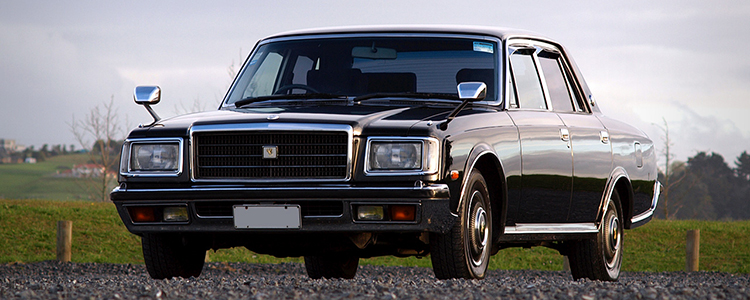
The Buyer's Read
If you're buying a Century, start by being honest about why you want one. This is a car that makes sense from the back seat, not the driver's seat, and the people who end up regretting their Century are usually the ones who bought it as a driver's car. The Celsior or a Lexus LS does that job better for less money.
The safest first Century is a documented G50 V12 with the timing belt already done and the air suspension either healthy or already converted to coils. Budget around $30,000 to $40,000 for a clean one and another $5,000 to $8,000 in the first year for catch-up service. The 1GZ-FE V12 itself is fine. It's the parts around it that cost money, especially when you're sourcing from Japan with shipping and lead times.
The VG40 V8 first-generation cars are the cheap way in, but cheap is relative. A $12,000 VG40 with no service records is a parts hunt waiting to happen. Wood trim cracks, soft-close motors fail, the heater control valve leaks, and the underbody on a Japan-stored car can hide rust that's expensive to fix properly. If you're going VG40, find one with a real service history and pay the premium. It's still cheaper than fixing a neglected G50.
The one Century almost nobody outside Japan should buy is a rough G50 V12 from a coastal storage car. The V12 alone is fine, but the air suspension, the JDM nav and TV head unit, the climate LCD, the soft-close door modules, and the rear seat controls all age together. When they start failing in sequence, the repair bill outruns the car's value fast. A clean, documented G50 is a different conversation. That's the one you want.
The G60 hybrid is mostly not available to foreign buyers because the 25-year rule doesn't apply yet. If you're seeing one for sale outside Japan today, ask hard questions about how it got there.
Frequently Asked Questions
- Which Toyota Century is the best buy today?
- Most buyers target VG40 (1997-2017) for value and support. GZG50 V12 is best for collectibility.
- Is the V12 Century reliable?
- Generally yes if maintained, but 1GZ-FE parts and diagnostics can be costly. Buy the best history you can.
- What should I inspect before buying?
- Check rust, air/ride components, cooling, electrical accessories, and verify service records and mileage consistency.
- Are parts hard to get outside Japan?
- VG40 wear items are manageable; trim/electronics can be tough. V12-specific parts may require Japan sourcing.
- How does it compare to a Lexus LS/Celsior?
- Century is more chauffeur-focused and traditional. LS/Celsior is more modern and easier to daily-drive.
- Will values keep rising?
- Clean, original cars trend upward with export demand. Expect strongest gains for low-km V12 and top-condition VG40.
- When is it US-legal to import?
- Under the 25-year rule, eligibility depends on build year. Example: 1997 cars in 2022, 1998 in 2023, etc.
- What options matter most for resale?
- Desirable: low km, original paint, rear comfort options, documented care, and correct period wheels/trim.
Sources & References
- Toyota Century — encyclopedic overview — WikipediaVerified
- Toyota Century — Japanese encyclopedic overview — Wikipedia (Japanese)Verified
- Toyota GZ engine family (1GZ-FE / 1GZ-FNE V12) — WikipediaVerified
- Toyota Century — model gallery and heritage — Toyota Motor CorporationVerified
- Century vehicle heritage — Toyota global showroom — Toyota Motor CorporationVerified
- Toyota Century Royal — G51 state car (2006–2008) — WikipediaVerified
- 1997 Toyota Century V12 — owner review — Autocar NZVerified
- Rolling like a Very Important Person — Century field report — Stance Is EverythingVerified
- Andrew's Japanese Cars — Toyota Century reference — Andrew's Japanese CarsVerified
- Lexus LS 400 — sibling-platform context for the G50 era — WikipediaVerified
Sources last verified: