Buyer's guide
Toyota Hilux
The Toyota Hilux is the world's most-imported pickup truck — a nameplate Toyota launched in March 1968 and has built continuously ever since across eight generations. The name itself is a contraction of 'high' and 'luxury,' positioning it above contemporary commercial pickups when Toyota replaced the Briska light truck. Inside Toyota's own catalogue, only the Land Cruiser has run longer. What separated the Hilux from rivals was a simple formula carried across decades: body-on-frame, leaf-spring rear, real low-range 4WD on the off-road trims, and engines tuned for durability rather than peak output. The reputation was sealed publicly in the 2000s when Top Gear set one on fire, drowned it, demolished a building on top of it, and watched it start. For JDM importers, the relevant variant is the Hilux Surf — Toyota's SUV body on the Hilux chassis, sold as the 4Runner everywhere except Japan. The two cars share most hardware but differ in the spec that matters: JDM Surfs were available with right-hand drive and turbo-diesel engines (1KZ-TE in the N80/N100, 1KD-FTV in later cars), neither of which the export 4Runner ever offered. That combination — JDM RHD, diesel powertrain, the same drivetrain that makes the Land Cruiser a global icon — is what makes the N80 and N100 Hilux Surf the canonical 25-year-rule import from this nameplate.
From commercial workhorse to indestructible icon
The Hilux launched in March 1968 with petrol engines only — 1.5L, 1.6L, 1.9L, and 2.0L four-cylinders — and a single 4-speed manual. The first three generations stayed close to that formula: a commercial pickup with leaf springs front and rear, simple mechanicals, and no diesel option. That changed in 1978 with the N30 third generation, which added a 2.2L L-series diesel and (from 1979) the first 4×4 variant — a gear-driven transfer case bolted to a solid front axle. The 4×4 sold strongly in North America, where it built the reputation that justified the 1984 launch of the Hilux Surf in Japan and the 4Runner in export markets. Both used the N50/N60/N70 chassis, with the Surf adding a hardtop rear body in place of the pickup bed. The fifth generation (N80–N110, 1988–1997) is where the JDM Hilux Surf hit its peak as an import target: the 1KZ-TE 3.0L electronic-controlled turbo-diesel arrived in 1993, giving the Surf real torque and reasonable fuel economy with the same body-on-frame durability as the pickup.
What JDM Hilux Surfs offer that export 4Runners don't
The mechanical hardware is largely shared between the JDM Hilux Surf and the export 4Runner of the same era — same transfer case, same rear axle, same suspension architecture. The differences are in trim, controls, and powertrain. JDM Surfs are right-hand drive, get JDM-only audio and climate units, and — most importantly for importers — were available with the 1KZ-TE diesel through the N80 and N100 generations. Export 4Runners never got that engine; the US 4Runner of the same period was 22R-E petrol or 3VZ-E V6 petrol only. The trade-off is parts: mechanical service items cross-reference cleanly with the US 4Runner, but JDM-only trim (instrument cluster, dash, headlight housings, JDM tail lights) needs to be sourced from import suppliers. Diesel emissions also vary by state; CARB-state buyers need a compliance plan before committing to an import.
Quick read
Key takeaways
- 1968–present: world's longest-running mid-size pickup nameplate after Land Cruiser
- Hilux Surf is the JDM SUV body; 4Runner is the export name for the same vehicle
- N80 Surf (1989–1995) with 1KZ-TE diesel is the most-imported JDM variant
- 1KZ-TE head gasket and EGR cooler are the known weak points to budget for
- Frame rust at leaf perches and crossmembers is the deal-breaker on older cars
- JDM diesel + RHD combination is what export-market 4Runners never got
Constants
Common across all Hilux generations
- Body-on-frame construction across all eight generations
- Live rear axle with leaf-spring rear suspension throughout production
- 4WD with low-range transfer case available across generations from 1979 onward
- Diesel powertrain availability on JDM-market trucks; export 4Runner is petrol-only
- Right-hand drive on all JDM production; Hilux Surf is JDM-only nameplate (4Runner in export)
- Strong parts crossover between JDM Surf and US-market 4Runner for mechanical service items
Chassis history
Generation timeline
The Hilux has been in production since 1968 and it's the longest-running Toyota nameplate after the Land Cruiser. Eight generations cover everything from the original 1.5 liter petrol pickup to the current 2.8 liter diesel. For US importers the relevant ones are the N50 fourth gen that started the Surf in 1984, the N80 fifth gen with the 1KZ-TE diesel that's the canonical import, and the N150 sixth gen Surf that's just now reaching the 25 year mark.
Fifth-gen late sub-codes — N100/N110 (1995–1997)
Eighth generation — AN110/AN120/AN130 (2015–present)
Buyer's call
Should you buy a Toyota Hilux?
The Hilux is one of those vehicles where the strong points and the weak points have stayed the same across the whole production run. Toyota built it to be cheap to own and hard to kill, not comfortable to drive every day. That trade is the whole reason people buy a Hilux, and it's also the reason people regret buying a Hilux when they wanted a Tacoma.
Why you'll love it
- Legendary durability Top Gear's destruction tests — set on fire, drowned, building demolition — made the Hilux a global byword for indestructibility. Real-world ownership reflects the same pattern: simple, robust, hard to kill.
- JDM diesel + RHD combination Export-market 4Runners only got petrol engines; the JDM Hilux Surf offers turbo-diesel options (1KZ-TE, 1KD-FTV) that US buyers can't get on the equivalent Tacoma/4Runner.
- Low running costs Cheap oil, cheap filters, basic mechanicals; insurance and maintenance both come in under most pickup alternatives.
- Strong parts crossover US-market 4Runner and Tacoma share most mechanical hardware with JDM Hilux Surf; pickup-specific parts also widely available.
- Real off-road hardware Body-on-frame, solid rear axle, low-range transfer case on 4WD trims, leaf-spring rear; meant for actual trail use, not soft-roader cosplay.
- Underrated curb appeal Rare in North America (most US-market Hilux trucks were 2-door 2WDs); the imported Surf with JDM trim stands out next to ubiquitous Wranglers and Tacomas.
Why you might not
- Poor on-pavement ride High center of gravity, leaf-spring rear, body-on-frame; the Hilux is not a comfortable daily commuter on smooth roads — slow, noisy tires, unstable at highway speeds.
- Basic interior Spartan trim, plastic dash, minimal sound insulation, plastic creaks and rattles especially off-road; not a luxury interior.
- Body and frame rust Toyota build quality doesn't extend to corrosion resistance on body panels and frame; rocker panels, bed corners, leaf perches, and the area behind the rear bumper are common failure points.
- Automatic transmission caution Pre-2004 4-speed automatics have a reputation for early failure when neglected; manual transmissions (5-speed) are the safer buy on imports.
- Hidden ownership history risk Belief that Hiluxes are indestructible means many owners run them to actual mechanical failure rather than scheduled maintenance; auction sheets and full pre-purchase inspections matter more here than on most JDM cars.
- Diesel emissions complexity JDM diesel Surf/Hilux can hit emissions hurdles in certain US states; CARB-state buyers need a compliance plan before importing.
Who should not buy this
- Buyers wanting a smooth, quiet daily highway commuter
- Anyone in a strict diesel-emissions state without a compliance plan
- Buyers without budget for frame inspection and possible repair
- Anyone expecting modern infotainment, ADAS, or premium interior
- Owners who can't tolerate plastic creaks and tire noise off-road
- Buyers wanting an automatic — the pre-2004 4AT is the weakest drivetrain choice
- Anyone who skips scheduled fluid and timing service on diesel engines
- Buyers expecting Tacoma-level body-rust resistance
- Drivers who do mostly short city trips (turbo-diesels need to warm up)
- Anyone wanting plug-and-play parts at a US Toyota dealer (JDM-specific trim is hard to source)
Reliability
Common issues & solutions
The Hilux is a bulletproof truck mechanically, but that reputation gets the cars in trouble. Owners run them hard and skip the scheduled work because they think nothing will break. Most of the issues you'll see on an imported Hilux trace back to that. The 1KZ-TE head gasket, the EGR cooler, the rear leaf perches, the diesel injectors. None of these are deal breakers if the paperwork shows the work was done.
| Issue | Cause | Solution | Est. cost |
|---|---|---|---|
| 1KZ-TE head gasket failure | Cylinder-head cracking around injector seats on early/abused 1KZ-TE engines; symptom is white exhaust smoke and coolant loss | Resurface or replace cylinder head; replace head gasket and head bolts; verify cooling system pressure | $1,800–4,500 |
| 1KZ-TE EGR cooler clog | Carbon buildup in EGR cooler restricts flow and reduces cooling efficiency; common after 150,000 km | Remove and clean EGR cooler or replace with reconditioned unit; some owners delete EGR where legal | $300–900 |
| Diesel fuel injector clogging | Low-quality diesel and copper injector seals failing on pre-2007 engines (1KZ-TE, 2KD-FTV, 1KD-FTV) | Clean or replace injectors; switch to aluminum injector seals (Toyota updated part) | $400–1,800 |
| Diesel fuel pump failure | Age-related wear on injection pump; symptoms include sputtering, stalling, power loss | Rebuild or replace injection pump; replace fuel filter and inspect lines | $1,200–3,500 |
| Frame rust at leaf spring perches | Salt exposure on rear leaf perches and crossmembers; structural concern on N50–N100 cars | Frame repair or replacement; budget for cut-out and weld-in of new sections | $1,500–6,000 |
| Pitman and idler arm wear | Worn steering linkage on N50–N100 trucks; symptoms include vague steering and clunks | Replace pitman arm, idler arm, drag link, tie rods as a set; alignment after | $500–1,400 |
| Rear leaf spring sag | Age and load on factory rear leaves on pre-2004 cars; rear of truck sits noticeably low | Replace leaf springs (OEM or aftermarket); inspect U-bolts and shackle bushings | $400–1,200 |
| Front strut tower bushing crumble | Rubber bushings under front strut towers harden and crack with age | Replace bushings; consider polyurethane alternatives for overland use | $200–600 |
| Turbo failure on diesel engines | Age-related bearing wear plus oil starvation on cars driven hard or with skipped oil changes | Replace turbo; verify oil feed/return lines clear; address root cause (oil change interval) | $1,400–3,500 |
| Diesel turbo boost leaks | Aged intercooler piping, hoses, and clamps on turbo-diesel cars | Replace cracked piping and hoses; new clamps; pressure-test system | $150–600 |
| 4-speed automatic transmission failure | Worn clutch packs and valve body on neglected automatics; symptoms include slipping, harsh shifts, no engagement | Rebuild or replace transmission; service ATF and filter on remaining cars | $1,800–4,500 |
| Body panel and bed rust | Salt and moisture on rocker panels, door bottoms, bed corners, around fuel filler | Localized cut-and-weld repair; full bed replacement on severe cases | $500–3,500 |
| Power steering whine | Low power-steering pump fluid or contaminated fluid on older Surf models | Flush and refill; replace pump if whine persists; check rack for internal leaks | $200–800 |
| Window regulator and door lock actuator failure | Plastic regulator clips and aged actuator motors on Surf and pickup | Replace regulator or rebuild actuator; many owners do this as planned maintenance on imports | $150–500 per door |
| Headlight clouding and alternator load | Aged headlight lenses and high-mileage alternators causing dim lights and battery drain | Polish or replace headlights; test alternator output; replace battery if voltage drops under load | $150–600 |
Market
Differences between JDM & USDM
The Hilux and the Hilux Surf are JDM names; the same vehicles were sold in North America as the Hilux (until 1995, after which the Tacoma replaced it) and the 4Runner (still in production today). The biggest spec divergence is powertrain: every JDM Hilux Surf could be ordered with a turbo-diesel (2L-T, 1KZ-TE, 1KD-FTV depending on generation), while every US-market 4Runner was petrol-only. JDM Surfs are right-hand drive, with JDM-only instrument clusters, headlight housings, tail lights, and audio units. Mechanical parts (engine, transmission, transfer case, axles, suspension components, brakes) cross-reference cleanly with the export 4Runner of the same generation, which keeps long-term parts support viable in the US. The Hilux pickup variant is similar: JDM-spec pickups got diesel; US-market Hilux pickups (1968–1995) were petrol-only. The Hilux nameplate left the US market in 1995, replaced by the Tacoma — a North-America-specific design that shares less with the JDM Hilux than the 4Runner does with the Surf.
Specs
Technical specifications
Every Hilux is body on frame with a leaf spring rear axle. The drivetrain choices are what change across the generations. The N80 and N100 Surf imports run either the 22R-E or 3RZ-FE petrol or the 1KZ-TE 3.0 liter turbo diesel. The 1KZ-TE is the engine you actually want on a JDM Surf, since the export 4Runner never got a diesel option.
Engine options
| Chassis | Engine | Displacement | Power | Boost | Notes |
|---|---|---|---|---|---|
| N50/N60/N70 | 22R-E | 2.4L | 100–116 hp (estimated, varies by year/market) | N/A | EFI petrol I4; common in 4WD pickup and early Surf |
| N50/N60/N70 | 2L-T | 2.4L | ~85 hp (estimated) | low-pressure turbo | First Hilux turbo-diesel; predecessor to 1KZ-TE |
| N80/N100 (Surf) | 1KZ-TE | 3.0L | 125 PS (estimated, JDM) | factory turbo | Electronic-controlled turbo-diesel I4; the iconic JDM Hilux Surf engine |
| N80/N100 (Surf) | 3VZ-E | 3.0L | 150 hp (estimated) | N/A | V6 petrol option in higher trims |
| N100/N110 | 3RZ-FE | 2.7L | 150 PS (estimated, JDM) | N/A | DOHC EFI I4; common N100 Surf and pickup petrol |
| N150 (KZN185W) | 1KZ-TE | 3.0L | 130 PS (estimated, JDM) | factory turbo | Sixth-gen JDM diesel Surf; head gasket attention warranted |
| N150 | 5VZ-FE | 3.4L | 185 hp (estimated) | N/A | V6 petrol; same engine as US-market 4Runner of the era |
| AN10/AN20/AN30 | 1KD-FTV | 3.0L | 171 hp (estimated) | common-rail turbo | D-4D common-rail diesel; replaces 1KZ-TE family |
| AN10/AN20/AN30 | 2KD-FTV | 2.5L | 102 hp (estimated) | common-rail turbo | Smaller D-4D diesel; primarily Thailand/Asia-Pacific markets |
Lineup
Variants & trims
JDM Hilux Surfs came in SSR-G, SSR-X, and SSR-Limited trims, with the V on later cars. The trim names sound bigger than they are. They mostly change interior content, wheels, and which 4WD setup you get. The drivetrain choice between the 1KZ-TE diesel and the V6 petrol matters way more than the trim badge.
| Generation | Trim | Engine | Key features |
|---|---|---|---|
| N10 (1968–1972) | Hilux Standard | 2R 1.5L petrol / 12R 1.6L petrol / 8R 1.9L petrol / 5R 2.0L petrol | First-generation commercial pickup, 4-speed manual, leaf-spring rear, RWD only |
| N20 (1972–1978) | Hilux Short/Long Wheelbase | 12R 1.6L petrol / 18R 2.0L petrol / 20R 2.2L petrol | Cabin comfort upgrades, optional 3-speed automatic and 5-speed manual added |
| N30/N40 (1978–1983) | Hilux 2WD / Hilux 4×4 (from 1979) | 12R 1.6L / 18R 1.8L / 20R 2.2L / 22R 2.4L petrol; L 2.2L diesel | First Hilux 4×4 with solid front axle, gear-driven transfer case; first diesel option |
| N50/N60/N70 (1983–1988) | Hilux Single Cab / Xtracab / Double Cab | 22R 2.4L / 22R-E 2.4L EFI / 22R-TE 2.4L turbo petrol / 2L 2.4L / 2L-T 2.4L turbo-diesel / 3VZ-E 3.0L V6 (1988) | First extended-cab Xtracab; first turbo-diesel (2L-T); independent front torsion bar on 4WD |
| N80/N90/N100/N110 (1988–1997) | Hilux Surf SSR-G / SSR-X / SSR-Limited; Hilux Pickup | 22R-E 2.4L / 3RZ-FE 2.7L / 3VZ-E 3.0L V6 petrol; 2L-TE 2.4L / 1KZ-TE 3.0L turbo-diesel | Hilux Surf (LN130/KZN130/VZN130) launched May 1989; 1KZ-TE electronic-controlled turbo-diesel from 1993 |
| N140/N150/N160/N170 (1997–2004) | Hilux Surf SSR-X / SSR-G / SSR-V; Hilux Sport Pickup | 3RZ-FE 2.7L / 5VZ-FE 3.4L V6 petrol; 1KZ-TE 3.0L turbo-diesel; KZN185W chassis | Sport Rider variant exclusive to Thailand; KZN185W is the popular JDM diesel Surf import |
| N210/AN10/AN20/AN30 (2004–2015) | Hilux Vigo (export); Hilux Sport Rider (Thailand) | 1TR-FE 2.0L / 2TR-FE 2.7L / 1GR-FE 4.0L V6 petrol; 2KD-FTV 2.5L / 1KD-FTV 3.0L turbo-diesel | Production moved entirely to Thailand; Japanese-market Hilux pickup discontinued |
| AN110/AN120/AN130 (2015–present) | Hilux Revo; Hilux Rocco; Hilux GR Sport | 2TR-FE 2.7L petrol; 2GD-FTV 2.4L / 1GD-FTV 2.8L turbo-diesel | Re-introduced to Japanese market September 2017 as right-hand-drive import; not US-market |
Pricing
Average prices & original MSRP
Drivers trade Hilux Surfs in roughly the $8,000 to $25,000 range today. The bottom of the market is rough N50 and early N80 cars with frame rust and unknown service history, and you should walk away from those unless you're prepared to weld. The top of the range is clean low mileage 1KZ-TE diesel N80 Surfs with documented service. Those have been climbing since 2020 and they're not going back down.
Today's market range: $5,000 to $25,000 (median ~$13,500). Source: JDMBuySell editorial + Goo-net Exchange + USS Auction observations.
Diesel-powered N80 and N100 Hilux Surf imports remain the price leaders; clean low-mileage examples have trended upward since 2020 as US-importable years arrived. KZN185W (N150) Surfs are now eligible and entering the import market. Pickup variants stay cheaper than Surf SUVs because most US buyers want the SUV body. Rough examples remain available below $10k but reconditioning costs (frame, diesel injectors, suspension) close the gap to a tidy mid-grade import.
Inspect
Pre-purchase inspection checklist
Walk this list with the seller, not in front of them. The Critical items mean walking away if there's no paperwork backing them up, since frame rust and a 1KZ-TE head gasket are the two things that can total a Hilux. The High items can usually be priced into the deal. Twenty minutes underneath the truck with a magnet and a flashlight will tell you more than any auction sheet.
Critical priority
- Frame Rust Inspect rear leaf perches, rear crossmember, fuel-tank straps, and front frame horns for structural rust
- 1KZ-TE Head Gasket On diesel Surf — sniff coolant overflow, check for white smoke at cold start, pressure-test system
- Diesel Injection Pump Listen for misfire on cold start; check for fuel weep at pump body
- Automatic Transmission Verify ATF condition (red, no burnt smell), no slipping, clean shifts at all gears
High priority
- Body Rust Check rocker panels, door bottoms, bed corners (pickup), tailgate hinges, area behind rear bumper
- Bed Floor / Cargo Area Pickup: bed floor rust and dent damage. Surf: cargo-area carpet for water leaks from rear window seal
- Diesel Injectors Test cylinder balance with scanner; sooty exhaust under load suggests clogged or worn injectors
- Turbocharger Inspect for shaft play, oil weep at compressor housing, blue smoke under load
- Timing Chain (3RZ-FE / 5VZ-FE) Listen for chain rattle on cold start; tensioner replacement is preventive
- Transfer Case Engage 4H and 4L; listen for grinding or shuddering; check for oil leaks at output seals
- Front Suspension Bushings Under-strut-tower bushings (4WD torsion-bar setup); look for crumbled rubber and clunks over bumps
- Pitman/Idler Arms Check for play at steering linkage; vague on-center steering is the symptom
- Brakes Front disc thickness, rear drum condition; many imports have neglected rear drums
- Coolant System Pressure-test radiator; inspect hoses, water pump weep; verify thermostat operation
- Auction Sheet (Imports) Verify auction grade, accident history, odometer rollback check, export certificate
- Emissions Compliance Confirm state-level emissions plan for diesel imports (especially CARB states)
Medium priority
- EGR Cooler (1KZ-TE) Look for excessive intake-tract soot; performance drop above 150,000 km
- Manual Transmission Check for syncro grind 2nd–3rd gear, clutch hydraulic operation, gear lever bush wear
- Front Differential (4WD) Check for whine on coast; inspect pinion seal and breather; engage hubs (manual or auto)
- Rear Differential Listen for whine; check pinion seal; verify lock function if equipped
- Driveshafts and U-joints Check for play in U-joints; vibration at speed signals driveshaft balance or center bearing wear
- Rear Leaf Springs Inspect for sag, broken leaves, U-bolt corrosion, shackle bushing wear
- Electrical (Surf) Test all power windows, door locks, sunroof if equipped, climate control fan speeds, dash lights
- Headlights and Charging Check alternator output, headlight clarity, battery voltage under load
Cross-shop
Comparable alternatives
If the Hilux Surf doesn't end up being the right truck, the natural alternatives are the Toyota Land Cruiser Prado for more refinement, the Nissan Safari if you want something bigger, or the Mitsubishi Pajero if you want a different ride feel. The US market Toyota 4Runner is the same vehicle with petrol only and left hand drive, which is the easier path if you don't need the diesel.
Toyota Land Cruiser Prado
Same body-on-frame durability with more luxury and refinement; better daily driver
Toyota Land Cruiser
Bigger brother to the Hilux Surf; more capable, more expensive to import
Nissan Safari (Patrol)
Larger SUV alternative with similar diesel options and JDM RHD
Nissan Terrano
Direct Nissan competitor to the Hilux Surf in the JDM market
Mitsubishi Pajero
JDM 4×4 SUV with diesel options; different ride character (semi-monocoque later gens)
Compare
How it compares
Among the JDM mid size pickups and pickup-based SUVs, the Hilux is the most durable, the Nissan Navara has the more modern diesel, and the Mitsubishi Triton is the cheapest to buy. The table below leans toward the Hilux's strengths because that's where it actually wins, on long term reliability and parts crossover with the US market 4Runner and Tacoma.
| Feature | Toyota Hilux | Nissan Navara/Frontier | Mitsubishi Triton/L200 |
|---|---|---|---|
| Body style | Pickup (Hilux) + SUV (Surf) | Pickup (4-door) | Pickup (4-door) |
| JDM diesel availability | 1KZ-TE, 1KD-FTV, 2KD-FTV | TD27, ZD30, YD25DDTi | 4D56, 4N15 |
| Reliability reputation | Exceptional (Top Gear durability tests) | Good — ZD30 has issues | Good — 4D56 timing belt critical |
| Off-road hardware | Body-on-frame, solid rear axle, low-range | Body-on-frame, solid rear axle, low-range | Body-on-frame, solid rear axle, low-range |
| Parts availability (US) | Strong via 4Runner/Tacoma crossover | Moderate via Frontier crossover | Limited — most parts JDM-only |
| Import popularity | Very high (most-imported pickup) | Moderate | Low |
| Typical price (good condition) | $8,000–$25,000 | $6,000–$18,000 | $5,000–$15,000 |
| Ford Ranger comparison (export) | Smaller, more compact than current Ranger T6 | — | Hilux is the global benchmark T6 targets |
Gallery
In pictures
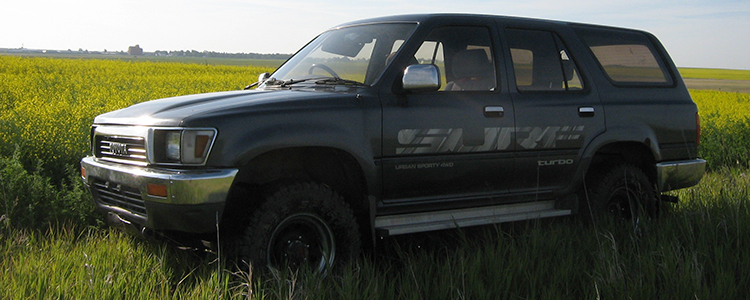
Editorial
The buyer's read
If you're buying a Hilux, the safest place to start is a documented N80 Hilux Surf with the 1KZ-TE diesel and a manual gearbox. That gives you the JDM RHD diesel combination that's the whole reason to import one of these instead of just buying a US market 4Runner. Skip anything under $8,000. A cheap Hilux almost always means frame rust or a 1KZ-TE that's been run hard without service, and what you save on the purchase you'll spend in the first year fixing what should have been done already.
The two things to verify before you commit are the frame and the cylinder head. The frame is structural, and a rotted rear leaf perch will fail an inspection in most states. Get under the truck with a flashlight and a magnet and look at the rear leaf perches, the rear crossmember, the fuel tank straps, and the front frame horns. If you see flaking rust or pitting on the structural members, walk away. The cylinder head is the 1KZ-TE weak point. White smoke at cold start that goes away when the engine warms up is the symptom, and a pressure test on the cooling system will confirm it. Budget $2,000 to $4,500 for that repair if the seller hasn't done it.
The one Hilux to avoid is a rough N50 fourth gen without service records. The chassis is fine and the drivetrain is simple, but at this age you're buying frame rust risk and 40 years of unknown maintenance. An undocumented N50 is a project, not a truck you can drive. If you find a clean one with frame repair receipts and the timing chain history sorted, that's a different conversation. But those Hilux trucks are mostly still in Japan, and importing one ends up costing more than buying a documented N80 Surf already in your country. The N150 KZN185W is just becoming eligible under the 25 year rule, and that's where the next wave of clean imports will come from.
FAQ
Frequently asked questions
- What body style does the Toyota Hilux Surf have?
- The Hilux Surf is classified as a mid-size SUV (Sport Utility Vehicle) — built on the Hilux pickup chassis but with a hardtop body and rear seating in place of an open bed.
- Which is the best generation of Hilux Surf to import?
- The N80 (1989–1995) and early N100 (1995–2002) generations are the most-imported under the US 25-year rule. The N80 with the 1KZ-TE turbo-diesel is the canonical JDM Surf import.
- Is the Toyota Hilux Surf the same as the 4Runner?
- Same vehicle, different markets. Hilux Surf is the JDM RHD version; 4Runner is the LHD export name (North America, Australia). JDM Surf is available with diesel; export 4Runner is petrol-only.
- Why is the 1KZ-TE engine the popular Hilux Surf choice?
- It's the only turbo-diesel option in the iconic N80/N100 generation Surf, gives ~30 mpg, and is electronic-controlled (better drivability than the older 2L-T).
- How does the 4WD system work on a Hilux Surf?
- Part-time 4WD with three modes: 2H (rear-drive only, on-road), 4H (4WD high range, off-road and snow), and 4L (4WD low range, low-speed crawling and steep terrain).
- What's the typical price range for a good Hilux Surf today?
- Drivers trade roughly $8,000–$25,000 depending on year, generation, mileage, body/frame condition, and modifications. Clean low-mileage 1KZ-TE N80 Surfs at the top end; rougher examples below $10k.
- Where can I source parts for a JDM Hilux Surf in the US?
- Most mechanical parts cross-reference with the 4Runner or Tacoma of the same era. JDM-specific trim, dash, headlights, and tail lights need import suppliers or used-parts networks.
- Is the Hilux still sold in the United States?
- No. The Hilux has not been sold in the US since 1995, replaced by the Tacoma. The 4Runner (SUV) continues but is a different platform and doesn't get the diesel.
Citations
Sources & references
- Toyota Global — Hilux vehicle lineage (75 years of Toyota) — Toyota Motor CorporationVerified
- Full Model Change for Hilux Surf (May 1989) — Toyota corporate milestone PDF — Toyota Motor CorporationVerified
- Toyota Hilux — encyclopedic overview — WikipediaVerified
- Toyota 4Runner — encyclopedic overview (export name for Hilux Surf) — WikipediaVerified
- Toyota 1KZ-TE engine reference — MotorReviewerVerified
- Toyota Hilux Surf / 4Runner — capable SUV import overview — BE FORWARDVerified
- Card-dealing-Page Hilux Surf column — CarDealPageVerified
- Toyota recall notice on Hilux Surf SUVs — Stars and StripesVerified
Sources last verified: