The H100 4WD diesel is the JDM van that drives the U.S. overland and vanlife market. The first 1999 H100s cleared the federal 25-year rule in 2024; 2000 cars cleared in 2025; the eligibility wave continues annually. Today's premium examples are clean Super Custom 4WDs with the 1KZ-TE, documented service history, and original interior. The honest buying conversation centers on three things: the cooling system condition (1KZ-TE overheating is the failure mode that ends the engine), the rust survey (step wells, sills, rear arches, floor seams, and seam sealer), and the camper-conversion quality if the van has been converted (DIY wiring, weight overload, and roof leaks reduce value).
Buyer's guide
Toyota Hiace H100 — Buyer's Guide & Specs
The H100 (1989–2004) is the iconic global HiAce. Toyota sold it in Japan, China, the U.K., Europe, Sri Lanka, South Africa, and the Philippines, and licensed a badge-engineered version (Jinbei Haise) to China's Brilliance Auto. Trim diversity expanded sharply: short and long wheelbase, three roof heights (flat, raised, and high curved 'loaf-of-bread' roof), and a 13-engine catalog — six petrol and seven diesel, including the 1RZ-E, 2RZ-E, 3RZ-FE, 3L, 5L, and 1KZ-TE. JDM trims included Super Custom and Super Custom Limited; export markets got the simpler DX/GL hierarchy. The wide-body Granvia, Touring HiAce, Grand HiAce, and Regius Ace shared H100 mechanicals but used distinct wagon bodies aimed at the MPV/luxury segment. 4WD was available on most JDM trims; export markets received it selectively.
Looking to buy?
Browse Toyota Hiace listings →
Key Takeaways
The HiAce has been in production since October 1967, longer than anything else Toyota builds. Six generations have moved roughly the same brief across nearly six decades. The H10 and H20 are mostly collector territory now, the H50 started the camper scene, the H100 is the icon, the H200 is the current JDM van, and the H300 is what Australia buys new today.
- Rust and prior repairs matter more than mileage
- 4WD diesels carry the biggest price premiums
- US 25-year rule is boosting older-gen demand
- Parts/support best for common engines like 1KZ/2KD
- Auto vs manual affects value by region and use
- Camper builds add value only if professionally done
Technical Specifications
Every JDM HiAce is rear-wheel drive or part-time 4WD, with a four-cylinder engine sitting under or beside the driver. Petrol options ran from the early 2R and 12R through the modern 2TR-FE. The diesels are what the overland scene cares about, and that means the 2L-TE, the 1KZ-TE, and the common-rail 1KD-FTV and 1GD-FTV that came later.
Engine Options
| Engine | Displacement | Power | Boost | Notes |
|---|---|---|---|---|
| 1RZ-E | 2.0L | estimated | N/A | EFI I4; market-dependent ratings |
| 2RZ-E | 2.4L | estimated | N/A | EFI I4; market-dependent ratings |
| 3RZ-FE | 2.7L | estimated | N/A | DOHC EFI I4; multiple tunes |
| 3L | 2.8L | estimated | N/A | NA diesel; commercial duty cycle |
| 5L | 3.0L | estimated | N/A | NA diesel; output varies by market |
| 1KZ-TE | 3.0L | estimated | Turbo | Turbo diesel; some models intercooled |
| 5VZ-FE | 3.4L | estimated | N/A | V6 petrol; wagon-only related platform |
Transmission Options
| Type | Ratios | Availability | Notes |
|---|---|---|---|
| 4-speed Manual | estimated | H10/H20 early commercial | Market/year dependent; multiple gearsets |
| 5-speed Manual | estimated | H50/H60/H70/H100/H200 | Multiple Toyota 5MT families used |
| 6-speed Manual | estimated | H200/H300 (market-dependent) | Typically paired with 1GD in some markets |
| 4-speed Automatic | estimated | H100/H200 (market-dependent) | Aisin 4AT variants; calibration varies |
| 5-speed Automatic | estimated | H200 (market-dependent) | Aisin 5AT variants; engine dependent |
| 6-speed Automatic | estimated | H300 (market-dependent) | Aisin 6AT variants; region-specific |
Livability
- Headroom
- 39.0"
- High roof varies; cab-over seat is upright
- Rear Seats
- Varies by trim
- Many are vans; wagons seat adults but upright
- Cargo
- Huge/boxy
- Excellent volume; wheel wells intrude; low tie-downs
Variants & Trims
JDM HiAce trims include the Super Custom, Super Custom Limited, Touring HiAce, Regius Ace, Grand HiAce, and the wide-body Granvia. Export markets mostly got the simpler DX and GL grades. The wagon-bodied Regius Ace, Grand HiAce, and Granvia share H100 mechanicals but use wider bodies aimed at the luxury MPV segment, so they drive softer and seat more.
| Generation | Trim | Engine | Key Features |
|---|---|---|---|
| H100 (4th gen) | DX Van | 2.0L 1RZ-E / 2.4L 2RZ-E / 2.8L 3L / 3.0L 5L | Commercial trim, vinyl, steel wheels |
| H100 (4th gen) | GL Van | 2.0L 1RZ-E / 2.4L 2RZ-E / 3.0L 5L | Better trim, A/C option, cloth seats |
| H100 (4th gen) | Super Custom | 2.7L 3RZ-FE / 3.0L 1KZ-TE | Wagon, twin A/C, power options |
| H100 (4th gen) | Super Custom Limited | 3.0L 1KZ-TE | Top wagon, premium interior, power features |
| H100 (4th gen) | Grand HiAce / Granvia (related) | 3.4L 5VZ-FE / 3.0L 1KZ-TE | Wide-body wagon, luxury seating, twin A/C |
| H100 (4th gen) | Commuter | 2.8L 3L / 3.0L 5L / 3.0L 1KZ-TE | High roof, high capacity, rear HVAC |
Should You Buy a Toyota Hiace H100?
The HiAce is a working van first and a lifestyle van second. What you give up in styling and ride quality you get back in load space, parts support, and the kind of mechanical simplicity that lets a HiAce keep working at 350,000 miles. The good and bad have stayed pretty consistent across every generation.
Why You'll Love It
- Legendary durability Proven commercial platform; many exceed 300k+ mi with maintenance and cooling care.
- Strong 4WD overland appeal JDM 4WD + diesel combos are sought after for snow, trails, and camper builds.
- Excellent packaging Cab-over layout maximizes interior volume; ideal for cargo, seats, or camper conversions.
- Broad global parts ecosystem Common service parts are widely available; cross-market interchange helps long-term support.
- High resale in niche markets Clean, rust-free examples hold value well, especially H100 4WD diesels and campers.
- Simple mechanicals (older gens) Many trims are straightforward to service; fewer electronics than modern vans.
- Multiple roof/wheelbase options Low/mid/high roof and long wheelbase variants suit cargo, shuttle, or camper use.
- Driver visibility and maneuvering Short nose and upright seating make urban driving and parking easier than long-hood vans.
Why You Might Not
- Rust is the value killer Sills, arches, floors, seams, and rear quarters rot; repairs can exceed vehicle value.
- Cab-over crash safety (older) Older HiAce lacks modern crash structures; front occupants sit close to impact zone.
- Heat management on diesels 1KZ-TE can suffer head issues if overheated; cooling system condition is critical.
- Hard commercial lives Many imports were fleet vans; expect worn seats, tired suspension, and deferred maintenance.
- Parts vary by engine/trim JDM-specific 4WD and trim pieces can be slow/expensive; verify engine code before buying.
- Noise and ride quality Older leaf-spring and cab-over NVH can feel truck-like, especially empty or on highways.
- Camper conversions can be risky DIY wiring, leaks, and weight overload are common; value depends on build quality and docs.
- Import compliance complexity Titling, emissions, and insurance vary by state; budget time and paperwork for registration.
Who Should NOT Buy This
- Anyone who can't inspect rust on a lift
- Buyers needing modern crash safety
- People expecting quiet highway cruising
- Drivers who hate sitting over the front axle
- Those unwilling to baseline cooling system
- Owners without a diesel-capable mechanic nearby
- People who can't source JDM-only parts delays
- Anyone needing easy OBD diagnostics on older models
- Those who will overload it and skip maintenance
- Buyers in strict emissions states without research
- People who need fast acceleration or passing power
- Anyone who can't tolerate commercial-van NVH
- Families needing LATCH/ISOFIX and airbags everywhere
- People who park in tight garages (height/length)
- Owners who won't grease driveline regularly
- Anyone expecting car-like handling in crosswinds
- Buyers who can't handle 12-20 mpg depending setup
- People who need strong A/C in extreme heat (older)
- Those who won't pay for proper rust repair
- Anyone relying on unknown mileage imports blindly
Common Issues & Solutions
The HiAce is bulletproof when you look after it. The trouble shows up when you don't. On diesel HiAce vans the turbo is the part that punishes neglect, the cooling system is the part that punishes neglect on the 1KZ-TE, and the body paint is just thin enough that rust gets a head start before you notice. None of these are deal breakers if the paperwork shows the work was done.
| Issue | Cause | Solution | Est. Cost |
|---|---|---|---|
| Severe chassis rust | Salt use + poor undercoating + age | Walk away if perforated; proper cut/weld repairs | $2000-12000 |
| Step well rust-through | Trapped moisture under mats and seam sealer | Cut out, weld panels, treat cavities, reseal | $800-3000 |
| Sliding door roller wear | Dry track, rust, heavy use in commercial duty | Replace rollers, clean/grease track, align door | $250-1200 |
| Sliding door track rust | Water ingress + neglected cleaning | Derust/paint; replace track if pitted through | $300-2500 |
| Rear door hinge sag | Overloaded doors + worn hinges + rusted mounts | Replace hinges, repair metal, adjust latches | $300-1800 |
| Windshield frame leaks | Rust under seal and poor glass installs | Remove glass, repair rust, reseal properly | $600-2500 |
| Cooling system overheat | Old radiator, stuck thermostat, airlocks | Radiator/thermostat/cap; bleed; hoses | $400-1400 |
| Head gasket failure | Overheating + warped head (common on diesels) | Machine head, gasket set, bolts, cooling refresh | $1800-4500 |
| Cracked cylinder head | Repeated overheating or low coolant episodes | Replace head; pressure test; fix root cooling issue | $2500-6500 |
| Diesel injector wear | High km + poor fuel + overdue filter changes | Pop-test/replace injectors; set balance/timing | $800-2500 |
| Diesel pump leaks | Aged seals on mechanical injection pumps | Reseal/rebuild pump; replace fuel lines | $900-2500 |
| Hard cold starts (diesel) | Glow plugs/relay/timer faults or weak compression | Test glow circuit; replace plugs; compression test | $200-1800 |
| Turbo oil smoke | Worn turbo seals or restricted oil drain | Rebuild/replace turbo; clean drain; check PCV | $900-3000 |
| EGR/intake soot clog | Diesel EGR + short trips + low-quality oil | Remove/clean intake/EGR; address driving pattern | $300-1200 |
| Timing belt overdue | Unknown history on import/commercial vans | Do belt, tensioner, idlers, water pump ASAP | $700-1800 |
| Manual synchro wear | Commercial use + poor clutch habits + old oil | Fluid change may help; rebuild gearbox if grinding | $120-2500 |
| Clutch slip/shudder | Overloading + oil contamination + worn DMF (some) | Replace clutch kit; resurface flywheel; fix leaks | $700-2200 |
| Auto trans shift flare | Old ATF, worn solenoids, valve body wear | Service ATF; solenoids/valve body; rebuild if bad | $250-4500 |
| Driveshaft U-joint clunk | Neglected greasing + high load cycles | Replace U-joints/shaft; grease regularly | $250-1200 |
| Diff whine/leaks | Low oil from pinion/axle seals; heavy loads | Replace seals; refill; rebuild diff if noisy | $250-2500 |
| Front ball joint failure | Boot tears + water ingress + age | Replace joints ASAP; align; inspect control arms | $350-1200 |
| Steering wander | Worn idler/pitman/tie rods; alignment off | Replace worn links; alignment; check steering box | $300-1500 |
| Wheel bearing failure | Overloading + water ingress + old grease | Replace bearings/seals; inspect hubs/spindles | $300-1200 |
| Seized brake calipers | Corrosion on slide pins; infrequent fluid changes | Rebuild/replace calipers; new pads/rotors; flush | $400-1600 |
| Rusty brake lines | Salt exposure; line clips trap moisture | Replace hard lines; inspect flex hoses; bleed | $500-2500 |
| A/C weak or dead | Leaks at condenser/lines; worn compressor | Leak test, replace parts, evac/recharge | $300-1800 |
| Blower resistor failure | Heat stress; debris in blower | Replace resistor; clean blower and cabin intake | $80-350 |
| Cabin water intrusion | Door seals, roof gutters, rear windows, seams | Trace leaks; reseal; repair rust; replace seals | $200-3000 |
| Engine mount collapse | Age + diesel vibration + oil saturation | Replace mounts; check exhaust flex and brackets | $250-900 |
| Exhaust manifold crack | Heat cycling + missing studs + warped flange | Replace manifold; new studs/gaskets; check mounts | $400-1600 |
| Fuel filler neck rot | Road salt + trapped mud behind liner | Replace neck/hoses; clean area; undercoat | $250-900 |
| Electrical ground issues | Corrosion at chassis grounds; battery acid | Clean/replace grounds; dielectric grease; test drop | $50-400 |
| Odometer rollback risk | Import cluster swaps and weak documentation | Verify auction sheet/service stickers; inspect wear | $0-300 |
Differences between JDM & USDM
The HiAce was never officially sold in the United States — no LHD U.S.-spec version exists, and the chicken tax (a 25% tariff on imported light trucks dating to 1964) made commercial van imports uneconomical for Toyota. The U.K. and Australia did receive factory HiAce sales: the U.K. sold the H100 and H200 as the 'HiAce' through Toyota GB, and Australia has imported the HiAce continuously through the H300, where it's still sold new today. For U.S. buyers, the only legal path is the federal 25-year import rule (NHTSA's FMVSS exemption for vehicles 25+ years old): H100 vans built in 1999 became U.S.-legal in 2024, 2000-model-year vans in 2025, and 2001 in 2026. The H200 (2004 onward) won't begin clearing eligibility until 2029. JDM-spec HiAce vans differ from export-market HiAce sales in three significant ways: engine availability (the 1KZ-TE 3.0L turbo diesel and 5L NA diesel were largely export-market engines due to Japanese road tax penalties on engines over 2.0L; JDM domestic units leaned on the 2.0L 1RZ-E and 2.7L 3RZ-FE petrols), trim hierarchy (JDM-only Super Custom, Super Custom Limited, Touring HiAce, Regius Ace, and Grand HiAce trims have no direct export equivalent), and 4WD availability (4WD was offered in JDM but not all export markets). The Granvia and Grand HiAce share H100 mechanicals but use wider wagon bodies aimed at the luxury MPV segment.
Pre-Purchase Inspection Checklist
Walk this list with the seller, not in front of them. The Critical items mean walking away if there's no paperwork backing them up. The High items can usually be priced into the deal. Spend ten minutes at idle and 30 minutes driving the HiAce and you'll catch most of what matters.
Critical Priority
- Chassis rust Probe rails/crossmembers; look for scabs/holes
- Sills & steps Check step wells for rust-through under mats
- Front subframe Check cracks, bent mounts, collision ripples
- Rear spring mounts Check shackle hangers for rust and elongation
- Engine cold start Start cold; listen for knock/rattle; smoke check
- Coolant condition Check oil in coolant; rusty coolant; low level
- Cooling system Pressure test; check radiator tanks & cap
- Overheat history Ask for head work; check warped head signs
- Transmission shift Auto: flare/harsh shifts; Manual: synchro grind
- Front ball joints Check for play; torn boots; uneven tire wear
- Brakes Check pulsation, pull, seized calipers, pad taper
- Brake lines Inspect hard lines for rust; flex hoses cracking
- Seatbelts Check fraying, retractor function, anchor rust
- Import compliance Verify title, VIN, emissions/inspection legality
High Priority
- Rear wheel arches Inspect inner/outer arch lip; bubbling/patches
- Floor pans Lift mats; check seams for pinholes/soft spots
- Front frame horns Look for tow damage, kinks, fresh undercoat
- Sliding door track Check track rust; door sag; roller play/noise
- Windshield frame Look for bubbling at corners; leaks on A-pillars
- Accident repairs Measure panel gaps; overspray; seam sealer mismatch
- Undercar coating Fresh thick coating can hide rot; scrape test
- Oil condition Check sludge, fuel dilution, metal glitter
- Timing belt proof Verify belt/water pump date; sticker + receipts
- Timing chain noise Listen for chain rattle at idle (chain engines)
- Diesel blow-by Oil cap dance, crankcase smoke, dipstick puffing
- Injector health Diesel: clatter, haze, hard start, fuel knock
- Turbo condition Check shaft play, oil leaks, boost cut, smoke
- Fuel leaks Smell diesel; check lines at tank and filter head
- ATF condition Check color/burnt smell; verify service history
- Clutch operation Check slip in 4th/5th; high bite point
- Driveshaft U-joints Check play, clunk on takeoff, grease fittings
- Diff noise Whine on coast/accel; check pinion seal leaks
- 4WD system Engage 4H/4L; check hubs/actuator function
- CV joints (4WD) Check boots split; clicking on full lock
- Steering play Check idler/pitman/tie rods; wander at speed
- Control arm bushes Check cracking; braking shimmy; clunks
- Leaf springs Check sag, broken leaves, worn shackles
- Wheel bearings Listen for hum; check play; heat after drive
- Glow plug system Diesel: check relay, timer, hard cold starts
- Cabin leaks Check wet carpets; rear quarter leaks; musty smell
- Seat mounts Check rust at seat rails; loose bolts in floor
- Dash warning lights Ensure MIL/ABS/airbag bulbs not removed
- Odometer credibility Check auction sheets/service stickers wear vs km
- Service records Look for coolant, ATF, diff oil, belt intervals
Medium Priority
- Body seams Inspect gutter seams for rust bleeding/repairs
- Rear door hinges Check hinge cracks, sag, latch alignment
- Roof gutters Check for rust under sealant; water trails inside
- EGR/intake clog Diesel: check soot buildup; sluggish response
- Vacuum lines Diesel: brittle hoses cause boost/EGR issues
- Engine mounts Check for collapse; excessive vibration in cabin
- Exhaust manifold Check cracks, ticking, missing studs
- Power steering Check pump whine, leaks at box/rack lines
- Shocks/struts Check leaks; bounce test; cupped tires
- ABS light Scan codes; check wheel speed sensors wiring
- Tires load rating Confirm correct commercial load index; even wear
- Battery/charging Check alternator output; corroded grounds
- Starter health Slow crank indicates starter/battery/cables
- A/C performance Check vent temp; compressor noise; leaks at lines
- Heater output Check hot air at idle; weak = coolant/airlock
Generation History
H10/H20 (1st Gen) (1967-1977)
- Early cab-over commercial van
- Simple RWD running gear
- Collector niche; scarce in clean shape
- Rust and parts scarcity are main issues
H30/H40 (2nd Gen) (1977-1982)
- Refined cab-over packaging
- Workhorse reputation in Asia/Oceania
- Carb petrols; basic diesels in some mkts
- Survivors often heavily used
H50/H60/H70 (3rd Gen) (1982-1989)
- Broader body styles and wheelbases
- Improved comfort and payload
- Popular base for early camper conversions
- Rust and tired interiors common
H100 (4th Gen) (1989-2004)
- Iconic RWD/4WD; huge global following
- Common 1KZ-TE 3.0TD in JDM imports
- Strong camper/overland demand
- Watch for cooling, rust, and hard use
H200 (5th Gen) (2004-2019)
- More modern safety and refinement
- 2KD/1KD diesels in many markets
- Higher purchase cost; newer than 25-year
- Great fleet van; less 'classic' appeal
H300 (6th Gen) (2019-present)
- Latest platform; more tech and safety
- Not US-import eligible for decades
- Best as local-market purchase
- Values track commercial van market
Granvia/RegiusAce line (1995-2013 (varies))
- More MPV/luxury oriented variants
- Often better interiors than base HiAce
- Some share HiAce mechanicals
- Trim complexity affects parts sourcing
Market Data
Production Numbers & Rarity
| Generation | Years | Total Built | Notes |
|---|---|---|---|
| H10 (1st gen) | 1967-1977 | estimated | Global totals not centrally published |
| H20/H30/H40 (2nd gen) | 1977-1982 | estimated | Regional production data incomplete |
| H50/H60/H70 (3rd gen) | 1982-1989 | estimated | Multiple plants; consolidated totals unpublished |
| H100 (4th gen) | 1989-2004 | estimated | Very high volume; exact global figure unpublished |
| H200 (5th gen) | 2004-present | estimated | Ongoing production; totals vary by region |
| H300 (6th gen) | 2019-present | estimated | Ongoing production; market-specific volumes |
How It Compares
Among the JDM cab-over vans, the HiAce is the most reliable and the easiest to get parts for. The Nissan Caravan runs it close on most measures but trails on resale and aftermarket support. The Mazda Bongo is smaller and less robust, and the Mitsubishi Delica L400 is narrower with cult AWD status but harder to find clean.
| Feature | H100 | Nissan Caravan E24 | Mitsubishi Delica L400 |
|---|---|---|---|
| Core layout | Cab-over, RWD/4WD | Cab-over, RWD/4WD | Cab-over, RWD/4WD |
| Typical JDM engines | 1KZ-TE, 2KD, 3RZ | TD27, QD32, KA24 | 4M40 2.8TD, 6G72 V6 |
| 4WD desirability | High; overland premium | Medium; fewer cult buyers | Very high; cult status |
| Reliability reputation | Excellent overall | Good; varies by engine | Good; more complex |
| Rust vulnerability | High on older gens | High on older gens | High; watch seams/floors |
| Parts availability (US) | Good via import network | Fair; smaller ecosystem | Good; strong Delica scene |
| Highway comfort | Fair to good (gen/trim) | Fair; older feel | Good; MPV-like trims |
| Interior/camper space | Excellent; many configs | Very good; boxy cargo | Very good; tall roof options |
| Typical US import pricing | $12k-$45k (H100) | $8k-$25k (E24) | $15k-$45k (L400) |
| Fuel economy (diesel) | Mid-20s mpg possible | Low- to mid-20s mpg | Low-20s mpg typical |
| Driving position | Upright; bus-like | Upright; utilitarian | More MPV-like in trims |
| Best buyer use-case | Work + camper + overland | Budget cargo/people mover | Adventure MPV/camper |
| Auto transmission feel | Durable; can be sluggish | Varies; age-related wear | Smooth; more complexity |
Comparable Alternatives
If the HiAce isn't the right van, the obvious alternatives are the Mitsubishi Delica if you want narrower with factory AWD, the Nissan Caravan if you want the closest direct rival, or the Mazda Bongo if you want smaller. None of them have the parts support or the global reputation the HiAce has, but each one wins on a specific axis.
Mitsubishi Delica L400
Cult 4WD MPV; great camper base; similar import pricing
Nissan Caravan E24
Often cheaper; similar cab-over utility; simpler trims
Toyota TownAce/LiteAce
Smaller, cheaper Toyota van; easier city use; some 4WD
Mazda Bongo Friendee
Popular camper with pop-top; compact; strong community support
Toyota Granvia
More MPV comfort than base HiAce; often better interiors
In Pictures
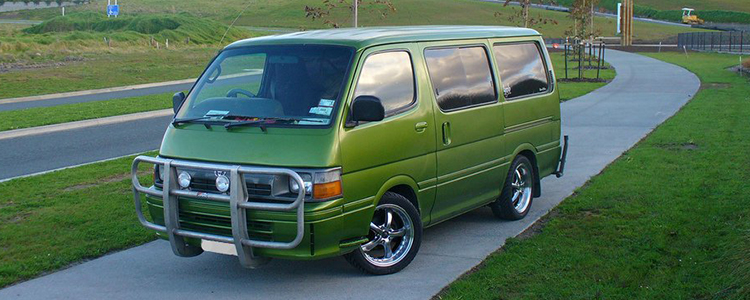
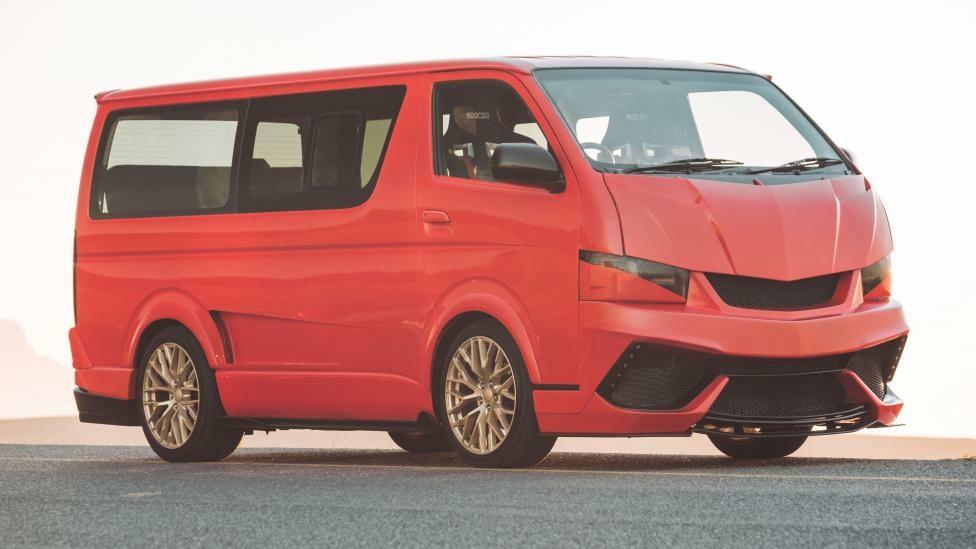
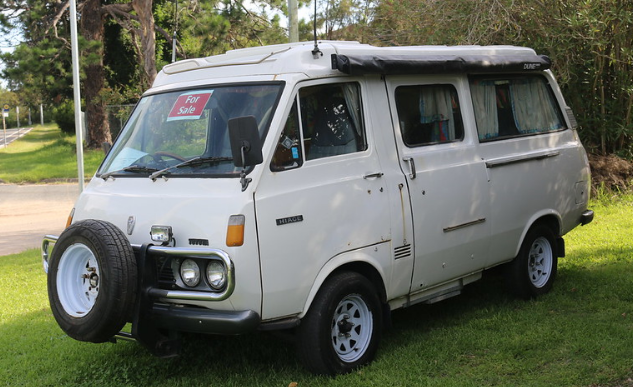
The Buyer's Read
If you're buying a HiAce, the safest starting point is a documented H100 Super Custom from the late 1990s with the 1KZ-TE 3.0L turbo diesel and confirmed cooling system history. That gets you the engine the overland scene built its reputation on, in the body style that started the vanlife trend, with parts support that still works through the global Toyota network. Skip anything under $15,000 that doesn't have receipts. A cheap HiAce almost always means a tired turbo, a tired cooling system, or rust that's been painted over rather than fixed, and you'll spend what you saved on the purchase fixing those things in the first year.
If you want a turnkey overland van and your country lets you import it, the H100 Super Custom 4WD with the 1KZ-TE is the right HiAce to buy. Just know that the cooling system is the failure mode that ends the engine, so baseline the radiator, thermostat, hoses, water pump, and cap on day one. A $700 service prevents a $3,500 head job. The other thing that drives HiAce prices is rust, so check the step wells, the rear arches, the floor seams, and anywhere seam sealer has been disturbed. A HiAce from a coastal Japanese prefecture is rarely as clean as one from inland.
The one HiAce to avoid right now is a converted camper without paperwork showing who did the conversion and when. DIY wiring, overweight builds, and poorly sealed roof penetrations are the three problems you can't see from the photos. A factory-fresh HiAce panel van you convert yourself ends up cheaper and safer than a tired conversion someone else walked away from. If your budget reaches the H200, you're buying a newer HiAce with mature electronics and the 1KD-FTV or 1GD-FTV diesel, but U.S. import eligibility doesn't open until 2029, so check your country's import age before you commit.
Frequently Asked Questions
- What HiAce generation is best to buy for the money?
- Most buyers target H100 (1989-2004) for value, parts support, and 4WD diesel availability.
- What are the biggest problems to check before buying?
- Check rust, cooling system health, service records, and signs of hard fleet use or poor camper wiring.
- Is the 1KZ-TE diesel reliable?
- Yes if maintained, but overheating can cause head/gasket issues. Verify radiator, hoses, and temps.
- Are 4WD HiAce models worth the premium?
- Usually yes for snow/overland. 4WD + diesel is the top-value combo, but buy on condition first.
- How does HiAce compare to a Delica for camping?
- HiAce offers more van-like space and simplicity; Delica often has more MPV comfort and cult demand.
- What mileage is too high on an imported HiAce?
- Mileage matters less than maintenance and rust. 150k-250k mi can be fine with strong records.
- Do camper conversions increase value?
- Only if professionally built with documentation. DIY builds can reduce value due to leaks and wiring.
- When is a HiAce US-legal to import?
- Under the 25-year rule, eligibility depends on build year. Example: 1999 models are legal in 2024.
Sources & References
- Toyota HiAce — encyclopedic overview — WikipediaVerified
- The common issues you will encounter on your Toyota HiAce van — Carused.jpVerified
- Most common problems — Toyota HiAce — Motor and WheelsVerified
- 1994 Toyota HiAce Super Custom — vanlife build profile — Vanlife NorthwestVerified
- Takata airbag recall — Co-op Toyota Australia — Co-op Toyota (Australia)Verified
- Toyota HiAce — current Australian model lineup — Toyota AustraliaVerified
- Toyota HiAce — current Japanese domestic lineup — Toyota JapanVerified
- Toyota KZ engine family (1KZ-TE 3.0L turbo diesel) — WikipediaVerified
- Toyota KD engine family (2KD-FTV / 1KD-FTV D-4D diesel) — WikipediaVerified
- Toyota GD engine family (1GD-FTV 2.8L D-4D diesel) — WikipediaVerified
- Toyota RZ engine family (1RZ-E / 2RZ-E / 3RZ-FE) — WikipediaVerified
- Toyota TR engine family (1TR-FE / 2TR-FE) — WikipediaVerified
- Toyota L engine family (3L / 5L NA diesel) — WikipediaVerified
- Toyota Granvia (H100-era wide-body luxury wagon) — WikipediaVerified
- Toyota Regius (Regius Ace JDM trim line) — WikipediaVerified
- Bring a Trailer — Toyota HiAce auction results — Bring a TrailerVerified
- Cars & Bids — HiAce search results — Cars & BidsVerified
- Importing a vehicle — 25-year exemption guidance — NHTSAVerified
- Flickr — HiAce lead-image source (nzhamstar) — FlickrVerified
Sources last verified: