Buyer's guide
Toyota Chaser
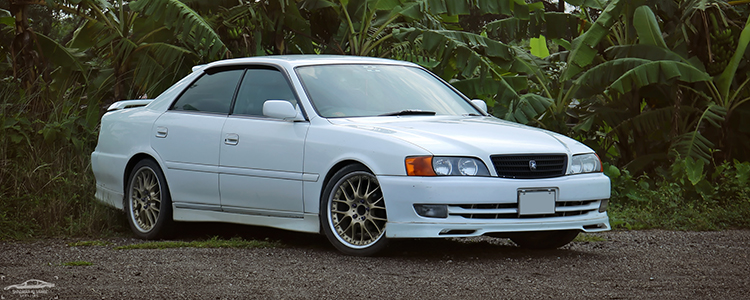
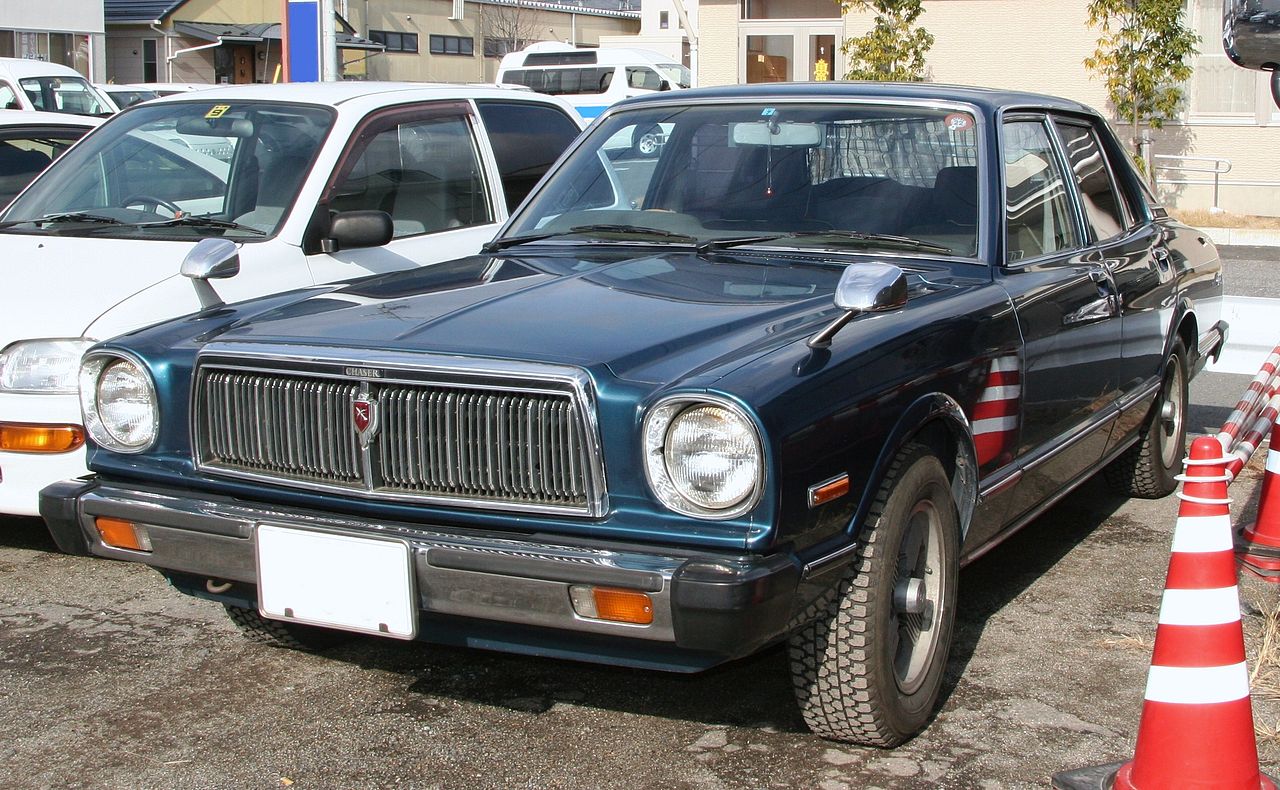
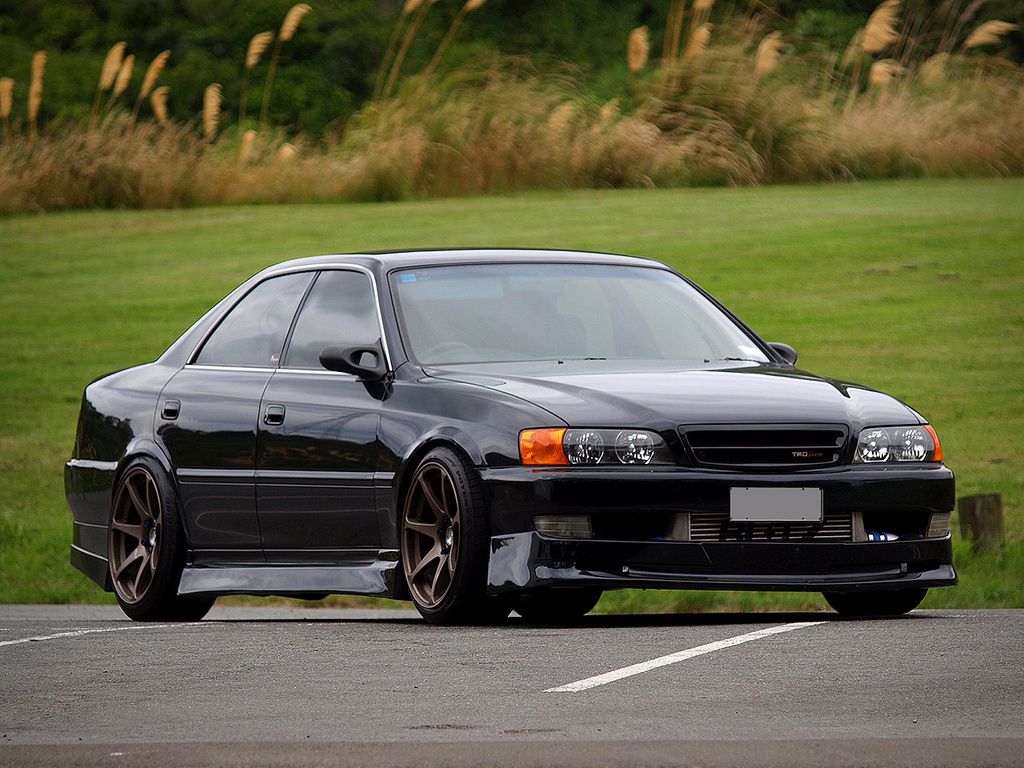
The Toyota Chaser was in production for nearly a quarter-century, with six generational changes between its July 1977 debut and its September 2001 discontinuation. It was Toyota's answer to the mid-size, four-door sedan — built on the Mark II platform, sold only in Japan, and offered alongside its sister cars the Cresta and the Cressida. The first-generation X30/X40 launched as a direct competitor to the Nissan Skyline, with three engines under 2.0L chosen specifically to keep the car inside Japan's smaller annual road-tax bracket. By the fourth-generation X80 in 1989, Toyota added the 1JZ engine and made 280 hp — the JDM gentleman's-agreement ceiling. The X90 in 1992 brought the 2.5L 1JZ-GTE and the 3.0L 2JZ-GE under the same hood Supra owners would recognise, and the fifth generation could be ordered with a five-speed manual only, making it, in many enthusiasts' eyes, the perfect four-door sports car. The 1996-2001 sixth generation — the JZX100 Tourer V — is the Chaser that Drift Tengoku, Best Motoring, and a generation of D1GP teams turned into the icon you see today: 1JZ-GTE, RWD, four doors, a clean three-box silhouette, and a tuning ecosystem deep enough to support both the gentleman daily and the angle-kit weapon.
JZX100 Tourer V vs JZX90 Tourer V — what changed underneath
The Tourer V badge first appeared on the JZX90 in October 1992 and carried over to the JZX100 in September 1996, but the two cars are not the same machine. Both use the 1JZ-GTE 2.5L twin-cam straight-six, both make the JDM-capped 280 PS, and both can be specified with the R154 five-speed manual. The differences sit in the detail. The JZX100 introduced VVT-i to the 1JZ-GTE and swapped from a parallel twin-turbo arrangement to a single CT15B turbocharger, which produced a fatter midrange torque curve — exactly the trait Toyota was chasing once the horsepower ceiling could not be raised. The chassis grew up in parallel: a longer wheelbase, revised front and rear suspension geometry, larger brakes on the Tourer V, and improved NVH from a more rigid body. Inside, the JZX100 dash is more modern and a touch less period-90s than the JZX90, and the Tourer V seats are firmer with deeper bolsters. For drift use the JZX90 is often preferred for its rawer feel and lighter front end; for daily-and-street duty the JZX100 is the more livable car and the one that holds money best today.
Why D1GP Chasers defined a tuner generation
When D1 Grand Prix launched in 2001, the JZX100 Chaser was already a fixture in the Japanese drift scene — a four-door car with a tuneable 1JZ-GTE, a 53/47 weight split, and a price tag that put it within reach of privateers. Through the early 2000s teams campaigned JZX100s alongside Silvias and Skylines, and the car became the platform of choice for drivers who wanted Supra-adjacent power without Supra money. Drift Tengoku, Option, and Video Option all featured Chasers heavily across the same window, and Toyota's decision to keep the Cresta and Mark II in showrooms alongside it meant cheap donor cars were everywhere. By the time the Chaser was discontinued in 2001 and replaced by the Verossa (and eventually folded into the 2004 Mark X), the JZX100 Tourer V had become the four-door equivalent of the S15 Silvia in the JDM tuner mind. That status — and the 25-year US import clock starting to tick on 1996 cars in 2021 — is what is now driving prices for clean, documented Tourer V examples upward year over year.
Quick read
Key takeaways
- JZX100 Tourer V is the value leader, manuals command big premiums
- Rust + accident history drive price more than mods or mileage
- R154 manual is prized; auto cars are cheaper but still desirable
- 1JZ-GTE is robust; budget for cooling, bushings, and wiring age
- US 25-year rule is expanding demand for 1996–2001 builds
- OEM + tasteful period mods sell best; extreme builds narrow buyers
Constants
Common across all Chaser generations
- Front-engine, rear-wheel-drive layout on the shared X-chassis platform
- Platform shared with the Toyota Mark II and Cresta
- Tourer V variants (X90/X100) used the 1JZ-GTE turbocharged inline-six
- JDM-only nameplate; never sold new outside Japan
- Right-hand drive throughout production
Chassis history
Generation timeline
The Chaser ran for six generations from 1977 to 2001, and the early ones aren't really what people mean when they say Chaser. The X30 through X70 are JDM curios. Everyone's actually after the JZX90 and JZX100, when the 1JZ-GTE shows up and the car turns into the drift sedan you've seen in Drift Tengoku and Option.
X80 (GX/JZX81; 1988–1992)
X90 (JZX90; 1992–1996)
Buyer's call
Should you buy a Toyota Chaser?
The Chaser is a sleeper. It looks like a plain four door and happens to come with a 1JZ-GTE under the hood. The catch is that parts are getting harder to find and rust is real on cars that lived their whole life in Japan.
Why you'll love it
- Iconic 1JZ/2JZ powertrain options 1JZ-GTE turbo models are durable, tunable, and well-supported with parts and knowledge.
- RWD balance with sedan practicality Four doors, usable rear seats, and trunk while keeping classic FR handling and drift capability.
- Strong aftermarket + swap ecosystem Coilovers, diffs, ECUs, and body parts are widely available; cross-compatibility with Mark II/Cresta.
- High ceiling for performance builds Stock turbos respond well to bolt-ons; built engines support big power with proven recipes.
- Enthusiast liquidity for top specs Tourer V, factory manual, low-km, and clean-history cars are consistently easiest to resell.
- Period-correct JDM appeal 90s interiors, aero kits, and wheels have strong nostalgia value; great show-and-street presence.
Why you might not
- Rust and prior drift damage risk Sills, arches, floor, and rear subframe areas can rust; many cars were drifted or repaired poorly.
- Manual premium and scarcity Factory manuals are expensive; swaps vary in quality and can hurt value if not documented well.
- Aging wiring, sensors, and plastics Coil packs, igniters, brittle connectors, and interior trim age; troubleshooting can be time-consuming.
- Cooling and oiling neglect issues Old radiators, tired fans, and sludge from poor maintenance can cause overheating or turbo wear.
- Insurance/registration friction Import paperwork, emissions rules, and insurer unfamiliarity can add cost depending on your state.
- Clean OEM parts getting pricier Original aero, interior pieces, and uncracked dash/trim are harder to source and cost more.
Who should not buy this
- Anyone needing easy parts at local US stores
- Buyers without a JDM specialist nearby
- People who can't handle 25+ year old wiring
- Anyone expecting modern crash safety
- Drivers needing strong A/C in extreme heat
- People who hate chasing oil leaks
- Those who won't budget $2k+ baseline service
- Anyone wanting zero-mod, untouched examples
- Buyers in strict emissions states/counties
- People who need OBD2 plug-in inspections
- Anyone who can't verify tune on a modified car
- First-time turbo owners with no tools
- People who require perfect paint and trim
- Those who won't do rust inspection on a lift
- Anyone who needs great fuel economy
- Drivers who sit very tall with sunroof models
- People who need rear seat child-seat simplicity
- Anyone who can't tolerate occasional downtime
- Buyers expecting quiet, modern NVH levels
- Anyone planning big power on stock auto trans
- Drift/track buyers without rebuild budget
- People who won't pay for quality tires/alignment
- Anyone allergic to import insurance hassles
- Buyers who can't read/translate Japanese docs
- People who need dealer-level diagnostic support
Reliability
Common issues & solutions
The Chaser is mechanically bullet-proof. Most owners report the drivetrain just keeps going, even when the car gets abused. What does fail is the same stuff that fails on any 25-year-old Japanese car. Electronics get flaky. Rust shows up on shells that never saw rustproofing from the factory, and clutches wear faster than you'd expect on the manual cars.
| Issue | Cause | Solution | Est. cost |
|---|---|---|---|
| Timing belt overdue | Unknown history; skipped interval on imports | Full TB kit: belt, tensioner, idlers, pump | $900-1800 |
| Radiator end tank crack | Aged plastic tanks; heat cycles and pressure | Replace radiator + cap; flush and bleed properly | $350-900 |
| Overheating in traffic | Weak fan clutch, clogged rad, missing shroud | Fan clutch/shroud/rad service; verify thermostat | $300-1200 |
| Heater core leak | Age corrosion; neglected coolant changes | Replace heater core; renew hoses; flush system | $700-1600 |
| Cam/crank seal oil leak | Hardened seals; crankcase pressure from blowby | Replace seals; check PCV; reseal front covers | $500-1400 |
| Rear main seal leak | Age; crankcase pressure; worn seal lip | Replace rear main; inspect crank surface; new clutch | $900-2200 |
| Valve cover gasket leak | Gasket shrink; overtightened covers warp | New gaskets + grommets; clean PCV system | $200-600 |
| Turbo oil smoke | Worn turbo seals; restricted oil drain; high blowby | Rebuild/replace turbo; fix drain; check PCV | $800-2500 |
| Boost creep/overboost | Free-flow exhaust; weak wastegate control | Port wastegate or add EBC; verify boost cut | $250-1200 |
| Misfire under boost | Weak coils, wrong plug heat range/gap, lean fuel | Coils/plugs; verify fuel pressure and AFRs | $250-1200 |
| ECU capacitor leak | Aging electrolytic caps on 90s Toyota ECUs | ECU recap/repair; clean board; verify sensors | $250-900 |
| Hacked wiring gremlins | Bad alarm/immobilizer/audio installs | Remove hacks; re-loom; restore grounds/fuses | $300-2000 |
| Auto trans slipping | Heat + age; higher boost/power on stock A/T | Service if mild; rebuild with upgrades if slipping | $300-4500 |
| Manual 2nd gear grind | Worn synchros from hard shifts/old fluid | Fluid first; rebuild trans if persistent | $120-2500 |
| Clutch slip | Worn disc; oil contamination from rear main | New clutch kit; fix oil leak; resurface flywheel | $700-2000 |
| Driveshaft vibration | Worn center bearing; bad U-joints; lowered angles | Replace bearing/U-joints; correct pinion angle | $300-1200 |
| Diff clunk/whine | Worn mounts/bushings; low fluid; abused LSD | Bushings/mounts; reseal; rebuild diff if noisy | $250-2500 |
| Steering rack leak | Seal wear; torn boots trap fluid and dirt | Rebuild/replace rack; flush PS; new hoses | $600-1800 |
| PS pump whine | Aerated fluid from leaks; worn pump vanes | Fix leaks; flush; replace pump if still noisy | $250-900 |
| Front ball joint wear | Age; lowered cars stress joints | Replace ball joints/control arms; align after | $300-1200 |
| Rear arm bushing play | Aged rubber; drift use; seized eccentrics | Replace arms/bushings; free eccentrics; align | $500-2000 |
| Inner tire wear | Lowered without correction; worn arms/bushings | Correct arms + alignment; set sane camber/toe | $400-1800 |
| Brake caliper sticking | Seized slide pins; old fluid; torn dust boots | Rebuild calipers; new pins/boots; flush fluid | $250-900 |
| Warped rotors/shudder | Cheap rotors/pads; overheated from stuck caliper | Quality rotors/pads; fix caliper; bed properly | $300-900 |
| A/C not cold | Low refrigerant; leaking condenser/evap; old compressor | Leak test; replace failed parts; evacuate/recharge | $250-1800 |
| Window regulator failure | Aged grease/cables; worn motor brushes | Replace regulator/motor; clean tracks | $150-500 |
| Cluster/speedo issues | Capacitors/solder cracks; swapped clusters | Repair cluster; verify speed sensor wiring | $150-700 |
| Fuel pump dying | Age; running low tank; ethanol exposure | Replace pump + sock; check wiring and relay | $200-700 |
| Injector O-ring leaks | Old seals; disturbed during mods | Replace upper/lower seals; lube and seat correctly | $150-450 |
| Knock/rod bearing wear | Low oil, detonation, bad tune, track abuse | Stop driving; inspect; rebuild/replace long block | $2500-9000 |
| Head gasket failure | Overheating; detonation; high boost on stock setup | Machine head; MLS gasket/studs; fix cooling/tune | $1800-6000 |
| Crank pulley separation | Aged harmonic balancer rubber delaminates | Replace crank pulley; inspect keyway and bolt torque | $250-900 |
| Rust in rockers/floors | Japan coastal/snow use; clogged drains; poor repairs | Cut/weld properly; rustproof; avoid filler fixes | $800-6000 |
| Water leaks to cabin | Sunroof drains, cowl seams, door vapor barriers | Clear drains; reseal cowl; replace vapor barriers | $150-900 |
| Poor idle/hunting | Vac leaks, dirty IAC, bad MAF, wrong BOV setup | Smoke test; clean IAC/MAF; recirc BOV if needed | $100-700 |
| Fuel cut/limp on boost | Boost spikes; stock MAP/ECU limits; bad boost control | Fix boost control; proper tune; verify sensors | $200-1500 |
Market
Differences between JDM & USDM
The Toyota Chaser was a Japanese-domestic nameplate from launch to retirement — never officially exported, never sold new in North America or Europe, and right-hand drive only for all six generations. The closest export equivalent was the Toyota Cressida, which shared the Mark II/Chaser/Cresta platform but used different bodywork, trim, and engine tunes for left-hand-drive markets. The Chaser arrives in the United States only through the 25-year FMVSS exemption: the first-generation X30/X40 became importable in 2002, the JZX90 fifth generation passed the threshold between 2017 and 2021, and the JZX100 sixth generation started becoming legal in September 2021 with the rest of the run going legal year-by-year through 2026. For Canada, the 15-year rule made JZX100 cars importable from 2011 onward, which is why a meaningful share of clean JZX100 stock now sitting in the US passed through Canadian ownership first.
450HP Toyota Chaser 1JZ — The Budget Supra Alternative
Specs
Technical specifications
Every Chaser is RWD and most of them ran a straight-six. The early cars used 2.0L engines to stay in Japan's small-car tax bracket. By the JZX90 you've got the 1JZ-GTE with parallel twin turbos, and the JZX100 swapped to a single CT15B that makes more torque in the middle of the rev range.
Engine options
| Chassis | Engine | Displacement | Power | Boost | Notes |
|---|---|---|---|---|---|
| X70 | 1G-GTEU | 2.0L | 185 PS @ 6200rpm | estimated ~8-10 psi | Twin-turbo; early 1G-GTEU |
| X80 | 1G-GTE | 2.0L | 185 PS @ 6200rpm | estimated ~8-10 psi | Twin-turbo; JDM performance grade |
| X80 | 1G-FE | 2.0L | estimated ~135-140 PS @ ~5600rpm | N/A | Estimated; exact spec varies by year |
| X80 | 1G-GE | 2.0L | estimated ~150-160 PS @ ~6200rpm | N/A | Estimated; DOHC NA I6 |
| X80 | 7M-GE | 3.0L | estimated ~200 PS @ ~5600rpm | N/A | Estimated; NA 3.0L I6 |
| X90 | 1G-FE | 2.0L | 135 PS @ 5600rpm | N/A | JDM spec varies; common rating shown |
| X90 | 1JZ-GE | 2.5L | 180 PS @ 6000rpm | N/A | NA 2.5L I6; pre-VVT-i era |
| X90 | 2JZ-GE | 3.0L | 220 PS @ 5800rpm | N/A | NA 3.0L I6; JDM rating |
| X90 | 1JZ-GTE | 2.5L | 280 PS @ 6200rpm | estimated ~11-12 psi | Twin-turbo; JDM 280PS agreement |
| X100 | 1G-FE | 2.0L | 140 PS @ 5600rpm | N/A | Common JDM rating; varies by year |
| X100 | 1JZ-GE | 2.5L | 200 PS @ 6000rpm | N/A | VVT-i on later models; rating varies |
| X100 | 2JZ-GE | 3.0L | 220 PS @ 5800rpm | N/A | NA 3.0L I6; JDM rating |
| X100 | 1JZ-GTE (VVT-i) | 2.5L | 280 PS @ 6200rpm | estimated ~11-12 psi | Single turbo VVT-i (late); JDM 280PS |
| X90/X100 | 2L-TE | 2.4L | estimated ~97-105 PS @ ~3800rpm | estimated ~6-9 psi | Estimated; turbo diesel varies by market |
Transmission options
| Type | Ratios | Availability | Notes |
|---|---|---|---|
| 5-speed Manual | estimated (varies by engine/trim) | Tourer V (opt), some Tourer S | Exact ratios depend on gearbox code |
| 4-speed Automatic | estimated (varies by A/T family) | Most trims (common) | A340-series common; ratios vary |
| 5-speed Automatic | estimated (varies by year/engine) | Late X100 NA trims (market-dependent) | Some late models used 5AT; varies |
Lineup
Variants & trims
Trim names changed a lot across the six generations, but only a few matter today. Tourer V is the one with the 1JZ-GTE. Avante is the luxury trim. Anything else is mostly for completeness, and you won't see those cars come up for sale very often outside Japan.
| Generation | Trim | Engine | Key features |
|---|---|---|---|
| X30/X40 (1st gen, 1977-1980) | Chaser (base) | 4M/5M (market-dependent) | RWD sedan, carb I6, basic trim |
| X30/X40 (1st gen, 1977-1980) | Chaser XL | 4M/5M (market-dependent) | Upgraded interior, higher equipment, I6 |
| X30/X40 (1st gen, 1977-1980) | Chaser XG | 4M/5M (market-dependent) | Top trim, luxury equipment, I6 |
| X60 (2nd gen, 1980-1984) | Chaser (base) | 1G-EU/5M-GEU (market-dependent) | RWD sedan, EFI I6, basic trim |
| X60 (2nd gen, 1980-1984) | Chaser XL | 1G-EU/5M-GEU (market-dependent) | Upgraded interior, higher equipment |
| X60 (2nd gen, 1980-1984) | Chaser XG | 1G-EU/5M-GEU (market-dependent) | Top trim, luxury equipment, EFI I6 |
| X70 (3rd gen, 1984-1988) | Chaser Avante | 1G-EU/1G-GEU (market-dependent) | Luxury trim, EFI I6, comfort focus |
| X70 (3rd gen, 1984-1988) | Chaser Avante TwinCam24 | 1G-GEU | DOHC 24V I6, sportier tune, Avante |
| X70 (3rd gen, 1984-1988) | Chaser GT TwinTurbo | 1G-GTEU | Twin-turbo I6, sport trim, RWD |
| X80 (4th gen, 1988-1992) | XL | 1G-FE/1G-GE/2L-T (market-dependent) | Entry trim, comfort suspension, RWD |
| X80 (4th gen, 1988-1992) | GL | 1G-FE/1G-GE/2L-T (market-dependent) | Mid trim, added equipment, RWD |
| X80 (4th gen, 1988-1992) | Avante | 1G-FE/1G-GE/7M-GE (market-dependent) | Luxury trim, higher equipment, RWD |
| X80 (4th gen, 1988-1992) | Avante G | 7M-GE/1JZ-GE (late, market-dependent) | Top luxury, premium interior, RWD |
| X80 (4th gen, 1988-1992) | GT TwinTurbo | 1G-GTE | Twin-turbo I6, sport trim, RWD |
| X90 (5th gen, 1992-1996) | XL | 1G-FE/2L-TE (market-dependent) | Entry trim, comfort focus, RWD |
| X90 (5th gen, 1992-1996) | GL | 1G-FE/2L-TE (market-dependent) | Mid trim, added equipment, RWD |
| X90 (5th gen, 1992-1996) | Avante | 1JZ-GE/1G-FE (market-dependent) | Luxury trim, higher equipment, RWD |
| X90 (5th gen, 1992-1996) | Avante G | 1JZ-GE/2JZ-GE (market-dependent) | Top luxury, premium interior, RWD |
| X90 (5th gen, 1992-1996) | Tourer S | 1JZ-GE | Sport trim, firmer suspension, RWD |
| X90 (5th gen, 1992-1996) | Tourer V | 1JZ-GTE | Turbo I6, sport seats, LSD (opt), RWD |
| X100 (6th gen, 1996-2001) | XL | 1G-FE/2L-TE (market-dependent) | Entry trim, comfort focus, RWD |
| X100 (6th gen, 1996-2001) | GL | 1G-FE/2L-TE (market-dependent) | Mid trim, added equipment, RWD |
| X100 (6th gen, 1996-2001) | Avante | 1JZ-GE/1G-FE (market-dependent) | Luxury trim, higher equipment, RWD |
| X100 (6th gen, 1996-2001) | Avante G | 1JZ-GE/2JZ-GE (market-dependent) | Top luxury, premium interior, RWD |
| X100 (6th gen, 1996-2001) | Tourer S | 1JZ-GE | Sport trim, firmer suspension, RWD |
| X100 (6th gen, 1996-2001) | Tourer V | 1JZ-GTE (VVT-i late) | Turbo I6, 5MT opt, LSD opt, RWD |
Pricing
Average prices & original MSRP
The Chaser market is led by the JZX100 Tourer V, and manuals lead the manuals. A clean documented manual Tourer V is the car driving the curve up. Auto cars are cheaper but still going up. The older generations sit further back in the market because they don't have the 1JZ-GTE that buyers are paying for.
Today's market range: $12,000 to $65,000 (median ~$28,000). Source: JDMBuySell / USS Auction.
Demand remains strong for JZX100 Tourer V, with manuals and clean OEM cars appreciating. Drift-worn cars lag. As 1999–2001 become US-legal, supply tightens and prices for rust-free, documented examples trend upward.
Inspect
Pre-purchase inspection checklist
Walk this list with the seller, not in front of them. The Critical items mean walking away if there's no paperwork backing them up. The High items can usually be priced into the deal. Pay extra attention to rust on a Chaser. These cars never saw rustproofing from the factory, and what's hiding under the carpet matters more than what's on top.
Critical priority
- Import paperwork Verify title/VIN match, legal import docs
- Frame rails Inspect front rails for kinks, pulls, rust
- Underbody rust Probe floor pans, jacking points, seams
- Cooling system Pressure test; check rad end tanks, hoses
- Compression test Warm compression test; note cylinder spread
- Leakdown test Leakdown for rings/valves; listen at oil cap
- Exhaust smoke Blue on decel/idle; white sweet smell coolant
- Timing belt history Confirm belt/water pump date; inspect sticker
- Transmission shift A/T: flare/slip; M/T: grind 2nd/3rd
- Aftermarket ECU Verify tune quality; check knock control retained
- Boosted mods list Confirm injectors/pump/AFR support for power
High priority
- Auction sheet Request auction sheet; verify grade/mileage
- Odometer legitimacy Check cluster swap signs; compare ECU mileage
- Accident repairs Check core support seams, overspray, welds
- Rear subframe mounts Look for cracks, rust, crushed pinch seams
- Sills/rockers Check rocker rust under skirts and plugs
- Strut towers Inspect for rust bubbles, seam separation
- Radiator support Look for non-OE spot welds, wrinkles
- Oil condition Check for glitter, fuel smell, sludge
- Cold start behavior Listen for knock, lifter tick, VVT-i rattle
- Vacuum/boost leaks Smoke test intake; check IC couplers/cracks
- Turbo condition Check shaft play, oil in IC pipes, smoke
- Boost control Verify stable boost; no overboost/creep
- Oil leaks Check cam seals, front main, rear main, pan
- Crank pulley wobble Watch harmonic balancer for wobble at idle
- Fuel system Check fuel smell, damp lines, pump noise
- Ignition system Check coil packs, plug gap, misfire under load
- ECU condition Open ECU; check capacitor leak/corrosion
- Wiring hacks Inspect for splices, scotchlocks, alarm mess
- ATF condition Check ATF color/burnt smell; pan debris
- Clutch engagement Check slip in 4th/5th; pedal feel and bite
- Steering rack Check rack leaks, torn boots, play on-center
- Front control arms Check ball joints, bushings, caster arm play
- Rear arms Check toe/camber arm bushings; seized eccentrics
- Brakes Check rotor lip, caliper leaks, soft pedal
- Heater core Check sweet smell, fogging, wet passenger floor
- Airbags/SRS Confirm SRS light behavior; check wheel swap
- Emissions readiness Check cats/O2s; local compliance feasibility
Medium priority
- Trunk floor Lift carpet; check spare well rust/water
- Windshield cowl Check for rust, clogged drains, water leaks
- Door bottoms Check drain holes and inner seams for rust
- Sunroof drains Pour water; confirm drains flow, no wet carpet
- Front bumper support Check for bends; indicates front impact
- Idle quality Check hunting idle; A/C on/off response
- Valve cover leaks Look for oil in plug wells and on manifold
- Accessory drive Listen for idler/tensioner bearing noise
- Fuel pressure Verify base pressure; check FPR vacuum line
- Battery/charging Check alternator output; voltage drop at idle
- Ground straps Check engine/body grounds for corrosion
- Driveshaft Check center bearing, U-joint play/vibration
- Diff noise Listen for whine/clunk; check for LSD chatter
- Axles/CV boots Inspect boots for tears/grease sling
- Power steering Check pump whine; fluid foaming; return hose
- Wheel bearings Check rumble/hum; play at 12/6 o'clock
- ABS function Confirm ABS light self-test; scan for codes
- Tires wear Check inner wear from bad alignment arms
- Wheels fitment Check rubbing, rolled fenders, spacer studs
- Suspension leaks Check struts for oil; bounce test
- Coilover quality Identify brand; check seized collars, leaks
- Engine mounts Check for collapse; excessive drivetrain rock
- A/C system Verify cold vent temps; compressor noise
- Climate controls Check blend doors; digital HVAC display works
- Cluster functions Check speedo/tacho; backlight; warning lamps
- Interior water leaks Check damp carpet, mold smell, trunk moisture
Low priority
- Window regulators Check slow windows; crunching; switch function
- Door locks Check actuators; keyless/alarm integration
- Lights Check headlight haze; leveling motors; fogs
- Wiper linkage Check slop, intermittent function, park position
- Seat wear Check bolsters, recline gears, seat rails
Cross-shop
Comparable alternatives
If the Chaser doesn't end up being your car, the natural alternatives are its siblings. The Mark II and Cresta share the chassis with different bodywork and are usually cheaper for equivalent condition. The Skyline R33 sedan is the obvious rival if you want twin-turbo straight-six in a different badge.
Toyota Mark II JZX100
Same platform; more sleeper look; similar 1JZ trims
Toyota Cresta JZX100
Same bones; luxury-leaning interior; Tourer V variants
Nissan Laurel C35
RB25DET sedan rival; cheaper entry; good drift base
Nissan Skyline R34 GT-T
RB25DET coupe/sedan feel; strong aftermarket; pricier
Nissan Stagea WC34 260RS
Wagon practicality; RB26DETT AWD; higher running costs
Compare
How it compares
Against the JDM sport-sedan field, the Chaser's edge is the 1JZ-GTE and four-door practicality at a price the Skyline GT-R and Supra can't touch. The trade-off is parts. Skyline and Supra parts are everywhere, and Chaser-specific trim is getting genuinely hard to source for a car that was never sold outside Japan.
| Feature | Toyota Chaser | Nissan Laurel C35 | Mitsubishi Galant VR-4 |
|---|---|---|---|
| Engine (turbo flagship) | 1JZ-GTE 2.5T I6 | RB25DET 2.5T I6 | 4G63T 2.0T I4 |
| Drivetrain layout | FR (RWD), some autos | FR (RWD) | AWD (most trims) |
| Stock power (typical) | 280 PS (JZX90/100 V) | 280 PS (top trims) | 280 PS (JDM cap era) |
| Torque character | Strong midrange; I6 smooth | Peaky; turbo lag varies | Linear; high-rev NA feel |
| Transmission options | R154 5MT / 4AT | 5MT / 4AT | 6MT / 5AT (later) |
| Manual desirability | Very high; big premium | High; more available | Moderate; many autos |
| Chassis use-case | Street, drift, VIP-sport | Drift-focused coupe | GT street coupe |
| Aftermarket depth | Huge (JZ ecosystem) | Huge (SR/RB ecosystem) | Strong but pricier niche |
| Parts interchange | Mark II/Cresta shared | Skyline/Stagea shared | Limited cross-model |
| Reliability baseline | High if maintained | Good; coil/MAF issues | Sensitive to heat/vac leaks |
| Rust vulnerability | Moderate; inspect sills/floor | Moderate; rear arches common | Moderate; age-dependent |
| Interior space | Good rear seat; sedan | Tight rear; coupe | Good; wagon option |
| Collector upside | Rising for clean Tourer V | High for Spec R, clean cars | High but already expensive |
Gallery
In pictures
Editorial
The buyer's read
If you're buying a Chaser, the car you actually want is a JZX100 Tourer V manual. That's the 1JZ-GTE with the single CT15B turbo and VVT-i, the R154 five-speed gearbox, and the body shape Drift Tengoku and Option turned into the drift-sedan archetype. A documented Tourer V manual with original paint, intact OEM aero, and a clean auction sheet is the spec that holds value as US import eligibility rolls through the late 2020s. Anything else is a step down the curve.
The JZX90 Tourer V is the budget version of the same idea. It's the parallel twin-turbo 1JZ-GTE, the same R154 gearbox, and a rawer, lighter car than the JZX100. It's not as polished and the front end is less planted, but it's the cheapest path into a real 1JZ-GTE Chaser, and clean original-paint examples are still findable.
Skip the X70 and earlier unless you specifically want a JDM curio. Those cars are interesting but parts are gone, and you'll spend more on a clean X70 than you'd spend on a tidy JZX100 Tourer S that you can actually drive every day.
The biggest risk on any Chaser is rust. Toyota didn't rustproof these cars because Japan doesn't salt the roads, so any Chaser that lived its whole life in Japan can have rot hiding under the carpet, in the rear arches, and at the seams. Pull the carpet. Lift the spare. Walk away from anything with bubbling at the rocker panels.
The second risk is misrepresented power. The Chaser was 280 PS from the factory because that's the JDM gentleman's-agreement ceiling. Any car advertised as making more from the factory is wrong. Real over-280 numbers come from aftermarket tuning, and the receipts need to be there. If they're not, assume the engine has been opened and price the car like an unknown.
FAQ
Frequently asked questions
- Which Chaser is most desirable for collectors?
- The JZX100 Tourer V leads, especially factory manual cars with low km, no rust, and clean history.
- What’s the difference between JZX90 and JZX100 Tourer V?
- Both use 1JZ-GTE; JZX100 adds VVT-i and newer chassis feel. JZX90 is more raw; JZX100 is peak demand.
- Are automatic Chasers worth buying?
- Yes—autos are cheaper and fine for street/VIP. But manuals hold value better; budget for a quality swap if desired.
- What are the biggest rust areas to inspect?
- Check sills/rockers, rear arches, floor pans, trunk well, and rear subframe mounts. Rust repairs can exceed the price gap.
- Common 1JZ-GTE issues to watch for?
- Look for cooling neglect, oil leaks, tired turbos, cracked vacuum lines, and aging coil packs/igniter components.
- How can I verify a real Tourer V?
- Confirm chassis code (JZX), engine code 1JZ-GTE, factory options, and auction sheet/history. Beware badge swaps.
- Do modifications help or hurt resale value?
- Tasteful, documented mods can be neutral, but heavy drift mods hurt. Best resale is OEM+, clean bay, and reversible upgrades.
- What should I budget for immediate maintenance?
- Plan for timing belt service, fluids, cooling refresh, bushings, and brakes. Deferred maintenance is common on imports.
Citations
Sources & references
- Toyota Chaser — encyclopedic overview — WikipediaVerified
- Whirlpool forums — JZX Chaser ownership thread — WhirlpoolVerified
- Mighty Car Mods forums — VX/VY Clubsport or JZX100 Chaser Tourer V — Mighty Car ModsVerified
- Driftworks — calling JZX owners: JZX100 daily, common issues — DriftworksVerified
- Driftworks — 1JZ Chaser help thread — DriftworksVerified
- Toyota 75-year vehicle lineage — Chaser (id60011062) — Toyota Motor CorporationVerified
- Toyota Chaser — Automobile Wiki entry — Fandom Automobile WikiVerified
- StanceNation — The Dream Chaser (feature) — StanceNationLink dead View archived ↗
- Toyota JZ engine family — encyclopedic overview — WikipediaVerified
- The Toyota JZ engine family explained — Car and DriverVerified
- Toyota Chaser JZX100 buyers guide — Garage DreamsVerified
- Toyota Automobile Museum — Chaser exhibit — Toyota Automobile MuseumVerified
- Toyota Cresta — sister-model encyclopedic overview — WikipediaVerified
- Toyota Mark II — platform-parent encyclopedic overview — WikipediaVerified
- Toyota Verossa — Chaser successor encyclopedic overview — WikipediaVerified
Sources last verified: