For most buyers, a documented 1997–2000 UCF20 is the right entry point: VVT-i power, modern transmission, mature electronics, and parts crossover from the Lexus LS 400 that keeps maintenance costs reasonable. Air suspension remains optional and the same caveat applies — budget for coil conversion if the system is past its prime.
Buyer's guide
Toyota Celsior XF20 — Buyer's Guide & Specs
The second-generation Celsior (UCF20/UCF21, November 1994 to 2000) is the value sweet spot in today's market. The 1UZ-FE gained refinements — better cooling, revised valvetrain, and from 1997 the VVT-i upgrade that added roughly 30 hp and 41 N·m. A 36 mm wheelbase stretch added 66 mm of rear legroom. The 1997 update introduced a 5-speed automatic gearbox alongside the original 4-speed.
Looking to buy?
Browse Toyota Celsior listings →
Key Takeaways
The Celsior had three generations from 1989 until 2006, and each one feels like a different car to own. The XF10 keeps things simple. The XF20 is generally considered the best value of the three. The XF30 has the most modern tech and the strongest VIP scene appeal, but it also has the most electronics waiting to fail.
- Lexus LS twin: same core platform, JDM trims
- UCF20/UCF30 are the sweet spot for value + tech
- Air suspension can be costly; coils are simpler
- Grade, mileage, history drive price more than mods
- VIP demand supports clean, stock, low-mile cars
- Import costs (shipping, compliance) change totals
Variants & Trims
JDM Celsiors came in A, B, C, F Package, eR Version, and on the XF30 the Ultra Luxury Selection. The differences are about features, not the engine or chassis. The eR Version is the sportier one with firmer suspension. The Ultra Luxury Selection is the top of the range with rear seat features and the best audio.
| Generation | Trim | Engine | Key Features |
|---|---|---|---|
| XF20 (UCF20/UCF21, 1994-2000) | Celsior A | 1UZ-FE 4.0L V8 | Base grade, improved safety, air suspension opt |
| XF20 (UCF20/UCF21, 1994-2000) | Celsior B | 1UZ-FE 4.0L V8 | Mid grade, upgraded interior, enhanced audio options |
| XF20 (UCF20/UCF21, 1994-2000) | Celsior C | 1UZ-FE 4.0L V8 | High grade, leather, premium audio, more standard equip |
| XF20 (UCF20/UCF21, 1994-2000) | Celsior F Package | 1UZ-FE 4.0L V8 | Luxury focus, rear comfort, higher standard equipment |
| XF20 (UCF20/UCF21, 1994-2000) | Celsior eR Version | 1UZ-FE 4.0L V8 | Sport-tuned suspension, sport trim, handling focus |
Should You Buy a Toyota Celsior XF20?
The Celsior is one of those cars where what you give up is just as clear as what you get. Toyota built it to be reliable first and exciting second, so the strong points and weak points have stayed the same across the whole production run.
Why You'll Love It
- Flagship refinement Exceptional NVH isolation, ride quality, and cabin quiet; still feels premium at speed.
- Durable Toyota/Lexus V8s 1UZ/3UZ are long-lived with routine service; strong cooling and bottom-end reliability.
- Strong parts interchange Many mechanical parts cross with Lexus LS/GS; easier sourcing than niche JDM sedans.
- VIP platform credibility Iconic base for VIP builds: stance, wheels, aero; strong community and style demand.
- Comfort-first daily driver Soft ride, stable highway manners, great seats; ideal long-distance cruiser.
- Value vs German luxury Similar comfort to S-Class/7-Series era with fewer catastrophic drivetrain failures.
- High spec JDM options Some trims get curtains, radar cruise, air suspension, rear controls, upgraded audio.
Why You Might Not
- Air suspension costs Air struts, height sensors, and compressors age; repairs can exceed car value on cheap buys.
- Aging electronics/modules Old nav screens, climate panels, and ECUs can fail; used parts vary by generation.
- Fuel economy and weight Heavy V8 sedan; city mpg can be poor, especially short trips and worn O2 sensors.
- Import/registration complexity 25-year rule timing, paperwork, and state rules add cost; RHD insurance can vary.
- Deferred maintenance risk Cheap imports often need bushings, mounts, cooling, brakes, and timing service catch-up.
- Not a sports sedan Comfort tuning and soft steering; performance mods exist but it’s not a factory handler.
- Trim/option confusion Celsior grades differ from US LS; verifying air/coil, radar, and packages takes homework.
Who Should NOT Buy This
- Anyone without budget for catch-up maintenance
- Buyers who need modern safety tech and ADAS
- People who can't source JDM-specific parts
- Owners without a trusted shop for older luxury cars
- Those expecting 25+ mpg; real-world is often 16-21
- Drivers wanting sporty handling; it's heavy and soft
- People who hate electrical gremlins in old luxury cars
- Anyone in strict emissions areas without a compliance plan
- Buyers unwilling to delete/convert failing air suspension
- Those needing cheap tires/brakes; quality parts cost more
- People who can't tolerate RHD quirks (if RHD import)
- Anyone who can't garage it; sun/heat kills interiors
- Drivers who do lots of short trips; sludge risk increases
- Buyers expecting plug-and-play infotainment upgrades
- People who won't do fluid changes on schedule
- Anyone who needs maximum rear-seat headroom with sunroof
Common Issues & Solutions
The Celsior is a bulletproof car mechanically. Most of the trouble comes from age, not the engineering. Three things tend to cause headaches. The power steering pump leaks onto the alternator. The air suspension gives up. The LCD screens in the climate and instrument panels start to fade. None of these are deal breakers if the paperwork shows the work was done.
| Issue | Cause | Solution | Est. Cost |
|---|---|---|---|
| PS pump leak kills alternator | Pump shaft seal leaks onto alternator below | Reseal/replace pump and alternator; flush PS fluid | $700-1600 |
| Timing belt overdue | Neglected interval; unknown history on imports | Timing belt kit + water pump + seals + drive belts | $900-1800 |
| Radiator plastic tank crack | Age heat-cycles; neck/tank splits under pressure | Replace radiator, cap, hoses; pressure test after | $450-900 |
| Heater core leak | Corrosion/age; coolant neglect accelerates failure | Replace heater core; flush system; new coolant | $900-1800 |
| Valve cover gasket leak | Gaskets harden; half-moons seep onto exhaust | Replace gaskets, grommets; clean PCV system | $350-800 |
| Cam/crank seal seep | Aged seals; often found during belt service | Replace seals during timing service; clean oil pump | $250-700 |
| Idle hunt / stalling | Dirty IAC/throttle body; vacuum leaks; old hoses | Clean IAC/TB; smoke test; replace brittle hoses | $200-600 |
| MAF sensor drivability | Contaminated MAF; intake leaks after MAF | Clean/replace MAF; fix intake boots and clamps | $120-450 |
| A341E shift flare/harsh | Worn clutches/valve body; old ATF; solenoids | Service ATF/filter; solenoids; rebuild if slipping | $250-3500 |
| Delayed D/R engagement | Internal seal wear; low ATF; valve body wear | Verify level; service; rebuild if persistent | $250-3500 |
| ATF cooler line seep | Aged rubber/flare fittings; radiator end tank seep | Replace lines/clamps; consider external cooler | $150-600 |
| Diff pinion seal leak | Seal wear; vent clog raises pressure | Replace seal; clean vent; refill gear oil | $250-650 |
| Driveshaft vibration | Center bearing wear; U-joint wear; imbalance | Replace center bearing/U-joints; balance shaft | $350-900 |
| Front lower ball joint wear | Age/boot tear; grease loss; heavy chassis load | Replace ball joints ASAP; align after | $300-800 |
| LCA bushing failure | Rubber tears; causes shimmy and tire wear | Replace arms or press bushings; alignment | $450-1200 |
| Steering rack leak | Rack seals wear; contaminated PS fluid | Rebuild/replace rack; flush PS; new tie rods | $900-1800 |
| Air suspension sag | Air strut bags crack; valve block leaks | Replace air struts/lines; or convert to coils | $900-3500 |
| Air compressor overrun | System leak; dryer saturated; weak compressor | Fix leaks; replace dryer/compressor as needed | $400-1600 |
| Brake pulsation | Rotor runout; seized caliper slides; cheap rotors | Quality rotors/pads; service slides; flush fluid | $300-900 |
| ABS wheel speed sensor | Sensor failure or cracked tone ring wiring | Scan codes; replace sensor/repair wiring | $200-650 |
| Climate control LCD failure | Aging capacitors/LCD bleed; heat damage | Rebuild unit or replace with known-good module | $200-700 |
| Blend/mode door servo fail | Servo gears strip; potentiometer wear | Replace servo; recalibrate; verify linkages | $250-900 |
| A/C weak or intermittent | Low refrigerant; compressor wear; condenser leaks | Leak test; replace O-rings/condenser/compressor | $250-1600 |
| Window regulator failure | Cable frays; plastic guides break; motor strain | Replace regulator; lube tracks; verify switches | $200-600 |
| Door lock actuator weak | Motor wear; grease hardens; low voltage issues | Replace actuator or rebuild motor; check battery | $150-500 |
| Power antenna mast strips | Nylon cable strips; mast bent; dirt intrusion | Replace mast cable; clean/lube antenna drive | $80-250 |
| Cluster backlight/pixels | Aged bulbs/solder joints; LCD degradation | Reflow solder; replace bulbs; cluster refurb | $150-600 |
| Soft-close door failure | Latch motor wear; misalignment; cracked gears | Adjust latch; replace soft-close actuator/latch | $250-900 |
| Fuel pump noisy/weak | Age; clogged sock/filter; low tank running | Replace pump and strainer; check wiring voltage | $250-700 |
| Evap/vacuum hose cracks | Old rubber; heat cycling; causes lean codes | Replace hoses; smoke test; new clamps | $100-400 |
| Exhaust manifold leak | Gasket fatigue; studs corrode; heat cycling | Replace gaskets/studs; inspect for cracks | $400-1200 |
| Catalyst rattle/failure | Age; misfire damage; substrate breaks apart | Fix misfire; replace cats; verify O2 sensors | $600-2500 |
| O2 sensor aging | Slow response with age; rich/lean trims drift | Replace upstream sensors; clear trims; retest | $200-600 |
| Parasitic battery drain | Aging modules, trunk light, aftermarket alarms | Draw test; isolate circuit; repair module/wiring | $150-800 |
Differences between JDM & USDM
The Celsior and the Lexus LS 400 / LS 430 share the same platform, drivetrain, and most mechanical hardware — but the cars are not identical. JDM Celsiors received factory specifications that never reached export markets: air suspension on more grades, radar cruise control on UCF30 from 2003, soft-close doors on certain trim levels, JDM-only audio and navigation modules (incompatible with North American head units), rear-seat curtain controls, and interior-trim packages like 'eR Version' (sport-tuned) and 'Ultra Luxury Selection' (top spec) that have no LS equivalent. The driving position is RHD throughout Celsior production. For VIP-style builds, these factory cues are the authenticity markers that separate an imported Celsior from a re-trimmed Lexus.
Toyota Celsior vs Lexus LS 400 — JDM vs USDM differences
Pre-Purchase Inspection Checklist
Walk this list with the seller, not in front of them. The Critical items mean walking away if there's no paperwork backing them up. The High items can usually be priced into the deal. Ten minutes at idle and a 30 minute drive will surface most of what you need to know.
Critical Priority
- Service History Verify timing belt/water pump date & mileage
- Power Steering Check PS pump leak onto alternator area
- Cooling System Check radiator tanks, hoses, fan clutch, temp
- Transmission Check ATF color/smell; shift flare or slam
- Ball Joints Check play/boots; front clunk over bumps
- Air Suspension If equipped: check sag overnight & compressor
- Air Struts Spray soapy water; check bag cracks/leaks
High Priority
- Cold Start Listen for valve tick, belt squeal, idle hunt
- Oil Leaks Check cam seals, front main, pan, rear main
- Alternator Check charging 13.8-14.4V; PS leak kills it
- Radiator Cap/Neck Inspect neck cracks; pressure test system
- Heater Core Smell coolant, fogging, damp carpet under dash
- Thermostat Confirm stable temp in traffic; no overheat
- ATF Cooler Lines Inspect seepage at radiator/lines/fittings
- Suspension Bushings Check LCA bushings; braking shimmy/pull
- Steering Rack Check rack boots wet; feel for dead spot
- Brakes Check rotor lip, pulsation, caliper slide pins
- ABS/TRAC Lights Confirm no warning lights; scan if possible
- Frame/Underbody Inspect jacking points, seams, subframe rust
- Front Core Support Look for bends/overspray; accident repair signs
- HVAC Operation Confirm hot/cold, mode doors, blower speeds
- A/C System Check vent temp; compressor noise; leaks
- Airbags Check SRS light self-test; no stored codes
- Fuel System Check fuel smell; tank straps; pump whine
- OBD/Diagnostics Scan for codes; readiness; pending misfires
- JDM Import Docs Verify export cert, auction sheet, mileage proof
Medium Priority
- Driveshaft Check center bearing & U-joint play/vibration
- Diff Check pinion seal leak; whine on coast
- Engine Mounts Look for collapsed mounts; clunk on shifts
- Struts/Shocks Check leaks; bounce test; uneven tire wear
- Wheel Bearings Listen for hum; check play at 12/6 o'clock
- Tires Check date codes; inner wear from bushings
- Sunroof Drains Pour water; check for wet A-pillars/headliner
- Trunk Leaks Check spare well damp; tail light seal leaks
- Climate Display Check LCD bleed/dim; buttons respond
- Instrument Cluster Check dead pixels, dim backlight, warning lamps
- Power Seats Test all directions; memory; lumbar function
- Steering Column Test tilt/telescope; auto-away function
- Soft-Close Doors If equipped: verify pull-in works on all doors
- Power Windows Check slow windows; regulator noise/clicking
- Door Locks Check actuators; remote/keyless operation
- Exhaust Check leaks at manifolds/y-pipe; rattles
- Catalysts Check for rattles; O2 codes; sulfur smell
- Idle Quality Check for vacuum leaks; IAC sticking
- Key/Immobilizer Verify all keys; master key present if equipped
- Recalls/TSBs Check any outstanding safety recalls in region
Low Priority
- Door Seals Check wind noise, water leaks, torn weatherstrip
- Audio System Test speakers; amp hiss; CD changer errors
- Antenna Power mast up/down; stripped cable noise
- Seatbelts Check retractors; fraying; buckle latch
Generation History
Celsior UCF10 (1989-1994)
- Debut of 1UZ-FE 4.0 V8
- Overbuilt NVH, flagship build quality
- Early electronics aging; simple by later standards
- Classic VIP base; boxy 90s luxury look
Celsior UCF20/21 (1994-2000)
- Refined 1UZ-FE; better safety and rigidity
- More modern interior; strong daily usability
- Optional air suspension on higher grades
- Best value: comfort, reliability, parts crossover
Celsior UCF30/31 (2000-2006)
- 3UZ-FE 4.3 V8; more torque and smoothness
- More tech: nav, radar cruise on some cars
- Stronger VIP demand; best looking to many
- Air struts, screens, modules raise ownership risk
Sales Numbers by Year
| Year | Exports | Domestic | Notes |
|---|---|---|---|
| 1989 | — | 11,574 | Launch year; partial-year production |
| 1990 | 41,901 | 42,806 | |
| 1991 | 41,228 | 36,995 | |
| 1992 | 32,472 | 32,561 | |
| 1993 | 28,187 | 23,783 | |
| 1994 | 21,390 | 22,443 | UCF10 → UCF20 transition |
| 1995 | 22,433 | 23,657 | |
| 1996 | 22,810 | 22,237 | |
| 1997 | 17,782 | 19,618 | VVT-i upgrade for 1UZ-FE; 5-speed automatic introduced |
| 1998 | 22,730 | 20,790 | |
| 1999 | 17,198 | 16,357 | |
| 2000 | 11,098 | 15,871 | UCF20 → UCF30 transition; 3UZ-FE 4.3L V8 |
| 2001 | 31,473 | 31,110 | |
| 2002 | 27,033 | 26,261 | |
| 2003 | 21,461 | 23,895 | Dynamic radar cruise control added |
| 2004 | 31,697 | 32,272 | Mid-cycle facelift; restyled fascias, LED tail lamps |
| 2005 | 28,902 | 26,043 | |
| 2006 | 30,908 | 19,546 | Final year of Celsior production; LS 460 launched globally |
Market Data
Production Numbers & Rarity
| Generation | Years | Total Built | Notes |
|---|---|---|---|
| XF10 (UCF10/UCF11) | 1989-1994 | estimated | Exact JDM Celsior-only totals not published |
| XF20 (UCF20/UCF21) | 1994-2000 | estimated | Exact JDM Celsior-only totals not published |
| XF30 (UCF30/UCF31) | 2000-2006 | estimated | Exact JDM Celsior-only totals not published |
Original MSRP & Pricing
Original MSRP: $35,000 at launch in 1989. USD launch price of the equivalent Lexus LS 400 in the United States. A contemporary Mercedes-Benz 420 SEL listed at approximately $63,500. JDM Celsior launch pricing varied by trim grade and was set in yen; the Lexus US price is the most-cited launch benchmark.
How It Compares
Among the JDM flagship sedans, the Celsior is the most reliable, the Cima is the most VIP coded, and the President is the rarest. The table below leans toward the Celsior's strengths because that's where it actually wins, on durability, parts, and resale stability.
| Feature | XF20 | Nissan Cima Y33 | Nissan President JG50 |
|---|---|---|---|
| Engine layout | V8 NA (1UZ/3UZ) | I6 NA/TT (RB25/RB26) | V8 NA (VH45DE) |
| Power (typical) | 1UZ 260hp / 3UZ 280hp | VH41 ~266hp | VH45 ~270hp |
| Torque (typical) | 1UZ ~260lb-ft / 3UZ ~320 | VH41 ~280lb-ft | VH45 ~290lb-ft |
| Transmission | 4AT/5AT/6AT (gen dependent) | 4AT/5AT | 4AT/5AT |
| Ride focus | Ultra quiet, soft luxury | Softer, floaty VIP feel | Limo-like, very soft |
| Reliability reputation | Excellent; LS-level durability | Good, but more electrical risk | Mixed; age + parts scarcity |
| Parts availability | Strong via Lexus LS crossover | Moderate; some JDM-only items | Weaker; niche body/interior parts |
| VIP scene demand | Very high; iconic VIP base | High; popular in VIP builds | Medium; rarer, more niche |
| Cabin tech (era) | High; radar/nav on some UCF30 | High; luxury options vary | High; chauffeur features |
| Driving position | RHD (JDM); LHD as Lexus LS | RHD (JDM) | RHD (JDM) |
| Best buy years | 1997-2000, 2001-2004 | 1997-2001 | 1990s-early 2000s |
| Ownership cost risk | Low-med; air/electronics main risk | Med; electronics + parts | Med-high; scarcity + age |
| Collector upside | Rising for low-mile UCF30/31 | Moderate; fewer global buyers | Niche; rarity helps but thin market |
Comparable Alternatives
If the Celsior doesn't end up being the right car, the natural alternatives are the Toyota Aristo if you want something sportier with the 2JZ-GTE, or the Nissan Cima if you want quieter and more VIP coded. The Lexus LS 400 or LS 430 is the same car with US specs and easier parts.
Lexus LS400/LS430
LHD equivalent; easier US parts/support
Toyota Crown Majesta
Similar JDM luxury/VIP; more trims, V8/I6
Nissan Cima Y33
Closest JDM rival; VIP-friendly, strong presence
Nissan President JG50
Chauffeur limo vibe; rare, big-body luxury
Toyota Aristo JZS161
Sportier Toyota luxury; 2JZ-GTE option
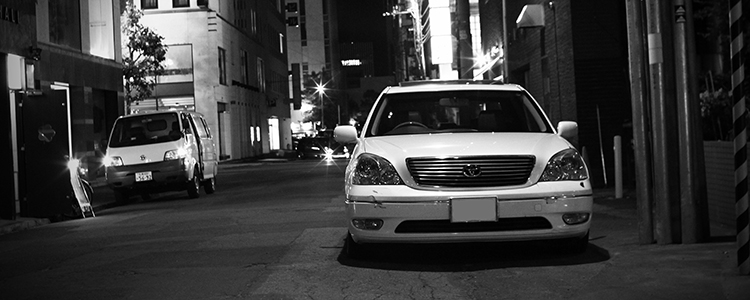
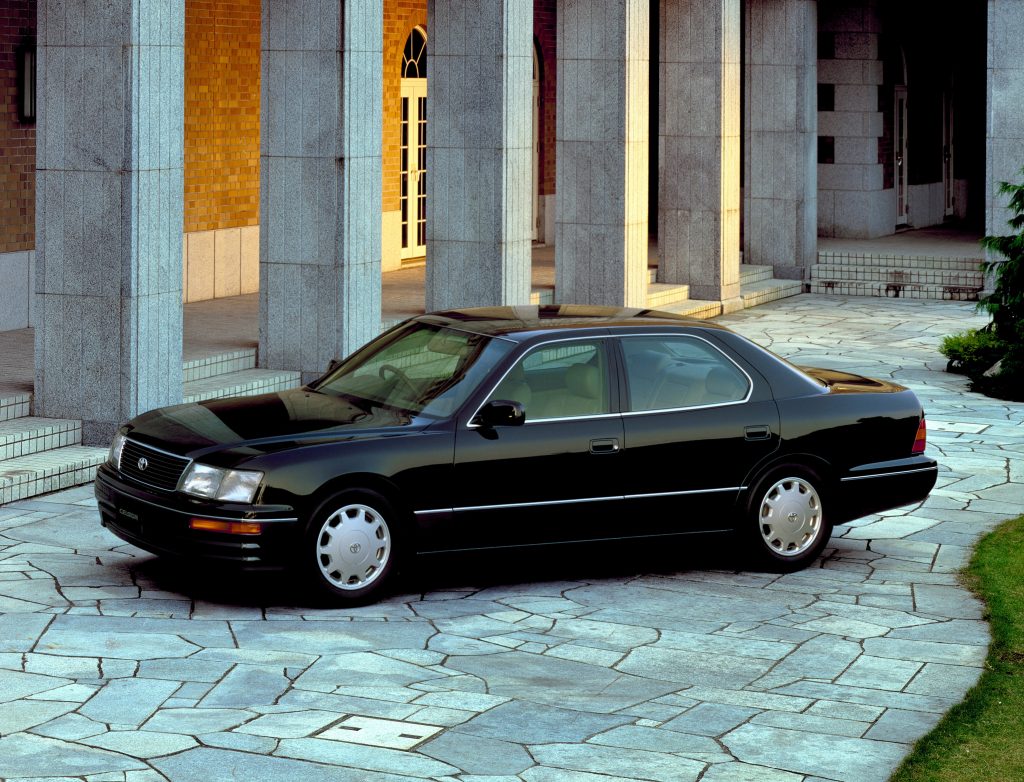
In Pictures
The Buyer's Read
If you're buying a Celsior, the safest place to start is a documented 1997 to 2000 UCF21. That gives you the VVT-i 1UZ-FE, the 5-speed automatic, and electronics that are modern enough to still work without being so new that prices have caught up. Skip anything under $8,000. A cheap Celsior almost always means deferred maintenance, and what you save on the purchase you'll spend in the first year fixing things that should have been done already.
If you want the VIP look, with air suspension and the curtained rear cabin and the longer wheelbase XF30 shape, look at the Ultra Luxury Selection. Just know that you're buying a bulletproof V8 sitting underneath an electronics package that's getting old. The air struts will need replacing. The nav screen will fade. The soft close door motors will need at least one rebuild before you're done. Budget another three to five thousand on top of the purchase price over the first few years and you'll be fine.
The one Celsior to avoid is a rough XF10 without service records. The chassis itself is fine. It's the early electronics that have aged poorly, especially the ECU capacitors that leak on cars built between 1990 and 1997. An undocumented XF10 is a parts hunt, not a car you can use right away. If you find a clean one with the ECU re-capped and the timing belt history sorted, that's a different conversation. But those cars are mostly still in Japan, and importing one ends up costing more than buying a documented UCF20 already in your country.
Frequently Asked Questions
- Is the Toyota Celsior the same as a Lexus LS?
- Yes—Celsior is the JDM-market Lexus LS twin. Specs/options differ by grade and year.
- Which generation is best to buy today?
- Best value is UCF20/21 (1994-2000); best tech/looks is UCF30/31 (2000-2006).
- What are the biggest reliability issues?
- Main risks are air suspension, aging electronics, and deferred maintenance (bushings, cooling).
- Does it have air suspension and should I avoid it?
- Some higher grades do. Air ride is great when healthy, but struts/compressor can be expensive.
- Are parts easy to get in the US?
- Mechanical parts are often easy via LS400/LS430 crossover. JDM-only trim and modules can be hard.
- What should I check before buying an imported Celsior?
- Verify auction grade, rust, timing service, air/coil setup, dash lights, and all screen functions.
- How much does a good one cost in today’s market?
- Drivers often trade in the $8k–$15k range; clean low-mile UCF30/31 can reach $20k–$35k+.
- When is a Celsior US-legal under the 25-year rule?
- It depends on build year. Example: 2000 becomes legal in 2025, 2001 in 2026, and so on.
Sources & References
- Unofficial LS 400 Buyers Guide — r/Lexus subredditVerified
- Lexus LS 400 (2000) — long-term review — EdmundsVerified
- Falling in love instantly with the Toyota Celsior — BE FORWARDVerified
- Lexus LS 400 1990–2000 review — RACVerified
- Lexus LS — encyclopedic overview — WikipediaVerified
- Toyota Celsior — Japanese encyclopedic overview — Wikipedia (Japanese)Verified
- 1UZ-FE Engine Development History — Toyota Motor CorporationLink dead
- Lexus LS 400 long-term reliability reporting — Car and DriverVerified
Sources last verified: