Buyer's guide
Mazda Cosmo
The Mazda Cosmo is Mazda's rotary halo car — the model that opened the rotary era in 1967 and closed it in 1996. The original L10A Cosmo Sport, launched in May 1967, was the first twin-rotor rotary-engined production car ever sold, beating NSU's Ro 80 sedan to customer deliveries and giving Mazda a marketing weapon to answer Toyota's 2000GT. Four generations followed: L10A/L10B (1967–1972) Cosmo Sport, CD (1975–1981) Cosmo AP, HB (1981–1989) Cosmo Coupe sold as the 929 in some export markets, and the JC Eunos Cosmo (1990–1996) — the only production car ever sold with a 3-rotor 20B-REW sequential twin-turbo engine and the first production car worldwide offered with a built-in GPS navigation system (Mazda's CCS Car Control System touchscreen). Across every generation the Cosmo was JDM-only at launch — limited CD exports aside, and those took 4-cylinder piston engines rather than the rotary — which is why it remains comparatively unknown to North American buyers despite occupying the same Mazda halo slot the RX-7 held in export markets. The Cosmo nameplate bookends Mazda's rotary program: it introduced the technology to passenger cars in 1967, and the JC retired the rotary flagship role in 1996, leaving the RX-7 (and later RX-8) to carry rotary sports duties alone. Today the Cosmo trades on rarity and rotary-era significance rather than mass-market familiarity, with the JC 20B and the L10 Cosmo Sport both established as blue-chip Japanese collector cars.
The JC Eunos Cosmo and the 20B-REW — the only triple-rotor production car
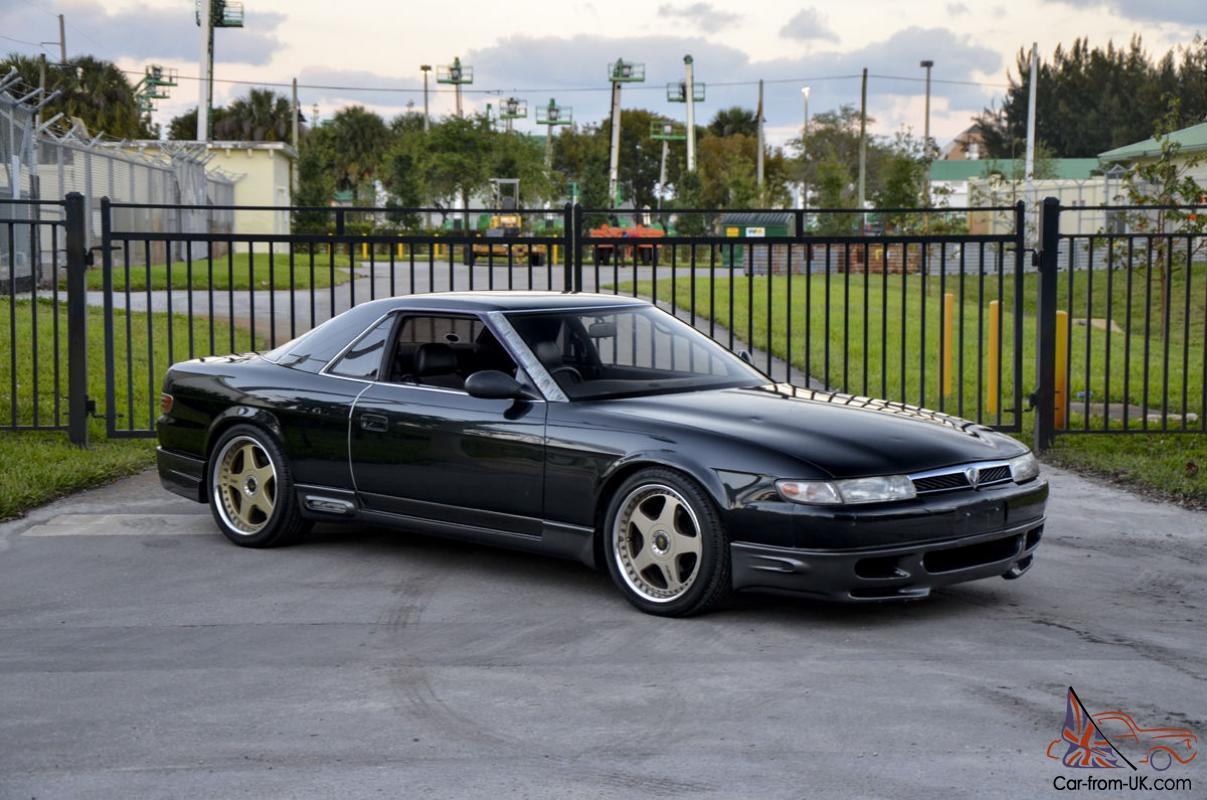
The fourth-generation Cosmo (chassis JC, 1990–1996) was sold under Mazda's short-lived Eunos luxury sub-brand and represents a high-water mark for early-1990s Japanese engineering. It is the only production car ever offered with a 3-rotor rotary engine — the 20B-REW — and the first production car worldwide to ship with a built-in GPS-based navigation system, integrated into Mazda's touchscreen CCS Car Control System dashboard alongside HVAC, audio, and trip computer functions. The 20B-REW used sequential twin turbochargers and was rated at 280 PS (the JDM Gentlemen's Agreement ceiling) and 41.0 kgm of torque; the smaller 13B-RE twin-rotor sat below it at the same 280 PS but 30.0 kgm. Of the roughly 8,875 JC Cosmos built, only about 3,550 received the 20B; the rest got the 13B-RE. Every JC Cosmo was a 2+2 grand tourer with 4-speed automatic transmission only — there was no manual option. The chassis was JDM-only and never officially exported, which is why earliest US-legal cars cleared the 25-year rule in 2015.
Cosmo Sport L10 — the rotary that started the era
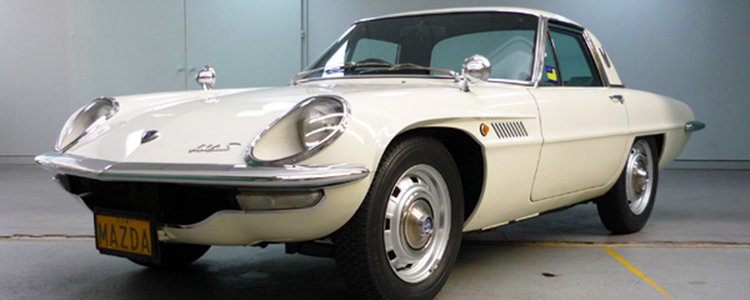
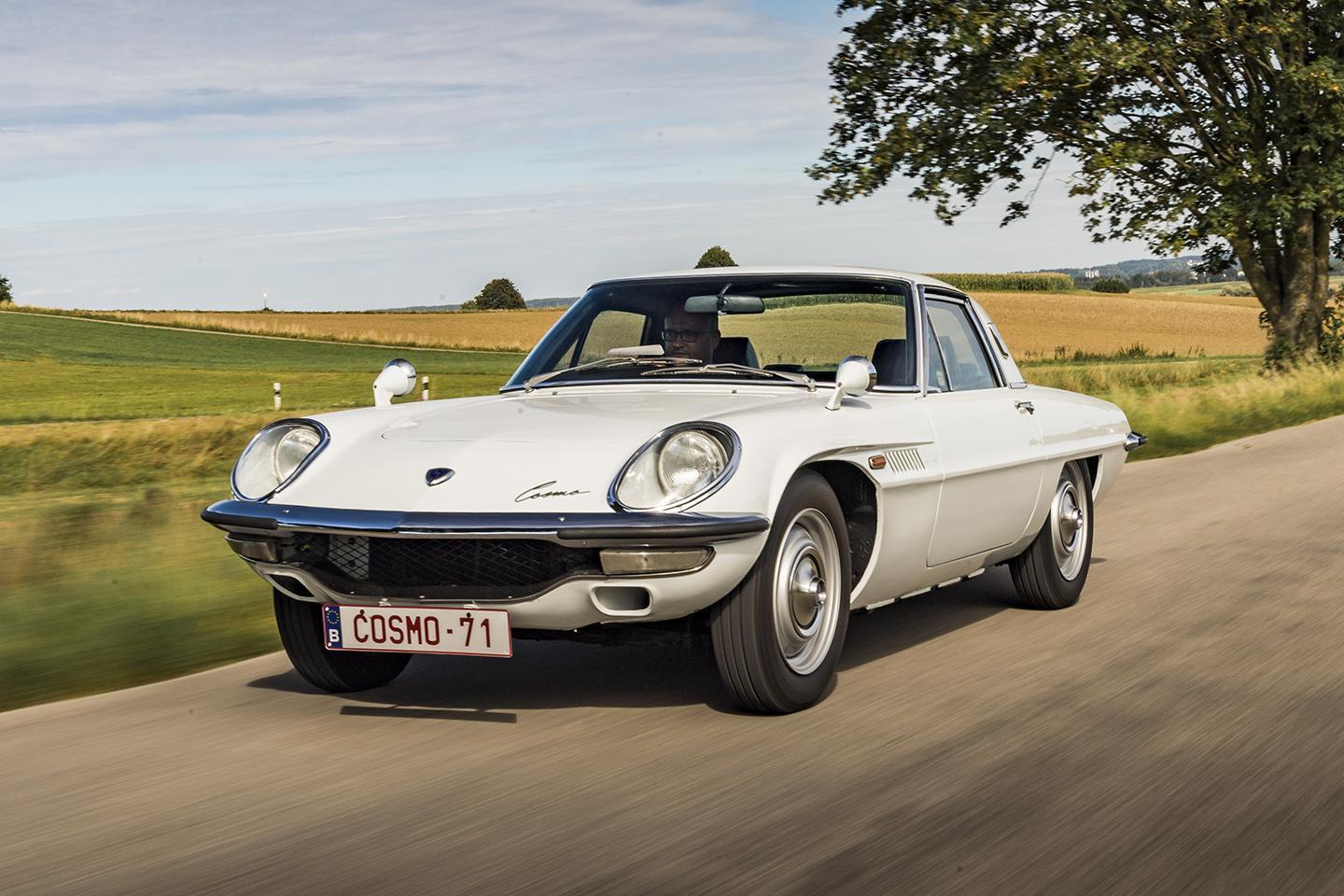
The original L10A Cosmo Sport debuted at the 1964 Tokyo Motor Show as a prototype and entered customer production in May 1967 with the 10A twin-rotor engine, 4-speed manual transmission, and a lightweight 2-seat GT coupe body. Mazda built 343 Series I (L10A) cars between 1967 and 1968, then upgraded to the L10B Series II in 1968 with the higher-output 10A producing roughly 128 hp, a 5-speed manual, and a 150 mm-longer wheelbase. Total L10 production reached 1,176 units (some sources cite 1,519 including pre-production), making it one of the rarest postwar Japanese halo cars. Two Cosmo Sports were entered in the 1968 84-hour Marathon de la Route at the Nürburgring as a rotary-engine durability test; one finished fourth overall, a result that underwrote Mazda's commitment to rotary development for the next three decades.
Quick read
Key takeaways
- JC Cosmo 20B is the value driver and most collectible
- Electronics/CCS condition can make or break a purchase
- Cooling & vacuum health matter more than peak power
- Originality beats mods for resale; stock ECU/airbox helps
- Parts scarcity and specialist labor raise ownership costs
- Import timing: 1990 cars US-legal in 2015 (25-year)
Constants
Common across all Cosmo generations
- Wankel rotary engine in every generation — a continuous rotary flagship
- Front-engine, rear-wheel-drive grand tourer layout
- Two-door coupe body style across all generations
- Eunos Cosmo (JC) is the only production car with the 20B-REW three-rotor engine
- Eunos Cosmo was JDM-only; right-hand drive throughout that generation's production
Chassis history
Generation timeline
The Cosmo had four generations across nearly 30 years, and each one feels like a completely different car to own. The L10 Cosmo Sport from 1967 is a blue-chip classic. The CD and HB Cosmos sit quietly in the middle. The JC Eunos Cosmo from 1990 to 1996 is where the rotary story ends and where most of the money is.
Second generation — CD (1975–1981)
Third generation — HB (1981–1989)
Buyer's call
Should you buy a Mazda Cosmo?
The Cosmo is one of those cars where the highs are very high and the lows are very low. Mazda built it to be a halo car first and a daily driver second, and that shows up in both columns.
Why you'll love it
- 20B triple-rotor exclusivity JC Cosmo’s 20B-REW is a unicorn: smooth, torquey rotary with major collector pull.
- Flagship Mazda luxury GT Quiet, high-speed cruiser with premium trim; a different vibe from RX-7’s raw sports focus.
- Strong upside on best examples Low-mile, original, fully working CCS cars command steep premiums and are most liquid.
- Tuning headroom (with caveats) 20B responds well to careful boost/fueling upgrades; reliability depends on cooling and mapping.
- Rarity supports long-term values JDM-only halo status and limited surviving clean cars underpin collector demand.
- Comfortable daily-classic potential Auto, stable ride, and refinement make it usable if you accept rotary upkeep and parts hunts.
Why you might not
- Complex electronics/CCS failures CCS screens, climate, audio, and modules can fail; repairs are niche and parts can be scarce.
- Rotary heat management critical Cooling, vacuum lines, and turbos must be right; neglect can mean expensive rebuilds.
- Automatic-only limits appeal 4AT suits GT use but caps enthusiast demand vs manual rivals; swaps hurt originality value.
- Weight and size vs sports cars Feels more grand tourer than RX-7; not as sharp, and consumables (brakes/tires) cost more.
- Parts and specialist labor premium 20B-specific parts and knowledgeable rotary shops are limited; downtime risk is real.
- Import/registration variability State rules, emissions testing, and insurer familiarity vary; paperwork quality affects resale.
Who should not buy this
- Anyone needing daily-driver reliability
- Buyers without rotary-specialist support nearby
- People who can't afford a $10k engine rebuild
- Anyone who won't do frequent fluid checks
- Owners who ignore warm-up and cooldown habits
- People wanting easy parts availability
- Those who hate electrical gremlins and old modules
- Anyone in strict emissions states without a plan
- Buyers who can't diagnose vacuum/boost systems
- People who want a manual transmission option
- Anyone expecting modern crash safety
- Drivers over 6'3" wanting lots of headroom
- People who park outside in wet climates
- Anyone who won't run premium fuel only
- Buyers tempted by unknown tunes/boost mods
- People who need usable rear seats regularly
- Owners who can't tolerate high fuel consumption
- Anyone who won't budget for cooling system refresh
- People who need strong A/C with zero fuss
- Buyers unwilling to source JDM-only interior parts
Reliability
Common issues & solutions
Most Cosmo trouble traces back to two things. The rotary doesn't forgive heat. The early 1990s electronics don't forgive time. The cooling system, the vacuum lines, the sequential turbo plumbing, and the CCS touchscreen on the JC are the parts that fail most often. Apex seals are the expensive one when they go.
| Issue | Cause | Solution | Est. cost |
|---|---|---|---|
| Low compression / hard start | Worn apex/side seals from heat or detonation | Compression test; rebuild 20B with quality seals | $8000-15000 |
| Hot start flooding | Weak ignition, leaking injectors, bad cranking rpm | Refresh coils/leads/plugs; service injectors; starter | $800-2500 |
| Overheating in traffic | Aging radiator, stuck thermostat, fan control faults | New rad/thermostat; fix fan relays; bleed properly | $600-1800 |
| Heater core leak | Old core corrodes; coolant neglected | Replace heater core; flush system; new hoses/clamps | $900-2000 |
| Sequential turbo flat spot | Vacuum leaks, wrong hose routing, stuck actuators | Vacuum line kit + diagram; free actuators; smoke test | $400-2000 |
| Overboost/boost spikes | Wastegate solenoid issues or hacked boost control | Restore OEM control; test solenoids; set safe boost | $300-1500 |
| Dead 2nd turbo | Seized actuator, failed control valves, cracked lines | Rebuild/replace actuators/valves; verify changeover | $800-3500 |
| Turbo oil smoke | Worn turbo seals or restricted oil return | Rebuild turbos; clean/replace oil return lines | $1500-4500 |
| Vacuum hose rot | Heat cycles harden hoses; missing restrictors | Replace all vacuum hoses; correct tees/restrictors | $200-900 |
| Ignition misfire under load | Weak coils/leads, wrong plugs, poor grounds | New coils/leads/plugs; clean grounds; verify dwell | $500-1800 |
| Injector clog/leak | Old fuel, varnish, internal corrosion | Ultrasonic clean/flow test or replace injectors | $400-1600 |
| Fuel hose seep/fire risk | Original rubber lines crack; ethanol exposure | Replace bay hoses with EFI-rated line and clamps | $200-800 |
| Oil metering failure | OMP motor/lines fail; lines brittle or deleted | Test OMP; replace lines; restore system or premix plan | $300-1500 |
| Oil cooler line leaks | Aged hoses and crimp fittings seep | Replace cooler lines; inspect fittings; clean undertray | $300-1200 |
| Automatic trans slipping | Heat, old ATF, worn clutches; boost abuse | Rebuild A/T; add cooler; correct line pressure issues | $2500-5500 |
| Delayed D/R engagement | Low ATF, worn valve body, internal seal wear | Diagnose pressure; service valve body or rebuild | $600-4500 |
| Driveshaft vibration | Worn center bearing or U-joints | Rebuild/replace driveshaft; check mounts and angles | $400-1200 |
| Diff whine/leaks | Worn bearings or pinion seal; old fluid | Reseal; rebuild diff if noisy; use correct gear oil | $250-1800 |
| Steering rack leak | Rack seals fail; boots fill with ATF | Rebuild/replace rack; flush PS; replace hoses | $800-2000 |
| PS pump whine | Air ingestion from old hoses or worn pump | Replace suction hose/clamps; rebuild/replace pump | $250-900 |
| Rear toe instability | Worn rear toe links/bushings; alignment off | Replace links/bushings; full alignment | $400-1200 |
| Front ball joint wear | Age and heavy chassis load | Replace ball joints/control arms; align | $400-1200 |
| Brake caliper sticking | Corroded sliders/pistons from old fluid | Rebuild calipers; new hoses; flush fluid | $500-1500 |
| ABS warning light | Wheel speed sensors or aged ABS module | Scan; replace sensor; repair wiring; module rebuild | $200-1200 |
| Digital dash failure | Capacitors age; cracked solder joints | Cluster rebuild with caps/solder; verify grounds | $300-900 |
| Climate control dead LCD | Backlight/cap failure; ribbon cable issues | Rebuild HVAC control unit; repair ribbon/backlight | $250-800 |
| Blend door not switching | Vacuum/servo failure; brittle actuators | Diagnose vacuum/servos; replace actuators as needed | $300-1200 |
| Window regulator slow/dead | Worn motors, dry tracks, failing switches | Clean/lube tracks; replace regulator/motor/switch | $200-700 |
| Pop-up headlight issues | Worn gears, tired motors, bad relays | Rebuild motor/gears; check relays and grounds | $200-800 |
| Sunroof water leaks | Clogged drains; shrunken seal | Clear drains; reseal; repair rusted drain tubes | $150-900 |
| Cowl water intrusion | Blocked cowl drains; seam sealer failure | Clear drains; reseal seams; address rust promptly | $200-1500 |
| Interior connector corrosion | Past water leaks under carpet | Dry interior; clean/replace connectors; fix leak source | $300-2000 |
| Brittle engine harness | Heat and age; prior alarm/tune hacks | Repair wiring properly; replace sections; re-pin plugs | $500-2500 |
| Vacuum solenoid failure | Age/heat kills solenoids controlling turbos/HVAC | Test solenoids; replace; restore correct plumbing | $200-1200 |
| Exhaust manifold cracks | Heat cycling and thin cast sections | Repair/replace manifold; check studs and gaskets | $500-2000 |
| Engine mount collapse | Oil saturation and age | Replace mounts; inspect crossmember and exhaust flex | $400-1200 |
| Rust in rockers/floors | Poor storage, clogged drains, prior repairs | Cut/weld properly; treat cavities; avoid filler fixes | $1500-8000 |
Market
Differences between JDM & USDM
Mazda never officially sold the Cosmo in the United States across any of its four generations. The L10A/L10B Cosmo Sport (1967–1972), CD Cosmo AP (1975–1981), HB Cosmo Coupe (1981–1989), and JC Eunos Cosmo (1990–1996) were all JDM-market cars. Limited CD-generation exports reached select markets with 4-cylinder piston engines only — never the rotary — and the HB-based Mazda 929 sold in some export regions used piston engines. The JC Eunos Cosmo, including the 20B-REW 3-rotor, was JDM-only with no export equivalent at any point. All Cosmos are RHD. North American availability is purely under the 25-year import exemption: 1990 JC Cosmos became eligible in 2015; 1995 cars in 2020; later years roll in 25 years after their build date. The complete absence of a USDM equivalent — unlike the Celsior/Lexus LS or RX-7/RX-7 pairings — is one reason the Cosmo remains comparatively unknown outside enthusiast circles, despite its technical significance.
Specs
Technical specifications
Every Cosmo got a rotary at some point, but the engine you actually want is the 20B-REW in the JC. It's the only triple-rotor production engine Mazda ever sold, rated at 280 PS and 41.0 kgm under the gentlemen's agreement. The smaller 13B-RE twin-rotor in the other JC trims hit the same 280 PS but only 30.0 kgm of torque, so the 20B feels noticeably stronger in the middle of the rev range.
Engine options
| Chassis | Engine | Displacement | Power | Boost | Notes |
|---|---|---|---|---|---|
| L10A | 10A | 0.982L (491cc×2) | 110hp @ 7000rpm | N/A | Carbureted 2-rotor; early Cosmo |
| L10A | 10A | 0.982L (491cc×2) | 128hp @ 7000rpm | N/A | Later tune; 5MT-era output |
| CD | 13B | 1.308L (654cc×2) | 135hp @ 6000rpm | N/A | Carbureted rotary; Cosmo AP |
| HB | 12A | 1.146L (573cc×2) | 130hp @ 6500rpm | N/A | NA 12A; market/year dependent |
| HB | 13B | 1.308L (654cc×2) | 135hp @ 6000rpm | N/A | NA 13B; market/year dependent |
| HB | 13B-T | 1.308L (654cc×2) | 180hp @ 6500rpm | 7.3 psi | Single turbo; typical JDM spec |
| JC | 13B-RE | 1.308L (654cc×2) | 230ps @ 6500rpm | 10.2 psi | Sequential twin-turbo; JDM rated |
| JC | 13B-RE | 1.308L (654cc×2) | 230ps @ 6500rpm | 10.2 psi | Torque: 30.0kgm @ 3500rpm |
| JC | 20B-REW | 1.962L (654cc×3) | 280ps @ 6500rpm | 10.2 psi | Sequential twin-turbo; JDM cap era |
| JC | 20B-REW | 1.962L (654cc×3) | 280ps @ 6500rpm | 10.2 psi | Torque: 41.0kgm @ 3000rpm |
Transmission options
| Type | Ratios | Availability | Notes |
|---|---|---|---|
| 4-speed Manual | 3.307/1.938/1.310/1.000 | L10A Cosmo Sport | Early Cosmo Sport manual |
| 5-speed Manual | 3.307/2.077/1.391/1.000/0.864 | L10B Cosmo Sport | Later Cosmo Sport manual |
| 3-speed Automatic | 2.458/1.458/1.000 | CD Cosmo AP (some) | Market/year dependent |
| 5-speed Manual | 3.483/2.015/1.391/1.000/0.864 | CD/HB (some) | Typical Mazda RWD 5MT family |
| 4-speed Automatic | 2.800/1.540/1.000/0.700 | HB Cosmo (some) | Market/year dependent |
| 4-speed Automatic (electronically controlled) | 2.800/1.540/1.000/0.700 | JC Type E/S/SX/Type R/RS/RS-X | 4EAT; all JC were automatic |
Lineup
Variants & trims
JC Eunos Cosmos came in six trims. Type E, Type S, and Type SX all use the 13B-RE twin-rotor. Type R, Type RS, and Type RS-X all use the 20B-REW triple-rotor. The R, RS, and RS-X are the ones collectors chase. The difference between them is interior and equipment level, not the engine.
| Generation | Trim | Engine | Key features |
|---|---|---|---|
| L10A (1st gen, 1967-1972) | Cosmo Sport (L10A) | 10A 491cc×2 rotary (NA) | 2-rotor, 4MT, RWD, 2-seat coupe |
| L10B (1st gen, 1968-1972) | Cosmo Sport (L10B) | 10A 491cc×2 rotary (NA) | 2-rotor, 5MT, RWD, 2-seat coupe |
| CD (2nd gen, 1975-1981) | Cosmo AP | 13B 654cc×2 rotary (NA) | 2-rotor, RWD, luxury coupe, 5MT/3AT |
| CD (2nd gen, 1975-1981) | Cosmo AP (piston) | 2.0L/2.6L I4 (NA) | RWD, 5MT/3AT, export-dependent spec |
| HB (3rd gen, 1981-1989) | Cosmo (HB) 12A | 12A 573cc×2 rotary (NA) | 2-rotor, RWD, 5MT/4AT, luxury coupe |
| HB (3rd gen, 1981-1989) | Cosmo (HB) 13B | 13B 654cc×2 rotary (NA) | 2-rotor, RWD, 5MT/4AT, higher output |
| HB (3rd gen, 1981-1989) | Cosmo (HB) 13B-T | 13B-T 654cc×2 rotary (Turbo) | turbo, RWD, 5MT/4AT, flagship rotary |
| JC (Eunos Cosmo, 1990-1995) | Type E | 13B-RE 654cc×2 rotary (TT) | twin-turbo, 4AT, RWD, 2+2, CCS nav |
| JC (Eunos Cosmo, 1990-1995) | Type S | 13B-RE 654cc×2 rotary (TT) | twin-turbo, 4AT, RWD, higher equipment |
| JC (Eunos Cosmo, 1990-1995) | Type SX | 13B-RE 654cc×2 rotary (TT) | twin-turbo, 4AT, RWD, top luxury spec |
| JC (Eunos Cosmo, 1990-1995) | Type R | 20B-REW 654cc×3 rotary (TT) | 3-rotor, twin-turbo, 4AT, RWD, flagship |
| JC (Eunos Cosmo, 1990-1995) | Type RS | 20B-REW 654cc×3 rotary (TT) | 3-rotor, twin-turbo, 4AT, RWD, sport-lux |
| JC (Eunos Cosmo, 1990-1995) | Type RS-X | 20B-REW 654cc×3 rotary (TT) | 3-rotor, twin-turbo, 4AT, RWD, highest spec |
Pricing
Average prices & original MSRP
The L10A Cosmo Sport launched in Japan in May 1967 at roughly 1,480,000 yen, which made it a halo-tier purchase well above the rest of the Mazda lineup. The numbers below are what a Cosmo costs today. The spread is wide because the market is barbell shaped. Clean L10 Sport coupes and clean JC 20B cars both command real money, and the CD and HB Cosmos in the middle stay relatively affordable.
Original MSRP: ¥1,480,000 at launch in 1967. Approximate launch list price in yen for the L10A Cosmo Sport in Japan, May 1967. The car was positioned as a halo-tier purchase well above Mazda's other model lines; later generations were priced by trim and engine and varied significantly. Exact JDM list prices for every Cosmo trim across 1967–1996 were not pulled in this migration.
Today's market range: $12,000 to $90,000 (median ~$32,000). Source: JDMBuySell / USS Auction.
JC 20B cars remain the demand center: top, original, low-mile examples trend upward, while needy/CCS-dead cars lag. Post-2020 spike cooled, but rarity supports firm pricing; expect widening spread between collector-grade and project cars.
Inspect
Pre-purchase inspection checklist
Walk this list with the seller, not in front of them. The Critical items mean walking away if there's no paperwork backing them up. A warm compression test on the 20B is the one thing that matters more than anything else. If the seller won't allow it, that tells you what you need to know.
Critical priority
- VIN/Model ID Confirm JC/NA Cosmo; match VIN to papers
- Import/Title Verify legal import, title status, no liens
- Front Frame Rails Inspect for kinks, pulls, fresh undercoat
- 20B Compression Warm compression test; record all 6 faces
- Exhaust Smoke Blue smoke hot = seals; white = coolant/ATF
- Oil Metering Pump Confirm OMP works; check lines for cracks/leaks
- Coolant System Pressure test; check rad end tanks, hoses
- Thermostat/Fans Verify fan stages; overheating kills rotaries fast
- Ignition Coils Check coil packs, leads; weak spark kills seals
- Automatic Trans Check ATF color; flare, harsh shifts, delayed D
- Modifications Avoid unknown ECU/boost mods; kills 20B fast
High priority
- Accident History Check apron seams, overspray, uneven gaps
- Rear Subframe Mounts Check for rust, cracks, crushed bushings
- Sills/Rocker Panels Probe pinch welds; look for bubbling/patches
- Floor Pans Lift carpets; check dampness, rust, holes
- Sunroof Drains Pour water; confirm drains flow, no cabin leaks
- Windshield Cowl Check cowl rust; water leaks into HVAC/ECU
- Rear Quarter Rust Check arch lips and inner quarter for bubbling
- Cold Start Listen for hard start, flooding, uneven idle
- Idle Quality Check hunting idle; watch AFR/trim if possible
- Boost Behavior Verify smooth boost; no surge, no overboost
- Turbo Actuators Check sequential changeover; no dead 2nd turbo
- Vacuum Hoses Inspect brittle hoses; missing restrictors/tees
- Heater Core Check sweet smell, fogging, wet passenger carpet
- Fuel System Check fuel smell, cracked hoses, pump noise
- Injectors Listen for misfire; check injector resistance
- Spark Plugs Confirm correct heat range; no oil-fouling
- ECU/Diagnostics Pull codes; check hacked wiring, piggybacks
- Battery/Charging Check alternator output; low volts = ECU chaos
- AT Cooler Lines Inspect leaks; heat kills A/T quickly
- Front Suspension Check ball joints, control arm bush cracks
- Rear Suspension Check toe links, bushings; uneven tire wear
- Steering Rack Check play, leaks, torn boots, inner tie rods
- Brakes Check rotor lip, caliper leaks, seized sliders
- Climate Control Test all modes; blend doors and LCD failures
- Digital Dash Check dead pixels, dim backlight, flicker
- Seat Belts Check retractors; JDM belts can be aged/sticky
- Interior Water Check under seats for corrosion on connectors
- Service Records Look for coolant, ignition, vacuum refresh proof
Medium priority
- Trunk Well Check spare well for water, rust, seam sealer
- Door Seals Inspect torn seals; check wet carpets after wash
- Underbody Coating Look for fresh tar hiding rust/repairs
- Intercooler Pipes Check oil pooling, loose clamps, cracked couplers
- Oil Leaks Check front cover, pan, turbo feeds/returns
- Power Steering Check pump whine, leaks at rack boots/lines
- Fuel Tank Rust Inspect filler neck, tank seams; debris in filter
- Engine Grounds Inspect grounds; voltage drop causes misfires
- Driveshaft Check center bearing, U-joints for play/vibes
- Differential Listen for whine; check leaks at pinion seals
- CV Axles Check torn boots, clicking on turns
- Shocks/Struts Look for leaks; bouncy ride = dead dampers
- ABS System Confirm ABS light self-test; scan for faults
- Headlights Check pop-up motors/aim; cloudy lenses
- Audio/Navigation Test OEM Bose/nav; parts are scarce/expensive
- Power Windows Check slow windows; regulators and switches fail
- Seat Motors Test all adjustments; gears strip, switches fail
- Key/Immobilizer Confirm all keys; alarm/immobilizer hacks common
Low priority
- Wheels/Tires Check bent wheels; mismatched tires hide issues
- Tail Lights Check moisture inside housings; wiring hacks
Cross-shop
Comparable alternatives
If the Cosmo doesn't end up being the right car, the natural alternatives are the Mazda RX-7 FD3S if you want a sharper rotary sports car, or the Toyota Soarer if you want a luxury GT without the rotary upkeep. The Supra and the Z32 give you twin-turbo grand tourer feel with parts that are easier to find.
Toyota Soarer JZZ30
Luxury GT; 1JZ/2JZ options; easier parts
Nissan 300ZX Z32 TT
90s twin-turbo GT; faster feel; more supply
Mazda RX-7 FD3S
Rotary icon; lighter and sharper; strong support
Toyota Supra JZA80
Collector/tuner benchmark; robust 2JZ; very liquid
Nissan Skyline GT-R R32
Motorsport legend; AWD grip; huge global demand
Compare
How it compares
Compared to the Supra, the GT-R, and the RX-7, the Cosmo is the rarest of the group and the most complicated to own. The 20B is the only triple-rotor production engine ever built, and the JC was the first car in the world with built-in GPS navigation. You're paying for that history, not for ease of ownership.
| Feature | Mazda Cosmo | Toyota Supra JZA80 | Nissan Skyline GT-R R32 |
|---|---|---|---|
| Engine layout | 20B 3-rotor TT (JC) | 2JZ-GTE I6 TT | RB26DETT I6 TT |
| Transmission | 4-speed automatic only | 6MT/4AT (market dep.) | 5MT |
| Power (JDM rated) | 280 PS (gentlemen’s) | 280 PS (JDM) | 280 PS (JDM) |
| Torque character | Smooth, revvy; strong mid | Big low-end; easy 400+ hp | Peaky; loves revs |
| Curb weight feel | Heavy GT; stable cruiser | Heavy but sporty GT | Lighter, sharper sports car |
| Cabin/tech | CCS infotainment, luxury focus | Driver-focused, simpler tech | Luxury GT, less CCS complexity |
| Rarity (US market) | Very rare; JDM-only | Imported/USDM available | USDM existed; more supply |
| Maintenance risk | High: rotary + CCS + TT | Medium: robust 2JZ, aging | Medium-high: VG30DETT heat |
| Collector narrative | 20B halo; tech flagship | Iconic tuner/hero car | Motorsport legend |
| Driving mission | High-speed luxury GT | Sports GT / grand touring | Pure sports coupe |
| Mod friendliness | Possible but complex packaging | Huge aftermarket; easy gains | Strong aftermarket; tighter margins |
| Ownership costs | High; niche parts & labor | Medium-high; better parts supply | High; labor-intensive packaging |
| Resale liquidity | Best cars sell fast; odd specs lag | Very liquid; broad buyer base | Liquid among JDM buyers |
Gallery
In pictures
Editorial
The buyer's read
If you're buying a Cosmo, the car that matters is the JC Eunos Cosmo with the 20B-REW. Everything else in the Cosmo lineage is either a museum piece, like the L10 Cosmo Sport, or an oddity, like the CD and HB Cosmos that not many people chase. The JC 20B is the car people actually drive and the car the market actually prices.
Inside the JC range, look for a Type R, Type RS, or Type RS-X. Those three trims got the 20B. The Type E, S, and SX all got the smaller 13B-RE twin-rotor, which is still a good engine but doesn't carry the same collector pull. Of the roughly 8,875 JC Cosmos Mazda built, only about 3,550 of them got the 20B, so the math is already against you when you start looking.
The single most important check on a JC Cosmo is a warm compression test on all six faces of the 20B. Apex seals are the failure mode that turns a $30,000 car into a $45,000 car overnight. The second most important check is the CCS touchscreen and the digital climate panel. Both fail with age. Rebuilds exist but the parts are scarce and the labor is niche.
Skip anything with mystery boost mods or an unknown ECU tune. The 20B is unforgiving when the fueling or the vacuum routing is wrong, and a hacked car can grenade the engine in one bad pull. Same goes for cars with the oil metering pump deleted. The OMP isn't optional on a rotary you plan to keep.
The best JC Cosmos in the world right now are low-mileage Type RS-X cars with working CCS, documented compression numbers, and a paper trail showing the cooling system and the vacuum lines have been refreshed. Those cars are getting harder to find every year, and the rest of the market is widening between collector-grade examples and projects you'll never finish.
FAQ
Frequently asked questions
- Which Mazda Cosmo is the most collectible?
- The JC Eunos Cosmo 20B (1990–1995) leads. Earlier Cosmo Sport (L10) is also blue-chip but different market.
- What should I check first when inspecting a JC Cosmo?
- Prioritize compression, hot starts, coolant health, vacuum lines, and whether CCS electronics and climate controls work.
- Are all JC Cosmos 20B twin-turbo?
- The flagship 20B-REW is twin-turbo. Other JC trims used smaller rotary options; verify by VIN/engine code and paperwork.
- Is the automatic transmission a problem?
- Not inherently; it suits the GT mission. But it limits demand vs manuals, and swaps usually reduce collector originality.
- What are common failure points?
- Cooling system, brittle vacuum hoses, turbo control issues, aging sensors, and CCS screen/module faults are frequent.
- How expensive is a 20B rebuild?
- Costs vary widely by region and parts; expect high specialist pricing. Buy on condition: a cheap car can become the priciest.
- What makes values jump the most?
- Low miles, stock condition, clean import history, working CCS, and documented rotary health drive the biggest premiums.
- When is the JC Cosmo US-legal to import?
- Under the 25-year rule, 1990 cars became legal in 2015; each later model year becomes legal 25 years after build date.
Citations
Sources & references
- Mazda Cosmo — encyclopedic overview — WikipediaVerified
- Eunos Cosmo — JC generation overview — WikipediaVerified
- Mazda Wankel engine — engine family overview — WikipediaVerified
- Wankel engine — rotary engine principles and history — WikipediaVerified
- Three reasons why the Eunos Cosmo is better than the RX-7 — CarsGuideVerified
- Mazda Cosmo — Japanese encyclopedic overview — Wikipedia (Japanese)Verified
- Mazda corporate history — rotary milestones — Mazda Motor CorporationVerified
- US import guidance: 25-year exemption overview — NHTSAVerified
Sources last verified: