Honda used this generation to add the creature comforts that buyers had started expecting from kei rivals — reading lights, factory radio options, body-colored bumpers, and a wider range of interior trims — without changing the mechanical character. The Attack 4WD trim, with ultra-low crawler gear and (on select years) a locking differential, was sold specifically at farmers and operators "where roads were optional." Today, HA4 4WD 5-speed trucks with documented timing belt service and clean underbodies set the price ceiling for non-rare Acty configurations. Pre-purchase priorities track the WP fault pattern: timing belt history, the under-bed radiator overflow tank (the most commonly broken part on the platform), and the OEM ECU capacitors (swollen or burst capacitors are the signature electrical fault and look like dozens of unrelated drivability problems until the board is re-capped).
Buyer's guide
Honda Acty HA4 — Buyer's Guide & Specs
The HA3/HA4/HA5 chassis (1990-1999, second-generation Acty truck) is the configuration the import market treats as the value sweet spot. The 656cc E07A three-cylinder produced 38 horsepower and 40 lb-ft of torque, enough for 71 mph on RWD examples and 65 mph on 4WD. The HA4 designation specifically refers to the 4WD truck — the most desirable single combination on the used market — and ran alongside the HH3/HH4 second-generation van and the earlier HA1/HA2/HH1/HH2 carbureted 547cc cars that opened the generation in 1988.
Key Takeaways
The Acty ran four generations from 1977 until 2021, and the one you buy is mostly decided by the 25-year rule. The first gen with its 545cc twin is a museum piece. The HA3/HA4 second gen is what most people actually own in North America right now. The HA6/HA7 third gen just became legal in 2024, and the HA8/HA9 fourth gen still has years to wait.
- 4WD + 5MT commands the biggest premium
- Rust is the #1 value killer; inspect seams/frames
- Timing belt service history strongly affects pricing
- Vans often cost more than trucks for lifestyle use
- HA4/HH4 are peak value for simplicity and parts
- State legality varies; verify registration first
Should You Buy a Honda Acty HA4?
The Acty is a working truck, not a comfortable one, and the trade-off list reflects that. You get unmatched utility per square foot of road, and you give up highway speed, crash safety, and a quiet cabin. Buyers who walk in knowing that stay happy. Buyers who expect a tiny pickup truck do not.
Why You'll Love It
- Excellent utility per footprint Tiny exterior, flatbed/cargo efficiency; ideal for farms, shops, and tight streets.
- Strong reliability reputation Honda kei drivetrains are durable; simple systems on HA3/HA4 are easy to keep running.
- 4WD capability in kei size 4WD models handle snow, gravel, and fields well; great with proper tires and maintenance.
- Great parts availability (relative) Compared with rarer kei models, Acty parts support is strong via Japan and importers.
- High buyer demand and liquidity Acty is a top-searched kei; clean examples sell quickly, supporting resale values.
- Simple DIY serviceability Basic layout, plentiful guides; common jobs are approachable for owners and small shops.
- Van variants suit lifestyle builds HH vans are popular for micro-camping; more weatherproof and secure than a truck bed.
Why You Might Not
- Rust is common and expensive Rocker seams, floors, bed corners, and frames rust; repairs can exceed vehicle value.
- Slow by modern standards Kei power and gearing mean limited highway performance; best for local roads and work use.
- Safety and crash protection Minimal crash structure and airbags on older gens; not comparable to modern small cars.
- State registration uncertainty Some US states restrict kei vehicles; verify title/registration path before purchase.
- Hard commercial life is common Many were fleet tools; expect worn synchros, tired suspension, and neglected maintenance.
- Cab comfort is limited Upright seating, noise, and heat; long trips can be fatiguing, especially in trucks.
- Parts vary by chassis code HA/HH and year splits matter; ordering wrong parts is common without exact VIN/chassis.
Who Should NOT Buy This
- Anyone needing 70+ mph highway commuting
- Drivers expecting modern crash safety/airbags
- People who won't do frequent maintenance
- Buyers without a kei-friendly local mechanic
- Rust-belt buyers without indoor storage
- Anyone needing strong A/C in hot climates
- People who haul heavy loads daily (overload risk)
- Those needing quiet, refined cabin comfort
- Drivers over 6'3" or broad-shouldered
- Anyone needing automatic transmission (rare)
- California residents if registration is uncertain
- Buyers who need easy parts at local stores
- People who can't tolerate slow acceleration
- Those who won't replace old fuel hoses immediately
- Anyone expecting modern infotainment/electronics
- Families needing rear seats (truck) or LATCH
- People who park outside in heavy rain/snow
- Owners who won't address structural rust promptly
- Those needing towing capability (not suitable)
- Anyone who dislikes right-hand drive adaptation
Common Issues & Solutions
Most of what goes wrong on the Acty is age, not Honda. The timing belt is the one job you assume is overdue no matter what the seller tells you. The radiator overflow tank sits under the bed in the debris path and gets destroyed routinely. The OEM ECU capacitors swell and leak on older cars, and that single fault looks like a dozen other problems until the board gets re-capped. Rust is the real money pit, especially on the rockers, the bed corners, and the frame.
| Issue | Cause | Solution | Est. Cost |
|---|---|---|---|
| Timing belt overdue | Unknown history; age cracks belt teeth | Replace belt, tensioner, seals; set timing | $500-1200 |
| Water pump failure | Old pump bearing/seal; coolant neglect | Replace pump with belt service; flush coolant | $250-700 |
| Overheating in traffic | Fan switch, relay, or clogged radiator | Test fan circuit; replace switch/rad; bleed | $150-800 |
| Head gasket / warped head | Repeated overheating; low coolant events | Machine head, gasket set, thermostat, flush | $900-2200 |
| Carb idle hunt/stall | Vacuum leaks, dirty jets, bad choke pull-off | Smoke test; rebuild carb; replace vacuum hoses | $250-900 |
| Hard hot starts | Heat soak, weak fuel pump, percolation | Replace pump/insulate lines; set float level | $150-600 |
| Fuel hose cracking/leaks | Aged rubber; ethanol fuel accelerates rot | Replace all rubber lines with ethanol-safe hose | $120-450 |
| Rusty fuel tank debris | Condensation; long storage; poor fuel | Clean/coat or replace tank; new filter/pump | $300-1200 |
| Valve cover oil leak | Hardened gasket; over-tightened cover | Replace gasket/grommets; check PCV/breather | $80-250 |
| Distributor O-ring leak | Aged O-ring; heat cycles | Replace O-ring; clean oil; verify timing | $80-250 |
| Rear main seal leak | Age; crankcase pressure from clogged breather | Replace seal with clutch job; service breather | $700-1500 |
| Oil consumption/smoke | Worn rings or valve stem seals from age | Leakdown test; head refresh or full rebuild | $900-3000 |
| 2nd gear synchro grind | Worn synchro; old gear oil; hard shifting | Change fluid; if persists rebuild/replace trans | $150-1800 |
| Clutch slip or chatter | Worn disc; oil contamination; weak pressure plate | Clutch kit; resurface flywheel; fix oil leak | $600-1400 |
| Clutch cable fray/bind | Dry cable; rust at sheath ends | Replace cable; lube pedal pivot; set freeplay | $120-350 |
| CV axle clicking | Split boots lose grease; joint wears quickly | Replace axle or reboot early; align afterward | $200-700 |
| Wheel bearing growl | Water intrusion; overload; age | Replace bearing(s); inspect hub and seals | $250-900 |
| Steering wander/play | Tie rods, idler arm, steering box wear | Replace worn joints; align; check box adjustment | $250-1000 |
| Ball joint failure risk | Boot torn; grease loss; corrosion | Replace ball joints ASAP; do both sides | $300-900 |
| Rear leaf spring sag | Chronic overloading; bushing wear | Replace leaf packs/bushings; avoid overload | $400-1200 |
| Brake hard line rust | Road salt; trapped mud; old coating | Replace lines; flush fluid; inspect hoses | $400-1500 |
| Front caliper seizure | Corroded slide pins; torn boots | Rebuild/replace calipers; new pads/rotors | $250-900 |
| Rear drum weak/pulsation | Out-of-round drums; leaking wheel cylinders | Turn/replace drums; replace cylinders/shoes | $250-800 |
| Parking brake seized | Cable rust; infrequent use | Replace cables; service rear hardware | $200-650 |
| Alternator weak/no charge | Worn brushes/regulator; heat and age | Rebuild/replace alternator; clean grounds | $200-600 |
| Intermittent no-start | Corroded grounds; tired starter; bad ignition switch | Voltage drop test; renew grounds; starter service | $150-700 |
| Heater core low output | Clogged core; air pockets; stuck thermostat | Backflush core; replace thermostat; bleed system | $120-600 |
| Cab water leaks | Door seals, windshield seal, cowl drains clogged | Clear drains; reseal windshield; replace seals | $100-900 |
| Severe structural rust | Salt exposure; poor repairs; trapped moisture | Walk away; proper metal work exceeds value | $1500-8000 |
| 4WD won't engage | Actuator/vac lines/switch issues; neglected use | Diagnose actuator; replace lines/switch; service | $200-1200 |
| 4WD driveline vibration | Worn U-joint/center bearing; bent shaft | Replace U-joint/shaft; check mounts and angles | $300-1500 |
| Speedo bounce/noise | Dry or kinked cable; worn cluster gear | Replace/lube cable; service cluster if needed | $80-350 |
| Lighting intermittents | Corroded sockets/grounds; hacked wiring | Clean grounds; replace sockets; repair harness | $80-600 |
Differences between JDM & USDM
The Honda Acty was never officially sold in the United States. Every Acty in North America is either a US-25-year-rule import (NHTSA exempt at 25 years from build date) or a low-speed off-road / farm vehicle registered under state-specific kei or UTV provisions where allowed. Eligibility by build year under the 25-year rule: 1988 became legal in 2013, 1990 (start of the HA3/HA4 656cc generation) in 2015, 1999 (start of the HA6/HA7/HH5/HH6 third generation) in 2024, and 2009 (start of the HA8/HA9 fourth generation truck) in 2034. State acceptance varies independently of the federal exemption — some states accept kei trucks for full road registration, others restrict them to off-highway use, and a few revoked existing registrations after policy changes. The WP guide flags this explicitly: confirm title type, insurance acceptance, and DMV policy at the county level before purchase. The right-hand-drive layout is universal across the entire Acty production run; there is no LHD configuration.
Pre-Purchase Inspection Checklist
Run this list with the truck on a lift if you can, and bring a magnet. The Critical items are deal breakers if there's no paperwork. The High items can be priced into the deal. Most of the Acty drama is rust and the overflow tank, so spend your time underneath rather than under the hood.
Critical Priority
- VIN/Model Code Confirm HA3/HA4/HH3/HH4; match papers
- Import/Title Status Verify legal title, VIN match, no salvage
- Rust: Sills Probe rocker/sills for soft spots & patches
- Rust: Floor Pans Lift mats; check pinholes at seams/drains
- Rust: Frame Rails Check rails/crossmembers for scaling & rot
- Rust: Suspension Mounts Inspect control arm/leaf mounts for cracks
- Compression Test Check all cyl; low spread indicates wear
- Overheat Evidence Check warped head signs, bubbling overflow
- Timing Belt Proof Ask date/mileage; no proof = assume due
- Fuel Smell/Leaks Inspect tank, filler neck, rubber lines
- Front Ball Joints Check boots/play; failure is catastrophic
- Brake Lines Inspect hard lines for rust; especially rear
High Priority
- Rust: Bed Floor Check bed seams, under bed crossmembers
- Rust: Cab Corners Inspect lower cab corners behind doors
- Accident Repairs Look for wrinkled inner panels, overspray
- Windshield Seal Check for leaks/rust at windshield corners
- Engine Cold Start Start cold; listen for top-end tick/knock
- Exhaust Smoke Blue smoke on start/overrun = rings/seals
- Coolant Condition Check for rust sludge; verify proper mix
- Radiator/Cap Inspect fins, cap seal; pressure test if able
- Cooling Fan Verify fan cycles; check thermo switch
- Water Pump Check weep hole, bearing noise, coolant trails
- Charging Voltage Measure 13.8-14.4V; alternator weak common
- Ground Straps Check engine/body grounds for corrosion
- Manual Trans Check 2nd gear synchro; grind on fast shift
- Clutch Slip 3rd gear pull test; slip = clutch near done
- CV Axles/Boots Inspect boots; clicking on turns = worn CV
- Wheel Bearings Check play/noise; rear bearings get loud
- 4WD System Engage 4WD; verify light/actuation works
- Prop Shaft U-joint 4WD: check play/vibration under load
- Steering Play Check tie rods/idler; wander at speed
- Rear Springs Check leaf cracks/bushings; bed load abuse
- Brake Hoses Check cracking/bulges; replace if aged
- Master/Booster Check pedal sink; booster hiss/vac leak
- Tires Age/Load Check DOT date; correct load rating for kei
- Odometer Credibility Check wear vs km; many are rolled/cluster swap
- Seat Belts Check retractors; frayed belts fail inspection
- Seat Rails Check cracks/loose mounts; rust under seats
Medium Priority
- Door Alignment Check sagging doors; hinge pins & striker
- Idle Quality Hunt/surge indicates vacuum leak/carb issues
- Oil Leaks Check cam cover, rear main, oil pan seep
- Carb/EFI Type Confirm carb vs EFI; check tampering/hoses
- Air Filter Box Check for cracks; unmetered air = lean
- PCV/Breather Check clogged breather; causes oil leaks/sludge
- Ignition Tune Inspect plugs/wires/cap; misfire under load
- Battery Tray Check rust/acid damage; secure hold-down
- Starter Crank Slow crank hot = starter/ground cable issues
- Clutch Cable Check fraying, heavy pedal, proper freeplay
- Diff/Trans Leaks Check output seals; gear oil smell underbody
- Shocks/Struts Bounce test; leaks; rear sag with load
- Parking Brake Verify holds; cables seize from rust
- Wheels/Studs Check bent wheels; stripped studs common
- Heater Output Weak heat = clogged core/airlock/thermostat
- Lights/Signals Verify all bulbs; corroded sockets common
- Cab Water Leaks Check wet carpet; door seals & vents leak
- Bed Latches/Hinges Check tailgate latches; hinge rust/seize
Low Priority
- Fuel Filter Check age; clogged filter causes lean stumble
- HVAC Controls Check cables/doors; stuck modes common
- Wipers/Washer Check motor speed; washer pump/lines
- Cluster/Speedo Check speedo bounce; cable noise
- Spare/Jack Verify present; jack points not crushed
Generation History
Acty 1st Gen (TA/TC) (1977-1988)
- Mid-engine kei truck origins
- Simple carbureted 2-cyl early models
- Utility-focused, very basic interiors
- Rarer in export markets; parts vary by year
Acty 2nd Gen (HA1-HA2) (1988-1999)
- E07A 656cc; carb then EFI in later years
- 4WD availability; work-spec durability
- Truck: HA1/HA2; Van: HH1/HH2
- Best balance of simplicity and usability
Acty 3rd Gen (HA3-HA4) (1990-1999)
- Popular US import: HA4 4WD 5MT sweet spot
- E07A SOHC; easy service and strong parts
- Diff lock on select trims/years (market dependent)
- Huge aftermarket for lift/tires and accessories
Acty Van (HH3-HH4) (1990-1999)
- More comfort and cargo volume than truck
- Often higher demand for camping builds
- 4WD and 5MT available; trim varies widely
- Watch for hard commercial use and rust
Acty 4th Gen (HA6-HA7) (1999-2009)
- Newer chassis; improved safety/ergonomics
- E07Z 656cc; EFI; better drivability
- 4WD available; more refined than HA4
- US-legal starting 2024 for 1999 builds
Acty Van (HH5-HH6) (1999-2018)
- Most refined Acty van generation
- Better NVH and interior packaging
- Strong lifestyle demand where legal
- Later years not US-legal yet (25-year rule)
Sales Numbers by Year
| Year | Notes |
|---|---|
| 1977 | Acty launches July 1977 with 545cc EH two-cylinder, 28 hp, RWD only |
| 1983 | Mid-cycle update; revised output figures and trim changes within first generation |
| 1988 | Second-generation HA1/HA2 truck and HH1/HH2 van launch with 547cc E05A three-cylinder, 34 hp |
| 1990 | 656cc engine introduced; RWD top speed 71 mph (115 km/h), 4WD 65 mph (105 km/h); HA3/HA4/HA5 codes appear |
| 1999 | Third generation HA6/HA7 truck and HH5/HH6 van launch; revised hood profile for new kei safety regulations; 52 hp from updated 656cc three-cylinder |
| 2009 | Fourth generation HA8/HA9 launches December 2009; truck only (van discontinued); output restricted to 44 hp; overall length shortened |
| 2018 | 55th-anniversary special edition based on the Town trim |
| 2021 | Acty production ends; Honda cites kei regulation costs as unprofitable for a re-engineered successor |
Market Data
Production Numbers & Rarity
| Generation | Years | Total Built | Notes |
|---|---|---|---|
| 1st gen (TA/TC) | 1977-1988 | unknown (estimated ~500,000+) | Exact factory totals not publicly consolidated |
| 2nd gen (HA1/HA2/HH1/HH2) | 1988-1999 | unknown (estimated ~800,000+) | High-volume kei workhorse; totals vary by source |
| 3rd gen (HA6/HA7/HH5/HH6) | 1999-2009 | unknown (estimated ~700,000+) | Truck+van combined; split production not published |
| 4th gen (HA8/HA9 Truck; HH5/HH6 Van) | 2009-2021 (Truck), 2009-2018 (Van) | unknown (estimated ~400,000+) | Late-cycle; van ended earlier than truck |
Rarest variant: Acty Truck Attack (5MT UL)
How It Compares
Inside the kei truck pack, the Acty's edge is the mid-engine layout and the parts support. The Suzuki Carry sells more units globally and is easier to find in some markets. The Daihatsu Hijet runs longer in the US gray import scene because more years are already legal. The Subaru Sambar is the rarest of the four and the priciest when clean.
| Feature | HA4 | Suzuki Carry DA63 | Subaru Sambar KS4 |
|---|---|---|---|
| Engine layout | Mid/rear-engine (varies gen) | Front-engine | Rear/mid-engine |
| Displacement | 656cc kei | 658cc kei | 658cc kei |
| Power (typical NA) | ~38-46 hp (gen/trim) | ~38-48 hp | ~40-48 hp |
| Transmission options | 5MT/3AT (varies) | 5MT/3AT | 5MT/3AT |
| 4WD availability | Yes; common on HA4/HH4 | Yes; very common | Yes; strong reputation |
| Diff lock availability | Select trims/years | Select trims/years | Less common; varies |
| Ride/handling | Stable; car-like feel for kei | More truck-like | Smooth for kei; rear engine |
| Cab space | Tight; upright seating | Similar; slightly roomier varies | Often roomiest feel |
| Parts support (US import) | Strong; high import volume | Strong; very common | Good but model-specific |
| Rust resistance | Average; inspect seams/bed | Average; bed/floor rust common | Average; sills and floors |
| Van lifestyle demand | High (HH vans) | High (Every vans) | High (Hijet Cargo) |
| Best use case | Work + hobby; balanced | Workhorse; huge supply | Refined feel; enthusiast pick |
| Typical US price (clean) | $7k-$14k (HA4/HH4) | $6k-$13k | $8k-$16k |
Comparable Alternatives
If the Acty doesn't work for you, the obvious alternatives are the Suzuki Carry or the Daihatsu Hijet, which are the same idea built by different companies. The Subaru Sambar is the other mid-engine kei truck and the closest match in driving feel. If you want a van instead of a truck, the Mitsubishi Minicab is worth a look.
Suzuki Carry
Most common kei rival; broad parts and 4WD supply
Subaru Sambar
Roomy feel; rear-engine character; strong enthusiast demand
Daihatsu Hijet
Huge Japan supply; many 4WD trims; good work spec value
Mitsubishi Minicab
Often cheaper; simple mechanicals; good farm/utility choice
Suzuki Every
Van-focused alternative; strong camping conversion base
In Pictures
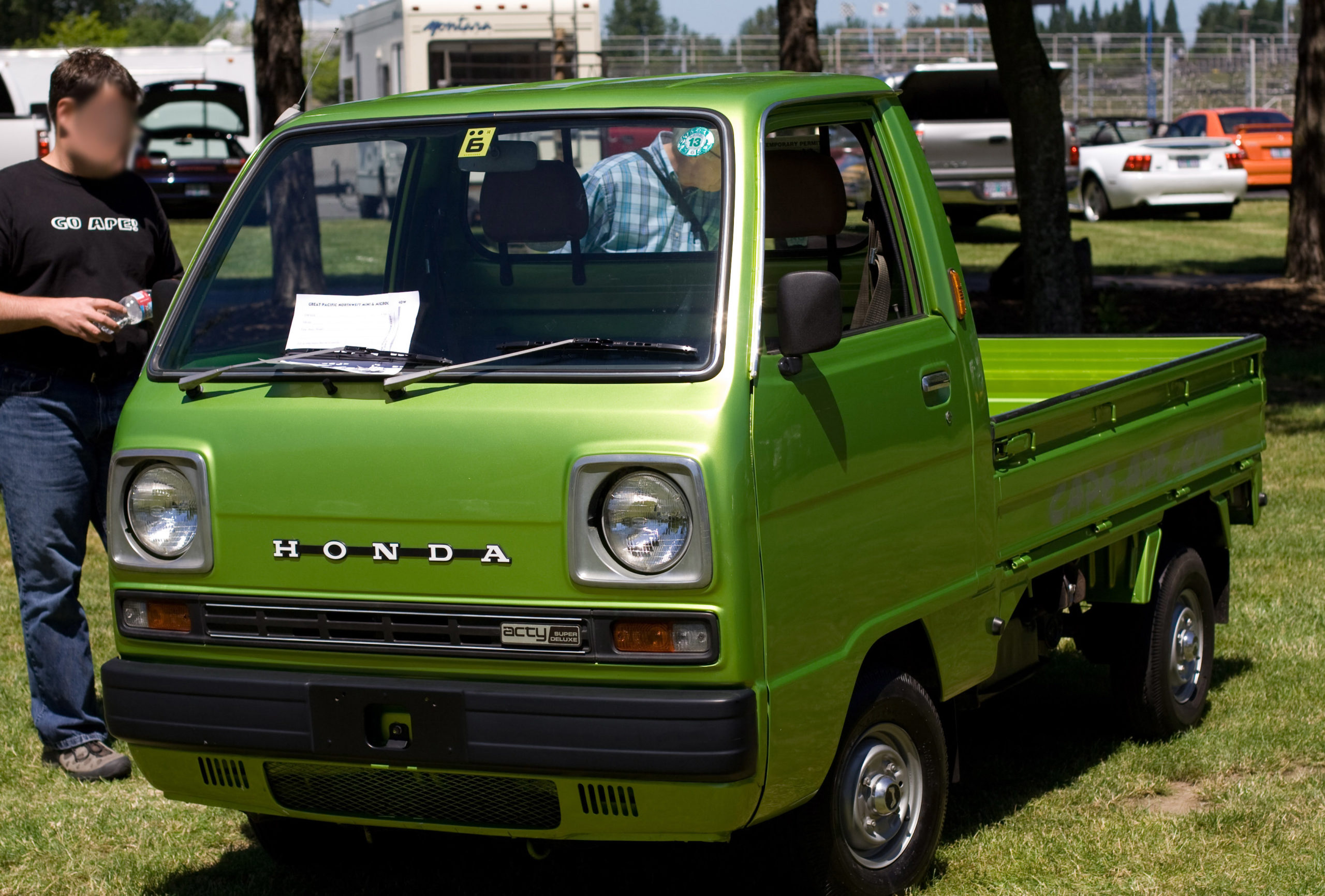
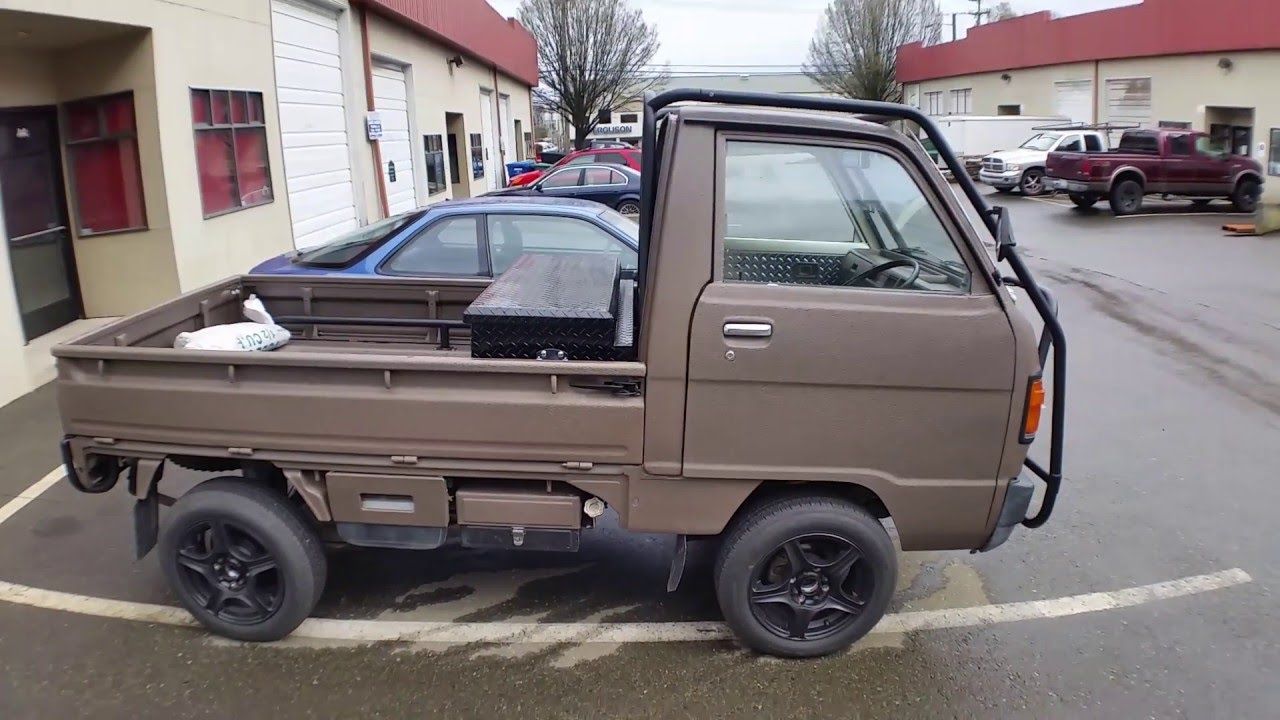
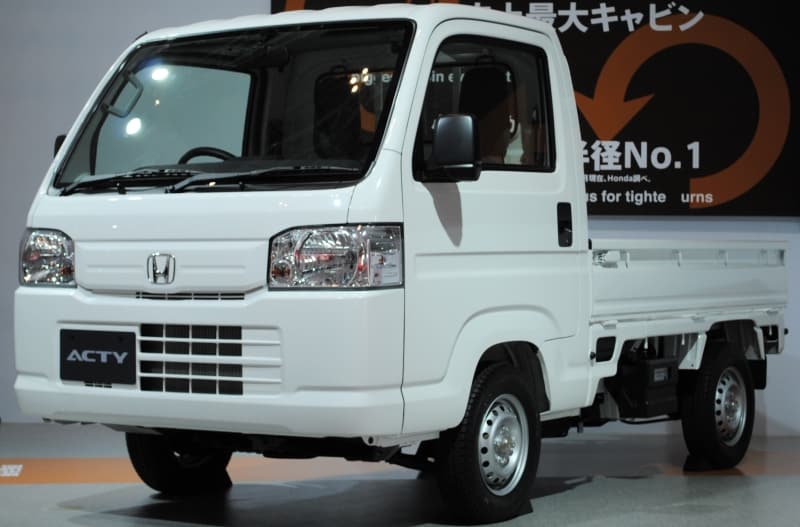
The Buyer's Read
If you're buying an Acty, the right answer for most people is a documented HA4 4WD with the 5-speed manual, a real timing belt receipt, and an underbody clean enough to read the stamping on the frame rails. That combination handles snow and gravel, doesn't need any of the electronic complexity the later cars added, and holds value better than anything else in the lineup. Plan on $8,000 to $12,000 landed in your driveway for a good one.
If you want a van instead, the HH3 or HH4 second generation is the sweet spot for the same reasons the HA4 is on the truck side. Skip the HH5 and HH6 vans for now unless you've got the budget. They're better cars and they're newer, but the legal ones are 1999 and 2000 builds and the prices reflect that. Vans run about 30 to 50 percent more than the equivalent truck, and the camping demand isn't slowing down.
The trap to avoid is a cheap Acty without records. A $4,500 import sounds like a deal until you've replaced the timing belt, re-capped the ECU, fabricated a guard for the overflow tank, and patched the rocker that got hidden under fresh underbody coating. That's another $2,000 to $3,000 of work before you've driven it for fun, and you'll have done it yourself, which is fine if that's why you're buying. If you want to drive it, pay for the documented one.
One last thing on registration. The 25-year rule makes the Acty federally legal, but your state and your county get the last word. Call the DMV before you import, not after. Some states accept kei trucks for full road use. Others restrict them to off-highway only. A couple have revoked existing registrations after policy changes, so even a clean title isn't a guarantee the truck stays road legal forever.
Frequently Asked Questions
- What Honda Acty is best to buy?
- Most buyers target HA4/HH4 4WD 5MT with low rust and proof of timing belt service.
- How much does a Honda Acty cost in the US?
- Driver-grade imports often run $6k-$10k; clean 4WD 5MT examples commonly $10k-$16k.
- Is the Honda Acty street legal in my state?
- It depends. Some states restrict kei trucks; confirm title type, insurance, and DMV policy first.
- Can a Honda Acty drive on the highway?
- It can, but it’s not ideal. Expect limited top speed, high RPM, and crosswind sensitivity.
- What are the biggest problems to check?
- Prioritize rust, cooling system, worn synchros/clutch, and overdue timing belt maintenance.
- Truck vs van: which holds value better?
- Vans often bring higher lifestyle premiums; trucks are steadier work buys. Condition drives value most.
- Is 4WD worth it on an Acty?
- Yes for snow/gravel. 4WD adds resale value and capability; verify engagement and listen for drivetrain noise.
- What year is US-legal under the 25-year rule?
- A given model year becomes eligible after 25 years. For example, 1999 becomes legal in 2024.
Sources & References
- Honda Acty — Wikipedia — WikipediaVerified
- Honda Acty (ホンダ・アクティ) — Japanese Wikipedia — Wikipedia (Japanese)Verified
- Kei truck — Wikipedia — WikipediaVerified
- 4x4 Honda Acty Mini Truck buying notes — Substar Inc.Verified
- Honda Acty Truck specifications (Japan-market reference) — TCV (Trade Carview)Verified
- 1992 Honda Acty — problems and owner advice thread — MiniTruckTalkVerified
- Honda Acty — basic questions community thread — MiniTruckTalkVerified
- Honda Acty Buyers Guide — KPMI USAVerified
- US NHTSA 25-year import exemption guidance — NHTSAVerified
- EPA importing vehicles and engines guidance — EPAVerified
Sources last verified: