Key Takeaways
The Every has run since 1982 across five generations, and they're more different from each other than the badge suggests. The early ST10 and DA51 cars are simple carb-fed kei vans. The DA62 brought the K6A turbo. The DA64 modernized everything. The DA17 is the current car and won't be US-legal for years.
- Best value: roomy kei van with low running costs
- 4WD + turbo trims bring the strongest premiums
- Rust/underbody condition matters more than mileage
- US demand rising as 25-year eligibility expands
- Auto vs manual: autos easier, manuals more durable
- Parts support strong via Suzuki/Carry ecosystem
Should You Buy a Suzuki Every DA62V?
The Every is honest about what it is. You get a tiny van that's cheap to run, easy to park, and weirdly practical for the size. What you give up is highway pace, crash safety to modern standards, and the kind of refinement you'd want on a long trip.
Why You'll Love It
- Exceptional space efficiency Boxy kei packaging fits cargo/people far beyond its footprint; flat load floors are common.
- Low operating costs 660cc kei running costs: tires, brakes, fuel use, and many parts are inexpensive and plentiful.
- 4WD availability Many trims offer selectable/part-time 4WD, ideal for snow, rural roads, and light trails.
- Strong parts interchange Shares ecosystem with Carry/kei components; aftermarket support for suspension, wheels, camping kits.
- Import-friendly ownership Simple mechanicals and strong JDM supply make it a practical first import versus sports cars.
- Conversion versatility Popular base for mini-campers, mobile vending, and shop vans; huge community knowledge base.
Why You Might Not
- Rust and corrosion risk Japanese coastal/snow regions cause underbody rust; repairs can exceed vehicle value quickly.
- Slow by US standards Kei power and gearing mean limited highway pace; crosswinds and grades require planning.
- Crash safety limitations Older kei vans lack modern crash structures/airbags; prioritize condition and later-year safety upgrades.
- Cab-over heat/noise Engine under/near seats increases NVH and cabin heat; insulation upgrades are common.
- Hard commercial histories Many were fleet/work vans; worn doors, seats, and drivetrains are common despite low indicated km.
- US registration variability State rules vary; some classify kei vans as off-road/low-speed, impacting street legality.
Who Should NOT Buy This
- Anyone needing modern crash safety
- Highway commuters doing 75+ mph daily
- People who refuse frequent maintenance
- Rust-belt buyers without indoor storage
- Anyone needing strong AC in extreme heat
- Drivers expecting quiet, refined cabin
- People who tow anything heavy
- Those needing fast parts availability locally
- Owners without a JDM-savvy mechanic
- States with strict emissions/inspection rules
- Drivers over 6'3" wanting relaxed legroom
- Anyone who hates slow steering and body roll
- People who overload vans for work daily
- Buyers who can't handle import paperwork
- Anyone needing advanced diagnostics/OBD2 ease
Common Issues & Solutions
The Every is mechanically simple and most issues come from age, not design. Rust is the big one and the only one that kills cars outright. The K6A turbo's oil-feed line and intercooler hoses are the ones to catch early. Pretty much everything else is normal kei-van wear that costs less than you'd think to fix.
| Issue | Cause | Solution | Est. Cost |
|---|---|---|---|
| Severe underbody rust | Salt use, poor undercoat, trapped moisture | Avoid; or cut/weld properly, then undercoat | $1500-6000 |
| Rear crossmember rot | Mud/salt packs around mounts and seams | Replace/repair crossmember; treat cavities | $800-3000 |
| Sliding door roller wear | Dry rails, rust, heavy use as work van | Replace rollers; clean/lube rails; adjust door | $150-600 |
| Water leaks into cabin | Aged seals, windshield rust, clogged drains | Reseal glass, replace seals, clear drains | $200-1200 |
| Timing chain rattle | Worn chain/tensioner from infrequent oil changes | Chain+tensioner+guides; inspect sprockets | $600-1400 |
| Coil pack misfires | Heat/vibration; oil in plug wells from gasket | Replace coils; fix cam cover gasket; new plugs | $200-700 |
| Oil consumption/blue smoke | Worn rings/valve seals; turbo seals on turbo | Compression test; rebuild/engine swap; turbo | $1200-4500 |
| Overheating in traffic | Weak radiator, stuck thermostat, bad fan circuit | Radiator/thermostat; verify fan relay/sensor | $250-900 |
| Coolant leaks | Aged hoses, plastic tanks, heater pipes O-rings | Pressure test; replace hoses/clamps/pipes | $150-700 |
| CVT shudder/failure | Old fluid, wrong fluid, worn belt/pulleys | Correct fluid service; if bad, rebuild/replace | $1200-3500 |
| 4AT harsh shifts | Old ATF, sticky solenoids, worn mounts | ATF exchange; solenoid service; mounts | $250-1500 |
| Manual clutch slip | Worn disc/pressure plate; oil leak contamination | Clutch kit; fix rear main/input seal if leaking | $500-1200 |
| CV joint clicking | Torn boots, grease loss, high angle from sag | Replace axle/boot; correct ride height | $200-700 |
| Wheel bearing noise | Water intrusion, age, overload use | Replace hub/bearing; check torque and seals | $200-600 |
| Steering play/clunks | Worn tie rods/ball joints; rack bushings | Replace worn joints; align; rack service if needed | $250-1200 |
| Brake line corrosion | Salt exposure; factory coating thin on lines | Replace hard lines; flush fluid; undercoat | $400-1500 |
| Rear drum seizure | Rusty hardware, seized adjusters, stuck cables | New hardware/cylinders; free/replace cables | $200-800 |
| Charging system weak | Aging alternator, poor grounds, small battery | Test/replace alternator; clean grounds; battery | $200-700 |
| Blower motor failure | Worn brushes, resistor pack failure, water ingress | Replace blower and resistor; check cowl drains | $150-600 |
| AC weak/no cooling | Leaks at O-rings, condenser rot, tired compressor | Leak test; replace parts; evac/recharge properly | $250-1400 |
| Fuel filler neck rust | Road spray corrosion at neck and clamps | Replace neck/hoses; inspect tank straps | $250-900 |
| Exhaust leaks | Thin factory piping, flange rust, flex failure | Replace sections; ensure cat and O2 bungs sealed | $200-1200 |
| Engine mounts collapsed | Age, oil saturation, constant stop-go use | Replace mounts; recheck exhaust and shifter feel | $250-900 |
| Door lock actuator issues | Wear, moisture, weak motors in sliding doors | Replace actuators; clean/lube latches | $150-600 |
| ABS sensor faults (if eq) | Corroded tone rings, broken wiring at hubs | Clean/replace sensors; repair wiring; hub if needed | $150-800 |
Differences between JDM & USDM
The Suzuki Every was never sold in the United States. The only US-market presence for the platform came through badge-engineered rebrands — the Ford Pronto (light-commercial channel, very limited) and indirectly through the Chevrolet/GMC partnership that produced the Suzuki-derived Chevrolet Sprint family on different bodyshells. Every Every in the US today is a gray-market import, which means the buyer either brought the vehicle in personally under the 25-year FMVSS exemption or bought from a domestic JDM importer who did. Practical implications: no NHTSA recall history applies, no US TSBs exist, all service literature is in Japanese, and state registration paths vary widely — some states classify imported kei vans as Low-Speed Vehicles (LSVs) and restrict them to sub-25 mph roads, while others register them as standard passenger vehicles. Verify the registration path in your state before purchase, particularly in Maine, Rhode Island, Michigan, Pennsylvania, Texas, and Georgia, where kei-van registration has been contested in recent years.
Pre-Purchase Inspection Checklist
Walk this list with the seller, not in front of them. The Critical items mean walking away if there's no paperwork backing them up. Rust at the rear crossmember and sills is the one to be most strict about, because fixing it properly costs more than the van's worth. Ten minutes underneath with a flashlight tells you more than any test drive will.
Critical Priority
- Chassis Rust Inspect sills/rockers for bubbling, soft spots
- Underbody Rust Check floor pans for patches, pinholes, rot
- Rear Frame/Crossmbr Probe rear crossmember near spring mounts
- Front Subframe Check subframe seams for rot, swelling, cracks
- Cooling System Verify fan cycles; no overheating in traffic
- CVT Behavior No shudder on takeoff; no flare at cruise
- Brake Lines Inspect hard lines for rust; flex hoses cracks
High Priority
- Strut Towers Inspect front towers for cracks, rust rings
- Door Tracks Check sliding door rail rust and roller play
- Windshield Frame Check lower corners for rust, water trails
- Engine Cold Start Start cold; listen for chain rattle or knock
- Idle Quality Check hunting idle; note misfire or shake
- Exhaust Smoke Look for blue smoke on start/overrun
- Blow-by Oil cap off at idle; excessive puffing = wear
- Coolant Condition Check for rust sludge; oil sheen; low level
- Radiator/Condenser Check fins for rot, impact, and seepage
- Turbo (if fitted) Check boost, whistle, shaft play, oil smoke
- Timing Chain Listen warm idle; rattles suggest tensioner
- Fuel Smell Check tank neck and lines for seepage/odor
- Trans Fluid ATF/CVT fluid not burnt; MT oil not glittery
- Auto Shift Quality No harsh 2-3; no delayed engagement D/R
- Manual Clutch Check slip in 3rd/4th; high bite point
- Driveshaft/CV Joints Listen for clicks on full lock; torn boots
- Diff/Transfer Case Check for whine; leaks; 4WD engagement
- 4WD System Engage 4WD; confirm light and no binding
- Steering Rack Check for play, torn boots, fluid leaks (PS)
- Tie Rods/Ball Joints Check boots, looseness, clunks over bumps
- Brake Feel Pedal firm; no pull; no ABS light
- Battery/Charging Check voltage 13.8-14.5V; dim lights at idle
- Fusebox/Relays Check for melted sockets, water intrusion
- Instrument Cluster Verify all warning lamps key-on then off
- Odometer Credibility Check wear vs km; service stickers; auction sheet
- Seat Mounts Check for rust at mounts; loose bolts
- Seatbelts Check retraction and fraying; buckle clicks
- Cabin Water Leaks Lift mats; check dampness, mildew, rust
- Emissions Readiness Check cat present; no exhaust leaks pre-cat
Medium Priority
- Sliding Door Latch Confirm smooth latch; no slam-to-close needed
- Roof Gutters Inspect gutters for rust, seam sealer cracks
- Rear Hatch/Doors Check bottom seams for rust and water ingress
- Oil Leaks Check cam cover, front seal, sump, turbo lines
- Heater Output Confirm strong heat; weak heat hints air/plug
- AC Performance Check vent temp; compressor noise; cycling
- Intercooler Hoses Inspect for oil-soaked hoses, loose clamps
- Spark/Coils Scan/feel misfire under load; coil packs fail
- Wheel Bearings Check hum at speed; play at 12/6 o'clock
- Shocks/Springs Look for leaks, sag, broken coils
- Handbrake Holds on incline; cables not seized
- Tires Wear Uneven wear suggests bent arms or alignment
- Wheels/Studs Check for cross-threaded studs, wobble
- Grounds/Corrosion Inspect battery terminals and chassis grounds
- Rear Heater Lines Check for leaks if rear heater equipped
- Keys/Immobilizer Confirm all keys; immobilizer starts reliably
- OBD/Diag Access Verify scan tool compatibility; read stored codes
Low Priority
- Wipers/Washer Confirm strong sweep; washer pump works
- Lights Check headlight aim, hazing, all bulbs
Generation History
Every/Carry Van (early) (1982-1990)
- Kei cab-over microvan roots
- Simple carb engines; easy DIY
- 2WD/4WD depending on trim
- Rust is the main value killer
DE51V/DF51V (1991-1998)
- 660cc F6A era; many 4WD
- Workhorse trims dominate supply
- Better HVAC and ergonomics
- Common JDM import sweet spot
DA52V/DB52V (1999-2001)
- Transition to newer 660cc setups
- More safety/comfort vs DE/DF
- Strong US interest as eligible
- Watch for hard commercial use
DA62V/DA62W (2001-2005)
- K6A engine widely used
- Wagon trims add comfort features
- Turbo models exist in some markets
- Higher prices for clean 4WD
DA64V/DA64W (2005-2015)
- Modernized interior and NVH
- Great parts availability
- Not US-legal yet (25-year rule)
- Popular for camping conversions
DA17V/DA17W (2015-present)
- Latest platform; best safety tech
- Most refined driving experience
- High domestic demand keeps prices up
- US import wait remains long
Market Data
Production Numbers & Rarity
| Generation | Years | Total Built | Notes |
|---|---|---|---|
| ST10/ST20 (1st gen) | 1979-1985 | estimated | Exact production not publicly consolidated; estimated |
| DA51/DB51/DE51/DF51 (2nd gen) | 1985-1991 | estimated | Exact totals vary by OEM rebadges; estimated |
| DA52/DB52/DA62 (3rd gen) | 1991-2005 | estimated | Long run; split by DA52/DB52 vs DA62; estimated |
| DA64V/DA64W (4th gen) | 2005-2015 | estimated | High-volume kei van; public totals not unified; est. |
| DA17V/DA17W (5th gen) | 2015-present | estimated | Ongoing production; totals depend on cutoff date |
How It Compares
Across the kei van field, the Every has the strongest parts ecosystem because of the Carry crossover. The Acty is the easiest to drive. The Sambar is the most interesting mechanically. The Hijet is the cheapest. The table below leans toward the Every's strengths because that's where it actually wins, on parts support and resale stability.
| Feature | DA62V | Honda Acty HH3/HH4 | Daihatsu Hijet S100V |
|---|---|---|---|
| Engine class | 660cc kei I3 (varies) | 660cc kei I3 | 660cc kei I3 |
| Drivetrain options | 2WD or part-time 4WD | 2WD/RealTime 4WD | 2WD or part-time 4WD |
| Transmission | 5MT/3AT/4AT by year | 5MT/3AT common | 5MT/ECVT some trims |
| Turbo availability | Some trims/years (market) | Rare; mostly NA | Supercharger on some |
| Interior space feel | Very boxy; tall roof | Good; slightly narrower | Excellent; low floor feel |
| Ride/handling | Stable; utilitarian tuning | Car-like steering feel | Best ride; rear-engine |
| Service access | Cab-over; tight but simple | Cab-over; good access | Rear-engine easier access |
| Rust susceptibility | Moderate; check sills/rails | Moderate; check floors | Moderate-high; arches |
| Parts availability | Strong; Carry ecosystem | Strong; Honda support | Good; model-specific bits |
| Typical US import price | $4k-$12k (age/cond) | $5k-$14k | $6k-$16k |
| Collector premium | Low-moderate; niche trims | Moderate; Honda tax | Higher; SC/unique layout |
Comparable Alternatives
If the Every isn't the right kei van, the natural alternatives are the Honda Acty if you want car-like steering, the Subaru Sambar if you want the rear-engine layout, or the Daihatsu Hijet if you want the cheapest entry. The Suzuki Carry truck is the same platform with a bed instead of a cargo box.
Honda Acty Van HH3/HH4
Similar kei utility; strong demand and support
Subaru Sambar KV3/KV4
Rear-engine feel; supercharged trims; premium
Daihatsu Hijet S100V
Huge supply; practical 4WD; easy parts sourcing
Mitsubishi Minicab U42V
Often cheaper; simple mechanicals; 4WD common
Suzuki Carry Truck DD51T
Same family; truck bed utility vs van volume
In Pictures
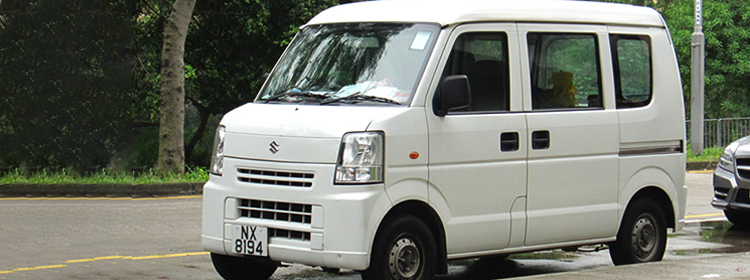
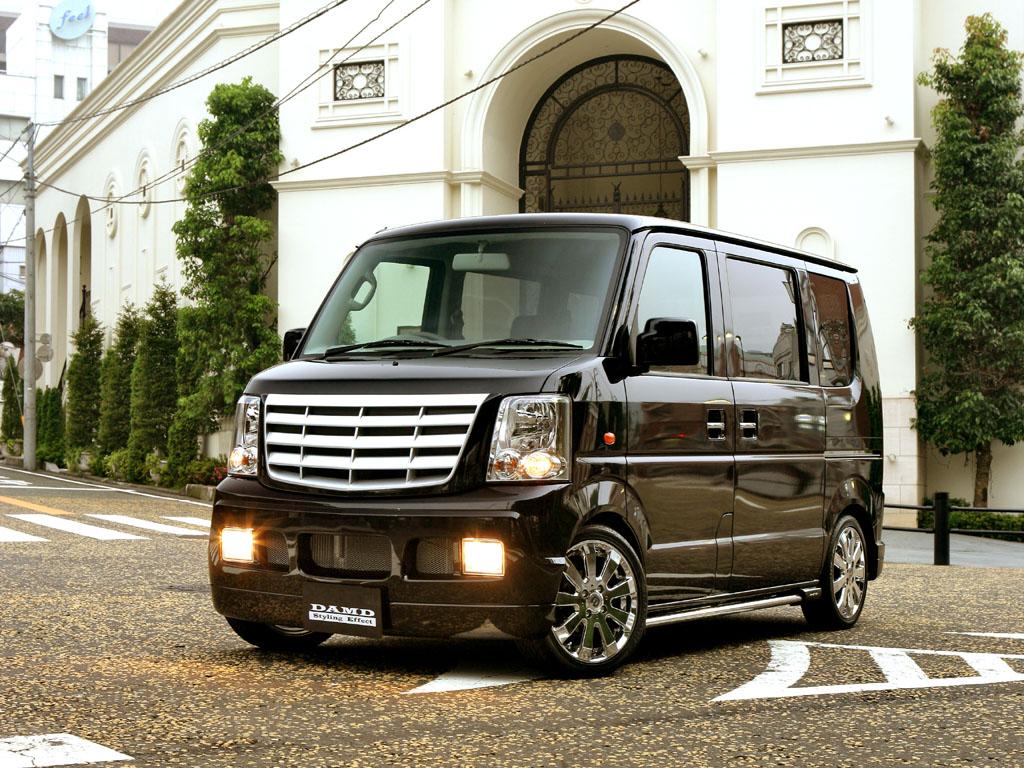
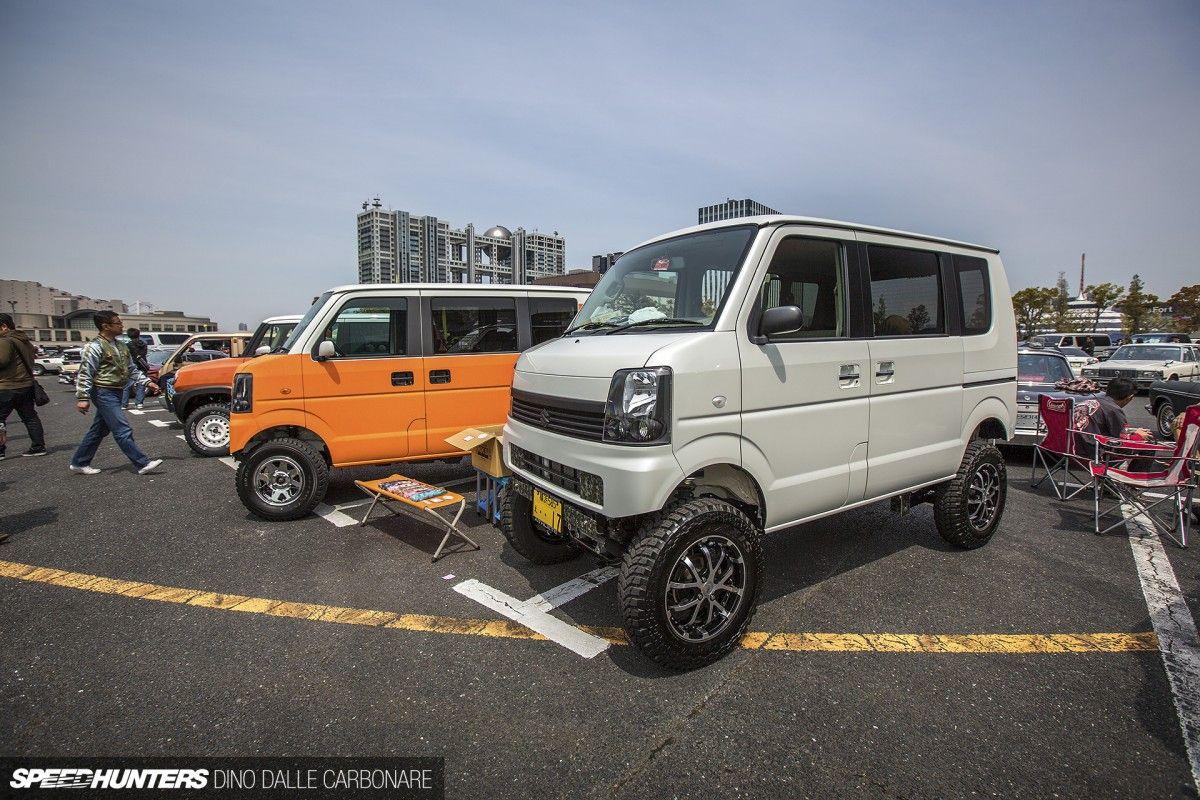
The Buyer's Read
If you're buying an Every, start by figuring out what you actually want to do with it. A delivery van around town is one decision. An overlander or camper conversion is a different one. The right Every for each is a different chassis.
For a daily errand van or shop vehicle, a clean DA64V Join from 2010 or later is hard to beat. You get modern enough interior plastics, the K6A engine with mature electronics, and parts that any kei specialist can source. Skip anything with visible rust under the rear or at the rocker panels. A cheap Every almost always means deferred bodywork, and what you save on the purchase you'll spend in the first year fixing rot that should have been caught.
For overlanding or camper builds, the target is a K6A turbo with part-time 4WD. That's the Joypop Turbo on the DA62, the Join Turbo on the DA64, or the upper Wagon PZ Turbo trims if you want passenger comfort. The turbo gives you enough power to handle a roof tent and a bed platform without feeling helpless on grades. The 4WD makes the van actually useful off pavement. Just know that the K6A turbo's oil-feed line wants replacing on any car past 100,000 km, and the intercooler hoses split at the clamps from heat cycling. Both are cheap repairs caught early. Both get expensive once the turbo eats the catalyst.
The one Every to avoid is anything with body filler at the sills or a rear crossmember that's been patched. The chassis is structurally important on a cab-over kei van and you can't fudge it. Walk away from anything that looks like it spent winters on salted roads in Hokkaido. Look instead for documented cars from the western prefectures where the climate is kinder.
Verify your state's kei-van registration path before you buy. Maine, Rhode Island, Michigan, Pennsylvania, Texas, and Georgia have all contested kei registration in the last few years, and the rules keep shifting. A van you can't plate is a van you can't use.
Frequently Asked Questions
- What is the Suzuki Every, and how is it different from Carry?
- Every is the passenger/cargo van; Carry is typically the truck. Many parts and engines overlap.
- Which years are best to buy for US import?
- Target the newest 25-year eligible year with clean history. Condition beats year; avoid heavy rust.
- How much should I pay for a good Suzuki Every?
- Most land $4k-$12k in the US. Clean 4WD, low-rust, and wagon/turbo trims push higher.
- Is 4WD worth it on an Every?
- Yes for snow/rural use. 4WD adds resale value and usability; inspect CV boots, hubs, and transfer operation.
- Can a Suzuki Every handle US highways?
- It can, but expect slow acceleration and wind sensitivity. Best for 45–65 mph routes; keep tires and brakes fresh.
- What are the biggest problem areas to inspect?
- Check rust (sills/rails), cooling system, oil leaks, sliding door rollers, and worn suspension bushings.
- Are parts and service difficult in the US?
- Routine service is easy. Many parts cross with Carry/kei catalogs; body/interior bits can take longer to source.
- Can I register and insure a Suzuki Every in my state?
- Usually yes if 25-year imported, but rules vary. Verify DMV classification and insurer acceptance before buying.
Sources & References
- Suzuki Every — encyclopedic overview — WikipediaVerified
- Suzuki Carry — encyclopedic overview (sibling platform) — WikipediaVerified
- Suzuki Every — official JDM product page — Suzuki Motor CorporationVerified
- Suzuki Every Wagon — official JDM product page — Suzuki Motor CorporationVerified
- Suzuki Every — Japanese encyclopedic overview — Wikipedia (Japanese)Verified
- Kei truck and kei van regulatory overview — WikipediaVerified
- Goo-net Exchange: Suzuki Every JDM listings — Goo-netVerified
- NHTSA 25-year import exemption guidance — NHTSAVerified
- EPA import exemptions for older vehicles — EPAVerified
Sources last verified: