Buyer's guide
Subaru Impreza
The Subaru Impreza arrived in November 1992 as a replacement for the Leone, and with it Subaru retired the EA-series engines in favour of the EJ flat-four. The legendary half of the lineup — the WRX and WRX STI — was built to satisfy Group A homologation for the World Rally Championship, and the Impreza name became inseparable from rally success across four chassis generations: GC8 (1992-2000), GDB (2000-2007), GRB/GVB (2007-2014), and VAB (2014-2021, badged WRX after the model split). JDM-only specials — the widebody 22B coupe, the Type RA homologation strippers, the S201 / S202 / S203 / S204 STI Group N specials, and the track-focused Spec C — never reached the United States in factory form, which is what the import market exists to correct. Colin McRae, Richard Burns, and Petter Solberg each won WRC driver's championships in factory Subaru Imprezas between 1995 and 2003, and that motorsport pedigree is the entire reason a clean GC8 or GDB still sells in 2026 for more than a comparable Civic.
EJ20 turbo flat-four — and the head-gasket reality
The EJ-series flat-four is the engine that built the Impreza's reputation: horizontally-opposed pistons with a bore larger than the stroke, which Subaru engineers chose for low engine height, low centre of gravity, and reduced reciprocating shake forces. EJ20G and EJ20K powered the GC-era WRX and STI; EJ205 (open-deck) and EJ207 (closed-deck, JDM-only) defined the GDB era; EJ255 and EJ257 carried 2.5L turbo duty through the GRB / VAB years until the FA20DIT replaced it on the VA WRX in 2015. The flip side of the EJ story is well-documented: the OEM single-layer head gasket on naturally-aspirated EJ25s (and to a lesser extent on turbo cars) develops external coolant seeps at the block-to-head seam, typically between 100,000 and 150,000 miles. Subaru moved to a multi-layer steel design in the late 2000s, which addressed most of the failure mode. On a buyer's inspection, the diagnostic is straightforward — coolant crust at the seam, white sludge in the oil filler, or combustion gases bubbling in the overflow tank under load. Replacement runs $1,800–$3,500 because the engine has to come out to reach the gasket faces; nobody is changing a Subaru head gasket in the car. Ringland failure on tuned EJ257 cars is the second well-known weakness, driven by oil starvation under hard cornering, knock from poor tunes, and OEM cast pistons that crack at the second compression ring land. Forged pistons and a competent tune solve it permanently.
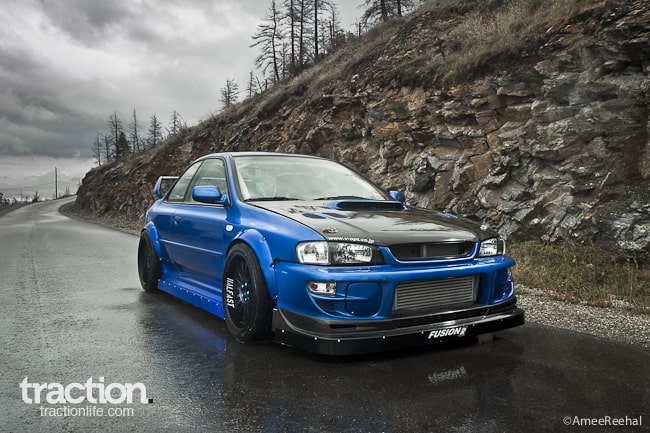
STI 22B and the homologation specials
The 1998 Impreza 22B STi is the variant collectors quote when they're explaining why a Subaru can be worth six figures. Built to celebrate Subaru's 40th anniversary and the consecutive 1995–1997 WRC manufacturers' titles, the 22B used a stroked 2.2L EJ22G turbo flat-four, a widebody two-door coupe shell, DCCD centre differential, and a production run held to 400 cars for Japan plus a small batch for export — verified in WP and Wikipedia source records. Clean 22Bs trade through Bring a Trailer and dealer auctions in the $250,000–$500,000+ range depending on mileage and originality. Below the 22B sits a stack of lesser-known JDM homologation specials that the United States never received: the Type RA (Record Attempt) strippers offered through the GC and GDB years with reduced sound deadening, manual windows, and close-ratio gearboxes; the Spec C cars with thinner glass and a lighter battery for Japanese Super Taikyu and N15 rally regulations; and the STI-developed S201 (1999, GC8), S202 (2002, GDB), S203 (2004, GDB), and S204 (2005, GDB) limited editions with bespoke aero, suspension tuning, and roughly 300–320 PS factory ratings. These four-figure-production cars are the engine of the Impreza import market — a clean S203 or S204 is a five-year wait at most US import dealers.
Quick read
Key takeaways
- WRX/STI drive collector demand; base trims stay budget
- Unmodified examples sell fastest and bring top money
- Rust + mods are the biggest value killers
- EJ head gaskets and timing belts are key due diligence
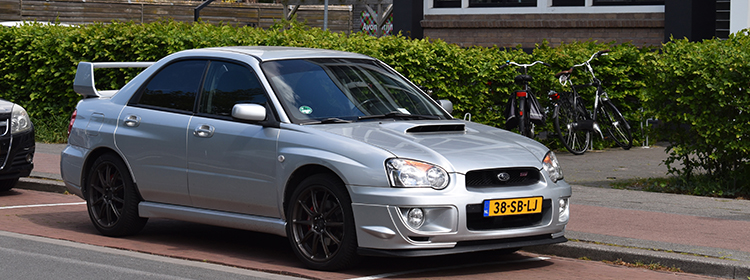
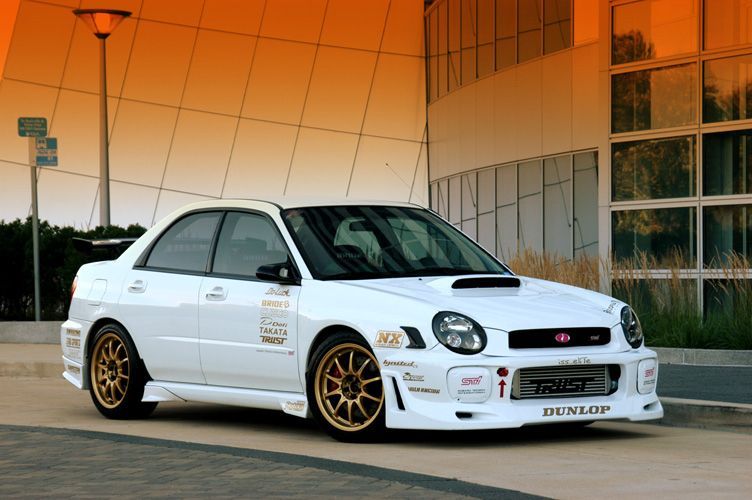
- Hawkeye/Blobeye WRX and GD STI are market sweet spots
- GR/GV hatch STI has rising enthusiast premium
Constants
Common across all Impreza generations
- Horizontally opposed (boxer) four-cylinder engine across all generations
- Symmetrical all-wheel drive on the WRX and WRX STI performance variants
- Sedan, wagon and (third-generation STI) hatchback body styles across the model's history
- JDM WRX STI variants used the turbocharged EJ20 boxer through the GV/GR generation
- Right-hand drive available throughout JDM production
Chassis history
Generation timeline
The Impreza had four WRX and STI chassis generations between 1992 and 2021, and they don't drive like the same car. The GC8 is the original rally homologation chassis and it's light, short, and rusty. The GDB is the value sweet spot and the first one the US ever got. The GRB hatch is wider, heavier, and the only US STI five-door. The VAB is the last EJ-powered factory STI before Subaru retired the STI badge.
First generation — GC8 sedan / GF8 wagon (WRX STI; 1992–2000)
Third generation — GRB hatch / GVB sedan (WRX STI; 2007–2014)
Buyer's call
Should you buy a Subaru Impreza?
The Impreza WRX and STI are easy to love and hard to own. You get the all-wheel-drive rally car that Colin McRae and Richard Burns drove to WRC titles, and you get the EJ flat-four with its head gasket and ringland reputation that every Subaru forum has been arguing about for 20 years. The strong points and weak points are baked in across the whole production run.
Why you'll love it
- Symmetrical AWD traction Excellent all-weather grip; strong resale in snow states and rural markets.
- WRX/STI performance upside Turbo models offer big tuning headroom; strong enthusiast liquidity when stock.
- Practical packaging Hatch/wagon variants are usable daily; good visibility and cargo for the size.
- Huge parts & community support Aftermarket and OEM supply is deep; DIY knowledge base is unmatched.
- Engaging analog feel (older gens) GC/GD deliver light steering and feedback; strong driver appeal vs newer rivals.
- Motorsport heritage Rally pedigree supports long-term desirability for WRX/STI and clean classics.
Why you might not
- Mod risk on WRX/STI Aggressive tunes, poor fueling, and hard use can hide expensive engine/trans issues.
- Rust and accident history Older Imprezas rust at quarters, sills, subframes; many have prior impacts.
- EJ maintenance sensitivity Timing belt intervals, oiling, and cooling matter; neglect can mean rebuild money.
- Insurance and theft exposure WRX/STI often carry high premiums; theft/vandalism risk in some metros.
- Interior wear & NVH Older cars feel cheap inside; rattles and road noise are common vs newer compacts.
- Fuel economy on turbo trims WRX/STI can be thirsty; tuned cars often worse and require premium fuel.
Who should not buy this
- Anyone who won't check oil every 1-2 fuel fills
- Buyers expecting Toyota-level reliability
- People who refuse matched tires on all 4 corners
- Anyone in rust-belt avoiding underbody work
- Drivers who tow or haul heavy loads regularly
- Owners who skip fluid services (esp. CVT)
- People who can't afford a $5k drivetrain surprise
- Those wanting quiet cabin; road noise is real
- Drivers who want strong acceleration (non-WRX)
- Anyone without a trusted Subaru specialist nearby
- People who ignore overheating even once
- Buyers wanting cheap mods; bad tunes kill engines
- Short-trip only drivers; moisture sludges PCV/oil
- Anyone who won't pay for OEM-quality cooling parts
Reliability
Common issues & solutions
The Impreza isn't a bulletproof car the way a Celsior is. The EJ flat-four has known weaknesses and you should buy with them in mind. The head gasket leaks at the block-to-head seam between 100,000 and 150,000 miles. Tuned EJ257 cars crack ringlands when the OEM cast pistons meet a lean tune or oil starvation in a hard corner. The turbocharger banjo bolt on EJ255 cars clogs and starves the turbo of oil. None of these are unfixable, but they all cost money to put right.
| Issue | Cause | Solution | Est. cost |
|---|---|---|---|
| EJ head gasket external leak | OEM gasket design + heat cycles | MLS gaskets, machine heads, new bolts, flush | $1800-3500 |
| EJ timing belt/idler failure | Skipped service; cheap idlers/pump | Full OEM/Aisin kit; inspect cam/crank seals | $700-1400 |
| FB oil consumption | Ring design/carbon; long oil intervals | Short intervals; piston/ring job if severe | $150-4500 |
| Rod bearing failure (low oil) | Oil consumption + owner neglect | Used engine or rebuild; fix root cause | $3500-8000 |
| Radiator end tank crack | Aging plastic tanks; heat cycling | Replace radiator, cap, hoses; bleed properly | $350-900 |
| Overheating from air pockets | Improper bleeding; weak cap/thermostat | OEM thermostat/cap; vacuum fill & bleed | $150-450 |
| Catalytic converter efficiency | Oil burning/misfires damage catalyst | Fix oil/misfire; replace cat with OE-quality | $900-2500 |
| P0420 recurring after repair | Cheap cat or unaddressed oil consumption | OE cat + address oil use; verify fuel trims | $1200-3000 |
| CVT valve body/solenoid failure | Heat/contamination; no fluid service | Valve body replace; fluid exchange; relearn | $1200-2500 |
| CVT chain/pulley wear | High mileage, towing, overheating | Replace CVT assembly; add cooler if needed | $4500-9000 |
| Manual trans synchro wear | Hard shifts, wrong fluid, high miles | Fluid change; rebuild/used trans if grinding | $150-2500 |
| Clutch/throwout bearing noise | Worn TOB/pressure plate; riding clutch | Clutch kit + TOB; inspect fork/pivot | $900-1800 |
| Center diff bind (4EAT/MT) | Mismatched tires; viscous coupling wear | Match tires; replace viscous/center diff | $600-2200 |
| Wheel bearing failure | Water intrusion; impact; age | Replace hub/bearing; torque axle nut correctly | $350-900 |
| Rear axle seal leak | Seal wear; bearing play; corrosion | Replace seal; address bearing if loose | $250-700 |
| Power steering pump whine | Air ingestion from o-rings/hoses | Replace suction o-ring/hoses; flush fluid | $80-450 |
| Steering rack leak/clunk | Seal wear; inner tie rod play | Replace rack or reseal; align afterward | $900-1800 |
| Control arm rear bushing tear | Age; salt; pothole impacts | Replace control arms or press bushings; align | $350-900 |
| Sway link clunk | Ball joint wear; torn boots | Replace links; check sway bar bushings | $120-350 |
| Rear subframe rust-through | Road salt; poor undercoating | Replace subframe; treat rust; inspect mounts | $1200-3000 |
| Brake line corrosion leak | Salt exposure; aged coating | Replace lines; flush; inspect calipers | $600-1800 |
| ABS wheel speed sensor faults | Rusty tone rings; sensor wiring damage | Clean/replace sensor; repair wiring; scan verify | $150-600 |
| A/C compressor failure | Clutch wear; contamination; leaks | Replace compressor+drier; flush; evac/recharge | $900-1800 |
| Heater core clog/weak heat | Old coolant; stop-leak use | Backflush; replace core if restricted | $150-1400 |
| Sunroof drain leak | Clogged drains; disconnected tubes | Clear drains; reseat tubes; dry interior | $100-500 |
| Windshield/cowl water leak | Poor seal; clogged cowl drains | Reseal glass; clear drains; treat mold | $250-900 |
| MAF sensor drivability issues | Oiled filters; dirt; intake leaks | Clean/replace MAF; fix intake leaks; reset trims | $20-350 |
| Ignition coil misfires | Heat cycling; oil in plug wells | Replace coils/plugs; fix valve cover leaks | $250-900 |
| Valve cover gasket leaks | Aged gaskets; crankcase pressure | Replace gaskets/tube seals; service PCV | $250-700 |
| Oil pan seep/leak | Sealant aging; impact damage | Reseal pan; check pickup; refill with correct oil | $250-650 |
| Exhaust manifold cracks/leaks | Thermal stress; rust at flanges | Replace manifold/gaskets; fix broken studs | $300-1200 |
| O2 sensor failures | Age; contamination from oil/coolant | Replace sensor; verify fuel trims & cat health | $150-450 |
| Battery drain/parasitic draw | Aging modules, aftermarket alarms, bad alternator | Draw test; repair circuit; replace battery/alt | $150-900 |
| Interior rattles/trim wear | Economy plastics; age; prior disassembly | Clip/foam fixes; replace broken retainers | $20-300 |
Market
Differences between JDM & USDM
The United States got the Impreza WRX starting with the 2002 model year (the Bugeye GD). Japan had it from November 1992. That ten-year gap is the defining import-market story for the Impreza: every GC-era WRX and WRX STI on US roads is a Japanese import, period. The STI never came to the US until 2004, and even then USDM STIs used the larger-displacement EJ257 2.5L turbo while JDM STIs kept the closed-deck, twin-scroll, AVCS-equipped EJ207 2.0L turbo through the entire production run. JDM-only models the US never received include the 22B, Type RA, Type RA-R, Spec C, S201, S202, S203, S204, and all WRX/STI wagons and coupes through GC. The wagon body never reached the US as a WRX or STI in any generation. RHD is standard on JDM cars; the gearbox is the same close-ratio 5-speed (GC) or 6-speed (GDB onward); brakes are typically Brembo on STI grades but the USDM/JDM rotor sizes differ. DCCD (Driver Controlled Centre Differential) is present on JDM STI from GC-era Type RA onward and on all USDM STIs from 2004.
400HP JDM Subaru Impreza STI Type R Version III — The Rumble in the Rainforest
Specs
Technical specifications
Every Impreza WRX and STI runs a turbocharged EJ flat-four. The GC and GD cars use the 2.0 liter EJ20G, EJ20K, EJ205, and EJ207. The 2.5 liter EJ255 and EJ257 came in starting with the USDM 2002 WRX and the 2004 STI. The JDM STI kept the closed-deck 2.0 liter EJ207 through the entire GDB, GRB, and VAB run, capped at the JDM gentleman's agreement of 280 PS. The gearbox went from a 5-speed manual on GC8 to a 6-speed manual with DCCD on every STI from GDB onward.
Engine options
| Chassis | Engine | Displacement | Power | Boost | Notes |
|---|---|---|---|---|---|
| GC/GF | EJ15 | 1.5L | unknown (varies by market/year) | N/A | SOHC NA; exact output market-dependent |
| GC/GF | EJ16 | 1.6L | unknown (varies by market/year) | N/A | SOHC NA; exact output market-dependent |
| GC/GF | EJ18 | 1.8L | unknown (varies by market/year) | N/A | SOHC NA; exact output market-dependent |
| GC/GF | EJ20 | 2.0L | unknown (varies by market/year) | N/A | NA; multiple specs by market/year |
| GC/GF | EJ20G | 2.0L | unknown (varies by year/trim) | unknown | Turbo; early WRX/STI; spec varies |
| GC/GF | EJ20K | 2.0L | unknown (varies by year/trim) | unknown | Turbo; later GC WRX/STI; spec varies |
| GC8 (WRX STI 22B) | EJ22G | 2.2L | unknown (factory-rated varies by market) | unknown | Turbo; limited 22B; exact figures vary |
| GD/GG | EJ15 | 1.5L | unknown (varies by market/year) | N/A | NA; JDM base; output varies |
| GD/GG | EJ16 | 1.6L | unknown (varies by market/year) | N/A | NA; EU base; output varies |
| GD/GG | EJ20 | 2.0L | unknown (varies by market/year) | N/A | NA; multiple calibrations by market |
| GD/GG | EJ204 | 2.0L | unknown (varies by market/year) | N/A | NA DOHC AVCS; market-dependent output |
| GD/GG (WRX) | EJ205 | 2.0L | unknown (varies by market/year) | unknown | Turbo; WRX; output/boost vary by market |
| GD/GG (WRX STI JDM) | EJ207 | 2.0L | unknown (varies by year/spec) | unknown | Turbo; STI; spec varies (AVCS, twinscroll) |
| GD (WRX STI USDM) | EJ257 | 2.5L | unknown (varies by year) | unknown | Turbo; US STI; output varies by MY |
| GE/GH/GR/GV | EJ15 | 1.5L | unknown (varies by market/year) | N/A | NA; base; output varies |
| GE/GH/GR/GV | EJ20 | 2.0L | unknown (varies by market/year) | N/A | NA; output varies by market |
| GE/GH/GR/GV | EJ204 | 2.0L | unknown (varies by market/year) | N/A | NA DOHC AVCS; market-dependent |
| GE/GH/GR/GV (WRX) | EJ255 | 2.5L | unknown (varies by market/year) | unknown | Turbo; WRX; output varies |
| GR/GV (WRX STI) | EJ257 | 2.5L | unknown (varies by market/year) | unknown | Turbo; STI; output varies |
| GP/GJ | FB16 | 1.6L | unknown (varies by market/year) | N/A | NA; FB-series; market-dependent output |
| GP/GJ | FB20 | 2.0L | unknown (varies by market/year) | N/A | NA; FB-series; market-dependent output |
| GT/GK | FB16 | 1.6L | unknown (varies by market/year) | N/A | NA; market-dependent output |
| GT/GK | FB20 | 2.0L | unknown (varies by market/year) | N/A | NA; market-dependent output |
| GU | FB20 | 2.0L | unknown (varies by market/year) | N/A | NA; current gen; market-dependent output |
| GU (RS NA) | FB25 | 2.5L | unknown (varies by market/year) | N/A | NA; 2.5L for RS; market-dependent output |
Transmission options
| Type | Ratios | Availability | Notes |
|---|---|---|---|
| 5-speed Manual | unknown (varies by model/year) | Multiple trims/gens | Ratios vary widely by market and MY |
| 6-speed Manual | unknown (varies by model/year) | WRX STI (many markets/years) | DCCD on STI; ratios vary by MY |
| 4-speed Automatic | unknown (varies by model/year) | Multiple trims/gens | 4EAT; ratios vary by MY/market |
| CVT | N/A (CVT) | GP/GJ, GT/GK, GU (most trims) | Lineartronic; spec varies by MY/market |
Lineup
Variants & trims
JDM Imprezas include the 22B coupe, the Type RA strippers, the Spec C track cars, and the STI-developed S201, S202, S203, and S204 limited editions. The US never got any of them. USDM buyers got the WRX from 2002 and the STI from 2004, both with the 2.5 liter EJ. Everything else, including the wagon and coupe body styles on the GC8, is an import.
| Generation | Trim | Engine | Key features |
|---|---|---|---|
| GC/GF (1st gen, 1992-2000) | Impreza 1.5i (JDM) | EJ15 NA | Base spec, 5MT/4AT, FWD/AWD (market) |
| GC/GF (1st gen, 1992-2000) | Impreza 1.6i (EU) | EJ16 NA | Base spec, 5MT/4AT, AWD (market) |
| GC/GF (1st gen, 1992-2000) | Impreza 1.8i | EJ18 NA | 5MT/4AT, AWD (market), entry equipment |
| GC/GF (1st gen, 1992-2000) | Impreza 2.0i | EJ20 NA | 5MT/4AT, AWD (market), higher output NA |
| GC/GF (1st gen, 1992-2000) | Impreza WRX | EJ20G Turbo | Turbo, AWD, 5MT/4AT, sport suspension |
| GC/GF (1st gen, 1992-2000) | Impreza WRX STI | EJ20G/EJ20K Turbo | STI tune, AWD, 5MT, uprated brakes/suspension |
| GC/GF (1st gen, 1992-2000) | Impreza WRX Type RA | EJ20G/EJ20K Turbo | Lightweight, close-ratio 5MT, roof vent (some) |
| GC/GF (1st gen, 1992-2000) | Impreza WRX STI Type RA | EJ20G/EJ20K Turbo | STI + lightweight, DCCD (some), rally-focused |
| GC/GF (1st gen, 1992-2000) | Impreza WRX STI 22B | EJ22G Turbo | Widebody, 2.2T, DCCD, limited production |
| GD/GG (2nd gen, 2000-2007) | Impreza 1.5i (JDM) | EJ15 NA | Base spec, 5MT/4AT, AWD (market) |
| GD/GG (2nd gen, 2000-2007) | Impreza 1.6i (EU) | EJ16 NA | Base spec, 5MT/4AT, AWD (market) |
| GD/GG (2nd gen, 2000-2007) | Impreza 2.0i | EJ20 NA | 5MT/4AT, AWD (market), mainstream trim |
| GD/GG (2nd gen, 2000-2007) | Impreza 2.0R (some markets) | EJ204 NA | AVCS NA, 5MT/4AT, sport-oriented NA |
| GD/GG (2nd gen, 2000-2007) | Impreza WRX | EJ205/EJ207 Turbo | Turbo, AWD, 5MT/4AT (market), sport chassis |
| GD/GG (2nd gen, 2000-2007) | Impreza WRX STI | EJ207/EJ257 Turbo | 6MT (many), DCCD, Brembo, STI aero |
| GD/GG (2nd gen, 2000-2007) | Impreza WRX STI Spec C | EJ207 Turbo | Lightweight, water spray (some), track/rally focus |
| GD/GG (2nd gen, 2000-2007) | Impreza WRX STI Type RA-R | EJ207 Turbo | Limited, uprated engine, lightweight, RA-R spec |
| GE/GH/GR/GV (3rd gen, 2007-2014) | Impreza 1.5i (JDM) | EJ15 NA | Base spec, 5MT/4AT, AWD (market) |
| GE/GH/GR/GV (3rd gen, 2007-2014) | Impreza 2.0i | EJ20 NA | 5MT/4AT, AWD (market), core trim |
| GE/GH/GR/GV (3rd gen, 2007-2014) | Impreza 2.0R (some markets) | EJ204 NA | AVCS NA, 5MT/4AT, sport NA |
| GE/GH/GR/GV (3rd gen, 2007-2014) | Impreza WRX | EJ255 Turbo | Turbo, AWD, 5MT, widebody (later), sport chassis |
| GE/GH/GR/GV (3rd gen, 2007-2014) | Impreza WRX STI | EJ257 Turbo | 6MT, DCCD, Brembo, STI aero/suspension |
| GP/GJ (4th gen, 2011-2016) | Impreza 1.6i (some markets) | FB16 NA | CVT/5MT (market), AWD (market), efficiency focus |
| GP/GJ (4th gen, 2011-2016) | Impreza 2.0i | FB20 NA | CVT/5MT (market), AWD, mainstream equipment |
| GT/GK (5th gen, 2016-2023) | Impreza 1.6i (some markets) | FB16 NA | CVT/5MT (market), AWD (market), base trim |
| GT/GK (5th gen, 2016-2023) | Impreza 2.0i | FB20 NA | CVT/5MT (market), AWD, core trim |
| GU (6th gen, 2023- ) | Impreza 2.0 | FB20 NA | CVT, AWD (NA), Subaru Global Platform update |
| GU (6th gen, 2023- ) | Impreza RS (NA) | FB25 NA | 2.5L, CVT, AWD, sport suspension/exterior |
Pricing
Average prices & original MSRP
The Impreza WRX and STI market splits in two. Clean documented GDB STI sedans still trade in the $25,000 to $40,000 range in 2026, which is the entry point. JDM-only specials like the 22B sit in a different universe, with clean 22Bs going for $250,000 to $500,000 plus through Bring a Trailer. The 25-year rule is the gatekeeper for the GC8 cars, and 2000 and 2001 GC8 STIs are coming legal right now.
Today's market range: $1,500 to $120,000 (median ~$22,000). Source: JDMBuySell / USS Auction.
Base Imprezas remain stable and condition-led. WRX/STI values are bifurcated: clean, stock cars hold strong, while modified examples soften. Expect continued premiums for rare, low-mile, unmolested GD/GR/VA, with rust-free shells increasingly scarce.
Inspect
Pre-purchase inspection checklist
Walk this list with the seller, not in front of them. The Critical items mean walk away without paperwork. The head gasket, ringland, and rod bearing checks are the ones that separate a clean buy from a six-month rebuild project. Ten minutes at idle and a 30 minute drive will surface most of what you need to know.
Critical priority
- VIN/Title Run VIN for salvage/flood/odometer flags
- Oil Level/Condition Check low oil, fuel smell, glitter in oil
- Head Gaskets Look for coolant/oil seep at block seam
- Cooling System Check overflow bubbles, sweet smell, stains
- Thermostat/Fans Verify fans cycle; no overheating in idle
- Compression Test Check even compression; flag low cylinder
- Leakdown Test Listen at oil fill/intake/exhaust for leak
- Exhaust Smoke Blue on decel = rings; white = coolant
- Timing Belt (EJ) Inspect sticker/records; check idlers noise
- CVT Operation No shudder, flare, or delayed engagement
- Center Diff Bind Tight turns: hopping/binding indicates AWD issue
- Tires Matching All 4 same brand/size/tread within 2/32"
- Rust: Rear Subframe Probe subframe, trailing arm mounts, brake lines
- Rust: Strut Towers Inspect front/rear towers for rot or cracks
- Airbags/SRS Ensure SRS light proves out; scan for codes
- Road Test Heat Watch temp gauge; any rise in hills is bad
- Post-Drive Check Recheck coolant level; sniff for combustion gas
High priority
- Service Records Confirm timing belt/chain service proof
- Engine Cold Start Listen for knock, piston slap, loud ticks
- Oil Leaks Inspect valve covers, front cover, oil pan
- Radiator Check plastic end tanks for cracks/leaks
- Heater Output Weak heat can indicate air/HC in coolant
- Misfire/CEL Scan OBD for pending codes & misfire counts
- Catalyst Readiness Check monitors set; avoid freshly cleared ECU
- Timing Chain (FB) Listen for chain rattle; check cam/crank codes
- Fuel Trim Check LTFT/STFT; big trims suggest leaks/MAF
- Vacuum Leaks Smoke test intake boots, PCV, brake booster
- CVT Fluid Check service history; look for seep at pan
- AT/MT Shifting Check synchro grind (2nd/3rd), clutch slip
- Clutch/Throwout Listen for TOB noise; check pedal feel
- Rear Diff Check leaks at seals; whine on decel
- Axles/CV Boots Check torn boots, clicking on full lock
- Wheel Bearings Listen for hum; check play at 12/6 o'clock
- Steering Rack Check for leaks, clunks, uneven assist
- Brakes Check rotor lip, caliper slide seizure, ABS light
- ABS/VDC Scan for ABS codes; check wheel speed sensors
- Rust: Rockers Check pinch welds, rocker seams, bubbling paint
- Rust: Floor/Spare Lift trunk liner; check spare well for water/rust
- Accident Signs Check core support welds, overspray, panel gaps
- Windshield/Cowl Check leaks into cabin; wet carpets/mold smell
- Seatbelts Check retractors & pretensioner history
- Interior Water Check under mats for wetness; musty odor
- Road Test Load WOT pull: no misfire, no ping, stable boost (WRX)
Medium priority
- PCV System Check PCV valve/hoses for sludge & vacuum
- Intake/MAF Check for hacked intakes, dirty MAF, codes
- Spark Plugs Check interval; misfires often from old plugs
- Coil Packs Look for cracks/corrosion; test under load
- Suspension Bushings Inspect control arm, trailing arm, sway links
- Struts/Shocks Check leaks, bounce test, uneven tire wear
- Power Steering Whine/foam in reservoir; leaks at pump/lines
- Alignment Road test for pull; check inner tire wear
- Sunroof Drains Pour water; check A-pillar drains & headliner
- HVAC Operation Check A/C cold, blend doors, fan speeds
- A/C Compressor Listen for clutch noise; check high/low pressures
- Battery/Charging Test alternator output; check parasitic draw
- Key/Immobilizer Verify all keys; test remote & immobilizer
Low priority
- Grounds/Corrosion Check battery terminals & chassis grounds
- Infotainment Test BT, USB, camera, speakers, touchscreen
Cross-shop
Comparable alternatives
If the Impreza isn't the right car, the natural alternative is the Mitsubishi Lancer Evolution. The Evo is the Impreza's direct rival and it tends to cost roughly double for an equivalent year. The Honda Integra Type R and the Nissan Silvia are different cars, lighter and rear-drive instead of AWD, but they're in the same JDM enthusiast tier.
Mitsubishi Lancer Evo IX
Closest AWD turbo rival; sharper feel; higher upkeep
VW Golf R (Mk7)
Modern AWD turbo hatch; refined daily; DSG common
Honda Civic Type R (FK8)
FWD track weapon; strong reliability; no AWD
Ford Focus RS
AWD hot hatch; playful chassis; watch head gasket history
Audi S3 (8V)
AWD turbo compact; premium cabin; higher service costs
Compare
How it compares
Among the JDM rally homologation cars, the Impreza is the most available and the cheapest to buy in. The Evo is the closest rival on paper but costs roughly twice as much for the same year. The table below leans toward the Impreza's strengths because that's where it actually wins, on availability, parts, and aftermarket support.
| Feature | Subaru Impreza | Honda Civic Si/Type R | Mazda MX-5 Miata ND |
|---|---|---|---|
| Layout/AWD system | Symmetrical AWD (most trims) | FWD (most); LSD on Type R | RWD; LSD on many trims |
| Turbo performance trim | WRX/STI turbo variants | Turbo I4; FWD hot hatch | Turbo I4; FWD hot hatch |
| Stock power (icon trims) | STI ~305 hp (US GD/GR/VA) | Evo IX ~286 hp (US) | Golf R Mk7 ~292 hp (US) |
| Handling character | AWD grip; safe understeer stock | Sharper turn-in; FWD rotation | Neutral AWD; track-focused |
| Tuning headroom | High; depends on engine/gen | High; strong ECU/turbo support | Very high; 4G63/4B11 robust |
| Reliability risk factors | EJ ringlands, HG, oiling (varies) | DSG/mechatronics; carbon buildup | AYC/transfer case; hard-use wear |
| Manual gearbox feel | Good; STI 6MT is benchmark | Excellent; short, precise | Good; not as heavy-duty as STI |
| Winter usability | Excellent AWD + ground clearance | Good tires help; FWD limits | Very good AWD; heavier |
| Collector desirability | High for clean WRX/STI; rare trims | High for Evo VIII/IX; limited supply | High for Type R; newer premium |
| Running costs | Moderate; higher on turbo + mods | Moderate; DSG service adds cost | Higher; parts + AWD systems |
| Practicality (hatch/wagon) | Strong; hatch/wagon availability | Strong; hatchback benchmark | Good; hatch, but tighter rear |
Gallery
In pictures
Drivetrain
Engine references
Editorial
The buyer's read
If you're buying an Impreza, the safest place to start is a documented Blobeye or Hawkeye USDM STI from 2004 to 2007. That gives you the EJ257 2.5 liter turbo, the 6-speed manual with DCCD, and Brembo brakes, without the import paperwork hassle. Plan on $25,000 to $40,000 for a clean one. Skip anything tuned without logs. A Cobb tune and a downpipe with no records is a leap of faith on the ringlands, and ringland failure means the engine comes out.
If you want the JDM-only experience, with the closed-deck EJ207 and the trim levels the US never got, the GC8 Type RA and the GDB Spec C are the cars to chase. These are imports. Every GC-era WRX and STI in the US is an import because Subaru didn't sell the WRX in the US until the 2002 Bugeye, which is a 10-year gap from the November 1992 JDM launch. Verify the import paperwork, the auction sheet, and that the chassis stamp matches the title before money changes hands. Budget another three to five thousand for a head gasket job if the car has 100,000 miles or more on it, because the OEM single-layer gasket at the block-to-head seam is a when, not an if.
The one Impreza to avoid is a rough GC8 with no service history and visible rust at the rear quarters or strut towers. The unibody rusts. Many GC cars have been crashed and re-shelled, especially the WRX and STI ones, because they were daily-driven rally cars for 20 years before anyone thought they'd be worth collecting. An undocumented GC8 is a re-shell hunt, not a car you can drive next weekend. The 22B and the S20x cars are the exception to all of this, but at $250,000 plus you're not asking the same questions.
FAQ
Frequently asked questions
- Which Impreza trims are most collectible?
- Clean, stock WRX/STI (GD/GR/VA) and rare editions lead. Base Imprezas are mainly value buys.
- What’s the biggest buying risk on WRX/STI?
- Bad mods/tunes. Look for stock ECU, conservative tune, logs/receipts, and a compression/leakdown test.
- Are head gaskets a deal-breaker?
- Not always. On some EJ engines it’s common; proof of quality repair is a plus, not a minus.
- What mileage is “too high” for an Impreza?
- Condition beats miles. A 150k car with records can be safer than a 90k car with unknown mods.
- Sedan vs hatch: which holds value better?
- Depends on gen. STI hatch (GR) has strong demand; GD sedans are classic. Wagons/hatches sell fast.
- What documentation should I demand?
- Timing belt history (EJ), clutch, diff/gear oil service, tuning receipts, and rust/accident documentation.
- Is an automatic/CVT Impreza worth it?
- For daily use, yes. For enthusiast value, manual commands more; CVT is less desirable for collectors.
- What’s the best value generation right now?
- GE/GH and GP/GJ base cars are value. For performance, clean GR/GV WRX/STI often price well vs GD.
Citations
Sources & references
- Subaru Impreza — encyclopedic overview — WikipediaVerified
- Subaru Impreza WRX STI — STI variant history — WikipediaVerified
- Subaru Impreza WRX — WRX variant history — WikipediaVerified
- Subaru Impreza 22B STi — limited-edition homologation special — WikipediaVerified
- Subaru World Rally Team — WRC programme history — WikipediaVerified
- Subaru Tecnica International — STI corporate background — WikipediaVerified
- Colin McRae — 1995 WRC champion with Subaru — WikipediaVerified
- Richard Burns — 2001 WRC champion with Subaru — WikipediaVerified
- Petter Solberg — 2003 WRC champion with Subaru — WikipediaVerified
- WRC official news archive — World Rally ChampionshipVerified
- Subaru EJ engine series — engineering tech feature — MotorTrendVerified
- Subaru Impreza — Edmunds research overview — EdmundsVerified
- Subaru Impreza — US News research overview — US NewsVerified
- Engineering Explained — 7 reasons to buy a Subaru Impreza — Car ThrottleVerified
- Subaru Crosstrek / Impreza recall coverage — CNET RoadshowVerified
Sources last verified: