Buyer's guide
Nissan Silvia
The Nissan Silvia is a rear-drive sport coupe whose history spans 37 years and seven distinct generations — beginning with the hand-built CSP311 of 1965 and ending with the S15 of 2002. The first run produced only 554 cars, each assembled by hand and sold at roughly double the price of its contemporaries; the export markets received the same chassis under different names: Datsun 200SX, 240SX, Gazelle, and 180SX, but never as the 'Silvia' badge outside Japan. The car earned its place in JDM culture not through outright performance but through the SR20DET — Nissan's 2.0-litre turbocharged inline-four introduced in the S13 in 1991 and refined through the S14 (1993–1998) and S15 (1999–2002). The combination of a 50:50 weight distribution, a multilink rear suspension, a viscous or helical LSD on K's and Spec R trims, and an engine that responded to tuning made the Silvia the foundational drift chassis of the late 1990s and early 2000s. Today, S15 Spec R prices lead the market, S13 and S14 values track condition and originality, and the earlier generations remain the province of collectors who care more about lineage than lap times.
Why the Silvia became drifting's foundational chassis
Several traits made the S13, S14, and S15 the platform of choice when touge drifting moved from Japanese mountain roads into organised competition. The chassis itself was light — the S13 weighs roughly 1,180 kg, the S15 around 1,240 kg — and the front-engine, rear-drive layout sat close to 53:47 with the SR20DET fitted. The independent multilink rear suspension responded predictably to slip-angle inputs and accepted a wide aftermarket of arms, bushings, and coilovers. Most importantly, the SR20DET's character — broad torque from low rpm, willingness to accept boost increases on stock internals, and a head design that flowed enough for 250–350 wheel-horsepower without major teardown — meant builders could reach competitive power on a working-mechanic budget. The cars also shared parts with the cheaper 180SX (RPS13) and the US-market 240SX (S13/S14), which kept replacement components plentiful through the 2000s. By the time S15 production ended in 2002, the Silvia was already the default reference for drift suspension geometry, weight transfer, and chassis dynamics — a position the AE86 had held a decade earlier and that no later platform has fully displaced.
The SR20DET arc — S13 redtop to S15 ball-bearing turbo
The SR20DET first appeared in the S13 in January 1991, replacing the CA18DET that had powered the earliest turbocharged S13s. The S13 unit (commonly called the 'redtop' for its red-painted plenum) used a T25 turbocharger and ran roughly 0.5 bar of boost, rated at 205 PS under the Japanese gentlemen's agreement. The S14 introduced the 'blacktop' variant in 1993 with revised cylinder head and intake, rated at 220 PS, and the 1996 Kouki facelift brought a ball-bearing T28 turbocharger that improved spool response without changing the rating. The S15 received the final iteration: a notchback variable-nozzle approach was discussed but never used; instead Nissan fitted a ball-bearing T28 with revised internals and higher boost, producing 250 PS — the maximum allowed under the gentlemen's agreement. The S15 Spec R also received the 6-speed manual gearbox developed in collaboration with Aichi Machine Industry, the only 6MT ever fitted to a Silvia, and the helical-gear LSD that distinguishes Spec R from Spec S. Across all three generations, the SR20DET's weak points — coil pack failure, head gasket vulnerability above 1.2 bar on stock fuel system, and timing chain guide wear after 100,000 km — are well documented and inexpensive to address.
Quick read
Key takeaways
- S15 Spec R is the value leader; clean 6MT premiums
- Rust and crash repairs are the biggest deal-breakers
- Unmodified cars outperform drift builds at auction
- SR20DET parts are plentiful; quality varies widely
- S13/S14 cheaper entry but more condition risk
- RHD/JDM demand steady; paperwork matters
Constants
Common across all Silvia generations
- Front-engine, rear-wheel-drive layout across all six generations
- S13/S14/S15 share SR20DET turbocharged 2.0L four-cylinder (JDM performance variant)
- Coupe body style (with optional fastback/convertible in some generations)
- Chassis balance optimized for spirited driving; extensively documented in motorsport literature
- Right-hand drive throughout all JDM production runs
Chassis history
Generation timeline
The Silvia ran for 37 years across seven chassis, from the hand-built CSP311 in 1965 to the S15 in 2002. Each Silvia feels like a different car to own. The early ones are collector pieces. The S13, S14, and S15 are the Silvia you actually drive.
S10 / CSP311 (1965–1968)
S110 / 1979–1983
S12 (1983–1988)
Buyer's call
Should you buy a Nissan Silvia?
What you give up with a Silvia is just as clear as what you get. Nissan built a light rear-drive coupe that begged to be modified, so a Silvia bought today carries the Silvia you want and whatever the last three owners did to it.
Why you'll love it
- Best-in-class chassis balance Light FR layout; predictable handling for grip or drift.
- SR20DET tuning ecosystem Massive parts support; easy 250–350whp with the right setup.
- Strong community + knowledge base DIY guides, alignment setups, and proven track/drift recipes.
- S15 desirability and liquidity Spec R 6MT cars sell quickly; strongest collector demand.
- Simple mechanicals Straightforward to service vs many modern turbo cars.
Why you might not
- Rust and prior crash damage Sills, strut towers, rails; many cars have drift-related hits.
- Modification quality varies Wiring, swaps, and cut corners can create expensive headaches.
- Rising parts and trim costs OEM aero, interior, and glass can be pricey or hard to source.
- SR20DET age-related issues Turbo wear, oil leaks, coil packs, and cooling system neglect.
- Import/legal complexity (US) RHD, compliance, and title history must be verified carefully.
Who should not buy this
- Anyone needing reliable daily transport
- Buyers without a JDM-specialist shop nearby
- People who can’t wrench or pay to wrench
- Rust-belt buyers without indoor storage
- Drivers over 6'2" (helmeted track use)
- Anyone expecting modern crash safety
- Emissions-strict state residents (legal risk)
- People who hate modified-car troubleshooting
Reliability
Common issues & solutions
The SR20DET is a tough engine when it's been left alone. Most of the trouble on a Silvia comes from bad tunes, neglected cooling, and drift-spec wiring hacks. Walk away from any Silvia where the engine bay looks like a spaghetti factory.
| Issue | Cause | Solution | Est. cost |
|---|---|---|---|
| Timing chain rattle (SR20) | Worn guides/tensioner; low oil pressure | Replace guides/tensioner; inspect chain | $400-1200 |
| Rod bearing failure | Oil starvation, track use, poor maintenance | Rebuild/replace long block; fix oiling | $3500-9000 |
| Overheating under boost | Old radiator, bad fans, air pockets, leaks | Radiator/fans/thermostat; proper bleed | $500-1500 |
| Head gasket failure | Overheat or too much boost on stock tune | MLS gasket + studs; machine head if needed | $1200-3000 |
| Turbo smoke / blown seals | Worn CHRA, poor oil drain, crankcase pressure | Rebuild/replace turbo; fix drain/PCV | $700-2500 |
| Gearbox 2nd/3rd grind | Worn synchros from hard shifting/drifting | Rebuild or swap trans; new clutch fluid | $1200-3500 |
| Diff clunk/whine | Worn LSD clutches or ring/pinion wear | Rebuild diff; correct fluid; check mounts | $600-2000 |
| Rear subframe mount tear | Rust + wheel hop + drift impacts | Weld repair plates; bushings; align | $800-2500 |
| Rusty sills & floors | Age, poor storage, clogged drains | Cut/weld metal; treat; undercoat correctly | $1500-6000 |
| Electrical gremlins | Old grounds + hacked stereo/alarm wiring | Restore grounds; de-hack harness; relays | $200-1500 |
| Fuel pump/injector issues | Old pump, clogged filter, stale fuel, rust tank | Pump/filter; clean tank; service injectors | $300-1200 |
| Power window failure | Worn regulators/motors; dry channels | Replace regulator/motor; lube channels | $150-500 |
Market
Differences between JDM & USDM
The Silvia name never appeared on a North American Nissan. The CSP311 was exported as the Datsun Coupe 1500 in limited numbers; the S10, S110, and S12 reached the US as the Datsun 200SX (and later the Nissan 200SX with the S12). The S13 and S14 were sold in the United States and Canada as the Nissan 240SX, fitted with the 2.4-litre KA24DE engine in place of the SR20DE/SR20DET that JDM cars received — the KA24 produces similar peak power but lower specific output and lacks the SR's tuning ceiling. The S15 was never federalised; it remains a 25-year-rule import. Beyond the engine substitution, USDM 240SX cars received different bumpers, sealed-beam or DOT-spec lighting, side-impact reinforcements, and emissions hardware (EGR, two pre-cat sensors on later cars) absent from JDM Silvias. The 180SX is the JDM hatchback variant of the S13 platform — known as the 240SX fastback in the US — and shared the same front-end revisions through its production run. For drift builders, the practical implication is that most USDM 240SX cars run an SR20DET swap; the JDM Silvia comes from the factory with the engine that everyone else has to install.
Specs
Technical specifications
Every Silvia from S13 onward runs a 2.0 liter four. The S13 got the SR20DET redtop. The S14 got the blacktop with more refinement. The S15 Spec R got the ball bearing turbo and the only 6-speed manual Nissan ever fit to a Silvia.
Engine options
| Chassis | Engine | Displacement | Power | Boost | Notes |
|---|---|---|---|---|---|
| S10 | L18E | 1.8L | 105hp @ 5600rpm (estimated) | N/A | EFI; market-dependent rating |
| S110 | Z20E | 2.0L | 110hp @ 5200rpm (estimated) | N/A | EFI; market-dependent rating |
| S110 | Z18ET | 1.8L | 135hp @ 6000rpm (estimated) | 7.3 psi (estimated) | Turbo; market-dependent rating |
| S12 | CA18E | 1.8L | 90hp @ 5200rpm (estimated) | N/A | SOHC; export ratings vary |
| S12 | CA18ET | 1.8L | 120hp @ 5600rpm (estimated) | 7.3 psi (estimated) | Turbo; export ratings vary |
| S12 | FJ20E | 2.0L | 148hp @ 6000rpm (estimated) | N/A | DOHC; JDM ratings vary |
| S12 | FJ20ET | 2.0L | 187hp @ 6400rpm (estimated) | 8.7 psi (estimated) | Turbo; intercooled (some) |
| S13 | CA18DE | 1.8L | 135ps @ 6400rpm (estimated) | N/A | JDM early base engine |
| S13 | SR20DE | 2.0L | 160ps @ 6400rpm (estimated) | N/A | NA; JDM rating varies by year |
| S13 | SR20DET | 2.0L | 205ps @ 6000rpm (estimated) | 7.3 psi (estimated) | Redtop/blacktop variants |
| S14 | SR20DE | 2.0L | 165ps @ 6400rpm (estimated) | N/A | NA; JDM rating varies by year |
| S14 | SR20DET | 2.0L | 220ps @ 6000rpm (estimated) | 7.3 psi (estimated) | Ball-bearing turbo (late, est) |
| S15 | SR20DE | 2.0L | 165ps @ 6400rpm (estimated) | N/A | NA; JDM rating |
| S15 | SR20DET | 2.0L | 250ps @ 6400rpm (estimated) | 11.6 psi (estimated) | BB turbo; 6MT Spec-R |
Transmission options
| Type | Ratios | Availability | Notes |
|---|---|---|---|
| 5-speed Manual | 3.321/1.902/1.308/1.000/0.759 (estimated) | S13/S14 NA & Turbo (varies) | FS5W71C family (varies) |
| 5-speed Manual | 3.321/1.902/1.308/1.000/0.759 (estimated) | S13/S14 SR20DET (some) | FS5W71C/FS5W71C-based |
| 5-speed Manual | 3.321/1.902/1.308/1.000/0.759 (estimated) | S15 Spec-S | 5MT; final drive varies |
| 6-speed Manual | 3.626/2.200/1.541/1.213/1.000/0.767 (estimated) | S15 Spec-R/Spec-R Aero | Close-ratio 6MT (JDM) |
| 4-speed Automatic | 2.785/1.545/1.000/0.694 (estimated) | S13/S14/S15 (most trims) | RE4R01A family (varies) |
Lineup
Variants & trims
JDM Silvia trims map to engines first and equipment second. K's and Spec R mean turbo. Q's and Spec S mean NA. J's is the stripped base. The Aero variants add factory bodywork. The Spec R is the Silvia everyone actually wants.
| Generation | Trim | Engine | Key features |
|---|---|---|---|
| S10 (Silvia/Gazelle) | Silvia (base) | L18E | RWD coupe, EFI, 5MT/3AT |
| S10 (Silvia/Gazelle) | Gazelle | L18E | RWD, luxury trim, 5MT/3AT |
| S110 (Silvia/Gazelle) | Silvia ZSE-X | Z20E | EFI, 5MT/3AT, sport interior |
| S110 (Silvia/Gazelle) | Silvia ZSE | Z20E | EFI, 5MT/3AT, comfort trim |
| S110 (Silvia/Gazelle) | Gazelle Turbo | Z18ET | Turbo, 5MT, sport suspension |
| S12 (Silvia/Gazelle/200SX) | Silvia RS-X | FJ20E | DOHC, 5MT, sport suspension |
| S12 (Silvia/Gazelle/200SX) | Silvia RS-X Turbo | FJ20ET | Turbo, intercooler, 5MT |
| S12 (Silvia/Gazelle/200SX) | Silvia/200SX | CA18ET | Turbo (some mkts), 5MT/4AT |
| S12 (Silvia/Gazelle/200SX) | Silvia/200SX | CA18E | SOHC, 5MT/4AT, base trim |
| S13 (Silvia) | J's | CA18DE | NA, base equipment, 5MT/4AT |
| S13 (Silvia) | Q's | SR20DE | NA, HICAS optional, 5MT/4AT |
| S13 (Silvia) | K's | SR20DET | Turbo, viscous LSD, 5MT/4AT |
| S13 (Silvia) | K's Diamond Selection | SR20DET | Turbo, higher equip, aero options |
| S13 (Silvia) | A's | SR20DE | NA, automatic-focused grade, 4AT |
| S14 (Silvia) | Q's | SR20DE | NA, 5MT/4AT, HICAS optional |
| S14 (Silvia) | K's | SR20DET | Turbo, LSD, 5MT/4AT |
| S14 (Silvia) | K's Aero | SR20DET | Turbo, factory aero, 5MT/4AT |
| S14 (Silvia) | Q's Aero | SR20DE | NA, factory aero, 5MT/4AT |
| S14 (Silvia) | K's Super HICAS | SR20DET | Turbo, Super HICAS, 5MT/4AT |
| S15 (Silvia) | Spec-S | SR20DE | NA, 5MT/4AT, helical LSD opt |
| S15 (Silvia) | Spec-R | SR20DET | Turbo, 6MT, helical LSD, bigger brakes |
| S15 (Silvia) | Spec-R Aero | SR20DET | Turbo, aero kit, 6MT, helical LSD |
| S15 (Silvia) | Spec-S Aero | SR20DE | NA, aero kit, 5MT/4AT |
| S15 (Silvia) | Varietta | SR20DE | Retractable hardtop, 4AT, luxury trim |
Pricing
Average prices & original MSRP
S15 Spec R cars lead the Silvia market and clean ones keep climbing. The S14 sits in the middle, with Kouki facelift cars trading at a clear premium over Zenki. The S13 is the cheapest entry but it's also the Silvia where rust and crash damage hide easiest.
Today's market range: $12,000 to $65,000 (median ~$32,000). Source: JDMBuySell / USS Auction.
Market remains bifurcated: clean, stock-leaning S15 Spec R keeps appreciating, while rough drift cars soften. Buyers pay up for provenance, rust-free shells, and quality work; expect steady demand as later S15 years age into US eligibility.
Inspect
Pre-purchase inspection checklist
Walk this list with the seller, not in front of them. Front frame rails matter more than anything cosmetic on a Silvia. Ten minutes under the car will tell you more than an hour reading the auction sheet.
Critical priority
- Front frame rails Check for crumples, welds, pull marks
- Rear subframe mounts Inspect for tearing, rust, ovaled holes
- Compression/leakdown Verify even cylinders; avoid low/uneven
- Cooling system Check overflow stains, fans, temp stability
High priority
- Strut towers Look for cracks, mushrooming, seam splits
- Sills/rockers Probe for rust under skirts/jack points
- Floor pans Check under carpet for rust/patch panels
- Radiator support Check for bends, non-OE spot welds
- SR20 cold start Listen for timing chain rattle on start
- Turbo condition Check shaft play, smoke on boost/decel
- Boost control Look for manual boost hacks/overboost
- Oil pressure Hot idle oil pressure; watch flicker lights
- Gearbox (5/6spd) 2nd/3rd grind, pop-out on decel
- Suspension arms Bent arms, seized eccentrics, cracked bush
- Wiring/ECU Look for splices, piggybacks, burnt pins
- Fuel system Smell fuel, check tank rust, pump noise
Medium priority
- Rear quarters Inspect arch lips for bubbling/filler
- Diff & axles Clunks, leaks, torn boots, backlash
- Steering rack Check leaks, play, torn rack boots
- Brakes Check caliper leaks, seized sliders, lines
Cross-shop
Comparable alternatives
If the Silvia doesn't end up being the right car, the natural alternatives are the 180SX hatchback (same chassis), the 240SX (USDM Silvia with a KA24DE), or a 350Z if you want something newer with a stronger drivetrain and easier US paperwork.
Nissan 350Z
Modern FR coupe; easier US sourcing; strong aftermarket
Toyota GT86/BRZ
Light FR handling focus; newer, easier to insure/finance
BMW E36 328i/325i
FR balance; cheap parts; great drift/grip platform
Mazda RX-8
Chassis feel similar; lower buy-in; rotary upkeep tradeoff
Nissan 180SX
Same S-chassis DNA; hatch practicality; similar drift demand
Compare
How it compares
Among the late 90s JDM coupes, the Silvia is the lightest, the FD3S RX-7 is the sharpest, and the JZA80 Supra is the heaviest hitter. The Silvia wins on chassis balance and aftermarket depth, not on outright power.
| Feature | Nissan Silvia | Mazda RX-7 FD3S | Toyota Supra JZA80 |
|---|---|---|---|
| Stock power | S15 Spec R: 250PS | FD3S: 255PS | JZA80 TT: 280PS |
| Weight/feel | Light, nimble FR | Sharper, lighter feel | Heavier GT feel |
| Aftermarket depth | Huge (drift + grip) | Huge; rotary specialists | Huge; 2JZ support |
| Reliability baseline | Good if unmolested | More maintenance-sensitive | Very strong drivetrain |
| Drift suitability | Benchmark platform | Similar; cheaper entry | More power; heavier |
| Collector premium | S15 Spec R highest | High; clean cars scarce | High; iconic halo car |
Gallery
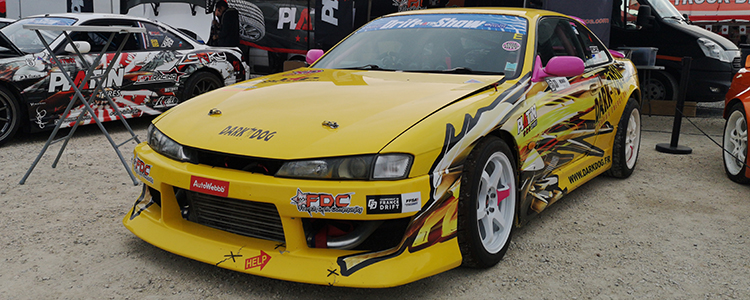
In pictures
Drivetrain
Engine references
Editorial
The buyer's read
If you're buying a Silvia, the safest place to start is a documented S15 Spec R with the 6-speed manual and a rust-free shell. That gives you the strongest SR20DET, the only 6MT ever fit to a Silvia, and the Silvia that holds its value best when you go to sell. Skip anything under $20,000 on an S15. A cheap S15 almost always means a salvage title or a crash repair the seller isn't telling you about.
If you want the Silvia experience without paying S15 money, look at a Kouki S14 K's. Kouki means the 1996 facelift, with the projector headlamps and the ball bearing turbo. The S14 is wider and more rigid than the S13, the SR20DET blacktop has the refinements the redtop didn't, and clean Kouki cars trade meaningfully below S15 prices. A Zenki pre-facelift S14 saves you another chunk of money but you lose the better turbo.
The S13 is the cheapest Silvia and also the riskiest. Most S13s have been drifted, crashed, repaired, and drifted again. The good ones are out there but you'll dig through ten bad cars to find one. Front frame rails are the first thing to check on any S13, ahead of paint and panel gaps. Look for ripples behind the bumper bar and non-OEM spot welds on the radiator support.
The Silvia name was never used in North America. The S10, S110, and S12 came to the US as the Datsun 200SX. The S13 and S14 came as the Nissan 240SX with the KA24DE instead of the SR20DET. The S15 was never sold new in the US at all. First-year 1999 S15s became 25-year-rule eligible in 2024, and that's the import everyone's been waiting for. If you find a 1999 Spec R that already cleared US customs with paperwork in order, that's the Silvia worth paying up for.
FAQ
Frequently asked questions
- Which Silvia is most valuable today?
- Generally the S15 Spec R 6MT in clean, near-stock condition. Aero, color, and low-owner history add premiums.
- What’s the biggest thing to check before buying?
- Prioritize rust, frame/rail damage, and repair quality. Many cars have drift impacts or poor resprays.
- Are modified Silvias worth more?
- Usually no—auction buyers pay more for stock or lightly modified cars. High-end builds can sell well, but only with receipts and pro workmanship.
- Is the SR20DET reliable?
- Yes when maintained, but watch turbo wear, oil leaks, coil packs, and cooling. Bad tunes kill engines fast.
- What’s the difference between Spec R and Spec S?
- Spec R is turbo (SR20DET) and most desirable. Spec S is NA (SR20DE) and typically cheaper.
- Do automatics hurt value?
- Yes—manuals command a clear premium, especially on S15. Auto-to-manual swaps help but rarely match factory 6MT value.
- When is the S15 US-legal under 25-year rule?
- First-year S15s (1999) become eligible in 2024; later years follow annually. Verify build month and import paperwork.
- What options add the most value?
- Factory aero, desirable colors, OEM wheels, clean interior, and documented history. Avoid cut fenders and hacked wiring.
Citations
Sources & references
- Nissan Silvia — encyclopedic overview — WikipediaVerified
- Nissan Silvia — Japanese encyclopedic overview — Wikipedia (Japanese)Verified
- Nissan 180SX — encyclopedic overview — WikipediaVerified
- Nissan 240SX — encyclopedic overview — WikipediaVerified
- Nissan SR engine family — technical reference — WikipediaVerified
- Nissan Heritage Collection — Nissan Motor CorporationVerified
- S13 owners' pros and cons discussion thread — NICOclub forumsVerified
- List of common 240SX problems — community knowledge base — NICOclub forumsVerified
- Nissan Silvia editorial coverage — Car ThrottleVerified
- Nissan Silvia editorial coverage (secondary) — Car ThrottleVerified
- Nissan Silvia design evolution — Motor1Moved
Sources last verified: