Buyer's guide
Nissan Laurel
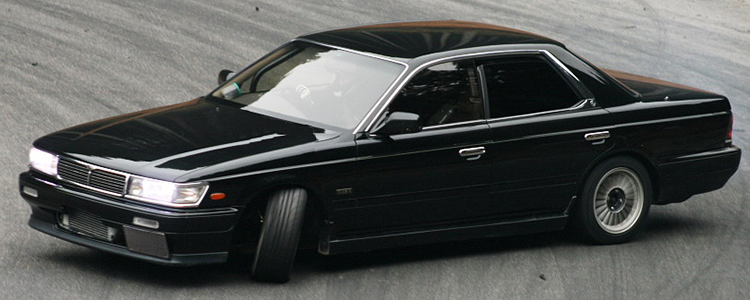
The Nissan Laurel is a JDM-only executive sedan that ran for 34 years across eight generations, from the C30 of 1968 to the final C35 in 2002. Nissan positioned it below the Cedric and Gloria but above the Bluebird — an affordable mid-luxury car that, from the 1980s onward, quietly inherited Skyline running gear: shared platforms with the R31, R32, R33 and R34, and the full sweep of RB inline-six engines (RB20E, RB20DE, RB20DET, RB25DE, RB25DET). The original 1968 C30 was built on the third-generation C10 Skyline chassis and sat between the four-cylinder Bluebird and the Cedric/Gloria flagships in Nissan's domestic hierarchy. Subsequent generations widened that mechanical kinship: the C32 of 1984 onward used RB-series sixes alongside the contemporary Skyline, and from the C33 forward the platform was shared with the R32 Skyline sedan, the C34 with the R33, and the C35 with the R34. Unlike the Skyline, the Laurel never sold in export markets — it was a domestic-market nameplate sold through Nissan's Motor Store dealer channel for its entire production run, with no factory LHD variant ever built. Today the Laurel is a gray-market import in every country outside Japan, and its turbo Medalist (C32/C33), Club S Turbo (C34/C35), and Club S Type X (C35) variants are the trims that drive collector and drift demand.
Why the Laurel was the Skyline's understated sibling
From the C32 generation in 1984 onward, Nissan built the Laurel and the contemporary Skyline sedan on shared platforms with shared engines, shared transmissions, and large portions of shared suspension hardware. The fifth-generation C32 Laurel and the R31 Skyline were both styled under Osamu Ito and both ran the RB-series inline-six. The C33 Laurel that launched in 1988 used the same platform as the R32 Skyline sedan and offered the RB20E, RB20DE, RB20DET, RB25DE and RB25DET; the C34 (1993) tracked the R33; the C35 (1997) tracked the R34. The packaging difference was deliberate — the Laurel was sold through Nissan's Motor Store retail channel, the Skyline through Nissan Prince Store, and the Laurel positioned itself as the comfortable executive option while the Skyline kept the sport-sedan identity. The mechanical kinship is what makes the Laurel attractive to enthusiasts today: an RB25DET sedan with most of the same drivetrain a buyer would expect in a Skyline, usually at a lower entry price, with fewer modified examples in the supply pool.
The C35 Club S Type X — final generation, final Laurel sport trim
The eighth-generation C35 (1997–2002) was the last Laurel Nissan built. It kept the C34's RB lineup but dropped the SOHC RB20E and rationalized the trim grid down to Medalist, Club S, and Club S Type X. The Club S Type X paired the RB25DET turbo with sport-tuned suspension, the Type X aero package, and sport interior trim — the closest the Laurel ever got to a factory hot-rod variant. Source-published outputs for the late-C35 RB25DET sit at the 280 PS Japanese gentlemen's-agreement ceiling. By 2002 Nissan's lineup rationalisation under the Renault alliance had no room for the Laurel as a separate nameplate — its segment merged into the Skyline sedan and Teana, and production ended in August 2002.
Quick read
Key takeaways
- C33/C34/C35 are the most sought-after generations
- RB20DET/RB25DET turbo cars command the premium
- Manual swaps add value, but originality can win auctions
- Rust and tired automatics are the biggest value killers
- VIP and drift demand keeps parts and prices buoyant
- US 25-year rule is a major demand catalyst
Constants
Common across all Laurel generations
- JDM-market mid-size sedan positioned between the Skyline and Cedric/Gloria
- Front-engine, rear-wheel-drive layout across the imported generations
- RB-series inline-six engines shared with the contemporaneous Skyline
- Turbocharged RB20DET / RB25DET available in performance trims
- Right-hand drive throughout all JDM production
Chassis history
Generation timeline
The Laurel ran for 34 years and eight generations, from the 1968 C30 to the final C35 in 2002. The early C30 through C230 Laurels are interesting old Datsuns but parts are scarce outside Japan. The C32 is where Nissan first put RB power in the Laurel, and the C33, C34, and C35 are the ones almost every enthusiast wants because they share so much with the Skyline.
C32 (1984–1989)
C33 (1989–1993)
C34 (1993–1997)
Buyer's call
Should you buy a Nissan Laurel?
The Laurel is a car you buy for what's under the body, not what's on top of it. You get Skyline running gear in a quieter and more understated package, usually for less money than the equivalent Skyline. What you give up is parts availability outside Japan, factory LHD, and any kind of mainstream resale market that isn't enthusiast driven.
Why you'll love it
- RB engine ecosystem RB parts knowledge is deep; turbo upgrades and swaps are well-trodden paths.
- RWD balance and comfort More refined than Silvia/Chaser; still playful RWD dynamics and long-wheelbase stability.
- Strong trim desirability spread Touring/turbo trims lead, but clean NA cars still have enthusiast and VIP appeal.
- VIP and drift crossover demand Two buyer pools support values: stance/VIP and grassroots drift/track enthusiasts.
- Undervalued vs halo rivals Often cheaper than JZX90/100 or Skyline sedans for similar RWD turbo potential.
- Practical classic ownership Sedan packaging, usable rear seat, and Nissan serviceability make it livable as a classic.
Why you might not
- Rust and prior repairs Sills, arches, floors, and trunk wells rust; poor repairs are common on drift imports.
- Automatic-heavy supply Many Laurels are AT; manual swaps vary in quality and can hurt originality value.
- Wiring/ECU age issues Old harnesses, coil packs, and sensors cause intermittent faults; budget for refresh.
- Cooling and turbo wear Neglected cooling systems and tired turbos show up as overheating, smoke, and boost leaks.
- Trim and interior scarcity OEM interior pieces and exterior moldings are harder to source than Skyline/Silvia parts.
- Insurance and compliance friction US titling, emissions, and agreed-value coverage can be harder than mainstream classics.
Who should not buy this
- Anyone who can't DIY or pay a JDM specialist
- Buyers needing modern crash safety and airbags
- People who need zero-rust, winter daily use
- Drivers in salt states without storage/undercoat
- Anyone needing easy OEM parts at local stores
- Owners who hate chasing electrical gremlins
- People who need reliable AC with no effort
- Those who can't tolerate occasional overheating risk
- Anyone expecting 25+ mpg consistently
- Buyers who won't do baseline maintenance immediately
- People who want quiet cabin and modern NVH
- Anyone who needs Apple CarPlay/ADAS features
- Drivers who can't handle RHD in LHD traffic
- Emissions-strict areas where JDM compliance is hard
- Anyone buying a heavily modified/tuned example
- People who need a one-car solution with no downtime
- Those who won't budget for rust repair contingencies
- Buyers who can't inspect thoroughly before purchase
Reliability
Common issues & solutions
The Laurel itself is solid. Most of the problems come from age, hard use, and the fact that a lot of Laurels lived a drift life before they ever left Japan. The RB engines have a known oil pump drive weakness on pre-1994 cars. Automatics get tired. Rust at the rear arches and subframe mounts is the single biggest value killer on a Laurel from a wet climate.
| Issue | Cause | Solution | Est. cost |
|---|---|---|---|
| Rust in sills/jack points | Age, trapped moisture, poor past repairs | Cut/replace metal; treat cavities; undercoat | $1500-6000 |
| Front strut tower rust | Seam sealer failure, water intrusion | Metal repair; reinforce tower; align after | $1200-5000 |
| Rear subframe mount rust | Road salt, undercoat failure, neglect | Repair mounts; replace subframe bushings | $2000-7000 |
| Trunk water leaks | Tail light seals, trunk gasket, seam cracks | Reseal lights/seams; replace trunk weatherstrip | $150-800 |
| Sunroof drain leaks | Clogged drains, cracked drain tubes | Clear/replace drains; dry interior thoroughly | $150-700 |
| ECU capacitor leakage | Aging electrolytic caps on older Nissan ECUs | Rebuild ECU; clean board; repair traces | $250-900 |
| Overheating under load | Old radiator, weak fan clutch, clogged core | New rad, thermostat, hoses; verify fan/shroud | $400-1200 |
| Head gasket failure | Past overheating, detonation, old gasket | Head gasket; machine head; new bolts/studs | $1200-3500 |
| Oil leaks (multiple) | Aged seals: cam, front cover, rear main | Reseal; do timing service concurrently | $600-2500 |
| Low oil pressure hot | Worn bearings/oil pump; thin oil; sludge | Verify with gauge; rebuild bottom end if low | $1500-6000 |
| Timing belt overdue (some) | Neglected service; unknown history imports | Full belt kit, water pump, seals, tensioner | $600-1400 |
| Timing chain rattle (some) | Worn guides/tensioner; poor oil changes | Replace guides/tensioner; inspect sprockets | $700-1800 |
| Turbo smoking (if turbo) | Worn seals, poor oiling, clogged return | Rebuild/replace turbo; fix feed/return; tune | $800-2500 |
| Boost creep/overboost | Small wastegate, exhaust mods, bad plumbing | Port gate; proper boost control; verify AFR | $300-1200 |
| Detonation on boost | Bad tune, low octane, weak fuel pump, heat | Proper tune; upgrade pump/injectors; intercool | $500-3000 |
| Ignition misfire | Aged coils/igniter, cracked plugs, bad grounds | Replace coils/igniter/plugs; refresh grounds | $250-1200 |
| MAF/AFM failures | Age, oiled filters, wiring hacks | OEM sensor; repair harness; smoke test intake | $200-900 |
| Idle hunt/stalling | Vac leaks, dirty IACV, failing TPS | Smoke test; clean IACV; set TPS/base idle | $150-700 |
| Fuel pump weak | Old pump, clogged sock, low voltage feed | Replace pump/sock; relay rewire; new filter | $250-800 |
| Injector leaks/clogging | Old seals, varnish, ethanol exposure | Service injectors; replace seals; clean rail | $250-1200 |
| Auto trans slipping/flare | Worn clutches, overheated ATF, neglect | Service if mild; rebuild/replace if slipping | $300-3500 |
| Auto harsh shifts | Solenoids, TPS signal, old fluid, valve body | Diag TPS; service; solenoids/valve body work | $300-1800 |
| Manual synchro wear | Hard shifts, wrong oil, high power | Correct fluid; rebuild trans if grinding | $150-2500 |
| Clutch chatter/slip | Worn disc, glazed flywheel, bad mounts | Clutch kit; resurface flywheel; mounts if needed | $600-1800 |
| Diff whine/leaks | Worn bearings, low oil, old seals | Reseal; rebuild diff if noisy; set backlash | $250-2000 |
| Driveshaft vibration | Center bearing wear, U-joint play, imbalance | Replace bearing/U-joints; balance shaft | $300-900 |
| Steering rack leaks | Aged seals, torn boots, contaminated fluid | Rebuild/replace rack; flush system; new boots | $500-1500 |
| PS pump whine | Worn pump, air leaks at hoses, old fluid | Replace suction hose/clamps; flush; pump if needed | $150-800 |
| Front tension rod bush | Hydraulic bush leaks/tears with age | Replace bushes/rods; align; check caster | $250-900 |
| Rear subframe bushing sag | Aged rubber; oil contamination | Replace subframe bushes; inspect mounts for rust | $600-1800 |
| Brake caliper slide seize | Old grease/boots; corrosion | Rebuild calipers; new slides/boots; flush fluid | $250-900 |
| Warped rotors/pulsation | Cheap rotors, stuck caliper, improper torque | Quality rotors/pads; fix caliper; torque wheels | $250-800 |
| ABS light on | Wheel sensors, cracked tone rings, wiring | Scan/diag; replace sensor; repair harness | $150-900 |
| Heater core leak | Corrosion, old coolant, electrolysis | Replace core; flush system; new coolant | $600-1600 |
| AC not cold | Leaks, weak compressor, bad conversion work | Leak test; replace drier; proper R134a conversion | $300-1500 |
| Window regulator failure | Worn cables/gears; dry tracks | Replace regulator; lube tracks; check switches | $200-700 |
| Central locking issues | Weak actuators, cracked door harness wires | Replace actuators; repair harness in door jamb | $150-600 |
| Interior water/mold | Sunroof drains, windshield seal, trunk leaks | Fix leaks; remove carpet; dry; treat mold | $200-1500 |
| Hard starting | Weak battery, starter contacts, poor grounds | Load test; rebuild starter; clean grounds | $150-600 |
| Charging problems | Old alternator, bad regulator, belt slip | Replace alternator; check belt/pulleys; wiring | $250-800 |
| Exhaust manifold cracks | Heat cycling, thin castings, turbo heat | Replace manifold; check studs; add heat management | $300-1500 |
| Broken exhaust hangers | Age, rust, heavy aftermarket exhaust | Replace hangers; add supports; fix leaks | $100-400 |
| Parts availability delays | Discontinued OEM parts; JDM-only trims | Plan spares; use cross-refs; import used parts | $0-2000 |
Market
Differences between JDM & USDM
The Nissan Laurel is JDM-only. Nissan never sold a factory-export Laurel and never built an LHD variant — every Laurel manufactured between 1968 and 2002 was for the Japanese domestic market, sold through Nissan's Motor Store retail channel. There is no USDM equivalent and no rebadged Laurel sister car in North America: the Skyline shared the platform but was a different nameplate sold through a different dealer network in Japan, and the Skyline itself was also JDM-only through the R34 generation. For US, Canadian, UK, and Australian buyers, this means every Laurel on the road outside Japan arrived as a gray-market import under the relevant country's age-based import rule (25 years for the US, 15 years for Canada, no age restriction for the UK and Australia). The C30 through C33 are US-legal today; the C34 generation reaches full eligibility in 2022 and the C35 phases in between 2023 and 2027.
Specs
Technical specifications
Every Laurel from the C32 onward runs an RB inline-six in the regular trims, with a base four-cylinder kept around to side-step Japanese road tax. The RB20DET and RB25DET turbo cars are the ones that matter today. Most Laurels shipped as automatics, and a factory 5-speed manual on a Club S Turbo is a real rarity.
Engine options
| Chassis | Engine | Displacement | Power | Boost | Notes |
|---|---|---|---|---|---|
| C30 | G18 | 1.8L | estimated | N/A | Carb I4; exact JIS net varies by year |
| C30 | H20 | 2.0L | estimated | N/A | Carb I4; exact JIS net varies by year |
| C130 | G18 | 1.8L | estimated | N/A | Carb I4; exact JIS net varies by year |
| C130 | L20 | 2.0L | estimated | N/A | Carb I6; exact JIS net varies by year |
| C130 | L20E | 2.0L | estimated | N/A | EFI I6; exact JIS net varies by year |
| C130 | L26 | 2.6L | estimated | N/A | Carb I6; exact JIS net varies by year |
| C230 | L18 | 1.8L | estimated | N/A | Carb I4; exact JIS net varies by year |
| C230 | L20 | 2.0L | estimated | N/A | Carb I6; exact JIS net varies by year |
| C230 | L20E | 2.0L | estimated | N/A | EFI I6; exact JIS net varies by year |
| C230 | LD24 | 2.4L | estimated | N/A | Diesel I6; exact output varies by spec |
| C230 | L28 | 2.8L | estimated | N/A | I6; carb/EFI varies by market/year |
| C31 | Z18 | 1.8L | estimated | N/A | Carb I4; exact JIS net varies by year |
| C31 | L20 | 2.0L | estimated | N/A | Carb I6; exact JIS net varies by year |
| C31 | L20E | 2.0L | estimated | N/A | EFI I6; exact JIS net varies by year |
| C31 | L20ET | 2.0L | estimated | estimated | Turbo I6; boost/output vary by year |
| C31 | LD24 | 2.4L | estimated | N/A | Diesel I6; exact output varies by spec |
| C31 | L28E | 2.8L | estimated | N/A | EFI I6; exact JIS net varies by year |
| C32 | CA18S | 1.8L | estimated | N/A | SOHC carb I4; exact JIS net varies |
| C32 | RB20E | 2.0L | estimated | N/A | SOHC EFI I6; exact JIS net varies |
| C32 | RB20ET | 2.0L | estimated | estimated | SOHC turbo I6; boost/output vary |
| C32 | LD28 | 2.8L | estimated | N/A | Diesel I6; exact output varies by spec |
| C32 | RD28 | 2.8L | estimated | N/A | Diesel I6; exact output varies by spec |
| C33 | RB20E | 2.0L | 125hp @ 5600rpm (estimated) | N/A | SOHC EFI; JIS net varies by year |
| C33 | RB20DE | 2.0L | 155hp @ 6400rpm (estimated) | N/A | DOHC EFI; JIS net varies by year |
| C33 | RB20DET | 2.0L | 205hp @ 6400rpm (estimated) | estimated | Turbo DOHC; ceramic turbo on some specs |
| C33 | RB25DE | 2.5L | 180hp @ 6000rpm (estimated) | N/A | DOHC EFI; JIS net varies by year |
| C33 | RB25DET | 2.5L | 235hp @ 6400rpm (estimated) | estimated | Turbo DOHC; output varies by ECU/turbo |
| C33 | RD28 | 2.8L | estimated | N/A | Diesel I6; exact output varies by spec |
| C34 | RB20E | 2.0L | 125hp @ 5600rpm (estimated) | N/A | SOHC EFI; JIS net varies by year |
| C34 | RB20DE | 2.0L | 155hp @ 6400rpm (estimated) | N/A | DOHC EFI; JIS net varies by year |
| C34 | RB25DE | 2.5L | 190hp @ 6000rpm (estimated) | N/A | DOHC EFI; JIS net varies by year |
| C34 | RB25DET | 2.5L | 245hp @ 6400rpm (estimated) | estimated | Turbo DOHC; output varies by ECU/turbo |
| C34 | RD28 | 2.8L | estimated | N/A | Diesel I6; exact output varies by spec |
| C35 | RB20DE | 2.0L | 155hp @ 6400rpm (estimated) | N/A | DOHC EFI; JIS net varies by year |
| C35 | RB25DE | 2.5L | 200hp @ 6000rpm (estimated) | N/A | DOHC EFI; NEO on late models |
| C35 | RB25DET | 2.5L | 280ps @ 6400rpm (estimated) | estimated | Turbo; late models often rated 280PS |
Transmission options
| Type | Ratios | Availability | Notes |
|---|---|---|---|
| 4-speed Manual | estimated | C30-C31 (varies) | Early Laurel manuals varied by engine/year |
| 5-speed Manual | estimated | C31-C35 (select trims) | Common on sport grades; exact ratios vary |
| 3-speed Automatic | estimated | C30-C31 (varies) | Early JATCO 3AT; ratios vary by model |
| 4-speed Automatic | estimated | C32-C35 (most trims) | JATCO 4AT; electronic control on later |
Lineup
Variants & trims
JDM Laurels came in a long list of trims, and the names changed over the years. The ones to know are the turbo Medalist on the C32 and C33, the Club S Turbo on the C34 and C35, and the Club S Type X on the C35. The Type X is the closest Nissan ever got to a factory sport Laurel, with the Type X aero kit and sport-tuned suspension.
| Generation | Trim | Engine | Key features |
|---|---|---|---|
| C30 (1st gen, 1968-1972) | Laurel 1800 | G18 I4 | RWD, 4-door sedan, base equipment |
| C30 (1st gen, 1968-1972) | Laurel 2000 | H20 I4 | RWD, higher output, upgraded interior |
| C30 (1st gen, 1968-1972) | Laurel 2000 GX | H20 I4 | GX grade, sportier trim, additional instrumentation |
| C30 (1st gen, 1968-1972) | Laurel 2000 SGX | H20 I4 | SGX luxury grade, improved trim, comfort options |
| C30 (1st gen, 1968-1972) | Laurel 2000 GL-6 | H20 I4 | 6-cylinder style grade naming, luxury-oriented |
| C30 (1st gen, 1968-1972) | Laurel 2000 GL-6 Super Deluxe | H20 I4 | top luxury for C30, premium interior |
| C130 (2nd gen, 1972-1977) | Laurel 1800 | G18 I4 | RWD, sedan/hardtop (market), base grade |
| C130 (2nd gen, 1972-1977) | Laurel 2000 | L20 I6 | RWD, inline-6, improved refinement |
| C130 (2nd gen, 1972-1977) | Laurel 2000 GX | L20 I6 | GX grade, sport trim, added gauges |
| C130 (2nd gen, 1972-1977) | Laurel 2000 SGX | L20 I6 | SGX luxury, upgraded interior, comfort options |
| C130 (2nd gen, 1972-1977) | Laurel 2000 SGL | L20 I6 | SGL luxury grade, additional sound insulation |
| C130 (2nd gen, 1972-1977) | Laurel 2000 SGL-E | L20E I6 | EFI (E), luxury grade, smoother response |
| C130 (2nd gen, 1972-1977) | Laurel 2600 SGL | L26 I6 | 2.6L I6, luxury grade, higher torque |
| C230 (3rd gen, 1977-1980) | Laurel 1800 | L18 I4 | RWD, base grade, sedan/hardtop (market) |
| C230 (3rd gen, 1977-1980) | Laurel 2000 | L20 I6 | RWD, 2.0L I6, improved refinement |
| C230 (3rd gen, 1977-1980) | Laurel 2000 SGL | L20E I6 | EFI, luxury grade, upgraded interior |
| C230 (3rd gen, 1977-1980) | Laurel 2000 SGL-E | L20E I6 | EFI, top luxury, added comfort features |
| C230 (3rd gen, 1977-1980) | Laurel 2400D | LD24 I6 Diesel | diesel, high economy, fleet-friendly |
| C230 (3rd gen, 1977-1980) | Laurel 2800 SGL | L28 I6 | 2.8L I6, luxury grade, higher torque |
| C31 (4th gen, 1980-1984) | Laurel 1800 | Z18 I4 | RWD, base grade, sedan/hardtop (market) |
| C31 (4th gen, 1980-1984) | Laurel 2000 | L20 I6 | RWD, 2.0L I6, comfort-oriented |
| C31 (4th gen, 1980-1984) | Laurel 2000 SGL | L20E I6 | EFI, luxury grade, upgraded trim |
| C31 (4th gen, 1980-1984) | Laurel 2000 SGL Extra | L20E I6 | higher luxury, added convenience equipment |
| C31 (4th gen, 1980-1984) | Laurel 2000 Turbo Medalist | L20ET I6 Turbo | turbo, Medalist grade, sport-luxury |
| C31 (4th gen, 1980-1984) | Laurel 2400D | LD24 I6 Diesel | diesel, economy, taxi/fleet use |
| C31 (4th gen, 1980-1984) | Laurel 2800 SGL | L28E I6 | EFI 2.8L, luxury grade, higher torque |
| C32 (5th gen, 1984-1988) | Laurel 1800 | CA18S I4 | RWD, base grade, carbureted |
| C32 (5th gen, 1984-1988) | Laurel 2000 | RB20E I6 | RWD, SOHC I6, smoothness-focused |
| C32 (5th gen, 1984-1988) | Laurel 2000 Medalist | RB20E I6 | Medalist luxury, upgraded interior, options |
| C32 (5th gen, 1984-1988) | Laurel 2000 Turbo Medalist | RB20ET I6 Turbo | turbo, Medalist, stronger performance |
| C32 (5th gen, 1984-1988) | Laurel 2400D | LD28 I6 Diesel | diesel, economy, fleet use |
| C32 (5th gen, 1984-1988) | Laurel 2800D | RD28 I6 Diesel | 2.8L diesel, higher torque, economy |
| C33 (6th gen, 1988-1992) | Laurel 2000 Medalist | RB20E I6 | Medalist, luxury trim, RWD |
| C33 (6th gen, 1988-1992) | Laurel 2000 Medalist Twin Cam | RB20DE I6 | DOHC, Medalist, improved response |
| C33 (6th gen, 1988-1992) | Laurel 2000 Medalist Turbo | RB20DET I6 Turbo | turbo DOHC, Medalist, performance |
| C33 (6th gen, 1988-1992) | Laurel 2500 Medalist | RB25DE I6 | 2.5L DOHC, Medalist, higher torque |
| C33 (6th gen, 1988-1992) | Laurel 2500 Medalist Turbo | RB25DET I6 Turbo | 2.5L turbo, Medalist, strong midrange |
| C33 (6th gen, 1988-1992) | Laurel 2800D | RD28 I6 Diesel | diesel, economy, long-range cruising |
| C34 (7th gen, 1993-1997) | Laurel 2000 Medalist | RB20E I6 | SOHC, Medalist, comfort-focused |
| C34 (7th gen, 1993-1997) | Laurel 2000 Medalist Twin Cam | RB20DE I6 | DOHC, Medalist, improved response |
| C34 (7th gen, 1993-1997) | Laurel 2500 Medalist | RB25DE I6 | 2.5L DOHC, Medalist, higher torque |
| C34 (7th gen, 1993-1997) | Laurel 2500 Medalist Turbo | RB25DET I6 Turbo | turbo, Medalist, performance |
| C34 (7th gen, 1993-1997) | Laurel 2500 Club S | RB25DE I6 | sport grade, firmer suspension, aero (opt) |
| C34 (7th gen, 1993-1997) | Laurel 2500 Club S Turbo | RB25DET I6 Turbo | sport grade, turbo, available 5MT |
| C34 (7th gen, 1993-1997) | Laurel 2800D | RD28 I6 Diesel | diesel, economy, fleet use |
| C35 (8th gen, 1997-2002) | Laurel 2000 Medalist | RB20DE I6 | DOHC, Medalist, luxury equipment |
| C35 (8th gen, 1997-2002) | Laurel 2500 Medalist | RB25DE I6 | 2.5L, Medalist, higher torque |
| C35 (8th gen, 1997-2002) | Laurel 2500 Medalist Turbo | RB25DET I6 Turbo | turbo, Medalist, strong performance |
| C35 (8th gen, 1997-2002) | Laurel 2500 Club S | RB25DE I6 | sport grade, aero (opt), firmer suspension |
| C35 (8th gen, 1997-2002) | Laurel 2500 Club S Turbo | RB25DET I6 Turbo | sport grade, turbo, available 5MT |
| C35 (8th gen, 1997-2002) | Laurel 2500 Club S Type X | RB25DET I6 Turbo | Type X aero, sport interior, performance tune |
Pricing
Average prices & original MSRP
The Laurel was never sold new outside Japan, so there's no familiar export MSRP to anchor the long view. The numbers below are what one costs today. Clean C33 turbo Medalists sit in the middle of the market. Documented C35 Club S Turbo and Type X cars are the ones climbing fastest as US legality phases in through 2027.
Today's market range: $8,000 to $45,000 (median ~$22,000). Source: JDMBuySell / USS Auction.
Prices are firming for C33-C35 turbo cars as US legality expands and JZX/Skyline prices stay high. Clean, unmodified examples outperform; drift-worn cars lag. Expect steady gains, with the best C35s leading the upside.
Inspect
Pre-purchase inspection checklist
Walk this list with the seller, not in front of them. The Critical items are the ones that mean walking away if there's no paperwork. The High items can usually be priced into the deal. Pay extra attention to the rear arches and the subframe mount points on any Laurel that lived through Japanese winters or sat outdoors.
Critical priority
- Chassis ID/VIN Match chassis plate, stamp, export docs
- Rust: Strut Towers Inspect front towers for bubbling/holes
- Rust: Sills/Rockers Check pinch welds, jack points crushing
- Rust: Floor Pans Lift carpet; check underseat wet/rust
- Rust: Rear Subframe Probe mounts; look for scaling, cracks
- Engine Cold Start Listen for knock, lifter tick, VCT rattle
- Oil Pressure Verify hot idle pressure; light flicker
- Coolant Condition Check oil in coolant; rusty coolant
- Overheat History Look for new rad/hoses; warped head signs
- Compression Test Even numbers; low cyl suggests rings/valves
- Leakdown Test Listen intake/exhaust/crankcase leakage
- Timing Belt/Chain Verify service; inspect tensioner noise
- Auto Trans (if) Check flare, harsh shifts; burnt ATF smell
- Mod Quality Check wiring, tune proof, boost/fuel upgrades
- Road Test Boost Watch AFR/knock if gauges; detonation signs
High priority
- Auction Sheet Verify grade, mileage, repairs vs car
- Odometer Validity Check cluster swap signs, wear vs km
- Rust: Rear Arches Feel inner lip; look for filler, waves
- Rust: Trunk Well Check spare well seams; water pooling
- Rust: Firewall Inspect seam sealer cracks, brake area
- Accident Repair Check apron rails, welds, overspray
- Windshield Seal Look for leaks, rust at lower corners
- Sunroof Drains Pour water; check A-pillar/footwell wet
- Underbody Damage Check crushed rails, bent pinch welds
- Oil Leaks Front/rear main, cam covers, turbo feed
- Cooling System Check rad fins, cap, hoses, fan clutch
- Turbo Health (if) Check shaft play, smoke, boost creep
- Intake/MAF Check hacked wiring, non-OEM MAF, leaks
- Ignition System Coilpacks/igniter cracks; misfire under load
- Fuel System Smell fuel; check lines, filter, pump noise
- Injectors Listen for dead cylinder; check leaks at rail
- Manual Trans (if) Check 2nd/3rd synchro grind; clutch slip
- ATF Cooler Ensure cooler present; no milkshake ATF
- Differential Check whine, backlash; leaks at pinion
- Front Suspension Check tension rod bush, ball joints, leaks
- Rear Suspension Check subframe bushes, toe arms play
- Steering Rack Check leaks, torn boots, dead spot
- Brakes Check caliper slide seize; pulsation; leaks
- Grounds/Wiring Look for hacked stereo/alarm wiring
- ECU/Diagnostics Pull codes; check ECU for capacitor leak
- Heater Core Sweet smell, fogging, damp carpet
- Interior Damp Check mold smell; wet under mats/trunk
- Emissions/Legal Check cat present; loud exhaust; local compliance
- Service Records Look for timing service, fluids, bushings
Medium priority
- Panel Alignment Uneven gaps; doors drop; trunk misfit
- Boost Control Inspect solenoids, hoses, wastegate actuator
- Intercooler Piping Check couplers, oil pooling, loose clamps
- Vacuum Lines Brittle hoses; missing restrictors/tees
- Exhaust Condition Check cracks, leaks, missing cats/resonators
- Engine Mounts Excess movement; clunk on throttle blip
- Driveshaft Check center bearing, U-joint play/vibes
- LSD Function Tight turn chatter; confirm LSD tag/spec
- Power Steering Pump whine; fluid foaming; hose sweating
- ABS System ABS light self-test; sensor wiring damage
- Wheel Bearings Listen for hum; check play at 12/6
- Wheels/Tires Uneven wear suggests alignment/bent arms
- Alignment/Tracking Road test for pull, tramlining, steering shake
- Battery/Charging Check alternator output; corroded terminals
- HVAC Operation Test heat/AC; blend door; fan speeds
- AC System Check compressor noise; R12-to-R134a hack
- Door Seals Wind noise; water ingress; torn weatherstrip
- Window Regulators Slow windows; crunching cables; switches
Low priority
- Accessory Belts Check cracks, squeal; pulley wobble
- Instrument Cluster Check dead pixels, gauges, backlight
- Central Locking Check actuators; intermittent remote/alarm
- Seat Rails Check rocking seat; broken recline gears
- Lights/Lenses Check haze, cracks; pop-up/leveling if fitted
Cross-shop
Comparable alternatives
If the Laurel doesn't end up being the right car, the natural alternatives are the Nissan Skyline sedan, which is the same platform with the sportier badge, or the Nissan Cefiro, which is the cheaper Laurel cousin with most of the same RB drivetrain. The Toyota Cresta and Chaser are the JZX side of the same JDM executive-sport segment.
Toyota Chaser JZX90
1JZ-GTE sedan benchmark; stronger resale ceiling
Toyota Mark II JZX100
JZ turbo comfort sedan; huge parts and VIP scene
Nissan Skyline R33 sedan
RB25DET sedan with Skyline cachet; more global support
Nissan Silvia S14
Lighter RWD platform; easier MT sourcing; drift staple
Toyota Crown JZS151
Comfort/VIP focus; 1JZ options; strong Japan supply
Compare
How it compares
Among the JDM executive sport sedans, the Laurel is the understated one, the Skyline is the famous one, and the Cresta and Chaser are the Toyota answer with the 1JZ. The table below leans toward the Laurel because that's where it actually wins, on Skyline parts crossover and lower entry pricing for the same RB drivetrain.
| Feature | Nissan Laurel | Toyota Chaser JZX90 | Nissan Skyline R33 sedan |
|---|---|---|---|
| Layout/mission | RWD exec-sport sedan | RWD sport sedan | RWD sport sedan |
| Top turbo engines | RB20DET/RB25DET | 1JZ-GTE | RB25DET |
| Stock power (typical) | RB25DET ~245-250hp | 1JZ-GTE ~280PS | RB25DET ~250hp |
| Transmission availability | AT common; MT rare | MT more common in Tourer V | MT available; more supply |
| Aftermarket depth | Strong RB + chassis support | Very strong JZ support | Huge SR/RB chassis support |
| Drift suitability | Stable; longer wheelbase | Benchmark drift sedan | Lighter; more agile |
| VIP/stance appeal | High; Laurel identity | High; big scene support | High; factory luxury base |
| Interior refinement | Comfort-first, plush trims | Sporty-lux balance | More driver-focused |
| Parts availability | Good mechanical, mixed trim | Strong overall support | Strong overall support |
| Typical rust risk | Moderate-high (age/usage) | Moderate (varies by region) | Moderate (often cleaner shells) |
| Value ceiling (US import) | Lower than JZX halo cars | Higher; Tourer V premium | Higher; Skyline tax |
| Best buy trims | C34/C35 turbo Touring | Tourer V | GTS25t sedan |
| Daily usability | Good ride; quiet cabin | Good; sportier ride | Fair; more NVH |
Gallery
In pictures

Editorial
The buyer's read
If you're buying a Laurel, the right place to start is a C33 turbo Medalist with documented service history. Every C33 is past the US 25-year rule now, and they share so much with the R32 Skyline and the S13 Silvia that parts are easy to find and repair costs stay reasonable. Skip anything under $8,000. A cheap Laurel almost always means a tired RB and rust at the rear arches and subframe mounts, and you'll spend the savings catching up on work that should have been done already.
The C35 Club S Type X is the Laurel most VIP and drift builders want. Late RB25DET, the Type X aero package, sport-tuned suspension, and the cleanest looking C35 cabin Nissan made. Just know that you're chasing a Laurel that mostly shipped as an automatic. A factory 5-speed Club S Turbo is rare and carries a real premium, and a documented manual conversion is the next best thing. Avoid undocumented manual swaps. They almost always come with a chopped harness and a clutch pedal that doesn't quite line up.
The C34 sits in an awkward spot for US buyers. The earliest C34s only cleared the 25-year rule in 2022 and the youngest don't get there until later this decade. If you're in Canada, the UK, or Australia, where the import age rule is shorter or doesn't apply, the C34 Club S Turbo is the value buy on the Laurel line. You get most of the same RB25DET hardware as a later Skyline sedan for less money and with fewer modified cars in the pool.
The Laurel to avoid is anything pre-C33. The early Laurels are interesting cars, but parts are a hunt, the body styles weren't shared with the Skyline, and demand outside Japan stays thin. Unless you're already deep in vintage Datsun ownership, start with a C33 or newer.
FAQ
Frequently asked questions
- Which Laurel generations are most desirable today?
- Most demand is for C33/C34/C35, especially turbo Touring trims and clean, unmodified cars.
- Are turbo Laurels factory manual?
- Many are automatic; factory MT exists but is scarce. Swaps can add value if documented and tidy.
- What should I pay for a good Nissan Laurel in 2026?
- US pricing commonly spans $12k-$35k; top, clean turbo/MT or VIP builds can push $40k+.
- What are the biggest mechanical issues to check?
- Watch rust, cooling health, turbo smoke, coil packs, boost leaks, and tired AT behavior or harsh shifts.
- Is the Laurel good for drifting compared with a Silvia?
- Yes: stable long wheelbase and RB torque. It’s heavier than Silvia, so expect higher tire and brake costs.
- Do modifications help or hurt Laurel value?
- Quality mods help driver-grade value, but auctions reward clean OEM+. Poor drift mods and cut wiring hurt most.
- When is a Laurel US-legal under the 25-year rule?
- It depends on build year: C33 (1988-92) is legal now; C34 is legal through 2022; C35 starts 2023-2027.
- What’s the best Laurel to buy for long-term appreciation?
- A rust-free, original turbo Touring car with documentation. Rarity, condition, and provenance beat big power builds.
Citations
Sources & references
- Nissan Laurel — encyclopedic overview — WikipediaVerified
- 日産・ローレル — Japanese-language Laurel reference — Wikipedia (Japanese)Verified
- Nissan RB engine family — RB20, RB25, RB26 technical reference — WikipediaVerified
- Nissan Heritage Collection — corporate history portal — Nissan Motor CorporationVerified
- Nissan Laurel — generation gallery and specs index — WheelsageVerified
- Nissan Laurel market data and historical comps — Classic.comVerified
- Nissan Laurel image archive — Wikimedia CommonsVerified
- Used Nissan Laurel listings (Japan export channel) — Car From JapanVerified
Sources last verified: