Buyer's guide
Nissan Gloria
The Nissan Gloria is a large executive sedan produced from 1959 through 2004, originally launched by the Prince Motor Company in February 1959 and continued by Nissan after the two companies merged in 1966. From the 1971 Y-platform onward the Gloria shared its underpinnings with the Nissan Cedric — same chassis, same engines, same body shells — separated mainly by grille, headlight, taillight, and badging details, and sold through the Nissan Prince Shop network rather than the regular Nissan dealer chain. The cars ran in lockstep through five rear-drive generations (Y30 1983 to Y34 2004) before both nameplates were replaced by the front-engine Nissan Fuga. Import demand outside Japan focused on the Y32 (1991-1995) and Y33 (1995-1999) — the VG30E and VG30DET 3.0L V6 era, when JDM VIP culture took the Cedric/Gloria as one of its foundational platforms — and on the final Y34, whose VQ30DET and VQ25DET turbo V6s and Brougham VIP-style trims made it a dailyable luxury sedan that started becoming US-legal under the 25-year rule from 2024 onward. The Gloria was Japan-market only for its entire run; every Gloria in North America today is a gray-market import.
Prince Motors heritage — where the Gloria came from
The first Gloria appeared in February 1959 as a more luxurious variant of the Prince Skyline, built by Fuji Precision Industry — soon renamed Prince Motor Company. Prince had supplied vehicles to the Imperial Household Agency, and the Gloria nameplate itself was chosen as a tribute when the first BLSI sedan was presented to Crown Prince Akihito and Princess Michiko on their first wedding anniversary. The Latin root celsus / gloria evokes 'glory' or 'elevation,' positioning the car at the top of the Prince range. Through 1966 the Gloria carried Prince Motor Company badges; in August 1966 Prince and Nissan merged, and the third generation A30 launched in 1967 wore Prince badging on the body but Nissan engineering and dealer support behind it. From 1971 forward — the 230 generation — the Gloria fully adopted the Nissan Cedric platform and the two cars became badge-engineered twins. The Prince Motor Company name disappeared from the car itself, but the Nissan Prince Shop dealer network persisted, and Gloria buyers continued to be steered through that channel rather than the regular Nissan stores that sold the Cedric.
Cedric versus Gloria — what actually differs
From the 1971 230 generation onward, the mechanical differences between the Cedric and Gloria are essentially zero. Same Y-platform chassis, same VG and VQ engines, same RE4R0x and RE5R0x automatic transmissions, same suspension geometry, same body shell stamped at the same factory. The only differences are cosmetic and channel-driven: grille pattern, headlight and taillight fascia design, bumper trim, badging, and Nissan Prince Shop dealership versus regular Nissan dealer. Owners cite small interior detail variations by trim level — different upholstery patterns, occasional differences in dash cluster typography — but mechanical parts interchange freely. The two cars also tracked the same generation cadence: Y30 (1983-1987), Y31 (1987-1991), Y32 (1991-1995), Y33 (1995-1999), Y34 (1999-2004). The Gloria tended to lean slightly sportier in trim emphasis (Gran Turismo line on Y31 onward) while the Cedric leaned slightly more toward conservative Brougham luxury — but both cars offered the same engines, and the Gloria Brougham and Cedric Brougham were essentially identical.
Quick read
Key takeaways
- Best buys: clean Y32/Y33 turbo or late Y34 VQ
- VIP demand drives premiums for stock, low-mile cars
- Rust/neglect are the biggest value killers
- Parts easiest for Y33/Y34; hardest for early cars
- Auto-only for most trims; manuals are rare swaps
- Import timing: 1999+ becomes US-legal from 2024+
Constants
Common across all Gloria generations
- JDM-market executive sedan; badge-engineered sibling of the Nissan Cedric
- Front-engine, rear-wheel-drive layout across the imported generations
- VG-series V6 petrol engines, including turbocharged variants, in most trims
- Mechanically equivalent to the contemporaneous Cedric; differing trim and grille
- Right-hand drive throughout all JDM production
Chassis history
Generation timeline
The Gloria ran from 1959 to 2004, which is a lot of car history to sort through. Prince Motors built the first one in 1959 as an upscale sedan, and Nissan kept the Gloria going after the 1966 merger. From the Y30 in 1983 onward the Gloria became the badge-engineered twin of the Cedric, sold through the Nissan Prince Shop dealer network with different grilles and lights.
Y31 (1987–1991)
Y32 (1991–1995)
Y33 (1995–1999)
Buyer's call
Should you buy a Nissan Gloria?
The Gloria has always been the slightly sportier sibling to the Cedric, with the same chassis and engines but firmer trim and the Gran Turismo line on Y31 and later cars. What you give up is parts availability for the older generations and a lot of aging electronics. What you get is real VIP credibility at a price below the Celsior.
Why you'll love it
- Authentic VIP platform Long wheelbase comfort, rear space, and stance-friendly fitment make it a true VIP base.
- Strong Nissan drivetrains RB/VQ-era cars offer durable power; turbo trims respond well to mild tuning.
- Undervalued vs rivals Often cheaper than Celsior/Aristo/Laurel equivalents for similar luxury and presence.
- Highway comfort Quiet cruising, soft ride, and stable high-speed manners suit touring and commuting.
- Distinct styling Hardtop silhouettes and period details stand out versus more common JDM sedans.
- Aftermarket support (Y33/Y34) Suspension, wheels, aero, and VIP interior parts are most available for late models.
Why you might not
- Rust and prior repairs Sills, arches, floors, and trunk wells rust; poor repairs hide damage and kill value.
- Aging electronics Climate control, digital clusters, and power accessories fail; Y34 adds module complexity.
- Auto transmissions dominate Most are automatic; manual swaps exist but reduce originality and can hurt resale.
- Parts scarcity (early gens) Pre-Y31 trim, glass, and interior parts can be rare; restoration costs escalate fast.
- Fuel system sensitivity Direct-injection VQ25DD can be picky on fuel/maintenance; neglected cars run poorly.
- Insurance/registration friction Import paperwork, chassis codes, and emissions rules vary; budget time and fees.
Who should not buy this
- Anyone needing modern parts availability
- Buyers without a JDM-specialist shop nearby
- People who can't diagnose electrical gremlins
- Anyone expecting Camry-level reliability
- Owners who won't do proactive cooling refresh
- Drivers needing strong crash safety tech
- People in rust-belt areas without garage storage
- Anyone who can't handle premium fuel costs
- Buyers needing easy emissions compliance
- California residents without a clear legal path
- People who hate chasing vacuum/boost leaks
- Anyone relying on dealer service/support
- Those who can't budget $2k/yr for catch-up work
- Drivers wanting sporty handling without upgrades
- People who won't stop overheating immediately
- Anyone expecting plug-and-play infotainment
- Buyers who can't wait on imported parts shipping
- People who won't verify timing service history
- Anyone scared of automatic transmission rebuild costs
- Those needing a lightweight, efficient daily commuter
Reliability
Common issues & solutions
Most of what goes wrong on a Gloria is age, not the engineering. The cooling system gets tired. The valve cover gaskets leak. The HVAC blend doors quit. On turbo cars, the boost plumbing cracks and the timing service gets skipped. None of these are deal breakers if the paperwork backs up the work.
| Issue | Cause | Solution | Est. cost |
|---|---|---|---|
| Overheating from old radiator | Plastic tanks crack; cores clog with age | Replace radiator, cap, hoses; bleed properly | $350-900 |
| Heater core leak | Corrosion; old coolant; high system pressure | Replace heater core; flush; new hoses/clamps | $700-1600 |
| Thermostat sticking | Cheap parts or debris in cooling system | OEM thermostat; flush; verify fan operation | $150-350 |
| Electric fan/viscous fan weak | Aging clutch or fan control issues | Replace fan clutch or fan assembly; check relays | $250-700 |
| Oil leaks (valve covers) | Hardened gaskets; PCV restriction raises pressure | Valve cover gaskets + PCV service; clean breathers | $250-700 |
| Front cover oil seep | RTV aging; crank seal wear; poor prior reseal | Reseal front cover; replace crank seal | $900-2200 |
| Rear main seal leak | Seal wear; crankcase pressure; high mileage | Replace rear main; inspect flexplate/TC seal | $900-2000 |
| MAF sensor failure | Heat/oil contamination; brittle harness | OEM MAF; repair connector/pigtail; check intake leaks | $250-650 |
| Ignition coil/boot misfire | Aging coils; oil in plug wells; cracked boots | Replace coils/boots; fix valve cover leaks | $300-1200 |
| Injector failure (age/ethanol) | Old pintle deposits; ethanol swelling seals | Replace/clean injectors; new seals; fuel filter | $600-1800 |
| Fuel pump noisy/weak | Old pump; clogged sock; low tank running | Replace pump + sock; inspect wiring and relay | $300-800 |
| Vacuum/boost leaks | Brittle hoses; cracked couplers; loose clamps | Smoke/pressure test; replace hoses/couplers | $150-600 |
| Turbo wear (VG models) | Oil starvation; coked oil; hot shutdowns | Rebuild/replace turbos; add proper oiling habits | $1200-3500 |
| Exhaust manifold cracks/tick | Heat cycling; thin castings; loose hardware | Replace manifolds/gaskets; check studs | $600-1800 |
| Detonation on boost (VG) | Low octane, lean from leaks, weak fuel system | Fix leaks, verify fuel pressure, conservative boost | $200-1500 |
| Timing belt overdue (VG/RB) | Neglect; unknown history on imports | Full timing kit + water pump; inspect idlers | $700-1600 |
| Timing chain guide wear (VQ) | High miles; poor oil changes; guide material wear | Replace chains/guides/tensioners; clean oil pickup | $1800-4200 |
| Sludge from poor oil service | Long intervals; cheap oil; short trips | Drop pan, clean pickup; frequent oil changes | $400-1500 |
| Automatic trans flare/shift issues | Worn clutches; valve body wear; overheated ATF | Service w/ filter; rebuild valve body or full rebuild | $350-3500 |
| Delayed D/R engagement | Internal seal wear; low line pressure; old ATF | Line pressure test; rebuild if persistent | $1200-3500 |
| Torque converter shudder | Lockup clutch wear; contaminated ATF | Correct ATF service; converter replace if needed | $400-1800 |
| Diff whine/leaks | Worn bearings; low fluid; pinion seal aging | Reseal; rebuild diff if noisy; correct fluid | $250-1800 |
| Driveshaft center bearing | Rubber carrier cracks; age and heat | Replace center bearing/support; inspect U-joints | $350-900 |
| Tension rod bushing failure | Fluid-filled bushings split; braking loads | Replace tension rods/bushings; alignment | $300-900 |
| Rear subframe bushing wear | Age; heavy chassis loads; oil contamination | Replace subframe bushings; inspect mounts | $800-2200 |
| Ball joint/tie rod wear | Age; torn boots; poor roads | Replace joints/rods; alignment | $350-1200 |
| Steering rack leaks | Seal wear; contaminated fluid; torn boots | Rebuild/replace rack; flush PS system | $700-1800 |
| Power steering pump whine | Aeration from hoses; clogged reservoir screen | Replace suction hose/O-rings; clean reservoir | $150-600 |
| ABS wheel speed sensor faults | Sensor aging; cracked tone rings; wiring breaks | Scan, replace sensor/repair wiring; clean hubs | $200-800 |
| Window regulator failure | Plastic guides break; motor strain | Replace regulator; lube tracks; check switches | $200-600 |
| Door lock actuator failure | Weak motors; dried grease; age | Replace actuator; service latch mechanism | $150-450 |
| Climate control blend door | Actuator gear wear; control amp failure | Replace actuator/amp; recalibrate if applicable | $250-900 |
| AC compressor failure | Age; low oil; debris from prior failure | Replace compressor+drier; flush; correct charge | $900-1800 |
| Heater/AC blower resistor | Thermal stress; old blower drawing high amps | Replace resistor; check blower motor current draw | $150-450 |
| Cluster/illumination issues | Aging solder joints; dim bulbs; voltage dips | Reflow solder/replace bulbs; check grounds | $150-600 |
| Sunroof drain leaks | Clogged drains; cracked drain tubes | Clear drains; replace tubes; dry/repair rust early | $100-500 |
| Trunk water intrusion | Tail lamp seals; seam sealer cracks; vent leaks | Reseal lamps/seams; replace trunk weatherstrip | $150-700 |
| Ground/connector corrosion | Age, moisture; prior alarm/AV installs | Clean grounds; repair connectors; remove bad splices | $100-800 |
| Immobilizer/NATS issues | Key chip mismatch; hacked wiring; weak battery | Program keys; repair wiring; stabilize voltage | $200-900 |
| Seized alignment eccentrics | Rust bonds bolts to bush sleeves | Cut/replace bolts and bushings; anti-seize | $300-1200 |
| Underbody rust structural | Coastal/snow exposure; poor undercoating | Avoid purchase; repairs exceed value quickly | $1500-8000 |
Market
Differences between JDM & USDM
The Nissan Gloria was never officially sold outside Japan. There is no USDM counterpart in the way the Toyota Celsior has a Lexus LS equivalent or the Aristo has a Lexus GS. The closest North American Nissan/Infiniti relative is the Infiniti M45 (sold in the US 2003-2004), which shared the Y34 platform architecture but used the VK45DE 4.5L V8 in place of the Gloria's VQ-series V6, ran left-hand drive, and carried different exterior and interior fascias. Every Gloria in North America today is a gray-market import: brought in under the US 25-year rule (or the equivalent 15-year rule for Canada), right-hand drive, with JDM-spec instrumentation in kilometres-per-hour and JDM-only navigation and climate-control modules. Standalone Nissan parts catalogues do exist for the Gloria, but US Nissan dealers cannot service these cars under warranty and many JDM-only modules (the original navigation head unit, JDM-spec radio, NATS immobilizer key sets) require Japan-side parts sourcing.
Specs
Technical specifications
Every Gloria after the Y30 runs a V6. The early cars use the VG family (VG20E, VG20ET, VG30E, VG30DET) and a few diesel options. The Y33 switched to the VQ family and the Y34 went all-VQ with VQ25DET, VQ30DE, and VQ30DET. Most Glorias are 4-speed or 5-speed automatic, and factory manuals are rare enough that you can treat the Gloria as an automatic-only car.
Engine options
| Chassis | Engine | Displacement | Power | Boost | Notes |
|---|---|---|---|---|---|
| Y30 | VG20E | 2.0L | unknown | N/A | Exact JDM rating varies; data not in logs |
| Y30 | VG20ET | 2.0L | unknown | unknown | Turbo V6; exact output varies by year/market |
| Y30 | LD28 | 2.8L | unknown | N/A | Diesel; exact rating varies by application |
| Y31 | VG20E | 2.0L | unknown | N/A | SOHC V6; exact JIS figures vary by spec |
| Y31 | VG20DET | 2.0L | unknown | unknown | Turbo DOHC V6; exact output depends on year |
| Y31 | VG30E | 3.0L | unknown | N/A | SOHC V6; exact JDM power varies by tune |
| Y31 | VG30DET | 3.0L | unknown | unknown | Turbo DOHC V6; multiple calibrations exist |
| Y31 | RD28 | 2.8L | unknown | N/A | Inline-6 diesel; exact output varies by year |
| Y32 | VG20E | 2.0L | unknown | N/A | SOHC V6; exact figures not confirmed |
| Y32 | VG30E | 3.0L | unknown | N/A | SOHC V6; exact figures not confirmed |
| Y32 | VG30DET | 3.0L | unknown | unknown | Turbo DOHC V6; exact figures not confirmed |
| Y32 | RD28 | 2.8L | unknown | N/A | Inline-6 diesel; exact figures not confirmed |
| Y33 | VG20E | 2.0L | unknown | N/A | SOHC V6; exact figures not confirmed |
| Y33 | VG30E | 3.0L | unknown | N/A | SOHC V6; exact figures not confirmed |
| Y33 | VQ30DE | 3.0L | unknown | N/A | DOHC V6; exact JDM rating varies by model year |
| Y33 | VQ30DET | 3.0L | unknown | unknown | Turbo VQ; output varies by calibration |
| Y33 | RD28 | 2.8L | unknown | N/A | Inline-6 diesel; exact figures not confirmed |
| Y34 | VQ25DET | 2.5L | unknown | unknown | NEO turbo VQ; exact figures not confirmed |
| Y34 | VQ30DE | 3.0L | unknown | N/A | NA VQ; exact figures not confirmed |
| Y34 | VQ30DET | 3.0L | unknown | unknown | NEO turbo VQ; exact figures not confirmed |
Transmission options
| Type | Ratios | Availability | Notes |
|---|---|---|---|
| 4-speed Automatic | unknown | Y30-Y32 (most trims) | Exact ratios vary by RE4R0x family |
| 5-speed Automatic | unknown | Y33-Y34 (most trims) | Exact ratios vary by RE5R0x family |
| 5-speed Manual | unknown | Limited/market-dependent | Rare; not common on Gloria luxury grades |
Lineup
Variants & trims
JDM Gloria trims split into Brougham (the soft luxury one) and Gran Turismo (the sport-tuned one with the turbo V6) from the Y31 forward. The Y34 added the 300VIP at the top with the turbo VQ30DET and proper VIP-style rear cabin features. The FOUR badge on the Y34 means ATTESA AWD, which is the all-season pick.
| Generation | Trim | Engine | Key features |
|---|---|---|---|
| Y30 (1983-1987) | Gloria V20E/V20ET (Sedan/Hardtop/Wagon/Van) | VG20E, VG20ET | VG V6, luxury trim, optional turbo (VG20ET) |
| Y30 (1983-1987) | Gloria Diesel (Commercial variants) | LD28 | LD28 diesel, fleet spec, economy-focused |
| Y31 (1987-1991) | Gloria Brougham | VG20E, VG30E, VG30DET, RD28 | Luxury interior, soft ride, power options |
| Y31 (1987-1991) | Gloria Gran Turismo | VG20DET, VG30DET | Sport suspension, aero, turbo V6, firmer seats |
| Y31 (1987-1991) | Gloria Classic | VG20E, VG30E, RD28 | Traditional styling, comfort spec, chrome trim |
| Y32 (1991-1995) | Gloria Brougham | VG20E, VG30E, VG30DET, RD28 | Luxury spec, improved NVH, power amenities |
| Y32 (1991-1995) | Gloria Gran Turismo | VG30DET | Sport tune, turbo V6, aero, firmer suspension |
| Y33 (1995-1999) | Gloria Brougham | VG20E, VG30E, VQ30DE, VQ30DET, RD28 | Luxury spec, VQ V6 option, traction control opt |
| Y33 (1995-1999) | Gloria Gran Turismo | VQ30DET | Turbo VQ, sport suspension, aero, larger brakes |
| Y34 (1999-2004) | Gloria 250T | VQ25DET | Turbo VQ25, sport-luxury, optional NAV, TCS |
| Y34 (1999-2004) | Gloria 250T FOUR | VQ25DET | ATTESA AWD, turbo VQ25, winter traction focus |
| Y34 (1999-2004) | Gloria 300TX | VQ30DE | NA VQ30, luxury spec, smooth power delivery |
| Y34 (1999-2004) | Gloria 300TX FOUR | VQ30DE | ATTESA AWD, NA VQ30, stability-focused |
| Y34 (1999-2004) | Gloria 300VIP | VQ30DET | Top luxury, turbo VQ30, premium interior, rear comfort |
| Y34 (1999-2004) | Gloria 300VIP FOUR | VQ30DET | ATTESA AWD, turbo VQ30, flagship luxury spec |
Pricing
Average prices & original MSRP
Today's market range: $4,500 to $32,000 (median ~$13,500). Source: JDMBuySell / USS Auction.
Niche but firming: clean Y33/Y34 and turbo trims are appreciating as VIP demand grows. Modified/rusty cars stay cheap. Expect gradual gains for stock, low-mile examples; restoration-era cars rise but remain illiquid.
Inspect
Pre-purchase inspection checklist
Walk this list with the seller, not in front of them. The Critical items mean walking away if there's no paperwork. The High items can usually get priced into the deal. Spend ten minutes at idle and 30 minutes on a test drive and most of what you need to know will surface.
Critical priority
- VIN/Model Code Confirm Y33/Y34/Y31; match engine/trans codes
- Rust: Underbody Probe pinch welds, floor seams, jacking points
- Rust: Rear Subframe Inspect subframe mounts, trailing arm pockets
- Rust: Strut Towers Check front towers for bubbling/seam separation
- Frame/Unibody Measure diagonals; check rail kinks near front
- Cooling System Pressure test; check radiator tanks and cap neck
- Overheat History Scan for warped head signs; check heater output
- Oil Pressure Verify hot idle pressure; low = pump/bearing wear
- Compression Test All cylinders within 10%; low = rings/valves
- Timing System Confirm belt/chain service records; inspect covers
- Transmission Fluid ATF bright red; burnt smell = impending rebuild
- Test Drive Full warm-up; check temp stability and kickdown
High priority
- Import Paperwork Verify export cert, auction sheet, mileage proof
- Odometer Integrity Check cluster swap signs; compare ECU/TCU data
- Rust: Trunk Well Lift carpet; check spare well and tail lamp seams
- Accident Repair Look for apron welds, seam sealer mismatch, pulls
- Coolant Condition Look for oil sheen/rust; verify proper Nissan mix
- Engine Cold Start Listen for chain rattle/tick; note smoke on start
- Oil Leaks Inspect valve covers, front cover, rear main area
- Boost System (VG) Check turbo shaft play, oil feed leaks, boost creep
- Fuel System Check fuel smell; inspect lines, filter, pump noise
- Injector Health Listen for dead injector; check balance if possible
- AT Shift Quality Check flare, harsh 2-3, delayed D/R engagement
- TCU/Line Pressure Scan codes; verify kickdown and lockup function
- Diff Noise Whine on cruise/decel; check for leaks at pinion
- Steering Rack Check for leaks at boots; play on-center
- Front Suspension Inspect tension rod bushings; braking shimmy
- Rear Suspension Check subframe bushings; rear steer feeling
- Ball Joints Check for torn boots/play; clunk over bumps
- Brakes Check rotor lip, caliper slide pins, ABS light
- Battery/Charging Load test; check alternator output at idle w/AC
- ECU Codes Pull stored codes; check readiness if applicable
- AC Performance Vent temp test; check compressor noise and cycling
- Heater Core Check sweet smell/fogging; damp carpet under dash
- Airbags/SRS Confirm SRS light self-test; scan for stored faults
- Key/Immobilizer Verify all keys; check NATS/immobilizer behavior
- Emissions Mods Look for deleted EGR/cats; affects inspection legality
- Aftermarket Wiring Inspect alarm/boost controller splices; fire risk
- Service Records Verify oil/coolant/ATF intervals; neglect kills these
Medium priority
- Glass/Seals Check windshield trim, door seals for leaks/wind
- Idle Quality Check hunting idle; test IACV response with loads
- Intercooler Piping Pressure test for leaks; cracked couplers common
- MAF Sensor Check for hesitation; inspect wiring/connector fit
- Ignition Coils Misfire under load; inspect boots and coil cracks
- Vacuum Hoses Look for brittle hoses; boost/vac leaks cause lean
- PCV System Check PCV valve and hoses; sludge = poor service
- Driveshaft/CSB Check center bearing play; clunk on takeoff
- LSD Function Confirm LSD tag; test one-wheel peel vs lockup
- Power Steering Pump whine; check reservoir screen and hose seep
- Wheel Bearings Listen for hum; check for play with wheel lifted
- ABS/Traction Scan ABS codes; wheel speed sensors fail with age
- Tires/Wheels Check inner wear from bad alignment/bushings
- Alignment Verify camber/toe adjusters not seized
- Grounds/Connectors Inspect engine/body grounds; corrosion causes gremlins
- HVAC Operation Test all modes; blend door/amp issues common
- Instrument Cluster Check speedo/tacho stability; backlight flicker
- Power Windows Slow/stuck windows; listen for regulator crunch
- Sunroof Check drains, rust at cassette, smooth operation
- Exhaust System Check manifold cracks, flex joints, cat condition
Low priority
- Climate Control LCD Check dim pixels/backlight; buttons respond
- Door Locks Test actuators; intermittent locking common
- Seat Motors Test all directions; memory function if equipped
- Audio/Navi Test head unit, amp, speakers; JDM navi often dead
Cross-shop
Comparable alternatives
If the Gloria isn't quite the right car, the Toyota Celsior is the obvious step up for V8 smoothness and parts support. The Toyota Aristo gets you the 2JZ-GTE if you want more tuning ceiling. The Nissan Laurel C35 is the lighter, smaller-footprint Nissan VIP option. And the Cedric is the same car under a different grille.
Toyota Celsior UCF20
Flagship VIP sedan; smoother V8, stronger parts support
Toyota Aristo JZS161
2JZ-GTE twin-turbo; sport-lux with higher tuning ceiling
Nissan Laurel C35
Similar era Nissan VIP; RB25DET options and lighter feel
Toyota Crown JZS171
Executive sedan with strong comfort; broad trim and parts supply
Honda Legend KA9
Alternative JDM luxury; refined V6, unique styling, good value
Compare
How it compares
Against the Celsior the Gloria is cheaper and turbo-equipped, but it gives up parts support and V8 smoothness. Against the Aristo the Gloria is more luxury-focused and less tuning-friendly. Among the Nissan family the Gloria sits between the Laurel and the President, which is roughly where Nissan wanted it.
| Feature | Nissan Gloria | Toyota Celsior UCF20 | Toyota Aristo JZS161 |
|---|---|---|---|
| Segment/role | Luxury-sport sedan/hardtop | Luxury sedan (VIP icon) | Sport-luxury sedan |
| Typical power | 190-280hp (gen/trim) | 260-290hp (1UZ-FE) | 280hp (2JZ-GTE) |
| Turbo availability | Yes (RB/VQ turbo trims) | No (NA V8 only) | Yes (twin-turbo I6) |
| Drivetrain layout | RWD; some AWD variants | RWD | RWD |
| Transmission | Mostly 4AT/5AT autos | 4AT auto | 4AT auto (most markets) |
| Ride/comfort | Soft, quiet; VIP tuned | Smoother, more isolated | Firmer, sportier |
| Handling feel | Balanced; not sharp stock | Comfort-first, heavy | More athletic chassis |
| VIP aftermarket | Strong (Y33/Y34) | Very strong (VIP flagship) | Strong (aero/wheels) |
| Parts availability | Best on Y33/Y34 | Very good globally | Good; 2JZ support strong |
| Common issues | Rust, electronics, DI quirks | Suspension wear, leaks | TT plumbing, cooling, bushings |
| Value positioning | Often cheaper than rivals | Higher floor; flagship tax | 2JZ premium; higher ceiling |
| Closest Nissan rival | Gloria/Cedric sibling | Sporty executive sedan | Luxury sedan flagship |
| Tuning upside | Moderate-high (turbo trims) | High (RB25DET support) | Low-moderate (lux focus) |
| Daily usability | Good; Y34 best | Good; smaller footprint | Fair; big and thirsty |
Gallery
In pictures
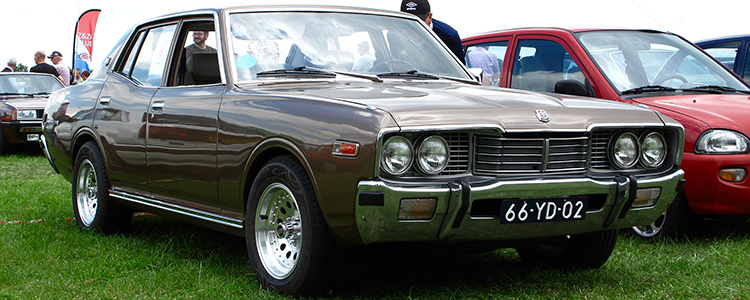
Editorial
The buyer's read
If you're buying a Gloria, the safest place to start is a documented Y33 or Y34 with the turbo VQ. The Y33 Gran Turismo Ultima with the VQ30DET gives you 90s VIP looks and a drivetrain that overlaps with the 350Z and Maxima, so parts aren't a hunt. The Y34 300VIP gets you the same engine in a more modern body with better electronics and the option of ATTESA AWD on the FOUR trims. Either is a Gloria you can actually drive.
Skip anything cheap that doesn't come with paperwork. A $4,500 Gloria almost always means deferred maintenance on the cooling system, the timing service, and the suspension bushings. What you save on the buy you'll spend twice over in the first year fixing what should have been done already. The Critical line items on the checklist matter most, because a Gloria with rust at the rear subframe mounts or a head that's been overheated is a parts donor, not a car.
If you want the older VIP look, the Y31 Gran Turismo with the VG30DET is the entry point. The Y31 is old enough to be cheap and visually iconic for VIP builds, but the trade is 35-plus years of wear and trim parts that are getting hard to find. The Y32 is the same idea with a stiffer body and a quieter cabin, and it's where VIP culture actually took hold in Japan. Stock Y32 survivors with intact interiors are getting rare.
The one Gloria to be careful with is a Y34 with the VQ25DD direct-injection engine. The DD engines are picky on fuel quality and need the intake valves cleaned of carbon on a schedule. A neglected DD Gloria runs poorly and the fix isn't cheap. The VQ25DET turbo is the safer pick at the 2.5 liter level. Verify the engine code on the cam cover before you commit. The bay looks the same. The car isn't.
FAQ
Frequently asked questions
- Which Nissan Gloria generation is best to buy today?
- For most buyers: Y33 (1995-1999) value + VIP support, or Y34 (1999-2004) for daily usability.
- Are Gloria and Cedric the same car?
- They’re platform siblings with trim/styling differences. Many mechanical parts interchange, especially Y32-Y34.
- What engines should I look for or avoid?
- Prefer well-maintained turbo RB/VQ30DET. Be cautious with neglected VQ25DD direct-injection cars.
- What are the biggest problem areas when inspecting one?
- Check rust, cooling system health, transmission behavior, and all electronics (HVAC, windows, cluster).
- How much does condition affect price on a Gloria?
- Massively. Low-mile, stock, rust-free cars can be 2–3x the price of tired, modified, or repaired examples.
- Are manual transmissions available from factory?
- Most are automatic. Factory manuals are uncommon; swaps exist but can reduce originality and complicate resale.
- Is the Gloria a good VIP build platform?
- Yes—especially Y33/Y34. Budget for quality suspension, bushings, and wheel fitment to avoid rubbing.
- When is the Y34 Gloria US legal under the 25-year rule?
- 1999 models became eligible in 2024; eligibility advances yearly. Verify build month and paperwork.
Citations
Sources & references
- Nissan Gloria — encyclopedic overview — WikipediaVerified
- Nissan Cedric — platform twin reference — WikipediaVerified
- Prince Motor Company — pre-merger heritage — WikipediaVerified
- Nissan VG engine family (VG20ET/VG30DET) — WikipediaVerified
- Nissan VQ engine family (VQ25DET/VQ30DE/VQ30DET) — WikipediaVerified
- Nissan RB engine family (RB25DET context) — WikipediaVerified
- Importing a vehicle — federal requirements — US EPAVerified
- Nissan Gloria — original WP buyer guide (source article) — JDMBuySellVerified
Sources last verified: