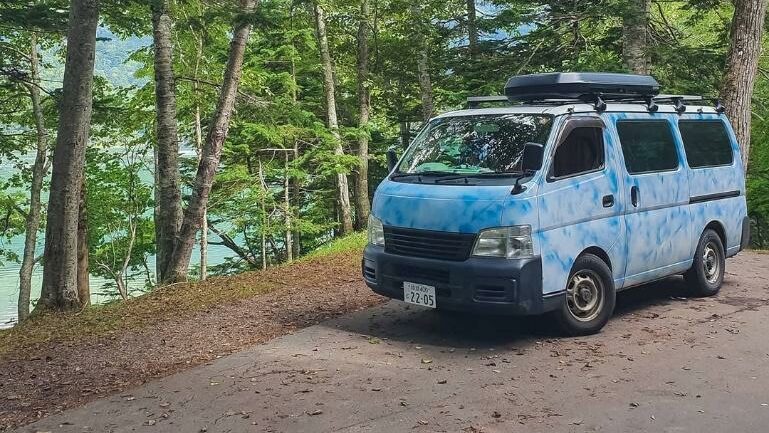
The E25 is the value sweet spot for buyers who want a modern Caravan and can wait on US legality. 2001 model years are now 25-year legal; the rest of the generation becomes legal year-by-year through 2037. The trade-off is emissions-control complexity: the YD25DDTi's EGR system clogs, the DPF (on later cars) is sensitive to short-trip use, and injector replacement on a neglected engine can cost more than the rest of the powertrain combined. Find a car with documented service history and a clean injector/EGR baseline.
Buyer's guide
Nissan Caravan E25 — Buyer's Guide & Specs
The fifth-generation Caravan (E25, 2001-2012) modernized the platform onto a monocoque chassis and introduced the YD25DDTi common-rail turbo-diesel — a smoother, quieter, more efficient engine than the TD27T it replaced. Petrol options narrowed to the KA20DE and KA24DE carryovers plus the new QR-series 2.0L and 2.5L units. Diesel options dropped to two 3.0L turbo-diesels in early production, with the YD25DDTi 2.5L common-rail becoming dominant.
Looking to buy?
Browse Nissan Caravan listings →
Key Takeaways
The Caravan ran through five chassis codes from 1973 to today. The E20 and E23 are mostly history at this point. The E24 from 1986 to 2001 is the one most buyers want, because it's old enough to import to the US and tough enough to camper convert. The E25 added the modern YD25DDTi diesel, and the E26 is still in production today as the NV350.
- Diesel + 4WD brings the biggest premiums.
- Rust and underbody condition drive value more than miles.
- E25/E26 are most liquid; older E24 is niche.
- Fleet history can be fine if serviced; avoid neglected.
- Camper/overland builds lift prices when documented.
- Parts availability is strong; trim-specific bits vary.
Technical Specifications
Every Caravan generation gives you a choice between petrol and diesel. The diesel 4WD is what camper builders want, and the ZD30 in the E24 is the most-requested combination. Petrol Caravans are cheaper to buy but they're thirstier to run.
Engine Options
| Engine | Displacement | Power | Boost | Notes |
|---|---|---|---|---|
| KA20DE | 2.0L | unknown (exact rpm unknown) | N/A | Gasoline KA20DE; JDM spec varies |
| YD25DDTi | 2.5L | unknown (exact rpm unknown) | unknown | CR turbo diesel; tune differs by year |
Transmission Options
| Type | Ratios | Availability | Notes |
|---|---|---|---|
| 5-speed Manual | unknown | E20/E23/E24 (varies) | Exact ratios vary by year/engine |
| 4-speed Manual | unknown | E20/E23 (varies) | Early models; ratios market-dependent |
| 3-speed Automatic | unknown | E23/E24 (some trims) | Early AT; exact ratios vary |
| 4-speed Automatic | unknown | E24/E25 (some trims) | AT model varies by engine/market |
| 5-speed Automatic | unknown | E25/E26 (some trims) | JR-series/RE-series depends on engine |
Livability
- Headroom
- 39.0"
- Tall roof trims roomy; low roof tight with seats
- Rear Seats
- Varies by trim
- Many are vans; rear benches narrow, upright
- Cargo
- High (van)
- Huge boxy load area; wheel wells intrude
Variants & Trims
The Caravan came in cargo Van and passenger Coach body styles, with a Limousine trim for the top of the range. The Homy badge was the passenger version Nissan sold until 2001, and export markets called the same van the Urvan.
| Generation | Trim | Engine | Key Features |
|---|---|---|---|
| E25 (4th gen, 2001-2012) | Van DX | KA20DE 2.0L I4 | Commercial, sliding door, steel wheels, ABS opt |
| E25 (4th gen, 2001-2012) | Van GX | KA20DE 2.0L I4 | Upgraded trim, power windows, keyless opt |
| E25 (4th gen, 2001-2012) | Van Super GX | KA20DE 2.0L I4 | Higher trim, body-color parts, improved seats |
| E25 (4th gen, 2001-2012) | Wagon GX | KA20DE 2.0L I4 | Passenger wagon, rear A/C opt, cloth interior |
| E25 (4th gen, 2001-2012) | Wagon Super GX | KA20DE 2.0L I4 | Passenger, higher trim, power features, A/C |
| E25 (4th gen, 2001-2012) | Van DX Diesel | YD25DDTi 2.5L Turbo Diesel I4 | Common-rail diesel, commercial, high torque |
| E25 (4th gen, 2001-2012) | Van GX Diesel | YD25DDTi 2.5L Turbo Diesel I4 | Diesel, upgraded trim, power windows, ABS opt |
| E25 (4th gen, 2001-2012) | Van Super GX Diesel | YD25DDTi 2.5L Turbo Diesel I4 | Diesel, higher trim, body-color, better seats |
| E25 (4th gen, 2001-2012) | Wagon GX Diesel | YD25DDTi 2.5L Turbo Diesel I4 | Passenger diesel, rear A/C opt, cloth interior |
| E25 (4th gen, 2001-2012) | Van 4WD | KA20DE/YD25DDTi | Part-time 4WD, utility spec, higher ride height |
Should You Buy a Nissan Caravan E25?
The Caravan is cheaper than a Hiace and just as easy to live with, but it doesn't hold its value the way the Toyota does. You're buying a Caravan to use it, not to flip it.
Why You'll Love It
- Commercial-grade durability Built for fleet duty; driveline and chassis tolerate high use when serviced.
- Huge interior volume Excellent for cargo, camper, or crew use; square packaging maximizes usable space.
- Strong parts availability Consumables and mechanical parts are widely available; shared Nissan components help.
- Upfit and camper friendly Flat sides, tall roof options, and simple layouts make builds straightforward.
- Diesel torque for load Diesel trims pull well at low rpm; preferred for towing and heavy payload work.
- 4WD variants add utility 4WD models are sought after for snow, rural routes, and overland-style builds.
- Value vs HiAce Typically undercuts Toyota HiAce in like-for-like condition, especially older gens.
- Simple to service Work-van engineering: access and procedures are familiar to many independent shops.
Why You Might Not
- Rust is the #1 killer Sills, floors, rear arches, and underbody rot can exceed the van’s value to repair.
- Ex-fleet wear and tear Hard commercial use means tired interiors, door rollers, suspension, and steering play.
- Diesel emissions complexity Later diesels may have EGR/DPF issues; short-trip use accelerates problems.
- YD25 mixed reliability Some YD25 variants are sensitive to maintenance; injector/turbo issues can be costly.
- Trim/spec confusion Badging varies by market; verifying engine, 4WD, and payload rating is essential.
- Noise and ride quality Cab-over vans can be loud and bouncy; refinement trails passenger vans/MPVs.
- Safety varies by year Older gens lack modern airbags/ESC; buyers should match use-case and risk tolerance.
- RHD import practicality In LHD regions, drive-thru, passing, and insurance can be inconvenient or pricier.
Who Should NOT Buy This
- Anyone who can’t inspect rust thoroughly
- Buyers needing modern crash safety
- People expecting quiet, car-like ride
- Those who won’t budget $2k/yr for catch-up
- Owners without a diesel specialist nearby
- States with strict emissions/inspection rules
- Anyone needing easy parts at local stores
- Drivers wanting 75mph effortless cruising
- People who hate slow steering and body roll
- Buyers who can’t DIY basic maintenance
- Anyone needing reliable A/C in extreme heat
- Those who can’t store it indoors (rust accelerates)
- People needing strong resale value
- Anyone sensitive to diesel smell/smoke
- Families needing real 3-row comfort
- People who tow heavy without cooling upgrades
- Buyers expecting perfect electrical reliability
- Those who can’t tolerate commercial-van wear
Common Issues & Solutions
Most of the Caravan's trouble lives in the diesel engines. The cooling system overheats when the head gasket goes. The TD27T turbo eats itself when the oil line clogs. Neither is a deal breaker if the paperwork shows the work was done.
| Issue | Cause | Solution | Est. Cost |
|---|---|---|---|
| Severe rocker/step rust | Trapped moisture in step/slider seams | Cut/weld panels; treat cavities; proper drain | $1500-6000 |
| Frame rail corrosion | Road salt + thin factory coatings | Probe/repair sections; avoid plated patch hacks | $2000-9000 |
| Sliding door roller wear | High cycle use; dry track; bent track | Replace rollers/track; align door; lube properly | $300-1200 |
| Rear door hinge sag | Heavy doors + rusted hinge mounts | Replace hinges; repair mounts; adjust latches | $250-1200 |
| Overheating under load | Clogged radiator, weak fan clutch, air pockets | New rad/cap/thermostat; fan clutch; bleed system | $500-1800 |
| Head gasket failure | Chronic overheating or poor coolant maintenance | Machine head; gasket set; fix cooling root cause | $1800-4500 |
| Heater core leak | Age corrosion; old coolant; electrolysis | Replace heater core; flush; new hoses/clamps | $700-1800 |
| Diesel hard cold start | Glow plugs/relay/timer weak; low compression | Test circuit; replace plugs/relay; compression test | $250-1200 |
| Diesel hot start problem | Injection pump wear or air ingress at lines | Fix leaks; rebuild pump; set timing correctly | $1200-3500 |
| Injection pump diesel leak | Aged seals; ULSD shrinkage; heat cycling | Reseal or rebuild pump; replace return hoses | $600-2500 |
| Turbo wear/oil consumption | Poor oil changes; high EGT; worn bearings | Rebuild/replace turbo; clean intake; check PCV | $900-2800 |
| EGR/intake clogging | Soot + oil mist buildup over time | Remove/clean intake/EGR; verify boost control | $300-1200 |
| Excessive blow-by | Worn rings/cylinders from dust or neglect | Compression/leakdown; rebuild or engine swap | $2500-8000 |
| Auto trans slipping/flare | Overheat, old ATF, worn clutch packs/valve body | Service if mild; rebuild/replace if slipping | $350-4500 |
| Manual synchro grind | Worn synchros; wrong oil; hard commercial use | Correct fluid; rebuild gearbox if persistent | $150-2500 |
| Diff whine and leaks | Low oil from seals; worn bearings from load | Reseal; set preload/backlash; rebuild if noisy | $300-2200 |
| Driveshaft vibration/clunk | Worn U-joints/center bearing; bad angles | Replace joints/bearing; balance shaft; check mounts | $250-1200 |
| Front hub engagement fail | Worn auto hubs or vacuum/actuator issues | Rebuild/replace hubs; convert to manual hubs | $300-1200 |
| Steering wander | Idler/pitman wear; steering box lash; alignment | Replace wear parts; adjust box; align properly | $400-1800 |
| Front ball joint failure | Age + load; torn boots; lack of grease | Replace joints/control arms; align afterward | $400-1600 |
| Leaf spring sag/crack | Overloading; rust between leaves; age | Replace leaf packs; new bushings/shackles | $600-2500 |
| Brake line rust rupture | Salt exposure; neglected underbody cleaning | Replace hard lines; flush fluid; inspect hoses | $500-2000 |
| Warped rotors/pulsation | Cheap pads/rotors; seized caliper slides | Quality rotors/pads; service calipers/slides | $250-900 |
| Wheel bearing failure | Water ingress; over-tightened bearings; age | Replace bearings/seals; set preload correctly | $300-1200 |
| A/C weak at idle | Low charge, tired compressor, condenser airflow | Leak test; repair; recharge; fan/clutch service | $250-1800 |
| Electrical gremlins | Corroded grounds; hacked accessories; moisture | Clean grounds; repair harness; remove bad add-ons | $150-1500 |
| Instrument cluster faults | Aged solder joints; failed bulbs; tampering | Reflow/repair cluster; verify true mileage | $150-800 |
| Fuel tank/filler neck rust | Road salt; trapped dirt at filler area | Replace neck/tank; new straps; treat area | $400-1800 |
| Exhaust manifold crack | Heat cycling; thin castings; loose hardware | Replace manifold; new studs/gaskets; check mounts | $400-1600 |
Differences between JDM & USDM
The Nissan Caravan was never officially sold in the United States in any model year. The closest USDM equivalent in Nissan's North American lineup was the much later NV2500/NV3500 (2011-2021), built on an unrelated F-Alpha truck platform and not a Caravan derivative. Every Caravan on US roads is a gray-market private import, and the controlling regulation is the federal 25-year rule (NHTSA exemption from FMVSS compliance for vehicles 25+ model years old) plus the EPA's similar 21-year exemption for emissions. In practice this means 2001-and-earlier model years are clearly importable as of 2026; 2002-2012 E25 cars become legal year-by-year. In other export markets the same vehicle was sold as the Nissan Urvan, sometimes with different engine availability — including the ZD30 diesel that did not appear in JDM-spec Caravans across the full E24 production run.
Nissan Caravan Full Evolution
Pre-Purchase Inspection Checklist
Walk this list with the seller, not in front of them. The Critical items mean walking away if there's no paperwork backing them up. The High items can usually be priced into the deal. Twenty minutes at idle and a road test will tell you most of what you need to know about a Caravan.
Critical Priority
- VIN/Model Code Confirm E24/E25, engine code, year, trim
- Import/Title Status Verify legal import docs, title, no liens
- Rust: Sills/Steps Inspect rocker/step seams for bubbling/holes
- Rust: Floor Pans Lift mats; check front footwells for rot
- Rust: Rear Floor Check cargo floor seams and spare tire well
- Rust: Frame/Cross Probe frame rails/crossmembers for soft spots
- Engine Cold Start Start cold; listen for knock, chain rattle, smoke
- Blow-by Test Oil cap off at idle; heavy puffing = worn rings
- Coolant Condition Check oil in coolant, rusty coolant, low level
- Overheat History Check warped rad tanks, new HG signs, stains
- Diesel Injection Pump Check for diesel seep, idle hunt, hard hot start
- Fuel Leaks Smell diesel/gas; inspect lines, filter head
- Auto Trans Check ATF color; flare/harsh shifts on road test
- Brake Lines Inspect hard lines for rust; especially rear
- Road Test Heat Drive uphill; watch temp creep and power fade
High Priority
- Odometer Proof Check auction sheet/service records vs km
- Rust: Wheel Arches Check inner/outer rear arches for repairs
- Rust: Door Bottoms Open doors; check drain holes and hems
- Rust: Windshield Check windshield surround for bubbling/leaks
- Accident Repairs Look for overspray, seam sealer breaks, pulls
- Sliding Door Track Check rollers/track wear; door should glide
- Underbody Coating Fresh undercoat can hide rust; inspect edges
- Oil Leaks Check front/rear main, valve cover, turbo feed
- Radiator/Cap Pressure test; weak cap causes boil-over
- Hoses/Heater Lines Squeeze hoses; check swelling/cracks at clamps
- Thermostat/Fans Verify fan clutch/elec fans engage at temp
- Timing System Listen for chain slap; check service proof
- Diesel Glow System Hard start cold = glow plugs/relay/timer
- Turbo Health Check shaft play, oil in intercooler, boost lag
- Fuel Tank Rust Check filler neck, tank straps, seepage
- Manual Gearbox Check 2nd/3rd synchro grind; fluid leaks
- Transfer Case 4WD Engage 4H/4L; check binding, leaks, noises
- Front Hubs (4WD) Check auto/manual hubs engage; clicking = worn
- Diff Condition Check pinion seal leaks; whine on decel
- Driveshaft U-joints Check play/rust dust; clunk on takeoff
- CV Boots (4WD) Inspect torn boots/grease sling; click on turns
- Steering Play Check idler/pitman, box lash; wander at speed
- Front Suspension Check ball joints, bushings, shocks, torsion sag
- Rear Suspension Check leaf springs, shackles, bushings, sag
- Wheel Bearings Check hum/play; heat after drive indicates wear
- Brake Feel Test for pull, pulsation, long pedal, ABS light
- Fusebox/Relays Check heat damage, hacked wiring, add-ons
- Heater Core Sweet smell/fogging = heater core leak
- Instrument Cluster Check warning lights work; tamper bulbs common
- ABS/SRS Lights Key-on self test; stored faults can be pricey
- Seat Mount Rust Check seat rails/floor anchors for corrosion
- Emissions Equipment Check EGR/cat present; missing causes fail
- Road Test Vibes Check 40-60mph vibration = shaft/bearing angles
- Road Test Brakes Hard stop; check fade, pull, ABS activation
Medium Priority
- Panel Alignment Check sliding door gaps; uneven = prior hit
- Rear Door Hinges Check sagging, cracked hinges, latch alignment
- EGR/Intake Soot Check for clogged EGR/intake; poor power/smoke
- Air Filter Box Check dust ingress; worn engines from bad seals
- Engine Mounts Excess vibration/clunk in gear = mounts
- Power Steering Leaks Check pump/hoses/rack or box; groan at lock
- Parking Brake Check holds on incline; cables seize with rust
- Tires/Wear Pattern Cupping/inner wear = alignment or worn joints
- Battery/Charging Check alternator output; dim lights at idle
- Grounds/Corrosion Check chassis grounds; weird electrics common
- A/C Operation Verify cold at idle; check compressor noise/leaks
- Seatbelts Check retractors and fraying; JDM belts age
- Door Seals/Leaks Water trails at A-pillar/sliding door seal
- Exhaust Condition Check manifold cracks, flex leaks, rusted muffler
- Load/Idle Test Idle with A/C on; check stalling/hunting
Low Priority
- Blower Motor Check all speeds; resistor failure common
- Window Regulators Slow windows = worn motors/regulators
- Wiper Linkage Check slop/slow wipe; linkage bushings wear
Generation History
Caravan/Urvan E20 (1973-1980)
- Early cab-over commercial van
- Simple carb engines; basic interiors
- Rare outside Japan; collector niche
Caravan/Urvan E23 (1980-1986)
- More space; improved payload
- Diesel options appear in many markets
- Often ex-commercial; condition varies
Caravan/Urvan E24 (1986-2001)
- Iconic boxy shape; huge aftermarket
- Common TD/QD diesels; long-lived
- 4WD variants exist; rust is key issue
Caravan E25 (2001-2012)
- Modernized chassis; better safety
- YD25 diesel common; mixed reputation
- High demand for camper conversions
NV350 Caravan E26 (2012-2024)
- Most refined; best daily usability
- YD25/QR engines; strong fleet support
- Top choice for export and upfits
Market Data
Production Numbers & Rarity
| Generation | Years | Total Built | Notes |
|---|---|---|---|
| E20 (1st gen) | 1973-1980 | unknown (estimated) | Factory totals not publicly consolidated |
| E23 (2nd gen) | 1980-1986 | unknown (estimated) | Production split by markets; totals unavailable |
| E24 (3rd gen) | 1986-2001 | unknown (estimated) | Long run; multiple plants/markets complicate totals |
| E25 (4th gen) | 2001-2012 | unknown (estimated) | Includes NV350 Urvan exports; totals not unified |
| E26 (5th gen) | 2012-present | unknown (estimated) | Ongoing production; totals change annually |
How It Compares
Against the Hiace, the Caravan is cheaper, roomier inside, and has more engine choices. Against the Delica, the Caravan is bigger and less tall, so it handles highway speeds better. The Hiace still wins on resale and parts depth, which is why it costs more.
| Feature | E25 | Toyota HiAce H100 | Mitsubishi Delica L400 |
|---|---|---|---|
| Body style | Cab-over van/wagon | Cab-over van/wagon | Cab-over van/wagon |
| Typical use-case | Fleet, cargo, camper | Fleet, cargo, shuttle | Camper, 4WD leisure |
| Market pricing | Usually cheaper vs HiAce | Highest demand premium | 4WD premium niche |
| Diesel availability | Common (YD/TD/QD) | Common (1KZ/2KD/1KD) | Common (4M40/4D56) |
| 4WD availability | Available; high demand | Available; pricey | Core identity; strong |
| Camper conversion | Excellent; boxy walls | Excellent; huge ecosystem | Great; 4WD lifestyle |
| Ride/handling | Work-van firm | More refined (newer) | More SUV-like feel |
| Cab noise/heat | Higher (cab-over) | Similar; varies by trim | Lower (front-engine MPV) |
| Parts ecosystem | Strong; fleet support | Strongest globally | Good; 4WD-specific parts |
| Rust resistance | Varies; watch sills/floor | Often better; still rusts | Can rust badly in snow belts |
| Fuel economy | Diesel good; load-dependent | Comparable; engine-dependent | Worse when lifted/4WD |
| Purchase risk | Fleet wear; verify service | High prices hide issues | 4WD complexity; bushings |
| Resale liquidity | High for clean E25/E26 | Highest; fastest sale | Strong in enthusiast market |
Comparable Alternatives
If the Caravan isn't right for you, the obvious alternative is the Toyota Hiace. It's pricier but holds its value better. For a smaller van the Mazda Bongo or Mitsubishi Delica is worth a look, and for kei-class the Suzuki Every is the cheapest way in.
Toyota HiAce H100
Top demand; strong diesel/4WD options; pricier but liquid
Toyota HiAce H200
Newer refinement and safety; huge parts network; higher buy-in
Mitsubishi Delica L400
4WD lifestyle icon; great camper base; watch rust and suspension
Mazda Bongo Friendee
Compact camper-friendly; often cheaper; less payload than Caravan
Honda Stepwgn (early)
More MPV comfort; lighter-duty; good family van alternative
In Pictures

The Buyer's Read
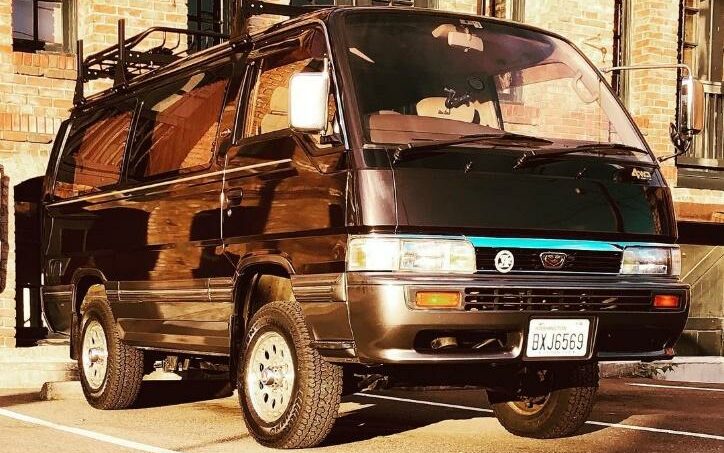
If you're buying a Caravan, the safest place to start is a documented diesel 4WD E24 built between the mid 1990s and 2001. That gives you the ZD30 or TD27T diesel that camper converters look for, the part-time 4WD that opens up forest service roads, and a chassis that's been around long enough for parts and know-how to be well sorted. The whole E24 generation is now 25 year legal in the United States, so you don't have to wait on the year of manufacture to ship one over.
Skip anything under $7,000. A cheap Caravan almost always means an overheated diesel, a worn out turbo, or rust crawling up from the underbody. What you save on the purchase price you'll spend in the first year on a head gasket and cooling rebuild that should have been done already. The Caravan was built as a fleet workhorse, and most of the cheap ones were used like one.
If you want the camper conversion look, the high roof E24 with the diesel 4WD is the build everyone is chasing. Just know that you're buying an old commercial van underneath the conversion. The cooling system needs to be sorted before you trust it on a long trip. The turbo wants clean oil and a cool down before you switch it off. None of this is hard, but it does mean the Caravan is a hands on van, not a buy and forget one.
The one Caravan to be careful with is the V6 petrol 300GT. The VG30E injectors clog up and the engine misfires, and parts for that specific variant are harder to find than the diesel four cylinders. The Caravan's main appeal versus the Hiace is price, and once you're buying the V6 you've already paid Hiace money. You might as well get the Hiace. The whole point of choosing a Caravan over the Toyota is that you wanted a cheaper, simpler workhorse with the Homy and Urvan family tree behind it.
Frequently Asked Questions
- Which Nissan Caravan generation is best to buy?
- For most buyers: E25 (2001-2012) value or E26 (2012-) usability. E24 is classic but rust-prone.
- What specs bring the highest prices?
- Diesel + 4WD, clean underbody, documented service, and desirable camper/seat layouts. Late-year, low-rust vans lead.
- What are the biggest problems to check?
- Rust, cooling system health, injector/turbo condition on diesels, sliding door rollers, and suspension/steering wear.
- Is the YD25 diesel reliable?
- It can be with strict maintenance and quality oil/filters. Neglect can mean injectors, turbo, EGR/DPF costs.
- Are 4WD Caravans full-time 4WD?
- Most are part-time 4WD systems depending on year/trim. Verify transfer case operation and front driveline wear.
- How do Caravan prices compare to Toyota HiAce?
- Caravan usually offers better value; HiAce commands a brand premium. Condition can flip the equation quickly.
- What mileage is too high for a Caravan?
- Mileage matters less than service history. A well-kept 200k+ mile van can beat a neglected 80k mile fleet unit.
- What should I budget after purchase?
- Plan for fluids, belts, brakes, tires, and rust prevention. Diesels may need injector/DPF/EGR attention.
Sources & References
- Nissan Caravan — encyclopedic overview — WikipediaVerified
- 日産・キャラバン — Japanese encyclopedic overview — Wikipedia (Japanese)Verified
- Nissan Homy — encyclopedic overview of the passenger-trim sibling — WikipediaVerified
- Nissan NV350 Caravan — fifth-generation E26 overview — WikipediaVerified
- Nissan YD engine — YD25DDTi common-rail diesel reference — WikipediaVerified
- Nissan ZD engine — ZD30 diesel reference — WikipediaVerified
- Nissan TD engine — TD27/TD27T diesel reference (E24-era) — WikipediaVerified
- Nissan Caravan — current Japan-market product page — Nissan Motor Corporation (Japan)Verified
- Royal Thai Police Nissan Caravan — Wikimedia Commons source image — Wikimedia CommonsVerified
Sources last verified: