Buyer's guide
Mitsubishi Pajero
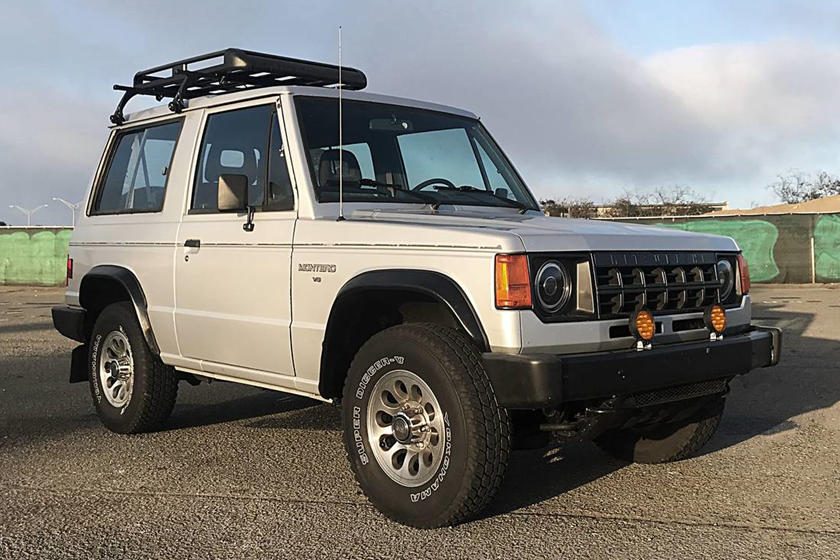
The Mitsubishi Pajero debuted at the Tokyo Motor Show in October 1981 and went on sale in 1982 as Mitsubishi's full-size body-on-frame 4x4, sold globally under three nameplates — Pajero in Japan and most markets, Montero in North America and Latin America, and Shogun in the United Kingdom. The first generation arrived as a short-wheelbase three-door with a choice of canvas or metal roof; a five-door arrived in 1983. The platform's reputation was forged in the Dakar Rally, where Mitsubishi has won outright 12 times between 1985 and 2007, the most of any manufacturer in the event's history. The lineage runs across four generations and roughly 39 model years (1982-2021): L040 first generation, V20/V30 second generation including the homologation-special Pajero Evolution (V55W), V60/V70 third generation, and V80/V90 fourth generation. Engineering highlights along the way include double-wishbone front suspension and torsion bars on Gen1 — rare on body-on-frame 4x4s of the era — Super Select 4WD allowing 4H/2H switching at speeds up to 80 km/h (49 mph) on Gen2, monocoque construction with integrated frame and Super Select II on Gen3, and 332 mm front brake rotors plus Active Stability and Traction Control on Gen4. Today, the V60 with the 4M41 3.2 DI-D common-rail diesel is the import target — long-distance reliability, parts crossover, and chassis-map alignment all converge on this chassis.
Twelve Dakar wins and a Guinness World Record
Mitsubishi entered the Paris-Dakar Rally in 1983, one year after Pajero production began, and took its first outright victory in 1985 with Patrick Zaniroli. The works team kept developing the Pajero through the 1980s and 1990s, building purpose-engineered widebody chassis that wore the Pajero name but shared little with the road car. By 2007, Mitsubishi had recorded 12 outright Dakar wins — 1985, 1992, 1993, 1997, 1998, 2001, 2002, 2003, 2004, 2005, 2006, and 2007 — and a seven-year unbroken streak from 2001 through 2007, which earned the program a Guinness World Record entry. The road-going Pajero Evolution (V55W) was built to satisfy Group T2 homologation for the 1998 Dakar effort: a widebody Gen 2 with the 6G74 3.5L V6 in MIVEC DOHC tune, multi-link independent rear suspension, and a limited production run that has made it the blue-chip Pajero in the global collector market.
Why the V60 with 4M41 diesel is the import target
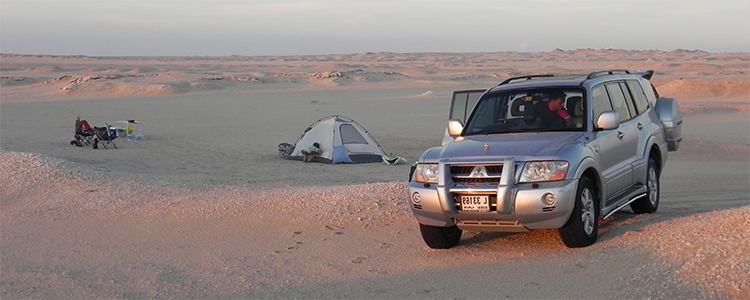
The third-generation Pajero (V60 SWB, V70 LWB; 1999-2006) is the most defensible import buy. The 4M41 3.2L direct-injection common-rail diesel — introduced on this chassis — produces useful torque at low rpm, runs the long-distance kilometres without complaint when timing belts and balancer belts are kept on schedule, and shares enough parts internationally to keep maintenance accessible. Gen3 also moved the Pajero to a monocoque shell with an integrated ladder frame, gaining stiffness for on-road manners while retaining low-range gearing, rear differential lock on higher trims, and Super Select II 4WD with 2H/4H/4HLc/4LLc modes. JDM-market V60 cars cross the 25-year US import threshold beginning in 2024 for early 1999 builds; verify exact build dates against the federal rule. The trade-off vs Gen2: less of the rally cachet, fewer SWB collector cars, but a meaningful step forward in NVH, drivability, and electronic reliability.
Quick read
Key takeaways
- Gen 2/2.5 is the collector sweet spot
- Pajero Evolution is the top-value halo model
- SWB 3-door commands a consistent premium
- Rust + cooling are the biggest inspection items
- Gen 3/4 are best value for daily + overland
- Diesel legality varies; verify import compliance
Constants
Common across all Pajero generations
- Body-on-frame construction on the L040 and V20 generations; monocoque from the V60 onward
- Selectable or Super Select four-wheel drive with low-range transfer case across all generations
- V6 petrol and turbo-diesel engine options; diesel variants not sold new in North America
- Sold as the Montero or Shogun in some export markets
- Right-hand drive available throughout JDM production
Chassis history
Generation timeline
The Pajero ran through four generations from 1982 until 2021, and each one feels like a different truck. The L040 first generation is the classic boxy 4x4 that started the whole thing. The V20/V30 is where the Pajero grew up and won most of its Dakar titles. The V60/V70 went monocoque and got the 4M41 diesel. The V80/V90 is the modern one, the most refined and the most electronics-heavy of the bunch.
First generation — L040 (1982–1991)
Second generation — V20 series (1991–1999)
Fourth generation — V80 series (2006–2021)
Buyer's call
Should you buy a Mitsubishi Pajero?
The Pajero is the kind of 4x4 you buy with your eyes open. Mitsubishi built it to go anywhere and last a long time, so the strengths are what you'd expect. The weak spots are about age and the fact that it's not a sports car or a fuel sipper.
Why you'll love it
- Super Select 4WD versatility Many trims offer full-time 4WD modes plus low range; great in mixed weather.
- Rally-bred durability Dakar heritage shows in cooling, driveline strength, and long-distance reliability.
- Strong off-road geometry Short overhangs (esp. SWB) and robust underbody make trails and sand easy.
- Comfortable daily usability Gen 2+ rides well for a 4x4; Gen 3/4 are genuinely road-friendly.
- Good global parts ecosystem Shared components across markets; aftermarket supports lifts, armor, and service parts.
- Value vs Land Cruiser tax Often 20–40% cheaper than comparable Toyota 80/100/Prado in similar condition.
- SWB and rare trims upside 3-door, widebody, and Evo variants have stronger collector demand and liquidity.
Why you might not
- Rust is the #1 value killer Rear arches, sills, body mounts, and frames rot; repairs quickly exceed savings.
- Cooling system neglect risk Old radiators, hoses, and viscous fans can cause overheating; check service history.
- Diesel import complexity Registration/emissions rules vary by state; verify paperwork and compliance before buying.
- Fuel economy is mediocre V6 models are thirsty; lifted/armored builds worsen range and operating costs.
- Aging electronics/trim Window regs, climate controls, and interior plastics can be brittle on older gens.
- Evo parts scarcity Pajero Evolution-specific body and suspension parts are expensive and hard to source.
- Auto trans wear on heavy use Towing/off-road heat can shorten life; look for smooth shifts and clean fluid.
Who should not buy this
- Anyone needing modern crash safety and ADAS
- People who can't wrench or pay specialist labor
- Buyers without proof of timing belt service
- Anyone who ignores cooling system maintenance
- Rust-belt buyers without lift/inspection access
- Drivers wanting quiet, car-like ride and handling
- People expecting 25+ mpg or cheap fuel costs
- Those needing easy parts availability everywhere
- Owners who tow heavy without adding trans cooler
- Anyone who can't tolerate occasional 4WD quirks
- Apartment dwellers with no place for DIY repairs
- States with strict emissions/inspection hurdles
- Buyers who need a small parking footprint
- People who hate slow diesel warm-up in winter
- Anyone expecting low running costs like a Corolla
- Those who need a truly adult-usable third row
Reliability
Common issues & solutions
The Pajero is tough mechanically and most of the trouble comes down to age and skipped maintenance. The diesel timing chain guides on the 4M41 fail without warning, so verify the service history. The hydraulic brake booster motor needs attention before it lets go completely. Rocker cover gaskets and the blocked rocker cover filter are easy to fix but you'll see them on every high-mileage truck.
| Issue | Cause | Solution | Est. cost |
|---|---|---|---|
| Timing belt overdue | Skipped interval; unknown history imports | Full belt kit, tensioners, water pump | $900-1800 |
| Balance shaft belt failure | Old belt snaps; can take timing belt with it | Replace both belts; inspect pulleys/tensioners | $900-1800 |
| Diesel head cracks/warpage | Overheating, poor coolant, clogged radiator | Pressure test; head job/replace; fix cooling | $2500-6000 |
| Cooling system weak | Aged radiator, hoses, cap, fan clutch | Radiator/hoses/cap/thermostat; flush properly | $600-1600 |
| Injector pump seal leaks | Aging seals; ULSD shrinkage on older pumps | Reseal pump; set timing; replace return lines | $700-1800 |
| Worn injectors (diesel) | High miles; poor fuel filtration/quality | Test/replace nozzles; set pop pressure | $500-1500 |
| Turbo wear/oil leaks | High EGT, poor oil changes, clogged breather | Rebuild/replace turbo; clean intake/intercooler | $900-2500 |
| EGR/intake carbon clog | EGR soot + oil mist builds thick deposits | Intake/EGR clean; check boost leaks | $300-900 |
| Auto trans overheating/wear | Towing, old ATF, clogged cooler, high temps | Fluid/filter service; add cooler; rebuild if bad | $350-4500 |
| Transfer case actuator faults | Vacuum leaks, stuck solenoids, seized actuator | Smoke test vac lines; replace solenoids/actuator | $150-1200 |
| 4WD lights flashing | Position switches dirty; actuator not completing | Clean/replace switches; verify vacuum/actuator | $100-600 |
| Front diff pinion leak | Worn seal; vent clogged; off-road contamination | Replace seal; service vent; refill correct oil | $250-700 |
| Rear diff clunk/whine | Worn gears/bearings; low oil from leaks | Rebuild diff; replace bearings/gears as needed | $900-2500 |
| CV joint/boot failure | Aged boots, lift angles, off-road debris | Replace boots early or swap axle assemblies | $200-900 |
| Wheel bearing failure | Water ingress, age, incorrect preload/service | Replace bearings/seals; set preload correctly | $300-900 |
| Steering rack leaks | Seal wear; torn boots trap grit and moisture | Rebuild/replace rack; flush PS fluid | $600-1600 |
| Front suspension wear | Heavy vehicle; bushings/ball joints age | Replace ball joints, bushes; align afterward | $500-1800 |
| Brake caliper sticking | Corrosion on slide pins/pistons; old fluid | Rebuild/replace calipers; flush brake fluid | $300-1200 |
| Rusty brake lines | Road salt; neglected underbody washing | Replace lines; inspect flex hoses and fittings | $400-1500 |
| Heater core leak | Corrosion; old coolant; electrolysis | Replace heater core; flush; new coolant | $700-1800 |
| A/C weak at idle | Low charge, tired compressor, condenser blockage | Leak test; recharge; replace compressor if noisy | $200-1500 |
| Sunroof drain leaks | Clogged drains; cracked tubes; poor sealing | Clear drains; replace tubes; dry interior fully | $100-600 |
| SRS light from seat plugs | Loose/corroded connectors under seats | Clean/repair connectors; clear codes properly | $80-300 |
| Window regulator failure | Worn cables/plastic guides; dry tracks | Replace regulator; lube tracks; check switches | $150-500 |
| Crank pulley/damper wobble | Rubber delamination with age/heat | Replace harmonic balancer; inspect keyway | $250-700 |
| Oil leaks (general) | Aged seals: valve cover, front/rear main | Reseal; clean PCV/breather system | $200-1500 |
| Fuel tank rust/contam | Condensation; long storage; poor fuel | Clean/replace tank; new filter; flush lines | $400-1500 |
| Electrical ground issues | Corroded grounds; battery acid damage | Clean/replace grounds; load test charging | $80-400 |
| Body/frame rust repair costs | Salt exposure; hidden rot under seam sealer | Proper cut/weld; avoid patch/undercoat flips | $1500-10000 |
Market
Differences between JDM & USDM
The Pajero was sold in North America as the Mitsubishi Montero from 1983 through model year 2006, when Mitsubishi withdrew the nameplate from the US market. Mechanically the Montero shared engines, chassis, and Super Select 4WD with the JDM Pajero, but it was offered only in left-hand-drive long-wheelbase form with a limited engine catalogue — typically the gasoline V6s (6G72, 6G74, 6G75) and no factory diesel. The JDM-only halo cars never reached the US: the Pajero Evolution (V55W, 1997-1999), the Pajero Super Wagon high-roof variants on the V20/V30, and the Pajero Mini and Pajero iO smaller-displacement siblings were all kept off the North American import schedule. JDM Gen3 and Gen4 cars also received the 4M41 3.2L DI-D diesel that the US Montero never offered. For import buyers, the practical implication is that any RHD JDM Pajero — particularly diesel-powered V60 / V80 cars and any V55W Evolution — has no direct US-market equivalent; verify state-by-state diesel emissions rules before purchase.
Specs
Technical specifications
Every Pajero generation got a different engine lineup, and the diesel options are what most import buyers are after. The 4D56 2.5 turbo diesel ran early. The 4M40 2.8 turbo diesel covered Gen 2. The 4M41 3.2 common-rail diesel is the one to want on Gen 3 and Gen 4. On the gas side, you'll find the 6G72 3.0 V6, the 6G74 3.5 V6, and the 6G75 3.8 V6 that the US Montero got.
Engine options
| Chassis | Engine | Displacement | Power | Boost | Notes |
|---|---|---|---|---|---|
| L040 | 4G54 | 2.6L | estimated | N/A | Carb/EFI varied by market |
| L040 | 4G63 | 2.0L | estimated | N/A | Early NA petrol; market dependent |
| L040 | 4D55 | 2.3L | estimated | N/A | Indirect injection diesel |
| L040 | 4D55T | 2.3L | estimated | estimated | Turbo diesel; early applications |
| L040 | 4D56 | 2.5L | estimated | N/A | Indirect injection diesel |
| L040 | 4D56T | 2.5L | estimated | estimated | Turbo diesel; intercooler varies |
| L040 | 6G72 | 3.0L | estimated | N/A | SOHC V6; output varies by market |
| V20/V30 | 4D56 | 2.5L | estimated | N/A | NA diesel; regional tune |
| V20/V30 | 4D56T | 2.5L | estimated | estimated | Turbo diesel; IC on some specs |
| V20/V30 | 4M40 | 2.8L | estimated | estimated | 2.8TD; mechanical/electronic pump varies |
| V20/V30 | 6G72 | 3.0L | estimated | N/A | SOHC V6; multi-point injection varies |
| V20/V30 | 6G74 | 3.5L | estimated | N/A | SOHC/DOHC varies by model |
| V55W | 6G74 | 3.5L | estimated | N/A | DOHC MIVEC on Pajero Evolution |
| V60/V70 | 4M41 | 3.2L | estimated | estimated | DI-D common-rail; tune varies |
| V60/V70 | 6G74 | 3.5L | estimated | N/A | NA V6; regional emissions tune |
| V60/V70 | 6G75 | 3.8L | estimated | N/A | NA V6; MIVEC on some applications |
| V80/V90 | 4M41 | 3.2L | estimated | estimated | DI-D; multiple output steps by year |
| V80/V90 | 6G75 | 3.8L | estimated | N/A | NA V6; limited markets in Gen4 |
Transmission options
| Type | Ratios | Availability | Notes |
|---|---|---|---|
| 5-speed Manual | estimated | Gen1-Gen2 (varies) | Early RWD/4WD applications |
| 4-speed Automatic | estimated | Gen1-Gen2 (varies) | Hydraulic 4AT; market dependent |
| 5-speed Manual | estimated | Gen3 (varies) | Diesel/petrol depending on market |
| 5-speed Automatic | estimated | Gen3-Gen4 (varies) | INVECS-II 5AT on many models |
Lineup
Variants & trims
JDM Pajeros came in trims and bodies that the rest of the world never saw. The Pajero Evolution V55W is the headliner, a widebody homologation special built for the 1998 Dakar campaign. The Pajero Super Wagon is the high-roof family-hauler version on the Gen 2 chassis that stayed in Japan. The smaller Pajero Mini and Pajero iO were JDM-only too. Outside Japan, the same truck was sold as the Montero in North America and as the Shogun in the UK.
| Generation | Trim | Engine | Key features |
|---|---|---|---|
| Gen1 (L040; SWB/LWB) | Pajero 2.6 GL (Metal Top) | 4G54 2.6 I4 NA | Part-time 4WD, 2/3dr metal top, basic trim |
| Gen1 (L040; SWB/LWB) | Pajero 2.6 GLX (Metal Top) | 4G54 2.6 I4 NA | Part-time 4WD, upgraded interior, tachometer |
| Gen1 (L040; SWB/LWB) | Pajero 2.6 Exceed (Metal Top) | 4G54 2.6 I4 NA | Higher trim, power windows, premium cloth |
| Gen1 (L040; SWB/LWB) | Pajero 2.0 GL (Metal Top) | 4G63 2.0 I4 NA | Part-time 4WD, entry spec, light-duty |
| Gen1 (L040; SWB/LWB) | Pajero 2.3D GL (Metal Top) | 4D55 2.3 I4 Diesel NA | Part-time 4WD, diesel economy, basic trim |
| Gen1 (L040; SWB/LWB) | Pajero 2.3TD GLX (Metal Top) | 4D55T 2.3 I4 Turbo Diesel | Turbo diesel, part-time 4WD, upgraded trim |
| Gen1 (L040; SWB/LWB) | Pajero 2.5D GL (Metal Top) | 4D56 2.5 I4 Diesel NA | Part-time 4WD, diesel, improved torque |
| Gen1 (L040; SWB/LWB) | Pajero 2.5TD GLX (Metal Top) | 4D56T 2.5 I4 Turbo Diesel | Turbo diesel, part-time 4WD, higher output |
| Gen1 (L040; SWB/LWB) | Pajero 3.0 V6 Exceed | 6G72 3.0 V6 NA | V6, higher trim, A/C, power accessories |
| Gen1 (L040; SWB/LWB) | Pajero 4x4 Rally/Paris-Dakar Rep. | 4D56T/6G72 (market dependent) | Rally-inspired, skid plates, auxiliary lamps |
| Gen2 (V20/V30; SWB/LWB) | Pajero XR | 4D56/6G72 (market dependent) | Super Select 4WD (spec), cloth, basic audio |
| Gen2 (V20/V30; SWB/LWB) | Pajero XL | 4D56T/6G72 (market dependent) | Super Select 4WD, upgraded trim, A/C |
| Gen2 (V20/V30; SWB/LWB) | Pajero GLS | 4D56T/6G72/6G74 (market dependent) | Alloy wheels, power accessories, better seats |
| Gen2 (V20/V30; SWB/LWB) | Pajero Exceed | 6G72/6G74/4M40 (market dependent) | Top trim, leather (spec), premium audio |
| Gen2 (V20/V30; SWB/LWB) | Pajero Super Exceed | 6G74/4M40 (market dependent) | Luxury trim, dual A/C (spec), wood accents |
| Gen2 (V20/V30; SWB/LWB) | Pajero Evolution (JDM) | 6G74 3.5 V6 DOHC NA | Widebody, MIVEC, Recaro, rally homologation |
| Gen2 (V20/V30; SWB/LWB) | Pajero Field Guard | 4D56T/4M40 (market dependent) | Utility spec, durable trim, off-road focus |
| Gen3 (V60/V70; SWB/LWB) | Pajero GL | 4M41/6G74 (market dependent) | Monocoque, Super Select II, basic trim |
| Gen3 (V60/V70; SWB/LWB) | Pajero GLS | 4M41/6G74/6G75 (market dependent) | Alloys, stability control (spec), upgraded seats |
| Gen3 (V60/V70; SWB/LWB) | Pajero Exceed | 4M41/6G75 (market dependent) | Luxury trim, leather (spec), premium audio |
| Gen3 (V60/V70; SWB/LWB) | Pajero Super Exceed | 6G75 3.8 V6 NA | Top trim, sunroof (spec), multi-zone A/C |
| Gen3 (V60/V70; SWB/LWB) | Pajero VR-X (AU/ME spec) | 6G75 3.8 V6 NA | Sport trim, body kit (spec), firmer suspension |
| Gen4 (V80/V90; SWB/LWB) | Pajero GL | 4M41 3.2 DI-D | Super Select II, basic trim, steel wheels (spec) |
| Gen4 (V80/V90; SWB/LWB) | Pajero GLS | 4M41 3.2 DI-D / 6G75 (market dependent) | Alloys, traction/stability, upgraded interior |
| Gen4 (V80/V90; SWB/LWB) | Pajero Exceed | 4M41 3.2 DI-D / 6G75 (market dependent) | Leather (spec), premium audio, parking sensors |
| Gen4 (V80/V90; SWB/LWB) | Pajero Super Exceed | 4M41 3.2 DI-D / 6G75 (market dependent) | Top trim, sunroof (spec), multi-camera (spec) |
| Gen4 (V80/V90; SWB/LWB) | Pajero Final Edition (market dependent) | 4M41 3.2 DI-D | Final-year package, unique trim, special badging |
Production
Sales numbers by year
Mitsubishi sold the Pajero in big numbers for a long time. Production peaked at over 174,000 trucks in 1992 and stayed above 100,000 a year through most of the 1990s. Dakar wins line up with the bigger production years. Japanese domestic sales started fading after 2000 as the export markets did most of the work. JDM production wound down in 2021 while overseas assembly continued.
| Year | Exports | Domestic | Total | Notes |
|---|---|---|---|---|
| 1982 | 7,023 | 8,059 | 16,930 | Launch year; SWB 3-door |
| 1983 | 25,886 | 8,076 | 33,605 | 5-door LWB introduced |
| 1984 | 32,341 | 9,176 | 41,422 | |
| 1985 | 49,249 | 11,770 | 59,770 | First Dakar Rally outright win |
| 1986 | 70,594 | 16,636 | 87,252 | |
| 1987 | 67,021 | 22,170 | 89,456 | |
| 1988 | 79,699 | 25,225 | 107,157 | |
| 1989 | 82,176 | 36,483 | 116,883 | |
| 1990 | 71,206 | 36,061 | 108,730 | |
| 1991 | 80,882 | 64,381 | 144,988 | Gen1 → Gen2 (V20/V30) transition; Super Select 4WD debuts |
| 1992 | 89,835 | 83,685 | 174,708 | Second Dakar Rally win |
| 1993 | 88,788 | 67,899 | 158,922 | Third Dakar Rally win |
| 1994 | 106,570 | 54,329 | 161,238 | |
| 1995 | 110,365 | 44,933 | 152,102 | |
| 1996 | 99,200 | 28,851 | 128,593 | |
| 1997 | 111,144 | 26,181 | 136,941 | Pajero Evolution (V55W) introduced for Dakar homologation |
| 1998 | 90,416 | 9,412 | 95,675 | Fifth Dakar Rally win |
| 1999 | 65,212 | 20,189 | 90,524 | Gen2 → Gen3 (V60/V70) transition; monocoque construction |
| 2000 | 129,198 | 12,701 | 138,315 | |
| 2001 | 85,324 | 6,725 | 91,700 | Dakar Rally win (start of seven-year streak) |
| 2002 | 106,376 | 5,681 | 112,161 | |
| 2003 | 85,863 | 6,035 | 90,929 | |
| 2004 | 74,347 | 4,196 | 79,152 | |
| 2005 | 66,773 | 2,781 | 69,142 | |
| 2006 | 68,563 | 6,025 | 75,933 | Gen3 → Gen4 (V80/V90) transition; Montero withdrawn from US market |
| 2007 | 108,982 | 3,818 | 112,103 | Seventh consecutive Dakar Rally win; Guinness World Record |
| 2008 | 58,000 | 2,738 | 57,903 | |
| 2009 | 44,896 | 2,198 | 48,055 | |
| 2010 | 64,207 | 2,948 | 66,569 | |
| 2011 | 58,842 | 3,209 | 61,603 | |
| 2012 | 38,300 | 2,029 | 39,759 | |
| 2013 | 52,199 | 2,213 | 55,066 | |
| 2014 | 52,548 | 2,948 | 54,267 | |
| 2015 | 51,340 | 1,665 | 53,393 | |
| 2016 | 44,030 | 1,062 | 45,406 | |
| 2017 | 35,150 | 1,000 | 36,142 | Production figures published through 2017; subsequent years declining toward 2021 wind-down |
Pricing
Average prices & original MSRP
Pajero prices have spread out more than most JDM models because the production run is so long. A rough Gen 3 or Gen 4 with high miles still trades under $10,000. Clean Gen 2 SWB trucks are climbing as they cross the 25-year line. A documented Pajero Evolution V55W is blue chip and prices are six figures for the right car. The numbers below are what one costs today across that whole spread.
Today's market range: $6,500 to $125,000 (median ~$28,500). Source: JDMBuySell / USS Auction.
Gen 2/2.5 and SWB prices are climbing with 25-year eligibility; Evo is blue-chip with low supply. Gen 3/4 remain stable value buys, but rust-free, stock trucks with records are tightening and trending upward.
Inspect
Pre-purchase inspection checklist
Walk this list with the seller, not in front of them. On any diesel Pajero, the Critical items are about the timing belt, the balance shaft belt, and the brake booster. Without paperwork on those, walk away or price the work in. The High items can usually be discounted into the deal. Half an hour with a cold start, a test drive, and a look underneath will tell you most of what you need to know.
Critical priority
- Frame rails Check rails for rot, dents, fresh undercoat
- Rear crossmember Probe rear crossmember for rust-through
- Engine cold start Listen for knock, chain rattle, lifter tick
- Oil condition Check for diesel dilution, glitter, sludge
- Overheat history Ask for head work; check temp stability
- Timing belt proof Verify belt kit date/miles; inspect stickers
- Balance shaft belt Confirm replaced with timing belt (diesel)
- Compression test Do compression/leakdown if hard starting
- Exhaust smoke Blue=oil, white=coolant, black=overfuel
- Auto trans shift Check flare, harsh 2-3, delayed engagement
- Transfer case Engage 4H/4HLc/4LLc; no grinding
- Service records Look for timing belt, ATF, diff oil history
High priority
- Body mounts Inspect mounts for rust, crushed bushings
- Front subframe Look for cracks near steering rack mounts
- Sills/rockers Check inner/outer sills for bubbling/holes
- Rear wheel arches Check arch lips and inner tubs for rust
- Floor pans Lift carpets; check for wetness and rust
- Radiator support Check for crash bends, rust, poor repairs
- Accident signs Check apron seams, overspray, uneven gaps
- Coolant condition Check for oil sheen, rust, low level
- Cooling system Pressure test; check hoses, cap, leaks
- Crank pulley Check wobble; inspect rubber damper cracks
- Turbo condition Check shaft play, oil leaks, boost response
- Injector pump Look for diesel leaks at pump seals
- Injectors Check smoke, rough idle, knock under load
- ATF condition Check burnt smell, dark fluid, debris
- Manual clutch Check slip in 4th/5th; pedal height
- Super Select lights Check 4WD indicator not flashing/stuck
- Front diff Check pinion seal leaks; listen for whine
- Rear diff Check backlash clunk; inspect oil for metal
- Diff lock (if fitted) Test engagement; check actuator movement
- Prop shafts Check U-joints play; grease points present
- CV boots Inspect inner/outer boots for splits/grease
- Front wheel bearings Check play/noise; look for heat discolor
- Rear wheel bearings Listen for hum; check for axle seal leaks
- Steering rack Check leaks, torn boots, dead spot
- Front suspension Check ball joints, control arm bushes
- Brakes Check pulsation, caliper drag, rusty lines
- ECU scan Scan for stored codes; verify readiness
- Heater core Check sweet smell, fogging, wet carpets
- SRS/airbag light Verify no SRS light; check seat plugs
- Tow history Check hitch wear; trans temps; diff noise
- Off-road damage Check skid plates, dents, bent links
- VIN/auction sheets Verify grade, mileage, accident notes
Medium priority
- Windshield cowl Check cowl seams for rust and water leaks
- Tailgate/door bottoms Inspect drain holes; look for swelling rust
- Intercooler hoses Check for oil pooling, splits, loose clamps
- EGR/intake Inspect for heavy soot; check idle quality
- Glow system Cold start time; check glow relay cycling
- Power steering Check pump whine; fluid foaming/leaks
- Rear suspension Check trailing arm bushes; sagging springs
- Shocks Check leaks; bounce test; uneven tire wear
- ABS light Scan codes; check wheel speed sensors
- Tires Check cupping; mismatched sizes hurt 4WD
- Battery/charging Check alternator output; corroded grounds
- A/C operation Check cold vent temp; compressor noise
- Blend doors Check mode/temp changes; listen for clicks
- Sunroof drains Pour water; check A-pillars for leaks
- Instrument cluster Check dead pixels, dim backlight, gauges
- Seat mounts Check for rust, looseness, cracked rails
Low priority
- Window regulators Check slow windows; crunching noises
- Central locking Test all doors; weak actuators common
- Rear HVAC (if fitted) Check rear fan speeds and temp control
Cross-shop
Comparable alternatives
If the Pajero ends up being the wrong fit, the natural alternatives are the Toyota Land Cruiser or Land Cruiser Prado for the bulletproof reputation, the Nissan Safari or Terrano for similar capability at lower prices, or the Isuzu Bighorn if you want something rarer. The Suzuki Jimny is the small-Pajero answer if a full-size 4x4 is more truck than you actually need.
Toyota Land Cruiser 80
More aftermarket; higher prices; best for heavy-duty builds
Toyota Land Cruiser Prado 90
Similar size; Toyota reliability; often pricier than Pajero
Nissan Patrol Y61
Heavy-duty axles; strong engines; availability varies by market
Isuzu Trooper (UBS)
Great value 4x4; simpler; less collector demand than Pajero
Toyota 4Runner (3rd gen)
US-friendly support; smaller; strong resale; less unique than Pajero
Compare
How it compares
Among the JDM full-size 4x4s, the Pajero has the rally history, the Land Cruiser has the durability legend, and the Safari sits between them on price. The table below leans on the things the Pajero actually does well, which is Dakar pedigree, the Super Select 4WD system, and the 4M41 diesel option that the Land Cruiser equivalents can't match in the same chassis.
| Feature | Mitsubishi Pajero | Toyota Land Cruiser 80 | Nissan Patrol Y61 |
|---|---|---|---|
| Era/segment | Gen2/2.5: 1991-2002 | 1990-1997 | 1996-2002 |
| Chassis type | Gen2: body-on-frame | Body-on-frame | Body-on-frame |
| 4WD system | Super Select (many trims) | Full-time 4WD (HF2A) | Part/full-time (varies) |
| Low range | Yes (most 4WD trims) | Yes | Yes |
| Diff locks | Rear LSD/locker varies | Front/center/rear avail | Rear locker common; others vary |
| Engine highlight | 6G72/6G74 V6; 4M40 diesel | 1FZ-FE I6; 1HD diesels | TB45/TB48; ZD30/TD42 |
| Power (typical) | V6 ~150-215 hp (market) | I6 ~212 hp (1FZ-FE) | TB48 ~245 hp (market) |
| Weight/feel | Lighter, more nimble | Heavier, tank-like | Heavy-duty, stable |
| On-road comfort | Gen3/4 very good | Good but trucky | Truck-like; solid feel |
| Parts/aftermarket | Strong global; JDM support | Excellent; huge aftermarket | Strong; region-dependent |
| Collector premium | High for Evo/SWB | High for triple-locked | High for TD42/TB48 |
| Comparable size | Mid/full-size SUV | Full-size SUV | Full-size SUV |
| SWB agility | 3-door SWB available | SWB rare (some markets) | SWB available (some markets) |
| Value vs rivals | Often cheaper than Toyota | Toyota tax common | Similar or slightly higher |
| Overland readiness | Great; needs rust check | Excellent; costly entry | Excellent; parts vary by region |
Gallery
In pictures

Editorial
The buyer's read
If you're buying a Pajero, the safest place to start is a documented V60 with the 4M41 3.2 common-rail diesel, ideally a 2002 or later build with the timing belt and balance shaft belt done as a set. That engine is the reason most people import a Gen 3 in the first place. It pulls strong at low rpm, runs the kind of mileage that scares other diesels, and parts are easier to find than on the older 4M40 trucks because the same engine went into Montero production in other markets.
If you want the rally story, the Pajero Evolution V55W is the only road car Mitsubishi built around the Dakar program. Production was limited and the Evo-specific body panels and multi-link rear suspension parts are scarce. You're paying collector money for a car that needs collector-grade attention. Don't buy an Evolution without verifying the chassis code on the frame plate against the auction sheet, and don't buy one that's been crashed and patched. A clean documented V55W is one of the most desirable JDM 4x4s on the market. A rough one is a parts hunt with no good ending.
Skip the cheap Gen 1 L040 trucks unless you're ready for a project. The chassis is fine and the running gear is simple, but rust on a 40-year-old body-on-frame 4x4 is where money disappears. If you find a documented one that's lived a dry life with the right paperwork, that's worth looking at. Most of what's left has been daily-driven hard and the cheap ones tend to be rough underneath.
The US Montero is a useful sanity check on Pajero prices. Mitsubishi sold the same truck in North America from 1983 through 2006, in left hand drive and without the 4M41 diesel option. If you want the diesel, you're importing a JDM Pajero. If you want left hand drive and a V8 era V6, a clean late Montero is a cheaper way to scratch the same itch and the parts cross-over both ways.
FAQ
Frequently asked questions
- Which Pajero generation is best to buy today?
- For value: Gen 3. For collectability: Gen 2/2.5 SWB. For top-tier: Pajero Evolution.
- What is Super Select 4WD and why does it matter?
- Super Select allows 2H/4H/4HLc/4LLc on many models, giving full-time 4WD flexibility on-road.
- What are the biggest problem areas to inspect?
- Prioritize rust, cooling system, 4WD engagement, trans shift quality, and front suspension wear.
- Are Pajero Evolution models worth the premium?
- Yes if you want rarity: limited production, unique body/suspension. Budget for Evo-only parts and originality.
- Is a short-wheelbase (3-door) Pajero better?
- SWB is more agile off-road and more collectible, but rides choppier and has less cargo space than LWB.
- How do Pajero prices compare to Land Cruisers?
- Comparable-condition Pajeros are often 20–40% cheaper than Land Cruiser 80/Prado due to Toyota demand.
- What mileage is too high for a Pajero?
- Mileage matters less than maintenance. Rust-free, well-serviced examples at 150k+ miles can be solid buys.
- What options add the most value at resale?
- SWB, factory lockers (where fitted), clean underbody, documented timing/cooling service, and stock condition.
Citations
Sources & references
- Mitsubishi Pajero (Wikipedia) — WikipediaVerified
- Mitsubishi Pajero Evolution (Wikipedia) — WikipediaVerified
- Mitsubishi Pajero iO (Wikipedia) — WikipediaVerified
- Mitsubishi Montero (Wikipedia) — WikipediaVerified
- Dakar Rally history and manufacturer results — WikipediaVerified
- Mitsubishi Motors Dakar Rally heritage — Mitsubishi Motors CorporationVerified
- Mitsubishi Montero reviews and pricing — Car and DriverVerified
- Mitsubishi Shogun (Pajero) UK review — AutocarVerified
- Mitsubishi Pajero common problems — CarsGuide AustraliaVerified
- Mitsubishi Pajero owner reviews — ProductReview.com.auVerified
- Pajero auction listings — Bring a TrailerVerified
- Goo-net Exchange JDM Pajero listings — Goo-net ExchangeVerified
Sources last verified: