The CP9A is the peak 'classic' Evo for collectors. The Evo VI TME draws the strongest premium of any pre-USDM Evo; values for documented, original-paint TMEs cleared six figures at auction during the 2020-2022 peak and have stabilized rather than retreated. Evo VI cleared 25-year US import in 2024 — supply of clean JDM-spec imports is now expanding. Inspection priorities are the standard CP9A risks: AYC pump, hard lines, head gasket on overboosted cars, and accident repair around the front rails on track-used examples.
Buyer's guide
Mitsubishi Lancer evo CP9A — Buyer's Guide & Specs
The Evo V (CP9A, January 1998 to January 1999) and Evo VI (CP9A, January 1999 to January 2001) shared the chassis code and the 4G63T at the 276 hp ceiling. Evo V widened the track, fitted Brembo brakes as standard on most trims, upgraded the Recaros, and revised the turbocharger for 275 lb-ft. Evo VI focused on durability: bigger oil pan, larger intercooler, new pistons, and a titanium-aluminide turbine wheel — all in service of the WRC effort. The Tommi Mäkinen Edition (TME, 1999-2001) sat on top: quicker steering rack, unique turbo and ECU tune, special aero, white-with-red-rally-stripe livery option.
Looking to buy?
Browse Mitsubishi Lancer evo listings →
Key Takeaways
The Evo ran from 1992 until 2016 across ten numbered versions and six chassis codes. CD9A covers Evo I. CE9A covers Evo II and III. CN9A is the redesigned Evo IV. CP9A is Evo V and VI, the peak classic shape. CT9A covers Evo VII through IX. CZ4A is the Evo X with the new 4B11T engine. Each chassis feels like a different car, and the one you buy depends mostly on whether you want the 4G63T or the newer 4B11T underneath.
- AWD + turbo delivers all-weather pace and tuning headroom
- Original, unmodified cars command the highest premiums
- Evo VI, VIII MR, IX, X MR are market favorites
- Rust, AYC/ACD, timing belt are key inspection items
- Prices stabilized post-peak; best cars still climb
- Import timeline boosts IV–VI demand as they turn 25
Technical Specifications
Every Evo from I through IX uses the 4G63T 2.0 liter turbo four. The Evo X switched to the 4B11T, same displacement and similar boost but all aluminum. Power started at 244 hp on the Evo I and climbed to the 276 hp gentlemen's agreement ceiling on Evo IV, where it sat on paper through 2005 even though real output was higher. The UK FQ-400 broke the ceiling officially with 405 hp from the factory on the Evo VIII.
Engine Options
| Engine | Displacement | Power | Boost | Notes |
|---|---|---|---|---|
| 4G63T | 2.0L | 280 PS @ 6500rpm (estimated) | N/A (varies by market/spec) | 280PS nominal; Brembo-era hardware |
| 4G63T | 2.0L | 280 PS @ 6500rpm (estimated) | N/A (varies by market/spec) | 280PS nominal; TME had unique tuning |
Transmission Options
| Type | Ratios | Availability | Notes |
|---|---|---|---|
| 5-speed Manual | N/A (varies by gen/market) | Evo I-X (most trims) | Multiple gearsets across generations |
| 6-speed Manual | N/A (varies by gen/market) | Evo VIII/IX MR, some UK | MR-focused close ratio sets |
| INVECS-II 5-speed Automatic | N/A | Evo VII GT-A | Torque-converter automatic |
| TC-SST 6-speed Dual-clutch | N/A (varies by year) | Evo X MR (and some markets) | Twin-clutch with S-Sport modes |
Livability
- Headroom
- 37.0"
- Helmet fit tight; sunroof cars worse
- Rear Seats
- Usable for adults short trips
- Legroom limited; loud ride makes it tiring
- Cargo
- 10-12 cu ft (trunk)
- Sedan trunk OK; rear seat pass-through varies
Variants & Trims
The two trims that matter on every Evo are GSR and RS. GSR is the road car with Recaros, AC, and the comfort items. RS is the homologation stripper with steel wheels, manual windows, no rear seat trim, and a lighter shell. The CT9A added the MR trim with Bilstein dampers, BBS wheels, and an available 6-speed. The Tommi Mäkinen Edition on the Evo VI and the JDM and USDM Final Editions on the Evo X are the variants collectors chase.
| Generation | Trim | Engine | Key Features |
|---|---|---|---|
| Lancer Evolution V (CP9A, 1998-1999) | GSR | 4G63T 2.0L I4 Turbo | AWD, AYC, Brembo, wider track, Recaro, Momo |
| Lancer Evolution V (CP9A, 1998-1999) | RS | 4G63T 2.0L I4 Turbo | AWD, AYC (opt/market), Brembo, lighter spec, steel wheels |
| Lancer Evolution VI (CP9A, 1999-2001) | GSR | 4G63T 2.0L I4 Turbo | AWD, AYC, Brembo, Recaro, Momo, revised aero |
| Lancer Evolution VI (CP9A, 1999-2001) | RS | 4G63T 2.0L I4 Turbo | AWD, AYC (opt/market), Brembo, lighter spec, steel wheels |
| Lancer Evolution VI (CP9A, 1999-2001) | RS2 | 4G63T 2.0L I4 Turbo | RS base with some comfort, AWD, 5MT, Brembo |
| Lancer Evolution VI (CP9A, 1999-2001) | Tommi Mäkinen Edition (GSR) | 4G63T 2.0L I4 Turbo | AWD, quicker steering, unique turbo/tune, special aero |
Should You Buy a Mitsubishi Lancer evo CP9A?
The Evo was built to win rally championships first and be a usable road car second. That trade comes through on every generation. You get unbeatable traction and a chassis that handles like it's on rails. You give up some refinement, easy parts in some markets, and the WRX-level aftermarket depth.
Why You'll Love It
- Rally-bred AWD traction Confidence in wet/rough roads; launches hard; AYC/ACD adds rotation and grip.
- Explosive tuning potential 4G63/4B11 respond to bolt-ons; big turbo paths are well-documented and supported.
- Steering and chassis feedback Quick rack, eager turn-in, and communicative limits; especially IV–IX for purity.
- Strong enthusiast liquidity Large buyer pool; clean cars sell quickly; special trims hold value best.
- Practical performance sedan Four doors, usable trunk, real-world pace; can daily with the right maintenance.
- Icon status and motorsport lore WRC heritage and cultural cachet support long-term collectibility.
Why You Might Not
- Many cars are modified/abused Hard launches, poor tunes, and cheap parts are common; stock, documented cars cost more.
- AYC/ACD/SST can be costly Hydraulic pumps, sensors, and fluid neglect add big bills; SST service is critical on X.
- Rust and crash history risk Imports and winter cars can hide corrosion; many have accident repairs or track damage.
- Timing belt & cooling upkeep 4G63 needs belt/water pump intervals; overheating from neglected radiators is common.
- Interior NVH and wear Cabins are basic; Recaros and trim wear; road noise is high versus modern rivals.
- Insurance and theft exposure High theft rates and high-risk driver history can raise premiums and scrutiny.
Who Should NOT Buy This
- Anyone needing low running costs
- Buyers who can't verify maintenance records
- People who won't pay for premium fuel always
- Drivers who hate stiff ride and road noise
- Those needing reliable daily in extreme heat
- Anyone without a good AWD/turbo specialist nearby
- People who can't resist modifying immediately
- Buyers expecting modern interior tech/comfort
- Owners who won't do frequent fluid services
- Track users on a budget (it breaks expensive parts)
- People in rust-belt areas without storage/undercoat
- Anyone who needs strong theft resistance
- Drivers who do lots of stop-and-go (SST heat)
- Those who can't handle clutch/trans wear risk
- People who need lots of rear seat space
- Anyone who can't tolerate random AYC/ACD faults
- Buyers who won't do compression/leakdown pre-buy
- People who need emissions compliance in strict states
Common Issues & Solutions
The Evo is a strong car when it's been looked after. Most of the trouble on an unmodified one is age and skipped maintenance, not the engineering. The boost actuator fails early. The throwout bearing whines once you pass 40 mph. The climate evaporator drain blocks up and stinks. The idle control valve gets gummy. None of these are deal breakers. The bigger risk on any Evo from CN9A onward is AYC pump health, because the hard lines rust and the fluid gets ignored.
| Issue | Cause | Solution | Est. Cost |
|---|---|---|---|
| 4G63 timing belt failure | Skipped service; cheap tensioner/idlers | OEM belt kit + water pump; set timing correctly | $900-1800 |
| 4G63 rod bearing knock | Oil starvation, over-rev, dirty oil, detonation | Rebuild bottom end; inspect crank; fix tune/oiling | $4500-9000 |
| 4G63 crankwalk (rare) | Thrust wear; clutch load; poor rebuild tolerances | Measure endplay; rebuild with proper clearances | $5000-10000 |
| 4G63 head gasket failure | Overheat, detonation, high boost on stock gasket | MLS gasket + studs; machine head; correct tune | $1800-3500 |
| 4B11T ringland failure | Detonation, lean AFR, too much boost on stock pistons | Forged pistons rebuild; conservative tune; better fuel | $6000-12000 |
| 4B11T timing chain rattle | Stretched chain/tensioner wear; dirty oil intervals | Chain/tensioner/guides; verify VVT phasers | $1200-2500 |
| Turbocharger wear/smoke | Heat, poor oiling, overspeed, dirty oil, coking | Rebuild/replace turbo; clean oil feed; proper cooldown | $900-2500 |
| Boost leaks/poor boost | Loose couplers, cracked hoses, leaking BOV, IC damage | Pressure test; replace couplers/clamps; fix IC/BOV | $150-800 |
| Misfire under boost | Worn plugs, weak coils, wrong gap, injector issues | Correct plugs/gap; replace coils; flow test injectors | $150-900 |
| Overheating at track | Small radiator, airflow issues, old thermostat, fans | Upgrade radiator/oil cooler; ducting; new t-stat/cap | $600-2500 |
| Oil consumption | Worn rings, turbo seals, PCV issues, high blow-by | PCV/catch can; leakdown; rebuild if rings/turbo bad | $150-9000 |
| Transfer case failure | Low fluid, abuse launches, mismatched tires, wear | Rebuild/replace t-case; strict fluid schedule; match tires | $1500-4000 |
| Rear diff whine/failure | Old fluid, track heat, shock loads, bearing wear | Fluid service; rebuild diff; check backlash/bearings | $400-3500 |
| 2nd/3rd synchro grind | Aggressive shifting, worn synchros, wrong fluid | Rebuild trans; correct fluid; replace clutch if dragging | $2500-6000 |
| Clutch slip/chatter | Worn disc, overheated pressure plate, oil contamination | Replace clutch kit; resurface flywheel; fix leaks | $900-2200 |
| SST mechatronic issues | Overheat, skipped fluid/filter service, worn solenoids | Service fluid/filters; relearn; mechatronic repair/replace | $800-4500 |
| SST clutch pack wear | Launches, tuning torque spikes, heat, wrong fluid | Replace clutch packs; update TCM; add cooling | $2500-7000 |
| AYC pump failure | Moisture/corrosion, old fluid, clogged filter, rusted lines | Rebuild/replace pump; flush; replace lines; relocate/guard | $1200-3500 |
| AYC/ACD warning lights | Wheel speed sensors, pump pressure faults, low fluid | Scan codes; repair sensors/lines; bleed with proper tool | $150-2500 |
| Rusty AYC hard lines | Road salt; poor undercoating; age | Replace lines; rust treat; undercoat; inspect yearly | $400-1800 |
| Brembo caliper sticking | Corrosion, torn boots, old fluid, track heat | Rebuild calipers; new seals; flush fluid; new pads/rotors | $400-1800 |
| Warped/cracked rotors | Track heat, cheap rotors, improper bedding | Quality rotors/pads; proper bedding; add brake cooling | $300-1200 |
| Control arm bushing wear | Age, track use, lowered ride height, cheap parts | Replace arms/bushings; align; avoid ultra-stiff street | $400-1600 |
| Steering rack leaks | Seal wear, torn boots, contaminated fluid | Rebuild/replace rack; flush system; new boots/tie rods | $700-1800 |
| Wheel bearing failure | Track heat, wide wheels, age, impacts/potholes | Replace hub/bearing; torque axle nut correctly | $300-900 |
| Cracked exhaust manifold | Heat cycling, missing supports, high EGT from tune | Replace manifold; fix tune; add bracing/heat management | $400-1500 |
| Catalyst/O2 readiness issues | Aftermarket downpipe, bad O2, tune disables monitors | Restore cat/O2; proper tune; replace sensors | $200-1800 |
| Electrical parasitic drain | Alarm/stereo hacks, bad grounds, failing alternator diode | Parasitic draw test; repair wiring; replace alternator | $150-900 |
| Interior water leaks | Cowl/sunroof drains, door vapor barrier, trunk seals | Clear drains; reseal barriers; replace seals; dry carpets | $100-800 |
Differences between JDM & USDM
Mitsubishi sold the Lancer Evolution officially in the United States only from the Evo VIII (2003 model year) through the Evo X Final Edition (2015 model year). Evo I-VII never received US-market homologation — every Evo I-VII in the US is a gray-market import, almost all under the 25-year FMVSS/EPA exemption (Evo I became eligible in 2017, Evo II in 2019, Evo III in 2020, Evo IV in 2021, Evo V in 2023, Evo VI in 2024, Evo VII in 2026). The JDM-only grades that never crossed officially: Evo IV-IX RS (lightweight homologation spec, manual windows, no AC, no rear seat trim, steel wheels), the Evo VI Tommi Mäkinen Edition (1999-2001, quicker steering, Recaros, unique aero), the Evo VII GT-A (the only automatic Evo, INVECS-II 5AT), the Evo IX Wagon (CT9W, JDM-only, 2005-2007), and the Evo IX MR Final Edition. The USDM Evo VIII MR (2005) and Evo IX MR (2006-2007) shared hardware with JDM MR cars but ran market-specific emissions calibrations. The Evo X arrived globally as GSR (5MT) and MR (TC-SST dual-clutch), with the USDM-specific Final Edition (2015) running a 303 hp tune, BBS wheels, Bilstein dampers, and a numbered plaque. JDM Evo X variants additionally include the RS (lightweight, manual, no DCT) which was never federalized.
Lancer Evolution — Everything You Need to Know (Up To Speed)
Pre-Purchase Inspection Checklist
Walk this list with the seller, not in front of them. The Critical items mean you walk if the paperwork isn't there. Pay extra attention to AYC and ACD function on anything CN9A or newer, and to TC-SST service history on the Evo X. A 30 minute drive will surface most of what you need to know.
Critical Priority
- VIN/Model ID Confirm Evo gen/trim; check VIN tags match
- Import/Title Verify legal import/title status; no gray-market
- Accident History Check core support seams; look for pull marks
- Frame Rails Inspect rails for kinks, ripples, crushed jacking
- Underbody Rust Probe pinch welds, subframes, floor seams
- ABS/AYC/ACD Scan for codes; verify no warning lights
- AYC Pump/Lines Check pump noise, leaks, rusty hard lines
- Diff/Transfer Case Check for whine; inspect seals for leaks
- Clutch/Trans Test 2-3 shift; grind, pop-out, synchro wear
- SST (Evo X) Check service history; test slip/flare, temp
- Engine Compression Warm compression test; even numbers all cyl
- Leakdown Test Leakdown for rings/valves; listen crankcase
- Timing Belt (4G63) Verify belt/tensioner/water pump date/miles
- Overheat Signs Check coolant stains; warped head symptoms
- ECU/Tune Confirm ECU type; review logs; avoid mystery tune
- SRS/Airbags Confirm airbag light works; scan SRS codes
- Test Drive Cold Cold start knock/tick; idle stability, smoke
- Test Drive Hot Watch temps; boost consistency; no misfire
- Hard Pull Check Full boost in 3rd; watch knock, slip, fuel cut
High Priority
- Strut Towers Check for cracks, mushrooming, seam separation
- Rear Subframe Check rust at mounts; look for repairs/welds
- Front Subframe Check bends, rust, tow hook damage, cracks
- Suspension Arms Check bushings/ball joints; torn boots, play
- Brakes/Rotors Check lip/cracks; Brembo caliper leaks/seals
- ACD Function Confirm mode changes; no binding on tight turns
- Driveshaft/CV Check CV boots; clunks on load/unload
- Timing Chain (4B11T) Listen cold start rattle; check cam phaser noise
- Turbo Condition Check shaft play; smoke on decel; boost creep
- Boost Leaks Pressure test; check IC couplers, BOV, clamps
- Oil Consumption Check level after drive; look for blue smoke
- Cooling System Check rad end tanks, fans, overflow smell
- Fuel System Check pump noise; injector scaling in tune
- Emissions Gear Check cats/O2 readiness; no CEL masking
- Steering Rack Check inner tie rods; play at wheel, torn boots
- Alignment/Tires Uneven wear suggests bent arms or bad alignment
- Body Panels Check gaps/overspray; trunk/hood bolt marks
- Cluster/ODO Check for tamper; compare ECU miles if possible
- Parking Lot Turns Tight turns for diff binding/clicks/vibration
- Service Records Look for diff/TC fluids, timing service, plugs
- Track/Launch Use Ask about launches; inspect clutch, mounts, diffs
Medium Priority
- Wheel Bearings Listen for hum; check play hot after drive
- Oil Leaks Inspect valve cover, pan, turbo feed/return
- Intercooler/Rad Inspect fins, bent core, oil pooling in IC
- Exhaust/Downpipe Look for cracks, leaks, missing heat shields
- Motor Mounts Check excessive movement; clunk on throttle
- Power Steering Check rack leaks; pump whine; fluid dark
- Wheels Check for cracks/bends; mismatched offsets
- Windshield/Cowl Check leaks; rust under cowl; clogged drains
- HVAC/AC Verify cold AC; blend doors; compressor noise
- Electrical Grounds Check battery/grounds; voltage drop under load
- Alternator/Charge Check 13.8-14.5V; belt squeal; pulley wobble
Low Priority
- Interior Wear Check seat bolsters; pedal wear vs mileage
Generation History
Evo I (CD9A) (1992-1994)
- 4G63T AWD homologation start
- Lightweight feel; raw steering
- Rare outside Japan; collector appeal
Evo II (CE9A) (1994-1995)
- Chassis/track widened; better cooling
- More power; sharper front end
- Still scarce; values tied to originality
Evo III (CE9A) (1995-1996)
- Big aero update; iconic front bumper
- Stronger midrange; improved turbo setup
- Top early-gen pick for drivers
Evo IV (CN9A) (1996-1998)
- New body; first **AYC** active yaw
- Major handling leap; rally DNA
- Rising US interest as 25-year nears
Evo V (CP9A) (1998-1999)
- Wider body; Brembos on many trims
- Stronger drivetrain; better stability
- Popular for stance and presence
Evo VI (CP9A) (1999-2001)
- Peak 'classic' feel; sharp response
- Tommi Mäkinen Edition halo model
- Strongest collector demand pre-USDM
Evo VII (CT9A) (2001-2003)
- Larger platform; more refinement
- More torque; better daily usability
- Often cheaper entry to CT9A era
Evo VIII (CT9A) (2003-2005)
- First major **USDM** Evo (2003)
- Huge aftermarket; track-day staple
- MR trim adds Bilstein + light wheels
Evo IX (CT9A) (2005-2007)
- **MIVEC** 4G63; best-spooling CT9A
- Highly desired; strong resale
- MR/SE trims lead pricing
Evo X (CZ4A) (2007-2016)
- 4B11T; stiffer chassis; modern safety
- SST dual-clutch option; ACD/AYC evolved
- Final Evo; MR/Final Edition premiums
Market Data
Production Numbers & Rarity
| Generation | Years | Total Built | Notes |
|---|---|---|---|
| Lancer Evolution I (CD9A) | 1992-1994 | 2,500 (estimated) | Homologation-era; commonly cited 2,500 |
| Lancer Evolution II (CE9A) | 1994-1995 | 5,000 (estimated) | Commonly cited 5,000 |
| Lancer Evolution III (CE9A) | 1995-1996 | 7,000 (estimated) | Commonly cited 7,000 |
| Lancer Evolution IV (CN9A) | 1996-1998 | ~10,000 (estimated) | Estimated; higher volume than I-III |
| Lancer Evolution V (CP9A) | 1998-1999 | ~10,000 (estimated) | Estimated; includes RS/GSR split |
| Lancer Evolution VI (CP9A) | 1999-2001 | ~17,000 (estimated) | Estimated; includes TME subset |
| Lancer Evolution VII (CT9A) | 2001-2003 | ~20,000 (estimated) | Estimated; includes GT-A |
| Lancer Evolution VIII (CT9A) | 2003-2005 | ~30,000 (estimated) | Estimated; includes global expansion |
| Lancer Evolution IX (CT9A) | 2005-2007 | ~25,000 (estimated) | Estimated; includes wagon production |
| Lancer Evolution X (CZ4A) | 2007-2016 | ~70,000 (estimated) | Estimated; longest run; many markets |
Rarest variant: Evo VIII FQ-400
Original MSRP & Pricing
Original MSRP: $29,990 at launch in 2003. USDM Evo VIII GSR launch MSRP in the United States (model year 2003). JDM Evo I launch in October 1992 was set in yen and varied by trim (RS vs GSR); a confirmed JDM Evo I figure is not in the WP source and is not asserted here. The Evo VIII US launch is the most-cited launch benchmark in English-language press.
How It Compares
Among the AWD rally sedans of the era, the Evo is the sharpest handler and the most race-bred. The WRX STI is the more available car with the deeper US aftermarket. The Skyline GT-R is the heavyweight that costs three times as much. The table below leans toward where the Evo actually wins, which is chassis response, AYC traction, and WRC pedigree.
| Feature | CP9A | Nissan Skyline GT-R R34 | Mazda RX-7 FD3S |
|---|---|---|---|
| Layout/traction | AWD, active diffs (many) | RWD, LSD | RWD, LSD |
| Engine family | 4G63T (I-IX) / 4B11T (X) | RB26DETT 2.6 I6TT | 13B-REW 1.3 RTT |
| Stock power (JDM) | 276 hp (gentlemen's agr.) | 276 hp (rated) | 255-280 hp (market) |
| Tuning headroom | High; 350-450whp common | High; costly but strong | High; heat/rotary limits |
| Handling character | Pointy, adjustable, AWD rotate | Stable, heavy, high grip | Light, oversteer-prone |
| Reliability baseline | Good if stock & maintained | Good but parts pricey | Sensitive; vacuum/heat issues |
| Maintenance pain points | AYC/ACD, belts, boost leaks | ATTESA, turbos, rust | Cooling, apex seals, twins |
| Practicality | 4-door sedan; usable rear seat | 2-door; small rear seat | 2-seat/2+2 tight; low cargo |
| Collector premium drivers | Evo VI TME, IX MR, X FE | V-Spec II Nür, M-Spec Nür | Spirit R, Type RZ |
| US availability | USDM VIII/IX/X; earlier import | R34 legal by year; costly | USDM available 1993-1995 |
| Direct USDM rival | Evo VIII/IX/X | AWD turbo; 2.5 EJ | AWD turbo; 2.5 EJ |
| Steering feel | Sharper, more immediate | Good but less razor-edged | Heavier; more insulated |
| Drivetrain tech | AYC/ACD; SST on X | DCCD center diff | DCCD; SI-Drive |
Comparable Alternatives
If the Evo doesn't end up being the right car, the natural alternative is the Subaru WRX STI, which is the rival the Evo was built against in the first place. The Nissan Skyline GT-R is the heavier and pricier option if you want all-wheel drive with more power on tap. The Toyota Altezza or a BMW 3-Series gets you a sport sedan without the rally pedigree or the running costs.
Subaru WRX STI GD
Closest AWD turbo rival; strong parts support
Subaru WRX STI GR/GV
Roomier hatch/sedan; DCCD; daily-friendly
Nissan Skyline GT-R R32
AWD turbo icon; older-school feel; rising values
Mazda RX-7 FD3S
Light RWD alternative; huge upside; higher upkeep
Nissan 370Z
Modern RWD performance; simpler ownership; cheaper
In Pictures
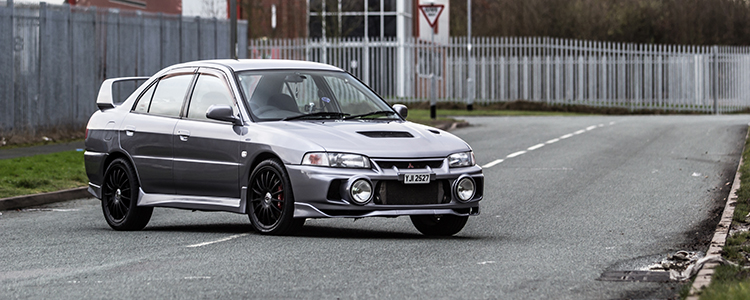
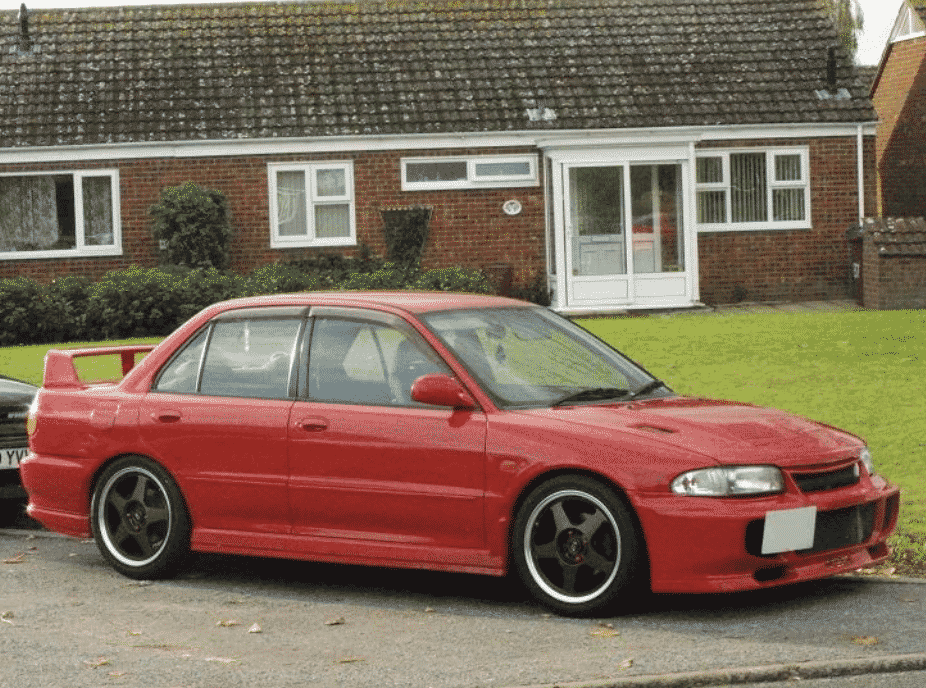
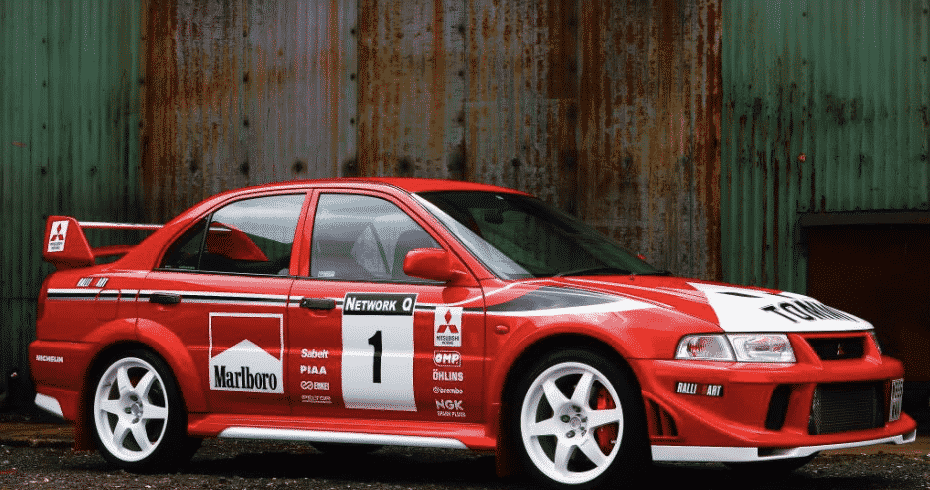
The Buyer's Read
If you're buying an Evo, the right starting point depends on your country and your budget. In the US, the cleanest entry is a documented Evo VIII or IX from 2003 to 2007, because those came factory LHD and you skip the import paperwork. Outside the US, a 1999 to 2001 Evo VI in GSR trim is the sweet spot. You get the titanium-aluminide turbine, the durability upgrades from the Evo V to VI program, and a car that's old enough to have settled in price but young enough to still find clean. Skip anything under $25,000 unless the seller can show you receipts, because a cheap Evo almost always means a blown ringland or a tired AYC pump waiting for you.
If you want the collector car, the Evo VI Tommi Mäkinen Edition is the one. Mitsubishi built it to celebrate Mäkinen's four straight WRC drivers' titles from 1996 to 1999, and clean original-paint TMEs cleared six figures at auction during the 2020 to 2022 peak. The Evo X Final Editions are the modern equivalent. They're numbered, they have BBS wheels and Bilstein dampers, and they're the last factory Evo you can buy. Both are appreciating, and both are easy to overpay for if you don't check the history.
The one Evo to avoid is a heavily tuned CT9A with no shop records. The 4G63T can make over 400 hp without much complaint, but only if every piece of the build was done right. The boost actuator fails early. The AYC hard lines rust through. A 500 hp Evo VIII with no paperwork is a parts hunt, not a car you can drive away. If you find a clean one with the timing belt history, the AYC service records, and the original ECU still on the car, that's a different conversation. But most cheap Evos aren't that car.
Frequently Asked Questions
- Which Evo generations are most collectible?
- Top demand: Evo VI (TME), Evo VIII MR, Evo IX MR/SE, and Evo X MR/Final Edition.
- What matters most for value: mileage, mods, or condition?
- Condition and originality lead. Light, documented mods can be OK; heavy builds usually reduce buyer pool.
- Are imported JDM Evos worth more than USDM cars?
- Often yes for IV–VI due to rarity. For VIII/IX, top USDM MR/SE can match strong JDM pricing.
- What are the biggest mechanical risks to check?
- Look for timing belt history (4G63), boost leaks, compression, and AYC/ACD pump function and codes.
- Is the Evo X SST transmission reliable?
- It can be, but needs strict fluid/service and correct tuning. Neglect leads to clutch pack and mechatronic costs.
- What’s the best Evo for daily driving?
- Evo X GSR/MR is most refined. A clean VIII/IX can daily well if cooling, bushings, and maintenance are current.
- How do Evos compare to WRX STI for ownership?
- Evo feels sharper and rotates better; STI is often cheaper to buy. Both suffer from mod abuse and need records.
- What documentation should I demand before buying?
- Ask for service records, timing belt proof (4G63), diff/AYC/ACD fluid history, and a mod list with tune details.
Sources & References
- Mitsubishi Lancer Evolution — encyclopedic overview — WikipediaVerified
- Mitsubishi Sirius / 4G6 engine family reference — WikipediaVerified
- World Rally Championship — historical record — WikipediaVerified
- Mitsubishi Lancer Evo VI used car buying guide — AutocarVerified
- Mitsubishi Lancer Evo X owner reviews and common problems — CarbuyerVerified
- Lancer Evolution — dream-car ownership perspective — CarThrottleVerified
- Left-hand-drive Evo discussion thread — EvolutionM forumVerified
- Pros and cons of Evo ownership — community thread — EvoX ForumsMoved View archived ↗
- Lancer Evolution common problems reference — BreakeryardAccess blocked
- Evo X reliability discussion — r/mitsubishi subredditAccess blocked
- Mitsubishi Lancer Evolution — Hagerty valuation tool — HagertyAccess blocked
- Mitsubishi Lancer Evolution — auction results archive — Bring a TrailerAccess blocked
- Mitsubishi Lancer Evo — model history and road tests — Evo MagazineAccess blocked
- WRC — championship history and Mitsubishi Ralliart record — FIA World Rally ChampionshipAccess blocked
Sources last verified: