Buying an NA1 today is less about chassis health and more about service history. The C30A is unstressed and routinely runs past 200,000 miles when maintained; the cooling system, pop-up headlamp motors, and original AC components are the wear items. Early 1991-1992 cars had documented AC failures requiring full system replacement — verify whether the work has been done. The 5MT is robust; automatics trade at a clear discount but were never sold in big numbers.
Buyer's guide
Honda Nsx NA1 — Buyer's Guide & Specs
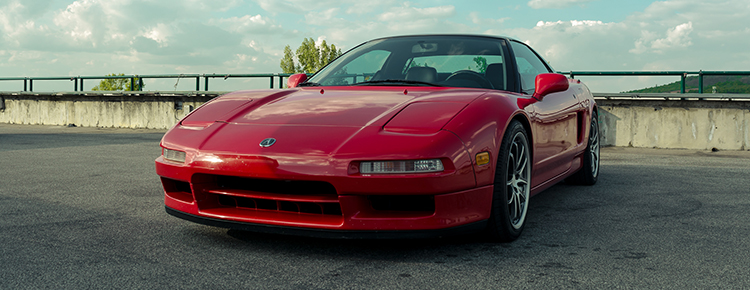
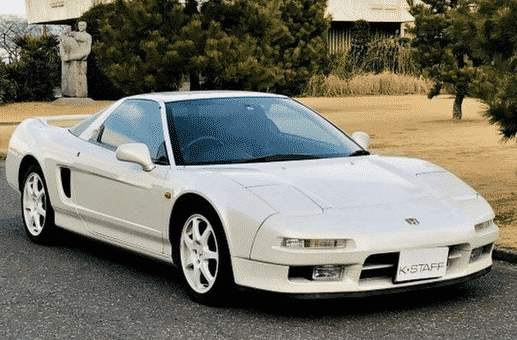
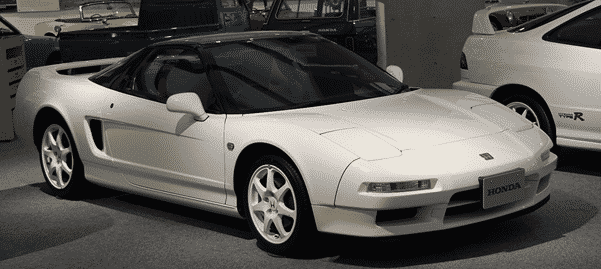
The NA1 (1990-1997) is the original NSX recipe: a 3.0-litre C30A V6 with VTEC, 270-274 hp depending on market, 5-speed manual or 4-speed automatic, all wrapped in the aluminium monocoque that Honda spent six years engineering. Pop-up headlamps, titanium connecting rods (a production-car first), and the Tochigi assembly team of 200 hand-picked builders define the spec. Type R variants ran 1992-1995, Japan only, stripped of audio, A/C, spare wheel, and sound deadening. NA1 examples are now the most analog NSX and the cheapest entry point into the model.
Looking to buy?
Browse Honda Nsx listings →
Key Takeaways
The NSX has two generations and they're really two different cars. The first generation ran from 1990 until 2005 across NA1 and NA2 chassis, all naturally aspirated V6, all rear wheel drive, all built by hand in Tochigi. The second generation NC1 ran from 2016 until 2022, twin turbo V6 with three electric motors and all wheel drive, built in Ohio. If you want the analog supercar, you want a first generation NSX. If you want modern pace with hybrid traction, you want an NC1.
- NA1/NA2 manuals command the strongest premiums
- Type R/Type S are top-tier, low-supply blue chips
- Targa (NSX-T) trades below coupes, all else equal
- NC1 values depend heavily on trim, miles, and warranty
- Timing belt & cooling are key NA ownership costs
- Originality beats mods for top auction results
Technical Specifications
The NA1 uses the C30A 3.0 V6 making around 270 hp with a 5-speed manual or 4-speed automatic. The NA2 swapped in the bigger C32B 3.2 V6 from 1997 with 290 hp and a 6-speed manual. The NC1 is a different animal: 3.5 twin turbo V6 plus three electric motors, 573 hp on the early cars and 600 hp on the 2022 Type S, all running through a 9-speed dual clutch.
Engine Options
| Engine | Displacement | Power | Boost | Notes |
|---|---|---|---|---|
| C30A | 3.0L | 270PS @ 7100rpm (JDM) | N/A | DOHC VTEC, aluminum block |
| C30A | 3.0L | 274hp @ 7100rpm (US/Export, rated) | N/A | SAE-era rating; varies by market |
| C30A | 3.0L | 280PS @ 7300rpm (late JDM, quoted) | N/A | estimated; market/yr dependent |
Transmission Options
| Type | Ratios | Availability | Notes |
|---|---|---|---|
| 5-speed Manual | 3.071/1.727/1.250/0.970/0.771 | NA1 3.0L (most markets) | Helical LSD on many trims/markets |
| 6-speed Manual | 3.071/2.055/1.481/1.161/0.943/0.771 | NA2 3.2L, NA2-R, some late NA1 JDM | Close ratio; paired with C32B |
| 4-speed Automatic | 2.684/1.521/1.023/0.694 | NA1/NA2 (market dependent) | Torque converter; sport logic (varies) |
| 9-speed Dual-Clutch (DCT) | 4.552/2.611/1.925/1.556/1.285/1.000/0.839/0.667/0.537 | NC1 all | Hybrid-integrated; launch control |
Livability
- Headroom
- 37.0"
- Helmet fit tight; tall drivers may brush roof
- Rear Seats
- None
- Strict 2-seater; no occasional rear perch
- Cargo
- 5.0 cu ft
- Small trunk; heat limits soft items; no spare
Variants & Trims
Most of what you'll see is the base coupe or the NSX-T targa. The Type R is the JDM only track car, stripped of air conditioning and sound deadening, and they're the most collectible variants by a wide margin. The Type S and Type S-Zero sit between the base car and the Type R on weight and price, also Japan only. The NC1 Type S from 2022 is a 350 unit run that's already trading above original sticker.
| Generation | Trim | Engine | Key Features |
|---|---|---|---|
| NA1/NA2 (1st gen, 1990-2005) | NSX (Japan, early NA1) | C30A 3.0L NA V6 | Aluminum monocoque, VTEC, pop-up lamps |
| NA1/NA2 (1st gen, 1990-2005) | NSX (Export, early NA1) | C30A 3.0L NA V6 | Aluminum body, VTEC, 5MT/4AT |
| NA1/NA2 (1st gen, 1990-2005) | NSX Type R (NA1, 1992-1995) | C30A 3.0L NA V6 | Weight reduction, Recaro, no A/C, LSD |
| NA1/NA2 (1st gen, 1990-2005) | NSX-R (NA2, 2002-2005) | C32B 3.2L NA V6 | Weight reduction, aero, stiffer chassis, LSD |
| NA1/NA2 (1st gen, 1990-2005) | NSX Type S (Japan, NA1/NA2) | C30A 3.0L / C32B 3.2L | Lighter than base, sport suspension, fewer options |
| NA1/NA2 (1st gen, 1990-2005) | NSX Type S-Zero (Japan, NA2) | C32B 3.2L NA V6 | Track-focused, reduced weight, stiffer suspension |
| NA1/NA2 (1st gen, 1990-2005) | NSX-T (Targa, NA1/NA2) | C30A 3.0L / C32B 3.2L | Removable roof, added bracing, pop-up lamps |
| NA1/NA2 (1st gen, 1990-2005) | NSX Zanardi Edition (US, 1999) | C30A 3.0L NA V6 | Limited run, BBS wheels, lighter, manual only |
| NA1/NA2 (1st gen, 1990-2005) | NSX (2002-2005 facelift, fixed lamps) | C32B 3.2L NA V6 | Fixed headlamps, revised aero, 6MT/4AT |
Should You Buy a Honda Nsx NA1?
The NSX is the supercar you can actually use. Honda built it to start every morning and behave at low speed, and that's still the main reason people buy one today. The trade off is that parts and labor on a 30 year old aluminum exotic aren't cheap, and a few jobs only a handful of shops can do properly.
Why You'll Love It
- Mid-engine balance Neutral handling and confidence at speed; approachable limits vs many exotics.
- Honda-grade usability Ergonomics, visibility, and drivability make it a true daily-capable supercar.
- Manual gearbox appeal NA 5MT/6MT are core to collector demand; strong engagement and resale.
- Strong collector liquidity Global demand, recognizable icon status, and broad buyer pool support values.
- Build quality & longevity Well-engineered drivetrain; many cars age better than period Italian rivals.
- Motorsport & halo pedigree Senna-era development lore and supercar benchmark status boost desirability.
- NC1 performance per dollar Used NC1 can undercut rivals while offering supercar pace and AWD traction.
Why You Might Not
- NA parts pricing/availability Some trim, glass, and body parts are costly or scarce; delays can be real.
- Timing belt service costs C30A/C32B belt/water pump intervals add meaningful ownership expense.
- Cooling system aging Radiators, hoses, and fans age; overheating risk if maintenance is deferred.
- Targa rigidity tradeoff NSX-T is heavier and less rigid; typically softer market vs coupes.
- NC1 complexity Hybrid system and electronics raise long-term repair risk outside warranty.
- Insurance & theft risk Rising values increase premiums; theft/vandalism risk for desirable NA cars.
- Modded cars value penalty Heavy mods can limit buyer pool; originality usually wins at top auctions.
Who Should NOT Buy This
- Anyone without $3k-8k/year maintenance buffer
- Buyers expecting cheap parts or quick dealer support
- People who can't do a thorough PPI on a lift
- Drivers over 6'2" wanting helmet clearance
- Anyone needing rear seats or real cargo capacity
- Owners without secure garage storage
- People who hate low ride height and scraping
- Those who won't keep up with timing belt intervals
- Buyers in salted climates without rust mitigation
- Anyone wanting modern crash safety and airbags
- People expecting quiet cabin and modern NVH
- Those who need flawless AC in extreme heat
- Anyone relying on generic shops for aluminum repairs
- Buyers tempted by cheap heavily-modded examples
- People who can't tolerate expensive trans rebuild risk
- Anyone needing easy emissions compliance everywhere
- Those who won't use correct fluids and bleed methods
- People who park outside in heavy rain (NSX-T leaks)
- Drivers wanting modern infotainment and electronics
- Anyone who can't handle long parts lead times
Common Issues & Solutions
The NSX is a well engineered car, but it's still a 30 year old supercar on most of the cars in the market. Two items decide whether the deal works. The timing belt and water pump service runs every seven years or 105,000 miles and costs $1,800 to $3,500 done right. The cooling system uses original plastic radiator end tanks that crack with age, and a full refresh is another $900 to $2,500. Cars without recent receipts for both of those should be priced as if the work is still owed.
| Issue | Cause | Solution | Est. Cost |
|---|---|---|---|
| Timing belt overdue | Age/miles; owners skip due to cost | Timing belt, water pump, tensioners, seals | $1800-3500 |
| Cooling system overheating | Old radiator, hoses, trapped air, weak fans | Radiator/hoses/thermostat; proper bleed | $900-2500 |
| Radiator end tank cracks | Plastic tanks age-heat cycle and split | Replace radiator and cap; inspect hoses | $600-1400 |
| Heater core leak | Age corrosion; coolant neglected | Replace heater core; flush; new hoses/clamps | $1200-2500 |
| 2nd/3rd gear synchro grind | Wear from hard shifts, wrong fluid, age | Rebuild trans; synchros/hubs; inspect gears | $3500-8000 |
| Clutch slip or chatter | Worn disc/pressure plate; heat spots on flywheel | Clutch kit; resurface/replace flywheel; bleed | $1800-3500 |
| Clutch master/slave failure | Seal wear; fluid contamination; heat | Replace master/slave; flush fluid; adjust pedal | $350-900 |
| Engine mounts collapsed | Age; heat; oil contamination softens rubber | Replace mounts; inspect brackets; align drivetrain | $900-2500 |
| Valve cover oil leaks | Gaskets harden; cam plugs seep | Gaskets, cam plugs, grommets; clean PCV | $250-700 |
| Oil consumption on decel | Valve stem seals aging; high vacuum pulls oil | Valve seals; inspect guides; refresh top end | $1500-4000 |
| Idle hunt/stall | Dirty IACV/FAST, vacuum leaks, old TPS | Clean/replace IACV; smoke test; set base idle | $200-900 |
| VTEC not engaging | Low oil, bad VTEC solenoid, clogged screen | Fix oil level; clean screen; replace solenoid | $150-600 |
| Knock sensor/CEL | Aged sensor or harness; heat cycles | Replace sensor; inspect wiring; clear codes | $250-700 |
| Alternator failure | Heat soak; bearing/diode wear | Replace alternator; check belt and grounds | $600-1400 |
| AC weak or warm at idle | Low charge, tired compressor, condenser airflow | Leak test; recharge; compressor/condenser as needed | $300-2200 |
| AC evaporator leak | Age corrosion; hard to access | Evaporator replacement; new drier; evacuate/recharge | $1800-3500 |
| Power steering rack leak | Seal wear; fluid contamination; age | Rebuild/replace rack; flush system; new lines if needed | $1200-3000 |
| PS pump groan/whine | Air in system, worn pump, old fluid | Flush; replace pump if noisy; inspect suction hose | $250-1200 |
| Suspension bushing wear | Age cracks; track use; oil contamination | Replace bushings/arms; alignment and corner balance | $1200-4500 |
| Ball joint/tie rod play | Wear; torn boots; impacts | Replace joints/rods; alignment | $400-1400 |
| Brake caliper sticking | Old seals; heat; moisture in fluid | Rebuild/replace calipers; flush; new pads/rotors | $600-2200 |
| ABS light / module faults | Wheel speed sensors, aged module, wiring | Scan; replace sensor/repair wiring; module refurb | $300-1800 |
| Pop-up headlight issues | Motor wear, linkage bind, dried grease | Service linkage; replace motor; adjust height | $200-900 |
| Window regulator slow/fails | Worn regulator, dry tracks, weak motor | Regulator/motor; lube tracks; adjust glass | $350-1200 |
| Targa roof leaks (NSX-T) | Aged seals, misadjusted latches, clogged drains | Replace/adjust seals; clear drains; align windows | $300-1800 |
| Trunk water intrusion | Tail light seals, trunk gasket, antenna grommet | Reseal lights/gaskets; dry and treat corrosion | $150-700 |
| Rear subframe rust | Salt exposure; trapped moisture; neglected undercoat | Derust/treat; replace subframe if severe | $800-4000 |
| Aluminum repair complexity | Improper crash repair; wrong welding methods | Specialist inspection; correct repair or walk away | $2000-20000 |
| Aftermarket alarm drain/no-start | Bad installs; parasitic draw; hacked ignition wiring | Remove/rewire properly; parasitic draw test | $200-1500 |
| Fuel injector aging/misfire | Old injectors, varnish, ethanol storage issues | Clean/flow test or replace injectors; new filters | $300-1600 |
| Fuel tank varnish/rust | Long storage; stale fuel; moisture | Tank clean/replace; pump/filter; flush lines | $800-3000 |
| Exhaust manifold cracks | Heat cycling; aftermarket thin-wall headers | Replace manifold/headers; check mounts and heat shields | $600-2500 |
Differences between JDM & USDM
In Japan, the car is a Honda NSX sold through Honda Verno dealers. In North America, every first-generation car wore Acura badges and was sold through Acura — the Acura brand had launched in 1986 as Honda's premium channel, and the NSX was its halo. Mechanically, JDM and USDM NA1/NA2 cars are nearly identical, but the JDM advantage is variant access: the Type R (1992-1995 and 2002-2005), the Type S, the Type S-Zero, and the homologation NSX-R GT were all Japan-only. None of these were ever federalized for the United States. JDM NA1 cars also retain the period-correct 280 PS rating tied to the Japanese manufacturers' Gentlemen's Agreement of 1988, whereas US-market cars used SAE ratings (270 hp early, 290 hp on NA2). For US importers, the 25-year rule (NHTSA Show or Display is an alternate path) makes 1990-1999 JDM examples currently importable, with later Type R and Type S cars rolling into eligibility year by year. The second-generation NC1 (2016-2022) was sold globally as the Acura NSX with no JDM Honda-badged variant — a reversal of the first-generation arrangement.
5ENNA; Honda NSX | 4K
Pre-Purchase Inspection Checklist
Walk this list before you put down a deposit, and pay for a PPI on a lift before you wire money. The Critical items are deal breakers without paperwork. Compression and leakdown matter on any NSX over 20 years old, and so does an honest paint meter pass. Ten minutes won't tell you what an hour on the lift will.
Critical Priority
- VIN/Title Verify VIN tags match; check salvage/odometer
- Service Records Confirm timing belt/water pump date & mileage
- Cooling System Check for overheating, fans cycle, no coolant smell
- Compression Test Compression/leakdown; watch for uneven cylinders
- Manual Trans 2nd/3rd grind cold/hot; synchros are expensive
- Aluminum Chassis Look for bent pickup points; repairs are tricky
- Accident Evidence Check panel gaps, overspray, headlight brackets
- Test Drive Full temp drive; monitor temps, shifting, braking
- PPI on Lift Get lift inspection; check leaks, bushings, damage
High Priority
- Cold Start Listen for top-end tick, belt squeal, idle hunt
- Oil Pressure Confirm hot idle oil pressure; no warning flicker
- Radiator/Cap Inspect radiator end tanks, cap seal, crusty leaks
- Coolant Hoses Check all hoses for swelling; rear hoses often old
- VTEC Engagement Verify VTEC hits cleanly; no CEL under load
- Exhaust Smoke Check for blue smoke on decel; valve seals/rings
- Fuel Smell Sniff for fuel odor; inspect lines/rail seepage
- Clutch Check engagement height, slip in 4th at low rpm
- Clutch Hydraulics Inspect master/slave leaks; pedal feel consistent
- Steering Rack Check for leaks at rack boots; play on-center
- Suspension Bushings Check compliance bushings, ball joints, tie rods
- Brakes Check rotor lip, pad taper, caliper sticking
- ABS System ABS light self-test; scan for stored codes
- Tires Verify correct stagger; check date codes & cracking
- Front Crash Beam Inspect for deformation; common after curb hits
- Rear Subframe Check for rust, cracks, impact marks, bent arms
- Rust Hotspots Check rear quarters, trunk seams, subframe mounts
- AC Performance AC cold at idle; check compressor noise & cycling
- Charging System Check voltage 13.8-14.5V; alternator load test
- ECU/OBD Pull codes; check for piggybacks/hacked wiring
- Wiring Harness Inspect for alarm/immobilizer splices & corrosion
- SRS/Airbag SRS light off after start; inspect clock spring
- Interior Water Lift mats; check for dampness, mold, corrosion
Medium Priority
- Heater Core Check for sweet smell, fogging, damp carpet
- Oil Leaks Inspect valve covers, cam plugs, oil pan seepage
- Fuel Pump Listen for loud pump; check for lean surge at WOT
- Intake/Filter Check for hacked intake, missing ducting, dirt
- Engine Mounts Check for clunk on throttle tip-in; mounts collapse
- Axles/CV Boots Check inner boots for grease sling; click on turns
- Differential Listen for whine; check for LSD chatter on tight turns
- Power Steering Inspect pump/lines; no groan at full lock
- Shocks/Struts Look for leaks; bounce test; uneven tire wear
- Wheel Bearings Listen for hum; check play at 12/6 o'clock
- Alignment Road test for tramlining; check uneven inner wear
- Front Undertray Inspect for missing panels; impacts hide damage
- Windshield Cowl Check for water leaks; clogged drains cause issues
- Targa Seals (if) Inspect roof seals; water leaks & wind noise
- Door Seals Check for torn seals; water in sills/footwells
- Window Regulators Slow/tilting glass; check drop function on open
- Headlights Pop-up motors smooth; no binding or uneven height
- AC Refrigerant Confirm R134a conversion quality; no stop-leak
- Climate Controls Test all modes; blend door operation; fan speeds
- Battery/Trunk Check battery tie-down; trunk water intrusion
- Instrument Cluster Check for dead pixels, dim backlight, gauge sweep
Low Priority
- Tail Lights Check for moisture; lens cracks; harness hacks
- Seats/Tracks Check seat bolster wear; track binding; recline
Generation History
NA1 (3.0) (1990-1996)
- C30A 3.0 V6 VTEC; 5MT/4AT
- All-aluminum body; mid-engine RWD
- Light, communicative chassis; analog feel
- Early pop-up lights; iconic styling
- Acura NSX branding in North America
NA1 NSX-T (1995-2001)
- Targa roof adds weight; more touring bias
- Often higher production than coupes
- Great usability; slightly less rigid feel
- Values typically below comparable coupes
NA2 (3.2) (1997-2005)
- C32B 3.2 V6; 6MT; more torque
- Bigger brakes; chassis refinements
- Preferred by many drivers vs NA1
- Higher market floor than most NA1s
NA2 Facelift (2002-2005)
- Fixed headlights replace pop-ups
- Sharper aero; modernized front end
- Often top of standard NA market
- Low-mile examples bring strong premiums
NSX Type R (NA1/NA2) (1992-2005)
- Japan-only; major weight reduction
- Track-focused suspension & gearing
- Extremely low supply; collector pinnacle
- Condition/originality drives huge spreads
NSX-R GT (NA2) (2005)
- Ultra-rare homologation-style variant
- Aero package; peak NA collectability
- Trades as a trophy asset when available
NC1 (2nd gen) (2016-2022)
- Hybrid AWD: twin-motor front + V6 rear
- 9DCT; high tech; daily supercar
- Strong performance; heavier, less analog
- Trim-sensitive market: Base/SH-AWD/Type S
NC1 Type S (2022)
- Final-year, limited run; most desirable NC1
- More power, sharper tuning, lighter parts
- Best long-term NC1 collectability outlook
Market Data
Production Numbers & Rarity
| Generation | Years | Total Built | Notes |
|---|---|---|---|
| NA1/NA2 (1st gen) | 1990-2005 | ~18,000 (estimated) | Global total commonly cited; verify by market |
| NC1 (2nd gen) | 2016-2022 | ~2,900 (estimated) | Global total estimated; Type S subset limited |
Rarest variant: NSX-R (NA2, 2002-05)
Original MSRP & Pricing
Original MSRP: $60,000 at launch in 1991. Approximate US launch MSRP for the 1991 Acura NSX (USDM). The 1997 NSX-S (JDM Type S) WP source lists MSRP at roughly $85,000. Japanese launch yen pricing varied by trim and is not cited verbatim in the WP body.
How It Compares
Among 1990s supercars the NSX is the only one engineered to be daily driven. The 348 leaked and needed a clutch at 30,000 miles. The Diablo needed a specialist within 50 miles. The NSX started every morning and ran the same maintenance schedule as a Civic Type R. That's why the comparison table below leans on usability and reliability, not just horsepower.
| Feature | NA1 | Toyota Supra JZA80 | Mazda RX-7 FD3S |
|---|---|---|---|
| Layout/Drivetrain | Mid-engine RWD (NA) | Front-engine RWD | Front-engine RWD |
| Power (stock) | 270-290 hp (NA) | 276 hp (JDM claim) | 276 hp (JDM claim) |
| Weight/feel | Light, analog steering | Heavier, GT feel | Light, edgy turbo |
| Reliability | High for an exotic | Strong but aging electronics | Rotary upkeep sensitive |
| Service complexity | Moderate (NA) | High (twin-turbo packaging) | High (rotary + turbos) |
| Tuning headroom | Moderate NA; costly big gains | Very high (2JZ) | Very high (RB26) |
| Steering/feedback | Benchmark feel (NA) | Good, more GT | Sharp, lighter nose feel |
| Track capability | Balanced, consistent | Fast, AWD grip | Fast, boost-dependent |
| Cabin ergonomics | Excellent visibility | More cramped, sporty | More compromised |
| Collector premium | High; icon status | High; 2JZ halo | High; GT-R halo |
| NC1 powertrain | Hybrid AWD, 9DCT | Twin-turbo V8 RWD, DCT | NA V8 RWD, DCT |
| NC1 performance | Supercar-quick launches | Lighter, sharper | High-rev drama |
| NC1 daily usability | Very high | Good, but lower ground clearance | Very high |
Comparable Alternatives
If the NSX doesn't work out, the closest car is probably a Toyota Supra JZA80 if you want the same era halo with more tuning headroom. A Porsche 996 Turbo gets you supercar pace with a bigger parts network. An R35 GT-R undercuts a clean NA2 on price and beats it on pace, just not on feel.
Toyota Supra JZA80
Iconic 90s halo; huge tuning; strong liquidity
Mazda RX-7 FD3S
Light, raw driver’s car; turbo thrills; rising values
Nissan GT-R R35
Modern performance bargain; AWD pace; broad support
Porsche 911 (996 Turbo)
Supercar speed with usability; strong parts network
Lotus Evora
Mid-engine feel and steering; simpler than hybrids
In Pictures
The Buyer's Read
If you're buying an NSX, the safest pick is a documented 1997 to 2001 NA2 with the 3.2 V6 and the 6-speed manual. That gives you the most refined version of the first generation: more torque than the NA1, a better gearbox, and electronics that are modern enough to still work. Skip anything under $60,000. A cheap NSX almost always means deferred timing belt service, a cooling system on borrowed time, or accident history nobody wants to talk about. Plan on $3,000 to $8,000 a year in maintenance even on a clean car, and that's before anything actually breaks.
If you want the analog feel and you don't mind older electronics, look at a documented NA1 from 1995 to 1996. The C30A is one of the most over engineered V6 engines ever sold, and it runs past 200,000 miles when serviced. The 5-speed is robust. The 4-speed automatic is the variant to avoid unless you find a low mile car at a real discount, because the manual carries the premium on resale. Type R cars from 1992 to 1995 are blue chip and trade in the $300,000 to $600,000 range. Those are different conversations and you'll know if you're in that market.
The one NSX to avoid is a 1991 or 1992 car without service records and a paint meter pass. Those early NA1 cars had documented air conditioning failures requiring full system replacement, the original radiators are well past their service life, and aluminum monocoque accident repair is the single largest hidden cost on these cars. If the work hasn't been done, you're not buying an NSX, you're buying a project. The NC1 is a different question entirely. Trim matters more than mileage. Base cars are softest in the market, Carbon Ceramic Brake cars hold value better, and the 2022 Type S is the only NC1 trading above original sticker.
Frequently Asked Questions
- What NSX years are most collectible?
- NA2 1997-2005 (3.2/6MT) and 2002-2005 fixed-light cars lead; Type R/S top.
- Manual or automatic: which holds value better?
- Manual NA cars carry the strongest premium. Automatics can be great drivers but trade at a discount.
- What are the biggest NA NSX maintenance items?
- Timing belt/water pump, cooling refresh, suspension bushings, and clutch wear. Deferred cooling work is risky.
- Are NSX-T targas less desirable than coupes?
- Usually yes: coupe is lighter and stiffer. NSX-T can be better value if condition is excellent.
- How do Type R and Type S differ from standard cars?
- Type R focuses on weight loss and track tuning; Type S/Type S-Zero are sharper, rarer variants with premiums.
- Is the NC1 NSX a good buy used?
- Often yes: depreciation can help. Prioritize warranty history, hybrid system health, and clean accident records.
- What hurts NSX value the most at resale?
- Accidents, heavy mods, poor documentation, corrosion, and non-original paint/parts. Provenance and records matter.
- What should I check on a pre-purchase inspection?
- Verify compression/leakdown, cooling, clutch, suspension play, VIN tags, paint meter, and complete service records.
Sources & References
- Honda NSX - encyclopedic overview — WikipediaVerified
- The 1991 Acura NSX revolutionized the supercar segment — HagertyLink dead
- Acura NSX maintenance - the long-term ownership view — Road & TrackVerified
- When Senna drove the NSX street car — SpeedhuntersAccess blocked
- Honda HP-X 1984 - the NSX concept origin — Old Concept CarsVerified
- Honda NSX - how the Japanese made a competitor for Ferrari — DylerVerified
- NSX Type S model information — NSX PrimeLink dead View archived ↗
- 10 mechanical issues you may have with the used Acura NSX — NSX Prime forumVerified
- Honda heritage timeline - automobile history — Honda Motor CorporationLink dead
- Honda NSX used review - 1990-2005 — What Car?Verified
Sources last verified: