Today the EK9 is the focal Civic for collectors. Clean, unmodified examples with the original B16B, untouched chassis seam welds, and verified mileage now trade at the top of the Civic market. The honest buys are documented one-owner cars with the timing belt history sorted, the original Recaro seats intact, and no evidence of motorsport use (cage tabs, harness mounts, oil temperature gauge holes in the dash). The 1998 Type Rx sub-variant — air conditioning and audio added — softens the daily-use friction without diluting the chassis brief. EK9 supply outside Japan is gated by the 25-year rule, which made the EK9 U.S.-legal from 2022 onward.
Buyer's guide
Honda Civic EK9 — Buyer's Guide & Specs
The 1997 EK9 Civic Type R is the first Civic ever sold with a Type R badge and the car that defined the formula every later Type R has worked from. Production ran from August 1997 to August 2000, JDM-only, built on the sixth-generation EK4 SiR three-door hatch. The B16B engine — a 1.6-litre DOHC VTEC unit hand-ported at Honda's Suzuka plant — made 185 PS at 8,200 rpm, then a class-leading 115.6 PS per litre for naturally-aspirated 1.6 production engines. Chassis changes included seam welds at key load paths, a close-ratio 5-speed gearbox, a helical LSD, Recaro front seats, a Momo steering wheel, and a curb weight of around 1,040 kg.
Looking to buy?
Browse Honda Civic listings →
Key Takeaways
The Civic has been in continuous production since 1972, so the generation you pick matters more than almost anything else. The SB1 first-gen ran a 1.2 litre making around 50 hp and arrived right as the 1973 oil crisis hit. The fourth-gen EF brought the first VTEC Civic in 1989. The fifth-gen EG6 and sixth-gen EK4 are the SiR cars most tuners grew up around. The EK9 of 1997 is where the Civic became a Type R for the first time. After that the EP3, FD2 and FN2 split the Type R brief three different ways depending on where you live.
- Trim drives value: Si/Type R far above base LX/EX
- Best buys: clean, stock cars with records and no rust
- Hot segments: EG/EK, EM1 Si, FD2/FL5 Type R
- Watch-outs: rust, mods, title issues, CVT neglect
- Market: softening on average cars; top trims still firm
- Running costs: low; parts and knowledge are abundant
Technical Specifications
The Civic has run almost every layout Honda ever shipped in a compact car. The early cars used the EB and ED 1.2 and 1.3 litre engines. The fourth and fifth gens introduced the B-series VTEC. The seventh and eighth gens moved to the K-series. The gearbox went from a 2-speed automatic in 1972 to a 6-speed manual by the EP3. For most enthusiast Civics what you actually care about is the engine code and whether it's the JDM tune.
Engine Options
| Engine | Displacement | Power | Boost | Notes |
|---|---|---|---|---|
| B16B | 1.6L | 182hp @ 8200rpm | N/A | DOHC VTEC; hand-assembled; 8400rpm redline |
Transmission Options
| Type | Ratios | Availability | Notes |
|---|---|---|---|
| 4-speed Manual | varies | 1970s-1980s base models | Early Civics; market-dependent |
| 5-speed Manual | varies | Most generations/trims | Wide/close ratios vary by engine/market |
| 6-speed Manual | varies | Si, Type R (varies by gen) | Often includes helical LSD on Si/Type R |
| 3-speed Automatic | varies | 1980s models (some) | Early torque-converter automatic |
| 4-speed Automatic | varies | 1990s-early 2000s (many trims) | Hydraulic/electronic; market-dependent |
| 5-speed Automatic | varies | 2006-2015 non-Si (many) | R18/R18Z applications |
| CVT | varies | HX (some), 10th/11th gen non-Si | Steel belt; paddle sim ratios on some |
| e-CVT (i-MMD) | N/A | Hybrid variants | 2-motor hybrid; fixed gearset coupling |
Livability
- Headroom
- 38.0"
- Good front space; sunroof trims ~1"
- Rear Seats
- Usable for adults
- Legroom good; center seat tight; low cushion
- Cargo
- 12-15 cu ft
- Sedan trunk good; hatch best; opening varies
Should You Buy a Honda Civic EK9?
The Civic is one of those cars where the strong points and the weak points haven't really changed in 50 years. Honda built it to be cheap, reliable and easy to fix, and the trade-offs are the same now as they were in 1972. The good bits are the engines, the parts supply and the running costs. The rough bits are the interiors and the brakes.
Why You'll Love It
- Strong reliability record Many Civics exceed 200k miles with routine maintenance; broad shop familiarity reduces risk.
- Low running costs Excellent fuel economy, affordable consumables, and plentiful used/new parts keep ownership cheap.
- Huge parts & knowledge base Aftermarket and OEM support is massive; easy sourcing for repairs, upgrades, and restoration.
- Resale value stability Civics depreciate slower than many compacts; Si/Type R trims often outperform the segment.
- Broad trim/mission coverage From base commuter to Si/Type R track tool, there’s a Civic for nearly every buyer profile.
- Efficient packaging Strong cabin and cargo utility for size, especially hatchbacks; practical daily-driver footprint.
- Enthusiast-friendly platforms EG/EK/EP3/Si/Type R have deep tuning ecosystems; track support is extensive.
- Safety and tech progression Later gens offer modern crash performance and driver aids; good value as a used family car.
Why You Might Not
- Modded examples are risky Swaps, boost kits, and cut wiring can hide poor work; stock, documented cars are safer buys.
- Rust on older generations EG/EK/EF and earlier can rust at quarters, floors, and subframes; repairs quickly exceed value.
- Theft and fraud exposure Older hatches/coupes are theft targets; VIN swaps and salvage rebuilds require extra diligence.
- CVT maintenance sensitivity Neglected CVT fluid changes can lead to shudder and failure; service history matters greatly.
- 1.5T oil dilution concerns Some 10th-gen 1.5T cars in cold/short-trip use show fuel dilution; verify updates and habits.
- Type R pricing volatility FK8/FL5 premiums can swing with supply and hype; overpay risk is real without comps.
- Road noise in some trims Economy-focused trims can have higher NVH and thinner tires; touring trims improve this.
- Insurance can be higher Si/Type R and older theft-prone gens can carry higher premiums than rivals.
Who Should NOT Buy This
- Anyone who won't service CVT fluid every 25-30k
- Short-trip drivers in cold climates (1.5T dilution)
- Buyers expecting luxury-level cabin quiet
- People who ignore rustproofing in salt states
- Those needing AWD for snow or steep driveways
- Drivers wanting strong towing capability
- Owners who won't run premium parts/fluids
- Anyone buying a heavily modded/tuned example
- People who can't budget for AC system repairs
- Drivers who hate infotainment glitches/updates
- Those needing 3 adults in back regularly
- Buyers who can't do frequent oil checks
- Anyone needing high ground clearance
- People who want a 'set and forget' turbo (1.5T)
- Emissions-strict areas if car has any exhaust mods
Common Issues & Solutions
The Civic is mechanically tough. Most of the trouble comes from age, not the engineering. The rear axle rusts. The interior trim falls off. The electrical components fail one at a time as the car gets older. The 2002 to 2007 cars eat engine mounts. None of these are deal breakers if the seller has paperwork showing the work was done.
| Issue | Cause | Solution | Est. Cost |
|---|---|---|---|
| CVT judder/early failure | Neglected HCF-2 fluid; belt/pulley wear | Drain/fill x3; if persists, rebuild/replace CVT | $300-4500 |
| Manual 2nd/3rd synchro grind | Worn synchros; aggressive shifting/low fluid | Fluid change; if grinding persists, trans rebuild | $120-2500 |
| Clutch slip or chatter | Worn disc/pressure plate; oil contamination | Replace clutch kit; inspect rear main seal | $900-2000 |
| 1.5T fuel dilution in oil | Short trips/cold climate; DI enrichment strategy | 5k oil changes; longer drives; update ECU if avail | $80-250 |
| 1.5T head gasket failure | Thermal stress/boost; detonation; cooling issues | Replace head gasket; machine head; update cooling | $2200-4500 |
| AC condenser leak | Thin condenser; stone damage; known weak design | Replace condenser; evac/recharge; add screen | $600-1200 |
| AC compressor shaft seal leak | Seal wear; contamination; low oil/refrigerant | Replace compressor; flush; new drier; recharge | $1200-2200 |
| Intercooler icing/stumble (1.5T) | Condensation in intercooler in cold humid temps | Updated parts/TSB; drain; change driving pattern | $0-800 |
| DI intake valve carbon buildup | Direct injection; short trips; low-quality fuel | Walnut blast intake valves; add catch can optional | $400-900 |
| Timing chain stretch/rattle | Poor oil maintenance; low oil; high mileage | Replace chain/tensioner/guides; verify oiling | $900-1800 |
| Engine mount collapse | Rubber hydraulic mount wear; torque loads | Replace mounts; avoid cheap aftermarket mounts | $250-900 |
| EPS rack/column clunk | Internal lash; bushing wear; torque sensor issues | Replace rack or column; align; update software | $900-2200 |
| Wheel bearing humming | Bearing wear; impact damage; water intrusion | Replace hub/bearing assembly; torque to spec | $250-650 |
| Brake caliper slide seizure | Dry slide pins; torn boots; road salt | Service slides; replace caliper if seized | $150-600 |
| Warped rotors/pulsation | Pad deposits from overheating; cheap rotors | Quality rotors/pads; proper bed-in procedure | $250-700 |
| VSA/ABS light (wheel sensor) | Wheel speed sensor failure; tone ring corrosion | Replace sensor; clean/replace tone ring if needed | $200-700 |
| Sunroof drain leaks | Clogged drains; disconnected drain tubes | Clear drains; reseat tubes; dry interior thoroughly | $100-500 |
| Infotainment freezing/reboots | Software bugs; failing head unit; weak battery | Update firmware; load test battery; replace unit | $0-1200 |
| Door lock actuator failure | Motor wear; moisture intrusion | Replace actuator; verify latch alignment | $200-500 |
| Window regulator slow/fails | Cable wear; dry channels; motor wear | Replace regulator/motor; lube window channels | $250-600 |
| Rust at rockers/jack points | Road salt; clogged drains; poor prior repairs | Cut/weld metal; undercoat; avoid filler-only fixes | $800-4000 |
| Rear subframe corrosion | Salt exposure; neglected underbody washing | Replace subframe/arms; align; rustproof annually | $1200-3500 |
| Brake line corrosion leaks | Salt; aged coating; trapped moisture | Replace hard lines; bleed system; inspect all lines | $600-2000 |
| Misfire under load | Worn plugs/coils; injector issues; carbon buildup | Plugs/coils; injector clean; walnut blast if DI | $150-1200 |
| Catalyst efficiency codes | Aging cat; oil burning; exhaust leaks upstream | Fix oil use/leaks; replace cat with OEM-quality | $400-2200 |
| Oil consumption (some engines) | Ring wear; PCV issues; extended oil intervals | PCV service; compression test; rebuild if severe | $50-3500 |
| Cooling fan failure | Fan motor wear; relay failure; connector heat | Replace fan assembly/relay; verify temp switch logic | $250-700 |
Differences between JDM & USDM
Across every Civic generation, the JDM and USDM cars share a body but split on drivetrain and trim. The USDM Civic Si historically ran SOHC D-series engines (D16A6, D16Z6, D16Y8) while the JDM Civic SiR received DOHC VTEC B-series engines (B16A, B16A2, B16B). The Civic Type R was JDM-only for the EK9 (1997–2000) and FD2 (2007–2010); the EP3 Type R (2001–2005) shipped globally including a JDM variant; the FN2 Type R (2007–2011) was Europe-only. The USDM never received an EK9, FD2, or FN2 Type R from the factory — every Type R in the U.S. before the FK8 (2017–2021) is a private import under the 25-year rule. JDM Civics also got body styles the U.S. market skipped: the Civic Ferio sedan, the five-door wagon Shuttle (1.5–1.6L 4WD variants), and the three-door EG6/EK4 SiR hatch in trim levels with closer-ratio gearing and helical LSDs as standard.
Why You Should NOT Buy a 90's Honda Civic — EK Hatch Breakdown
Pre-Purchase Inspection Checklist
Walk this checklist with the seller, not in front of them. The Critical items mean walking away if there's no paperwork backing them up. Rear axle rust is the one Civic-specific check that catches people out. Ten minutes at idle and a 30 minute drive will tell you most of what you need to know about the rest.
Critical Priority
- VIN/Title Run VIN for salvage, flood, odometer flags
- Oil Level/Color Check for fuel smell, low level, heavy sludge
- Overheat Signs Check for warped plastic, coolant stains, smell
- Head Gasket Look for bubbles in coolant, white smoke, loss
- Compression Test Low/uneven compression suggests rings/head issues
- CVT Behavior Check judder, flare, shudder on light accel
- CVT Fluid Confirm HCF-2 changes; no burnt smell
- OBD Scan Scan pending codes; check readiness monitors
- Emissions Mods Look for missing cats, O2 spacers, tune signs
- Rust: Rockers Check pinch welds, jack points, rocker seams
- Rust: Subframes Probe rear subframe/control arms for scaling
- Rust: Brake Lines Inspect hard lines under car for heavy corrosion
- Frame/Unibody Look for wrinkled rails, pulled seams, welds
- Airbags/SRS Confirm SRS light off; scan for stored codes
- Road Test Full warm drive; verify no overheating or limp
High Priority
- Service Records Verify oil, coolant, brake, trans fluid history
- Recalls/TSBs Check open recalls; confirm dealer completion
- Cold Start Listen for timing chain rattle or loud valvetrain
- Idle Quality Watch for hunting idle, misfire, or stalling
- Coolant Condition Check reservoir for oil sheen or low level
- Turbo (1.5T) Check shaft play, oil seep, boost surging
- Fuel System Smell for raw fuel; check injectors for ticking
- HPFP (DI) Listen for loud pump; check for fuel leaks
- Manual Clutch Test slip in 4th/5th; check high bite point
- Manual Synchros Fast 2-3 shift; feel grind or notchiness
- AT Shift Quality Older AT: check flare, harsh 2-3, delayed engage
- Axles/CV Boots Inspect boots for grease sling; click on turns
- Steering Rack Check EPS for dead spot, clunk, pull
- Front Suspension Check ball joints, tie rods, strut leaks
- Brakes Check pulsation, caliper slide seizure, pad taper
- ABS/VSA Lights Scan codes; wheel speed sensor faults common
- Rust: Rear Quarters Inspect lip/inner arch; bubbling under paint
- Accident Repair Check overspray, panel gaps, radiator support
- AC Compressor Listen for growl; check vent temp, cycling
- AC Condenser Inspect for oily residue, stone damage, leaks
- Heater Core Check sweet smell, fogging windows, low coolant
- Cooling Fans Verify both fans run with AC on and at temp
- Interior Water Check under mats for damp, mold smell
- Braking Test Hard stop; check pull, ABS activation, noise
- WOT Pull Check boost cut, misfire, detonation under load
Medium Priority
- Oil Leaks Inspect valve cover, timing cover, oil pan seep
- Radiator/Cap Look for crusting, cracks, swollen upper hose
- Spark Plugs Pull one plug; check oil fouling or lean white
- PCV System Check PCV function; excess crankcase pressure
- Air Intake Check for hacked intake, loose clamps, dirt past
- Intercooler Inspect for oil pooling, cracked end tanks
- Carbon Buildup DI engines: check for rough idle, cold stumble
- Engine Mounts Shift D/R; watch for clunk, excessive rock
- Shifter Feel Check for sloppy bushings, pop-out on decel
- Wheel Bearings Road test for hum that changes with steering
- Alignment Wear Inspect inner tire wear; indicates toe/camber
- Rear Suspension Check trailing arm bushings, shocks, links
- Battery/Charging Test alternator output; check weak battery
- Exhaust Check flex pipe leaks, rattles, broken hangers
- Sunroof Drains Pour water; check for wet headliner/floor
- HVAC Operation Test heat/AC; check blend door noises
- Seat Rails Check wobble, broken recline, airbag connectors
- Infotainment Test BT/CarPlay, screen delam, random reboots
- Key/Immobilizer Test both keys; check for security light issues
- Highway Vibes Check steering shake 60-75mph; wheel balance
Low Priority
- Glass/Seals Check windshield chips; door seals for leaks
- TPMS Check TPMS light; sensor batteries fail with age
Generation History
1st Gen (SB1/SB2) (1972-1979)
- Lightweight economy icon; simple carb engines
- Early CVCC tech improved emissions and MPG
- Collector niche; rust is the main killer
2nd Gen (SL/SS/SR) (1980-1983)
- More space and refinement; still very light
- CVCC continued; strong economy reputation
- Survivors rare; originality drives value
3rd Gen (EF) (1984-1987)
- Crisp hatch styling; huge tuner following
- Si trims appear; early EFI becomes common
- Rust and wiring age are common issues
4th Gen (ED/EE/EF) (1988-1991)
- Double-wishbone front; sharp handling baseline
- Si/CRX era overlap; strong aftermarket support
- Clean, unmodified cars now premium
5th Gen (EG) (1992-1995)
- Golden-era chassis; double-wishbone all around
- VTEC performance trims; iconic hatch/coupe
- Rust and theft risk; mods affect value heavily
6th Gen (EK/EM1) (1996-2000)
- Refined EG formula; strong daily+track balance
- US Si (EM1) becomes a blue-chip modern classic
- B-series swaps common; stock examples premium
7th Gen (ES/EP) (2001-2005)
- More comfort; some models lose double-wishbone
- EP3 Si hatch (K20) becomes enthusiast pick
- Auto trans and interior wear are common
8th Gen (FA/FG/FD) (2006-2011)
- Modern design; strong economy and reliability
- Si gets K20Z3; high-rev character
- Clearcoat and cracked dashboards seen
9th Gen (FB/FG) (2012-2015)
- More mature; improved NVH and comfort
- Si uses K24; torque up, revs down
- Early model criticism; later refresh improved
10th Gen (FC/FK) (2016-2021)
- Turbo era: 1.5T/2.0 NA; big efficiency gains
- Type R FK8 becomes global benchmark
- 1.5T oil dilution concerns in cold climates
11th Gen (FE/FL) (2022-Present)
- Cleaner design; improved chassis and interior
- Type R FL5: limited supply, strong premiums
- Hybrid (non-US early) boosts efficiency abroad
Market Data
Production Numbers & Rarity
| Generation | Years | Total Built | Notes |
|---|---|---|---|
| 1st (1972-1979) | 1972-1979 | estimated | Global production not consolidated in one figure |
| 2nd (1979-1983) | 1979-1983 | estimated | Global production varies by region/codes |
| 3rd (1983-1987) | 1983-1987 | estimated | Includes wagon/Si variants; global totals vary |
| 4th (1987-1991) | 1987-1991 | estimated | Includes EF/ED/EE/EC global variants |
| 5th (1991-1995) | 1991-1995 | estimated | High global volume; exact consolidated total varies |
| 6th (1995-2000) | 1995-2000 | estimated | Includes EK9 Type R low volume within gen |
| 7th (2000-2005) | 2000-2005 | estimated | Includes EP3 hatch; totals vary by market |
| 8th (2005-2011) | 2005-2011 | estimated | Includes global sedan/coupe/hatch/Type R variants |
| 9th (2011-2015) | 2011-2015 | estimated | Includes FK2 Type R (2015 EU) limited vs base |
| 10th (2015-2021) | 2015-2021 | estimated | Includes FK8 Type R; global totals not unified here |
| 11th (2021-present) | 2021-present | estimated | Ongoing production; totals not final |
Rarest variant: Civic Type R Mugen
Original MSRP & Pricing
Original MSRP: ¥1,995,000 at launch in 1997. JDM launch MSRP of the 1997 Honda Civic Type R (EK9) was ¥1,995,000. The EP3 Type R launched at approximately ¥2,200,000 in 2001; the 2007 FD2 Type R sedan launched at ¥2,835,000.
How It Compares
Among the JDM hot hatches the Civic is the cheapest to own, the easiest to fix and the one with the biggest aftermarket. The Integra is closer to a track car, the Pulsar GTI-R is faster in a straight line, and the AE86 is the only one of them that's rear-wheel drive. The Civic wins on parts and running costs. The others win on novelty.
| Feature | EK9 | Toyota Corolla E210 | Mazda3 BP |
|---|---|---|---|
| Base power | Civic 2.0 NA: 158 hp | Corolla 2.0: 169 hp | Mazda3 2.5: 191 hp |
| Turbo power | Civic 1.5T: 174-180 hp | Elantra 1.6T: 201 hp | Jetta 1.5T: 158 hp |
| Performance trim | Civic Si: ~200 hp | Elantra N: 276 hp | GTI: 241 hp |
| Halo model power | Type R: 306-315 hp | GR Corolla: 300 hp AWD | WRX: 271 hp AWD |
| Drivetrain layout | FWD (most); Type R FWD | AWD (GR Corolla) | AWD (WRX) |
| Transmission | 6MT (Si/Type R); CVT/auto | 6MT/8DCT (Elantra N) | 6MT/DSG (GTI) |
| Fuel economy focus | Strong MPG; light footprint | Hybrid leader option | Efficient but pricier |
| Reliability perception | High; broad parts support | High; hybrid proven | Good; more complex turbo/DCT |
| Used value retention | Above average; Si/Type R strong | Strong; less enthusiast premium | GTI varies by maintenance |
| Tuner ecosystem | Massive (EG/EK/K-series/Type R) | Strong but smaller | Growing; warranty-sensitive |
| Track durability | Type R excellent; Si good | Very strong; cooling robust | Strong; AWD heat management |
| Cabin space | Class-leading rear legroom (many gens) | Good; more conservative | Tighter rear; upscale feel |
| Ride/handling balance | Best-in-class steering feel (often) | Comfort-first tuning | Sporty chassis benchmark |
Comparable Alternatives
If the Civic isn't the right car, the natural alternatives depend on what you actually want. The Integra Type R is the closer-to-track sibling with the B18C. The Toyota AE86 gives you rear-wheel drive at a similar price. The Nissan Pulsar GTI-R gives you AWD and a turbo for the people who think VTEC isn't enough.
Toyota Corolla
Reliability-first compact; hybrid option; lower theft risk
Mazda3
More premium cabin; strong NA power; sharp handling
VW Golf GTI
Hot-hatch torque and DSG option; higher upkeep but fast
Hyundai Elantra N
Track-ready value; big power; DCT option; firmer ride
Subaru WRX
AWD traction and tuning; higher fuel use; rally vibe
In Pictures
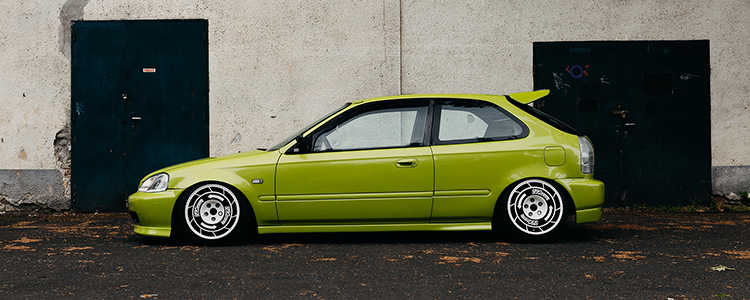
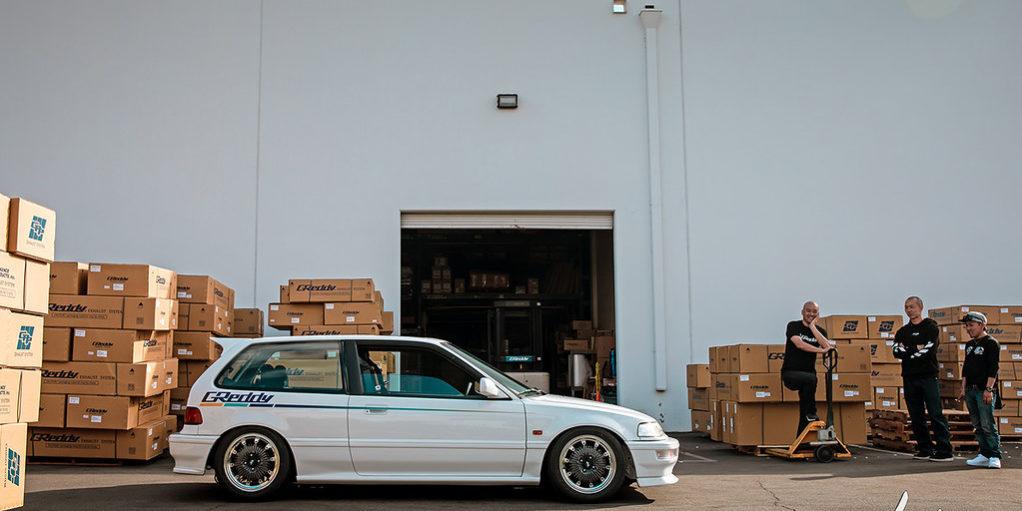
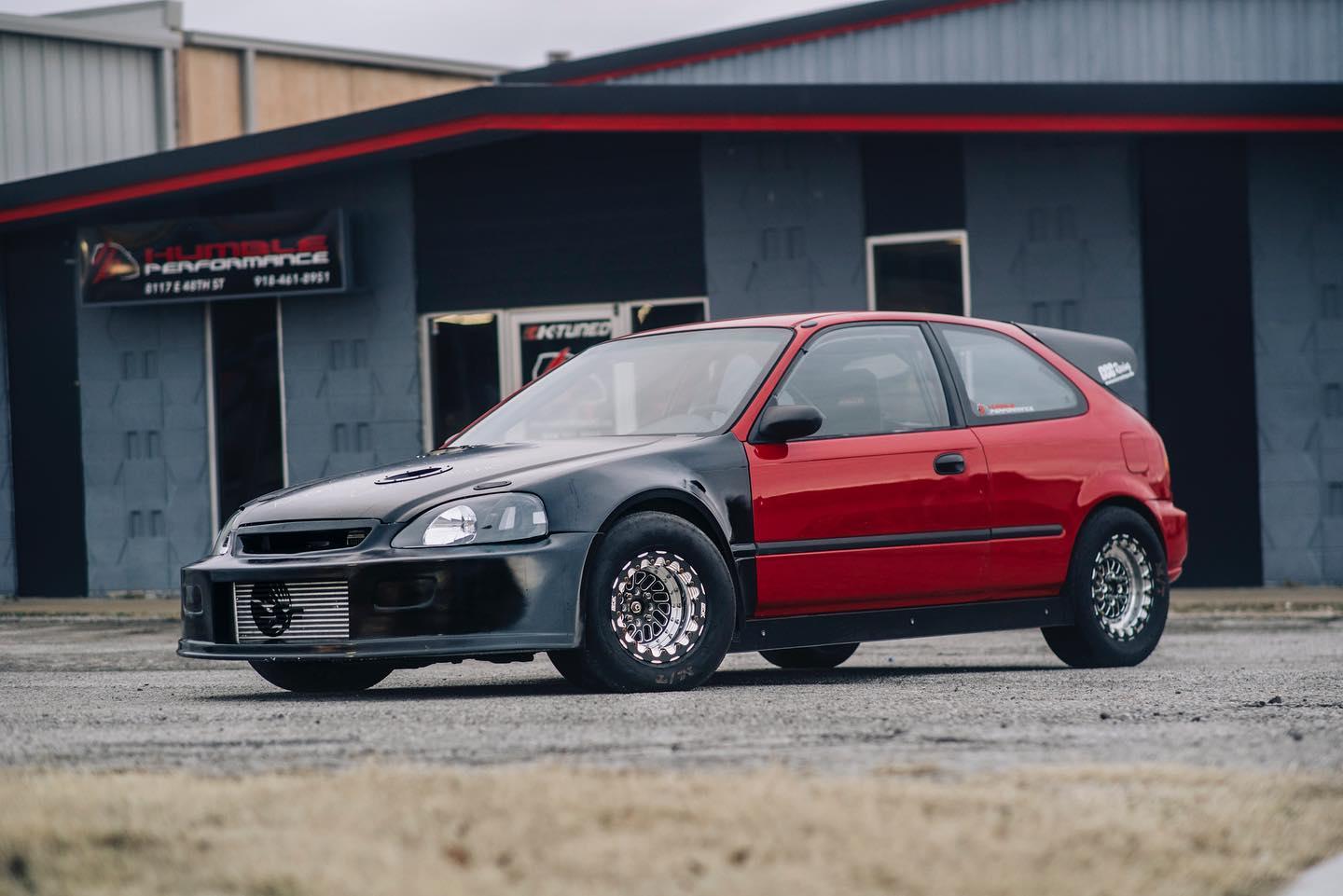
The Buyer's Read
If you're buying a Civic, the first question to answer is what you actually want it for. A daily driver Civic is a different purchase from a tuner Civic, and a Type R is different again. The cheapest way in is a clean EG or EK hatch with the D-series engine. That gets you a usable Civic for under $8,000 and leaves you room to do a B-series swap later if you want one.
If you want VTEC from day one, look for an EG6 SiR-II or an EK4 SiR with the B16A. Those cars are still affordable and they're the ones every Civic tuner in Japan grew up around. Budget around $12,000 to $20,000 for a clean documented example. Skip anything heavily modified unless the paperwork shows who did the work, because a bad Civic build can cost you more to undo than a clean stock car costs to buy.
The Type R conversation is its own thing. The EK9 is the collector pick. It's been US-legal under the 25-year rule since 2022 and clean examples are climbing. The EP3 is the practical pick because it's a five-door hatch with the K20A and it shipped globally, so parts and supply are easier. The FD2 sedan is the JDM enthusiast's pick. It's still grey-market only in the US until 2032 at the earliest. The FN2 is the Europe-only one with the simpler torsion-beam rear suspension, and most buyers outside the UK and EU skip it.
The one Civic to be careful with is the 2001 to 2005 seventh-gen, which had CVT problems and a long list of recalls. The Si and Type R versions of that generation are fine because they're manual cars with the K20A. The CVT models are the ones that ate themselves.
Frequently Asked Questions
- Which Civic generations are best for enthusiasts?
- Top picks: EG/EK for light chassis, EP3/8th Si for K-series, and FK8/FL5 Type R for track capability.
- What trims hold value the best?
- Si and Type R lead. Clean, stock EM1 Si, EP3, 8th Si, and FK8/FL5 command the strongest premiums.
- What are the biggest red flags when buying used?
- Avoid heavy mods, poor wiring, rust, missing VIN tags, salvage titles, and no maintenance records—especially on CVT cars.
- Is the Civic CVT reliable?
- Generally yes if serviced. Prioritize documented CVT fluid changes and smooth engagement; shudder or flare is a warning sign.
- What about 10th-gen 1.5T oil dilution?
- Some cold/short-trip use can cause fuel dilution. Look for dealer updates, consistent oil changes, and owners who drove longer trips.
- Are older Civics good collector cars now?
- Yes in the right spec. Stock, rust-free EG/EK/EM1 cars are increasingly collectible; modified examples trade at discounts.
- How do Civic Si and Type R differ for buyers?
- Si is the daily sweet spot (cost, comfort, fun). Type R is track-focused with higher running costs and stronger resale.
- What should I budget for maintenance and repairs?
- Base Civics are low-cost. Budget more for Type R tires/brakes, and for older cars expect suspension, bushings, and rust mitigation.
Sources & References
- Honda Civic — model overview (article source) — JDM Buy SellVerified
- Honda Civic — encyclopedic overview — WikipediaVerified
- Honda Civic Type R — generation-by-generation overview — WikipediaVerified
- Honda B engine family — B16A, B16B, B18C technical reference — WikipediaVerified
- Honda K engine family — K20A technical reference — WikipediaVerified
- Honda D engine family — D-series reference for non-Type R Civics — WikipediaVerified
- Honda Civic (sixth generation) — EK chassis including EK9 Type R — WikipediaVerified
- Honda Civic (seventh generation) — EP chassis including EP3 Type R — WikipediaVerified
- Honda Civic (eighth generation) — FD/FN chassis including FD2 and FN2 Type R — WikipediaVerified
- Honda Civic Type R — Japanese encyclopedic overview — Wikipedia (Japanese)Verified
- Honda Civic Type R — Bring a Trailer auction archive — Bring a TrailerVerified
- Honda-Tech — model-specific owner and tuning forums — Honda-TechVerified
Sources last verified: